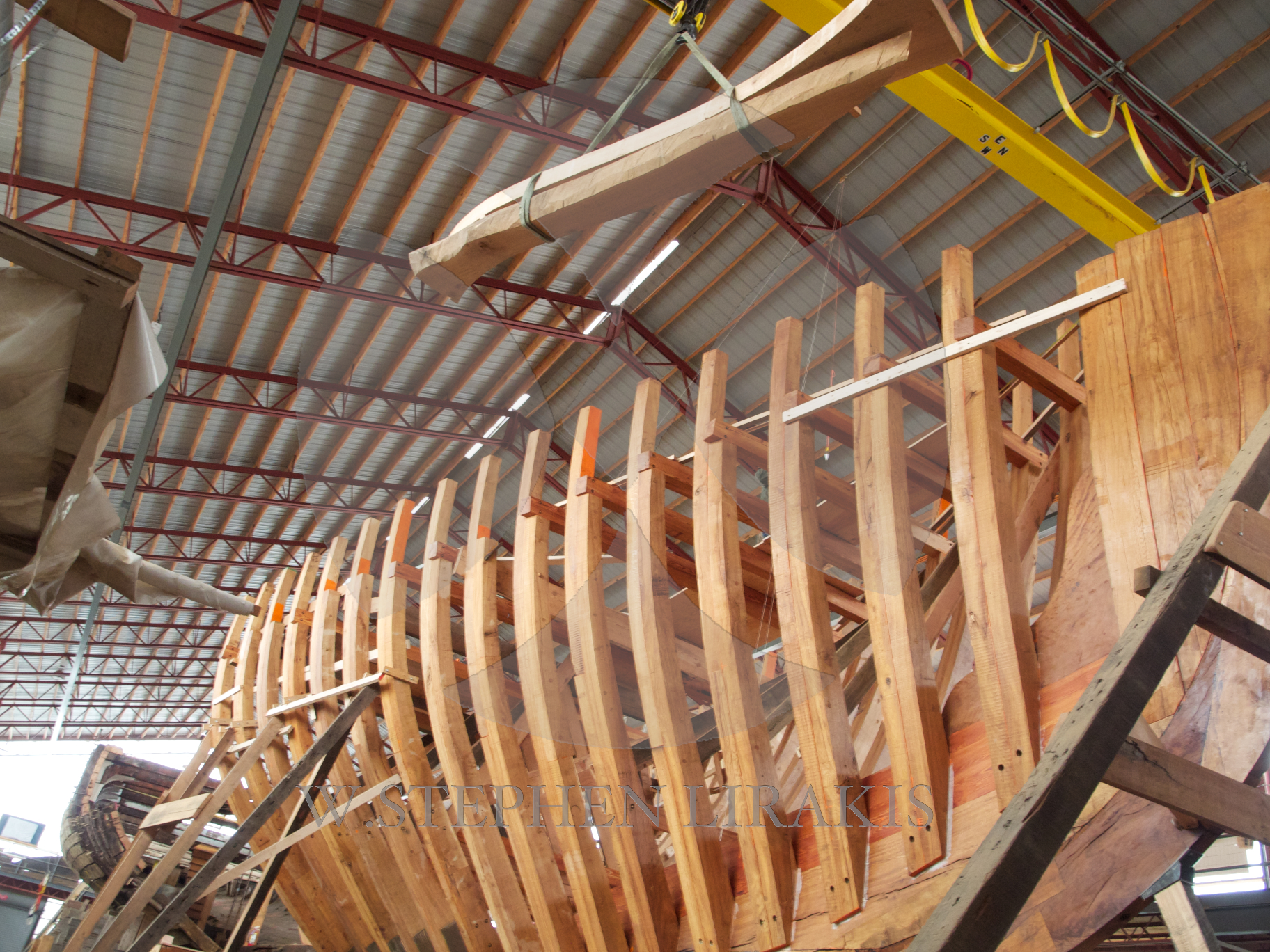
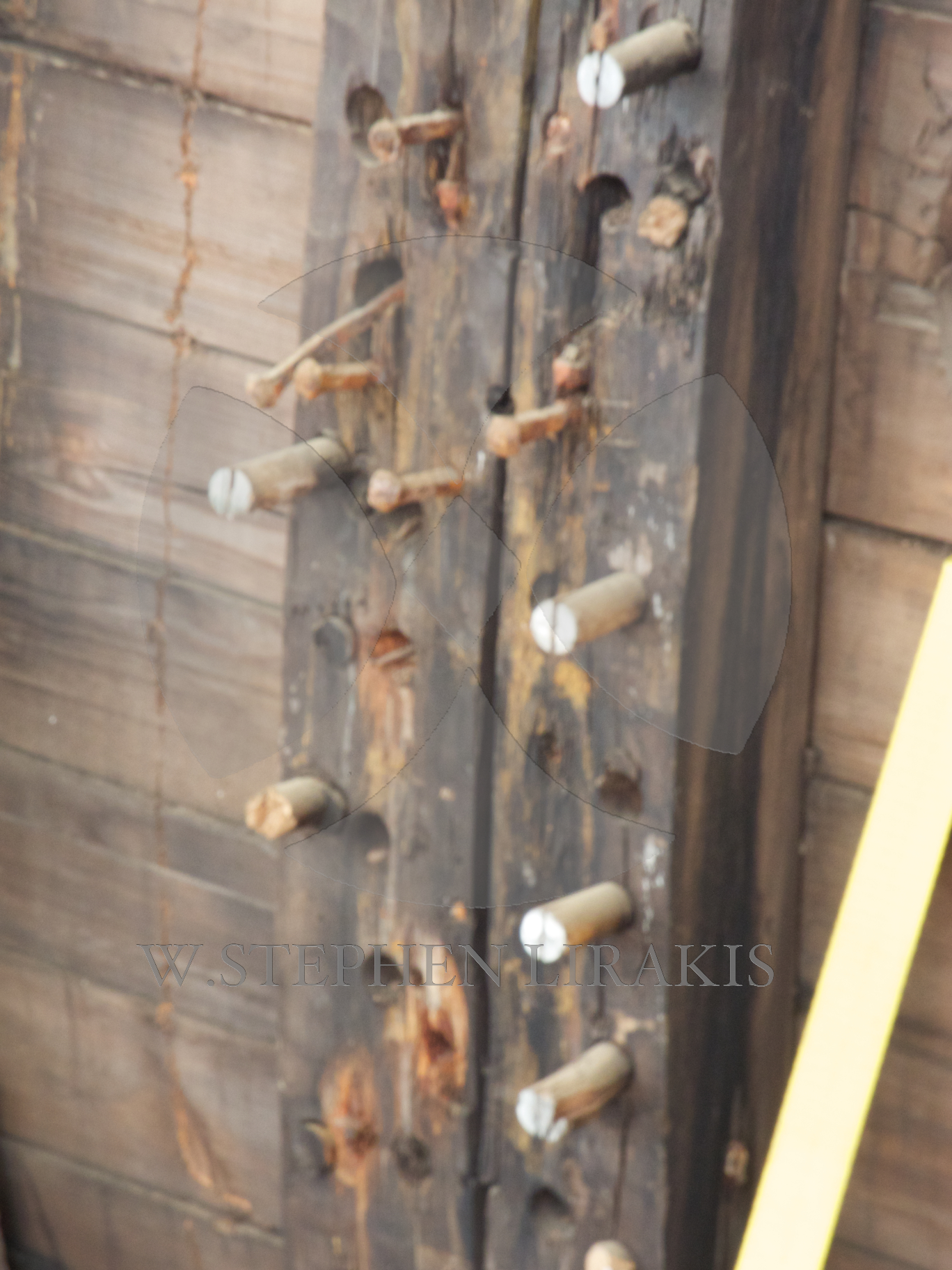
More progress on the “new” Coronet. The deck beams are set on the forward frames that have been set. The trunnels have arrived. Trunnels are usually made of Locust and are in fact a very good and clever way to secure planking and other things on a hull. The quality of the work on the Coronet makes it a work of art.
COUSINS
My posts are usually not so personal; but if we put life in perspective, what touches my life most profoundly? Is it the America’s Cup? The Six Meter World Championship? Or is it friends and family? I am hoping the questions begs the answer. Florence, niece to my wife, is finishing a year at Harvard before returning to Paris, came for the day with her parents, children, and uncle.
After a whirlwind tour of “Chateau-sur-mer”, “Marble House”, “Rosecliff “, “The Breakers”, and “The Elms” ( all properties of the Preservation Society of Newport County) marvels of American interpretations of European architecture. We returned home for a late lunch of cold lobster and red wine and of course conversation. Florence’s children were very patient with all of us, given that our topics of talk might not have been their first choice.
EXTREME SAILING, A PREVIEW OF THE AMERICA’S CUP?
Is this the kind of event the America’s Cup organizers are hoping for? Is it all about NASCAR? I freely confess I find this thrilling to watch and I raced multihulls (tornado) a long time ago now. It was splendid sailing, but extreme sailing makes sailing seem destructive and wasteful.
TRANSATLANTIC CLASSES
Our start (Snow Lion) is on June 29. As you can see it will be an active day. Once again “Zaraffa” will be in our class. She was in our class in the 2003 transatlantic race. I have told the story before; the day of our best 24 hour run at 275 miles , Zaraffa sailed 475 miles. Needless to say she beat us.
Once again our class will prove a challenging one. The big boats start July 3rd and will almost certainly arrive ahead of us. As you might imagine, each class will have it’s own unique set of weather conditions.
“WHAT ELSE DO YOU DO WHEN YOU GET ON IN YEARS?”
from the telegraph, uk
British sailor, 85, crosses Atlantic on a raft
An 85-year-old British has crossed the Atlantic on a raft with three friends.
The crew wanted to raise awareness about the environment Photo: ANTHONY SMITH
7:00AM BST 07 Apr 2011
The crossing to the Caribbean island of St Maarten, led by Anthony Smith of London, took about two months and was generally smooth except for damage to two rudders on the large, sail-powered raft.
“Some people say it was mad,” Mr Smith said. “But it wasn’t mad. What else do you do when you get on in years?”
The jovial crew said they wanted to raise awareness about the environment and to prove the elderly are capable of embarking on adventures that are mistakenly considered dangerous. They also aimed to raise money for the British nonprofit group WaterAid, which provides potable water to impoverished communities.
A stroke of bad luck paid for the trip, courtesy of Mr Smith, who was hit by a van and broke his hip.
“I got some compensation money,” he said. “So what do you blow the compensation money on? You blow it on a raft.”
RELATED ARTICLES
- Four men on a raft 04 Apr 2011
The crew departed from the Canary Islands after bad weather delayed their trip for about a month.
The raft was loaded with food including oranges, avocados, potatoes, cabbages and a pumpkin. Once the store-bought bread was consumed, sailing master David Hildred began making more loaves from scratch in a small oven.
Mr Hildred, a civil engineer who lives in the British Virgin Islands, also was summoned to help fix the rudders that broke three days into the trip.
The raft was built with four water supply pipes nearly 40 feet long, and 14 cross pipes. Seven pipes held the crew’s fresh water supply. The raft also had a nearly 40-foot long mast and a 400-square-foot sail. Twin rudders provided the steering, along with centerboards and two oars.
It travelled at an average speed of 4 knots, with the crew taking turns to keep watch when they were not reading or playing cards.
“I think all of us enjoyed our night watches when it was just oneself for company,” Mr Smith said. “Not an awful lot to see, but it was great.”
A whale played alongside the raft one day, and a school of mahi-mahi followed the raft almost the entire journey, said crew member John Russell, 61.
“The wildlife was just fantastic,” he said. “There is nothing to be scared of. We were all old men.”
Halfway across the Atlantic, Mr Smith celebrated his 85th birthday with a chocolate cake that his doctor, Andrew Bainbridge, cooked on board.
The crew intended to end their trip in the Bahamas, but strong winds and currents forced them to the Dutch Caribbean island of St. Maarten.
“Yes, of course it’s a success,” Mr Smith said with a smile. “How many people do you know who have rafted across the Atlantic? … The word mutiny was only spoken about two or three times a day.”

ABOUT COLLEGE SAILING
THE FOLLOWING WAS WRITTEN BY CHRIS LOVE. I would be curious to understand the circumstances surrounding this post in “Sailgroove”. We did not get to a point where this kind of thing happens overnight. All sports have been heading towards this for quite a long time. I remember reading not long ago about an Optimist regatta (children 7-12 years old) where the complaint was that there were too many coaches on the race course.
I was desperate to learn more when I was growing up, learning to sail. I probably would have embraced the idea of having a coach following me and telling me what to do; up to a point. I am able to look back at my time on the water with the best of memories, especially in college.
I look forward to understanding more about these events. For me this is a reflection of our times. I recognize that we can not turn back the clock, to a simpler time; but we always need to consider where we are going. I would enjoy hearing opinions from those of you who might like to express their thoughts.
It’s not the least bit uncommon for a baseball umpire to stand toe to toe with a manager, mask in hand, shoulders relaxed, stoically taking an earful of harsh words and a fateful of spit as the coach reams him out for a call he doesn’t like, only to burst to life, dramatically point to the dugout and yell “you’re out of here!” It’s generally part of the ceremony for the coach to kick some dirt, insult the man’s mother, saunter back down the steps to the boos or cheers (or both) from the crowd and hand off the clipboard to the assistant manager so the game may continue. Not uncommon at all–in fact, it’s one of the sport’s great traditions.
But compared to the barbaric sport of flying balls and dirty mitts, sailing is a gentleman’s game. Coaches and sailing officials would never interact in such a crude and brutish way. A combination of complicated litigation and cocktails at the bar is enough to solve our differences. No need to shout or make a scene by kicking someone off the water, right?
Well, in collegiate sailing this weekend, a scene was made. Two coaches were asked to leave and/or not return on the second day, per a sailing instruction that has been on the books at MIT for some time. It basically says that if a coach says something negative to an umpire, they may be banned from the premises for the rest of the regatta. This was the first time it has been utilized. Without getting into the unpleasant business of who said what to whom (and I honestly don’t know as I wasn’t there myself) I think this incident opens up an interesting and potentially positive discussion for collegiate sailing. Is this a good rule and should it be implemented more widely? Is it necessary and is it effective in its goal to protect ICSA’s staff of volunteer umpires?
You can’t argue the fact that being a sports official is hard–no matter what you’re going to piss people off, even if you’re right all the time (which isn’t possible either given the limitations of powerboats as vantage points for the complex game of team racing.) There should be some level of shielding for these kind souls who give their weekends away accepting this thankless job for no compensation. But is removing a coach a necessary measure in our sport? What must someone do to need to be removed from the premises?
Have your say, but please don’t turn this thread into a firing range on those who were involved in this particular incident.
DAVE PERRY EXPLAINS THE RULES
Dave Perry is so clear spoken on the subject of the racing rules for sailing. He is so willing and patient with questions, it was a pleasure to spend the day on an uncomfortable chair while the sun shone through the window. I look forward to the opportunity to attend another seminar on rules for match racing and team racing.
WORKING THE WATERFRONT
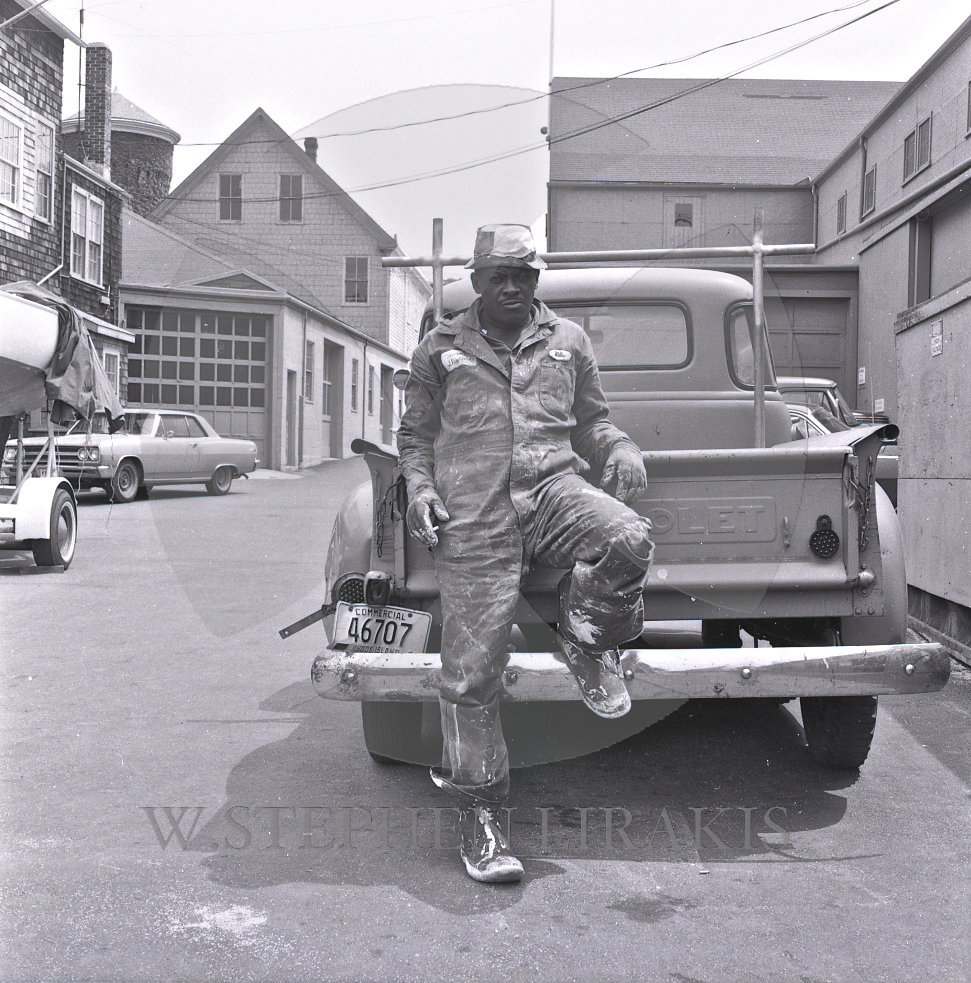
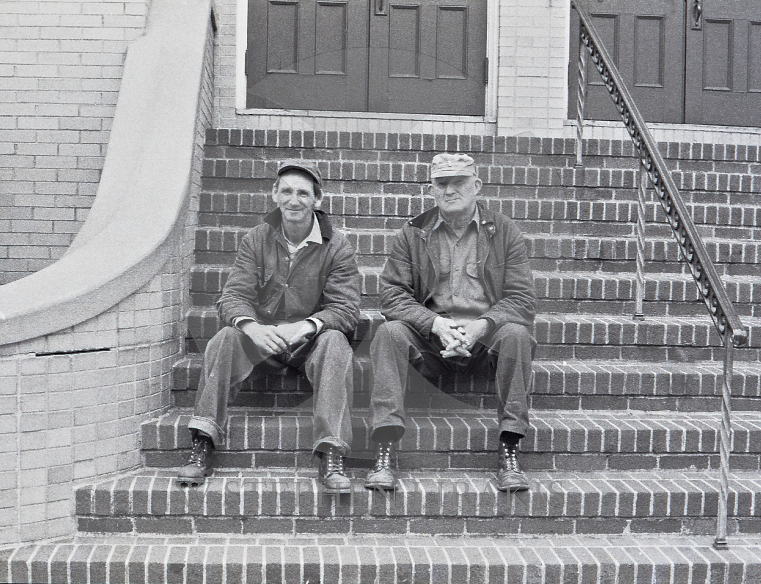
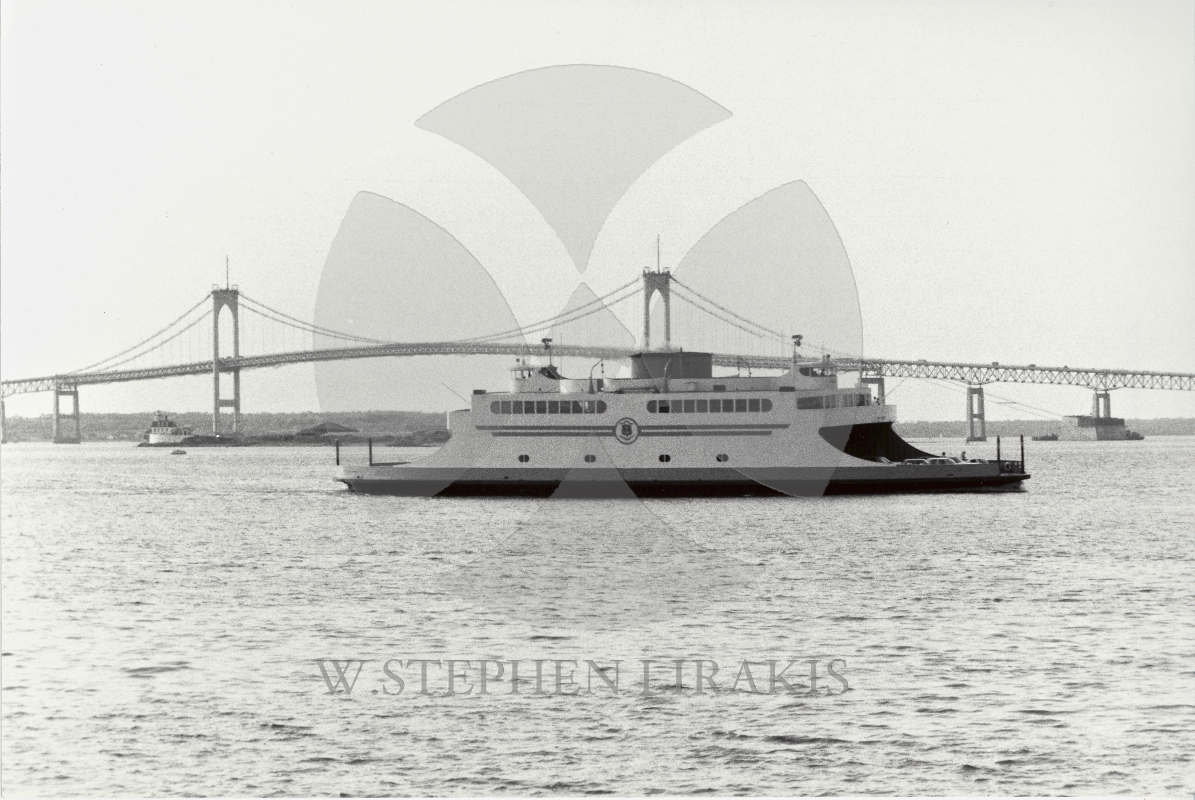
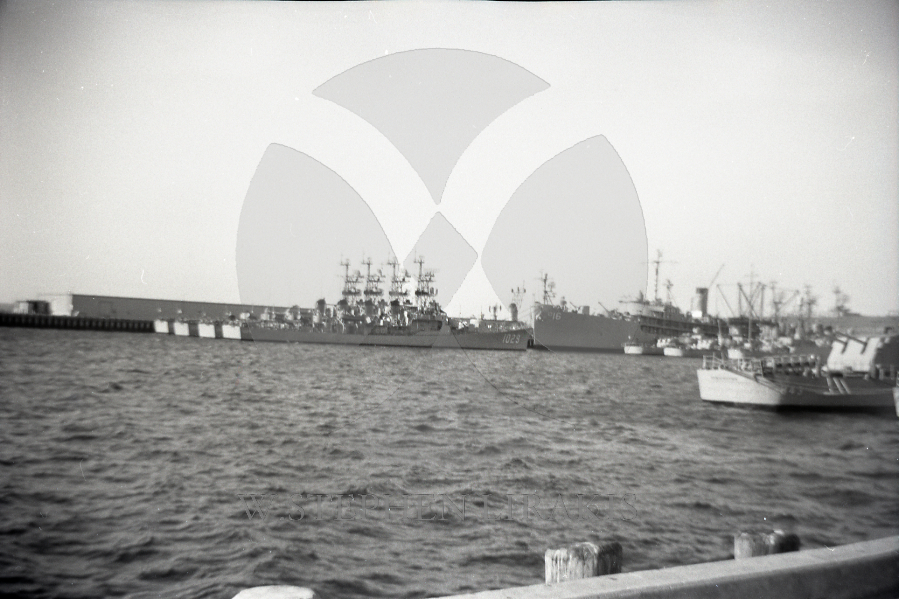
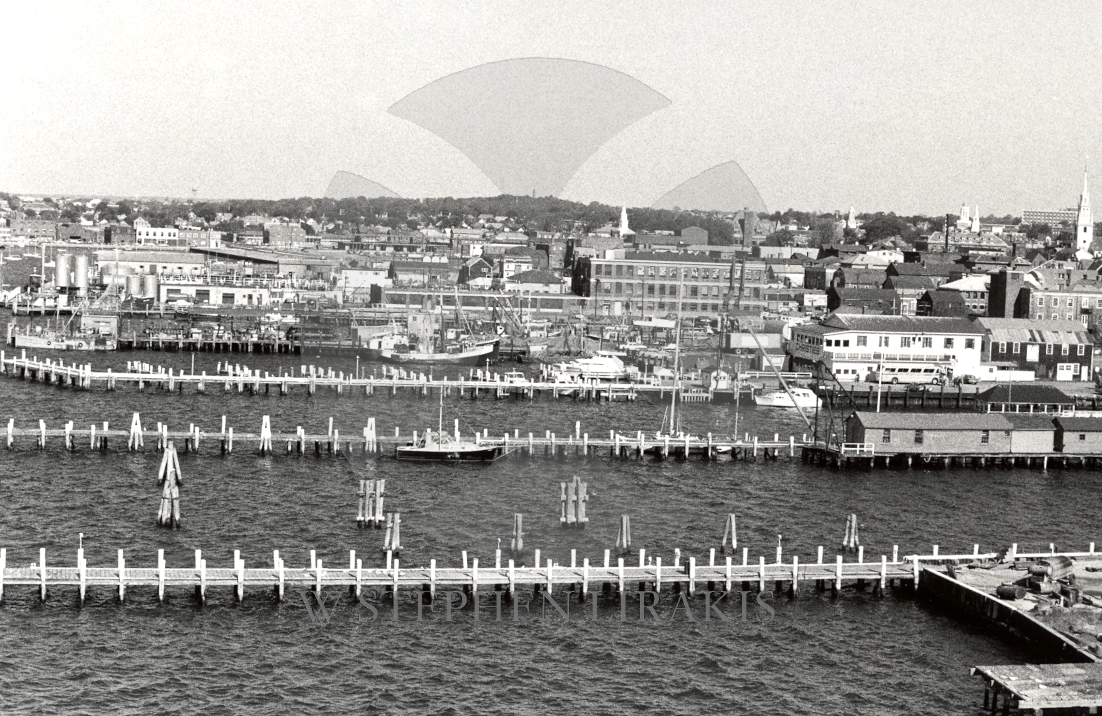
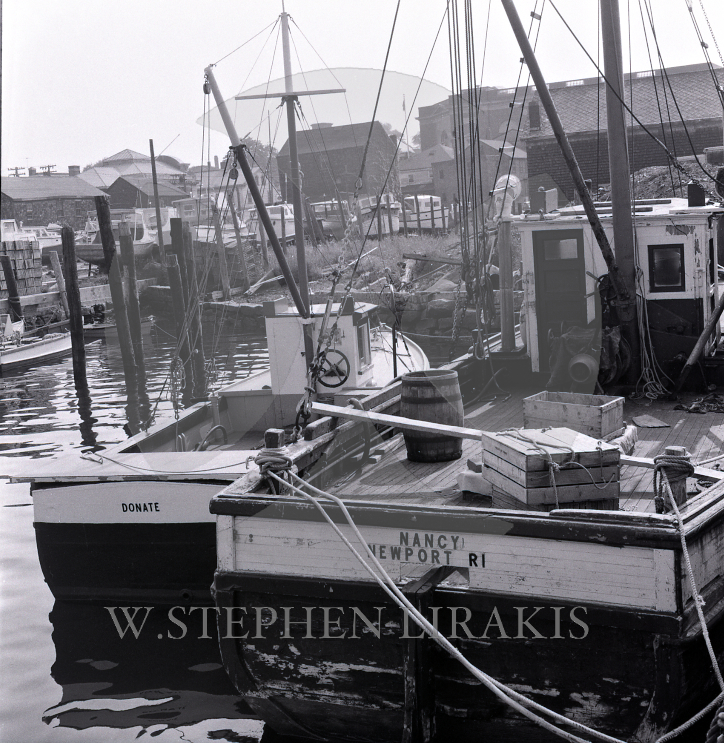
The story of the Newport waterfront was one tied to a long history of the sea. Newport is an island and before the bridge it really was a different place. The ferry only ran during the day until summer and then only until 11 pm. Shopping centers were only something one read about in the news; somewhere else.
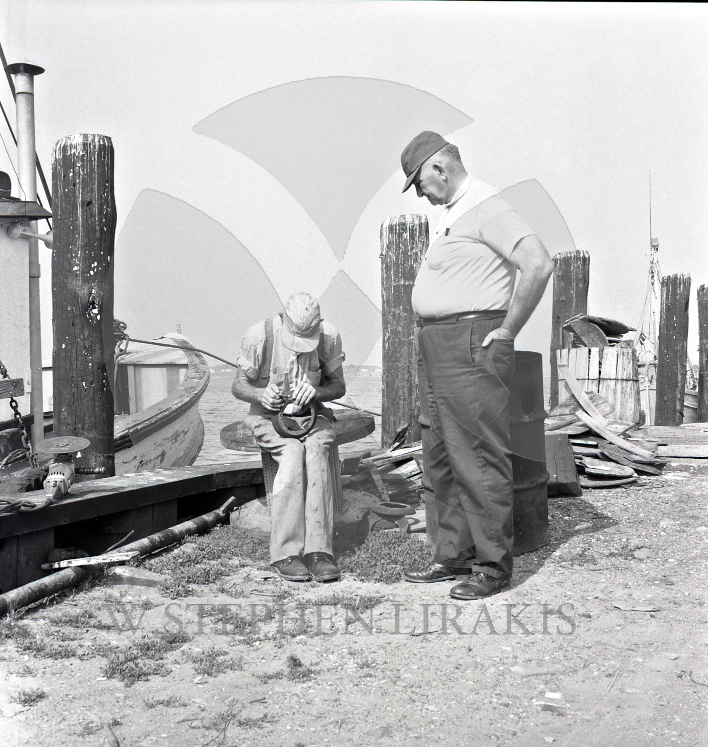
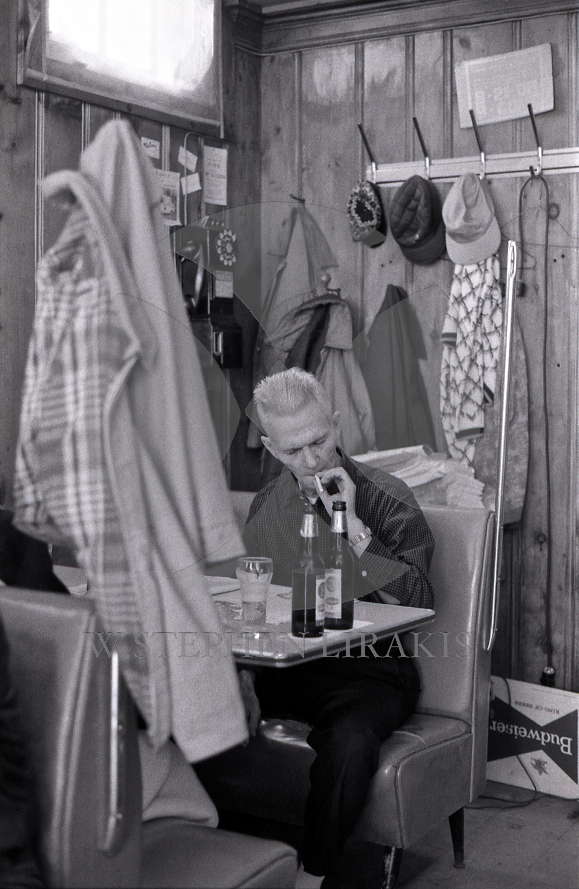
John and Kelly, sitting on the steps lived in a rooming house on Spring street: I doubt they had health insurance. Having a job was a badge of honor, a duty. All of the men pictured had skills that today people are paying to learn at places like IYRS. They were not particularly literate, but had something to offer.
Aluminum masts were still unusual. Rigging was wire rope. Wood shavings and sawdust were always everywhere, along with galvanized nails and silicon bronze flathead slotted wood screws.
Boats had to be tended to when launched until the planking swelled enough to keep the water out. I delivered a boat south one year that had spent the summer tied to the dock. It was a miracle we did not sink she leaked so badly during the trip . I will add that it blew 50 the entire time.
The Navy was a big presence in Newport, but so was fishing. This was a working waterfront.
WHARF RATS ON THE NEWPORT WATERFRONT
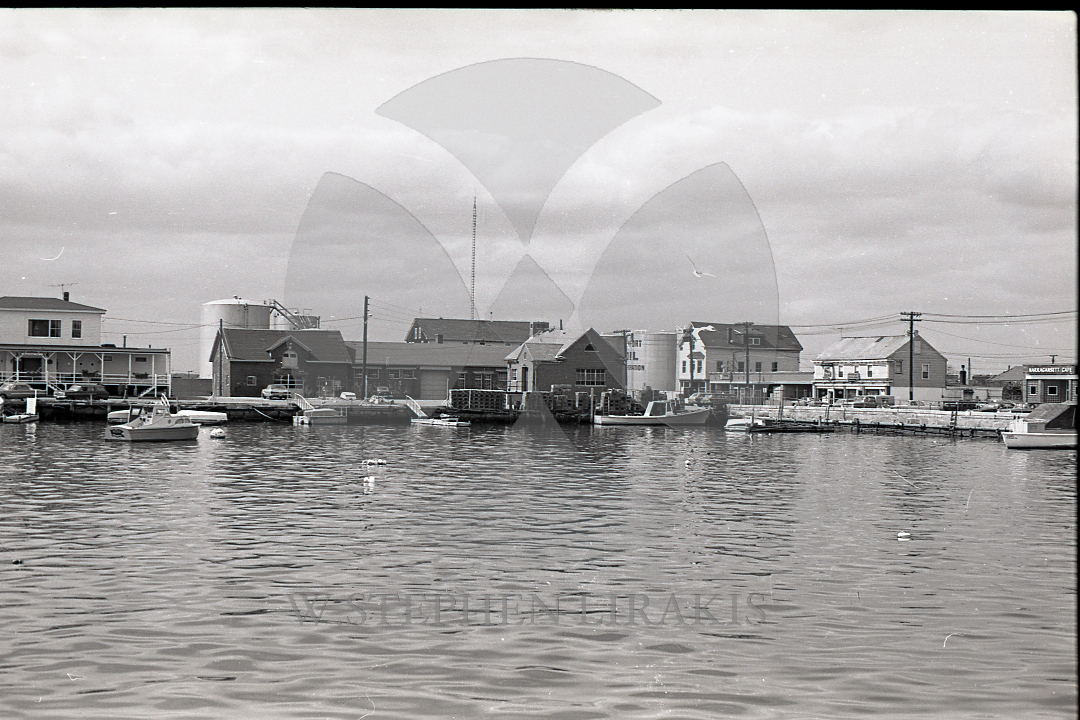
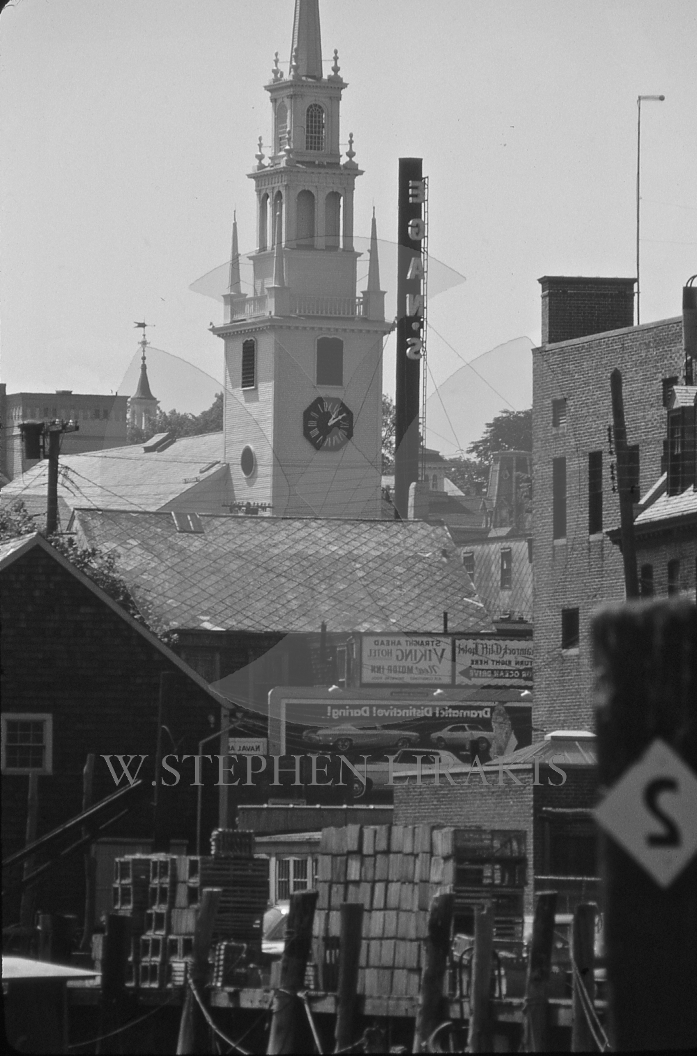
All stories must have context. These images are the Newport waterfront I knew as a teenager. I had to limit the images, there are so many that evoke memories of how things were, a simpler time.
Joe Cooper is responsible for this post, when he referred to me as the original wharf rat. The consequences of an offhand remark. I looked up the definition of wharf rat. Unfortunately what I found was not as flattering as I had hoped.
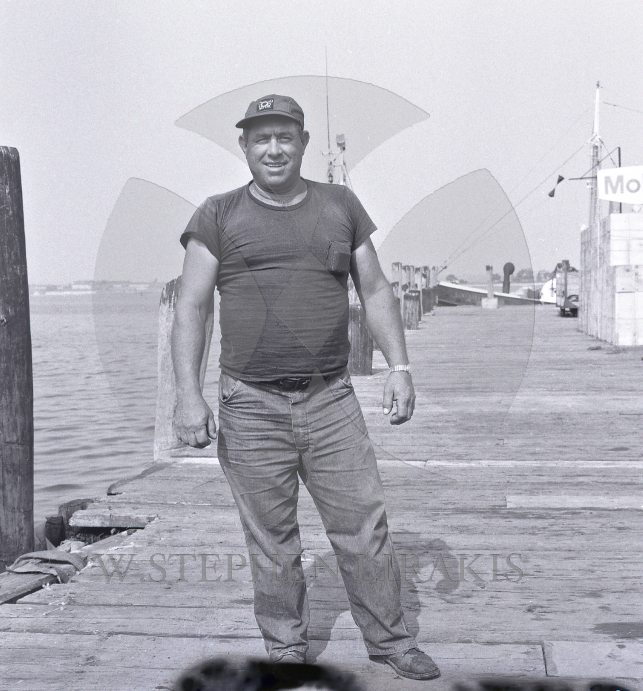
I will post some images of the people who were the real waterfront: gave it personality. For now this is the place they lived and worked.
Long strand manila rope was sill an important commodity in the chandleries, three strand dacron was really special, Samson braid and Intrepid braid did not yet exist.
I learned to make my first wire to rope tail splice, and macrame and baggywrinkle were commonplace. Newport was still very much a Navy town. The MP’s were on every corner during the weekends to deal with the sailors on leave.
The important fact is that it was a working waterfront, the fabric of which had evolved from necessity. Life was definitely a little slower.
NOT APRIL FOOL’S
I stumbled across this photo while looking for something entirely different. ( I have over one hundred thousand negatives spanning almost 50 years) I have been scanning and correcting images for several years now. It is a slow tedious process. There are photos which I still have not found that I know I have safely somewhere. I found an image a few days ago I had been searching for, for easily two years.
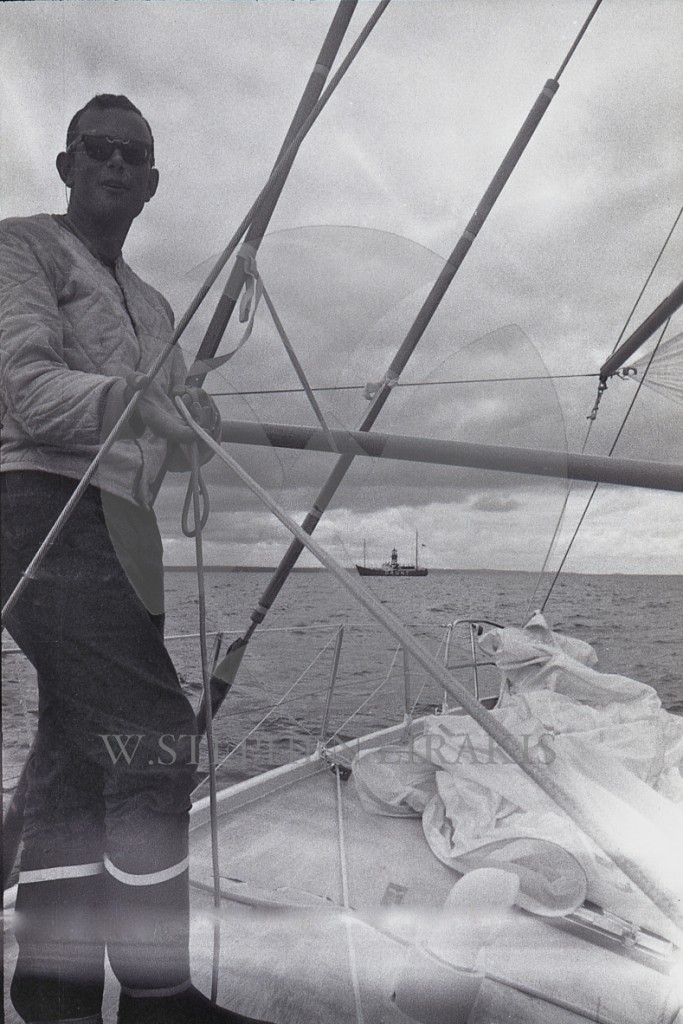
Back to this photo taken approaching the finish of the 1969 transatlantic race from Newport, RI to Cork, Ireland. That is Daunt Lightship on the bow of “Carina”, our finish. Richard B. Nye trimming the spinnaker. Finding this photo made me wish I had similar ones for each race I had sailed.