
Despite the results, I am do not have the kind of courage it takes to do this to my own camera.
CONTROVERSY IN NEWPORT
Doris Duke foundation reinvents Newport’s Queen Anne Square
By Ellen Albanese
| GLOBE CORRESPONDENT MAY 25, 2013

DORIS DUKE MONUMENT FOUNDATION
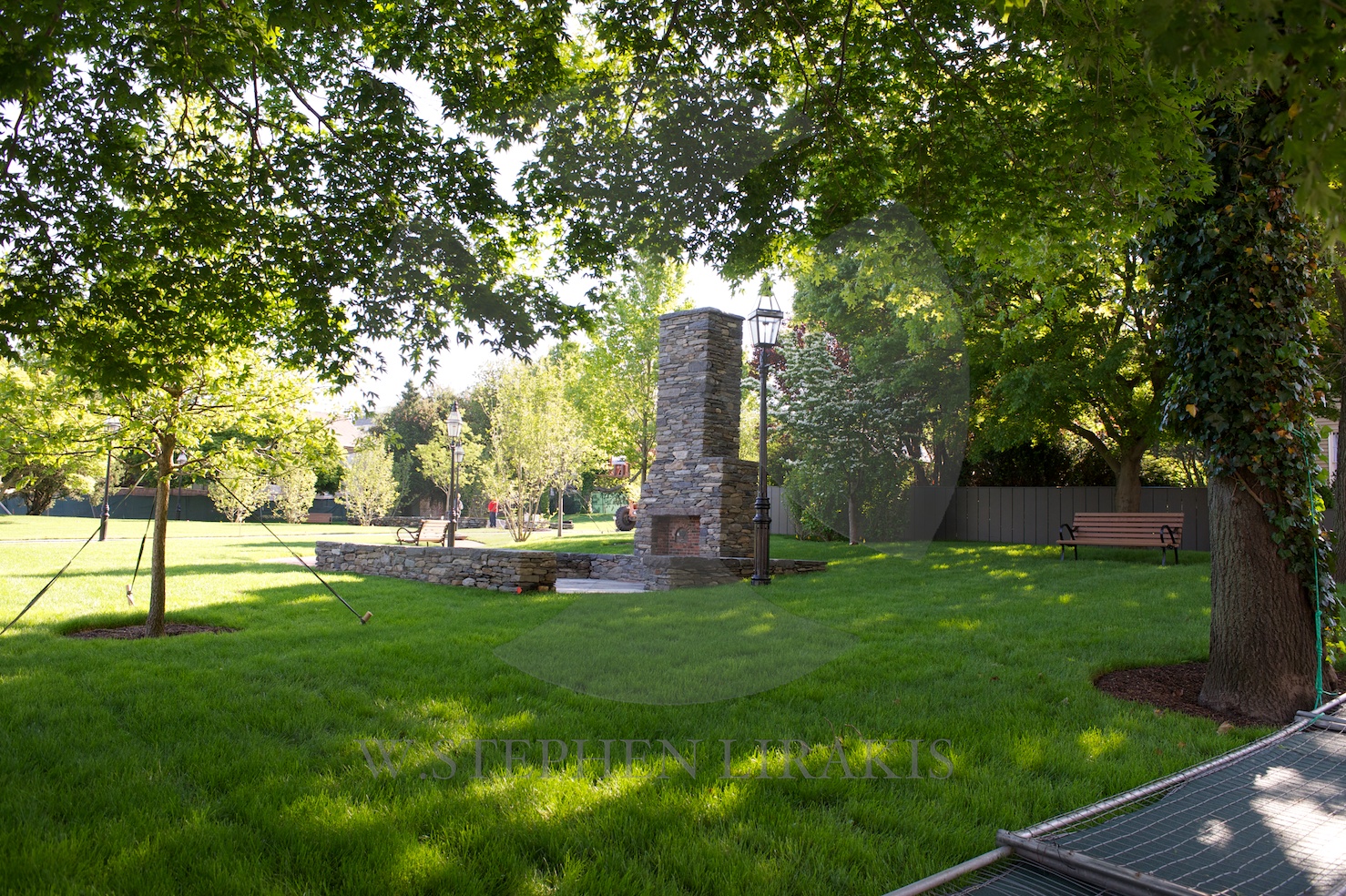
The spire of Trinity Church is visible behind Queen Anne Square. This seating area, one of three that make up Maya Lin’s installation, suggests domestic life.
NEWPORT, R.I. — The hiss of air spades and the rumble of cement mixers have ceased. The trees have been planted, and the sod placed. The shady, green square that offered rest and respite to travelers in Colonial times has come full circle.
When it reopens on May 31, Queen Anne Square will pay tribute to three women whose vision has left an enduring mark on Newport: Queen Anne, who ruled England from 1702 to 1714 and supported the Anglican Church in general and Newport’s Trinity Church in particular; Doris Duke, who created the foundation credited with preserving Newport’s Colonial architecture; and Maya Lin, one of the world’s foremost landscape architects, perhaps best known for the Vietnam Veterans Memorial in Washington.
The land between Trinity Church and Thames Street, in the area known as “The Hill,” was a center of village life as early as the mid-1700s. During the economic boom of the 1960s, a hodgepodge of commercial buildings spread across the space, nearly obscuring the historic church. In the mid-1970s, Duke, a philanthropist and summer resident of Newport, spearheaded the effort to create a park to be known as Queen Anne Square. In cooperation with Trinity Church, Duke’s Newport Restoration Foundation oversaw the removal of the commercial buildings and the site’s return to a village green.
Forty years later, the foundation has reinvented the square once again, with an eye toward honoring Duke’s preservation efforts, highlighting the role of historic preservation in community revitalization, and celebrating Newport’s history and assets.
“Doris Duke thought out of the box a lot,” said Pieter Roos, foundation director. “That has allowed us to think out of the box.”
Since Duke (1912-93) founded the organization in 1968, the foundation has restored or preserved 83 buildings and today owns one of the largest collections of Colonial architecture in the country. Most are rented as private residences to tenant-stewards. Buildings open to the public include The Whitehorne House, a Federal-era home with a rare collection of 18th-century American furniture; Prescott Farm, featuring 40 acres of green space and a collection of historic buildings; and Rough Point, Duke’s mansion on Bellevue Avenue, overlooking the Atlantic. The foundation also offers Newport History Tours, 75-minute walking tours, in conjunction with the Newport Historical Society.
Lin’s installation at Queen Anne Park, titled “The Meeting Room,” is a series of three seating areas designed to encourage rest, reflection, and conversation. Seating areas are set on stone foundations that form outdoor rooms representing the scale and type of materials used in Newport’s historical buildings, and each is meant to reflect an aspect of life in Newport. Stone thresholds at the entrance to each installation are inscribed with quotations from Newporters that capture the theme.
Describing her vision for the square, Lin wrote: “To be able to create a landscape that reveals the historic aspect of Queen Anne Square in which these physical structures, some of which have stood here for 300 years, hold the history of the people who lived and worked there through time, is an important aspect to me and the project. . . . I imagine it to be a place where people gather together and also can reflect upon how Doris Duke helped preserve so many of these significant historic houses.”
The smallest installation, which rests on a foundation the size of a modest Colonial Newport house (about 16 by 16 feet) and faces a stone fireplace, is meant to suggest domestic life. A passage from Franny Clarke’s 1867 diary reads: “Rained all day. Made jelly & did various other Housekeeping matters which consumed the morning.”
The second, on a slightly larger foundation, surrounds a water table, a typical element in Lin’s designs, and is meant to evoke commercial activity in the 18th and 19th centuries. Here, an entry from John Stevens’s 1726 account book reads: “To turning the arch, to the overplush of ye plastering, to laying five harthes.”
The third installation, about 36 by 22 feet, celebrates community life in the seaside village and includes an entry from the log of the ship Atlas, Henry A. Brightman, Master: “Light airs at 5AM, hove short & made all sail awaiting for the breeze.”
Nearly every element of the park reconstruction is home-grown. The three foundations are built from native Aquidneck Island stone, reclaimed from local historic houses that have been placed on new foundations. The benches are fashioned of local shale. Under the direction of landscape artist Edwina von Gal, who has collaborated with Lin on several projects over the last decade, new tree plantings were chosen based on native species that have historically grown in Newport. The inscriptions — including one from the Charter of 1663 (known as the King Charles charter) for the Colony of Rhode Island, the first document in the English empire to legislate freedom of religion and separation of church and state — have been hand-engraved by Newport artist and stone carver Nick Benson.
In conjunction with the reopening of Queen Anne Square, Rough Point is focusing on Duke’s philanthropy with a special exhibit entitled “A Career of Giving: The Surprising Legacy of Doris Duke.” Through photographs and artifacts, the exhibit paints a picture of the extraordinary range of Duke’s interests and largesse, from Little League teams to the Rosebud Sioux Indian tribe in South Dakota, who gave her the American Indian dress and accessories on display. As they leave, visitors can choose a charity to support from several representing Duke’s interests and cast their vote with chips. When the exhibition concludes, Rough Point will distribute money based on the votes.
Friday’s opening ceremony at the park begins at 10 a.m. It will include remarks by Governor Lincoln Chafee, Dr. Roger Mandle of the Doris Duke Monument Foundation board, and Mayor Henry F. Winthrop.
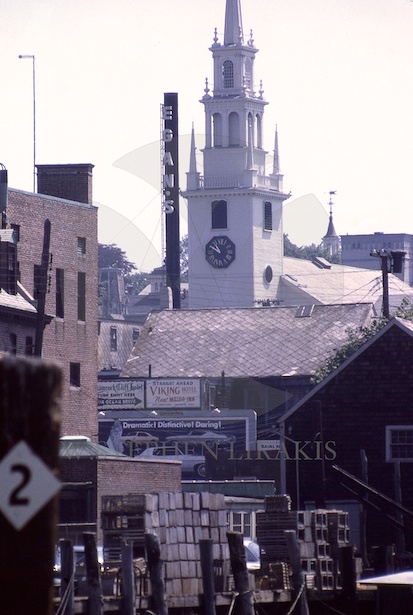
While I was sailing the Block Island Race, the controversial Maya Lin design for the Restoration Foundation’s Queen Anne Square was re-dedicated. This has been a hot topic for some time in the community. People seem to be resistant to change. I have included several photographs of what had been in place of the park before. I watched Doris Duke perched on a rock direct the placement of rocks and trees when she first decided to make the park.
I actually liked the Egan’s chimney and sign.

FOILING PHANTOM
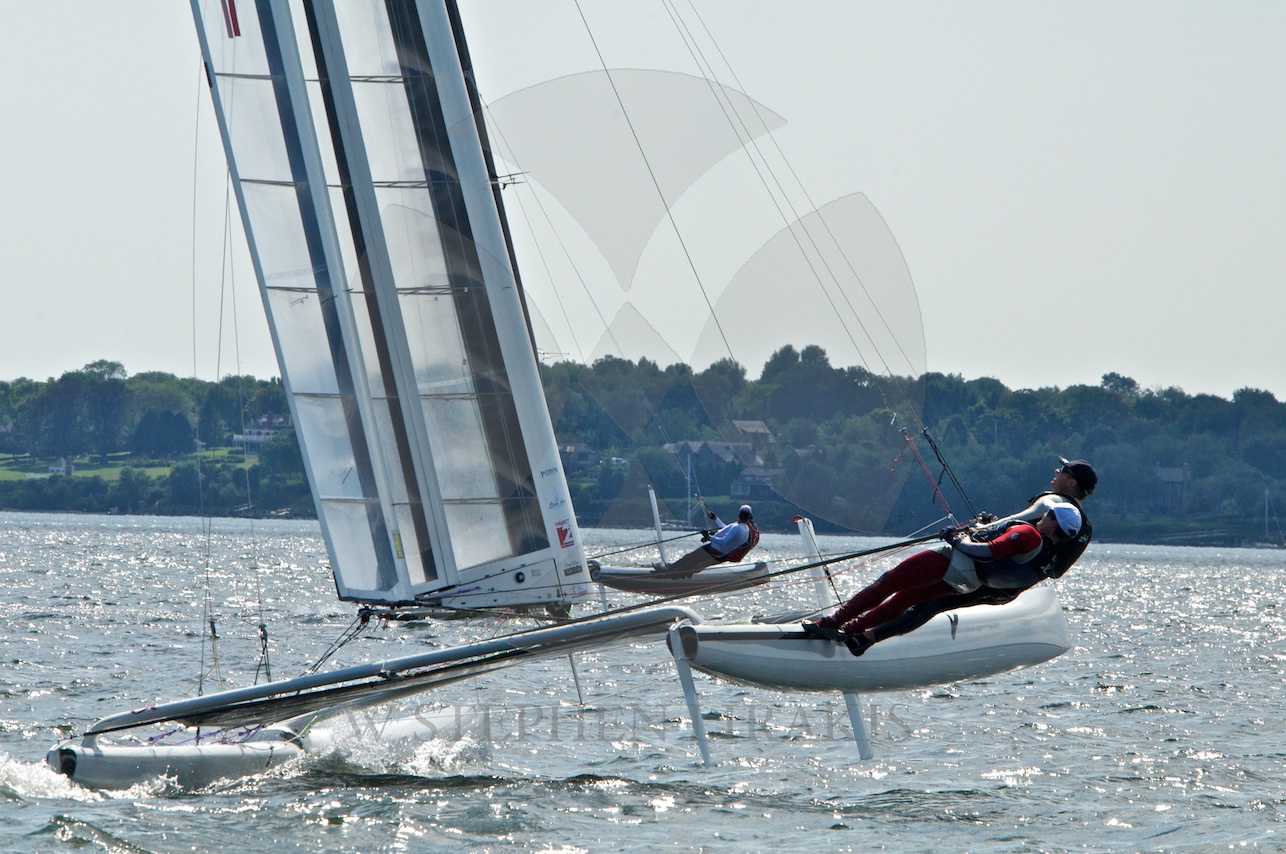
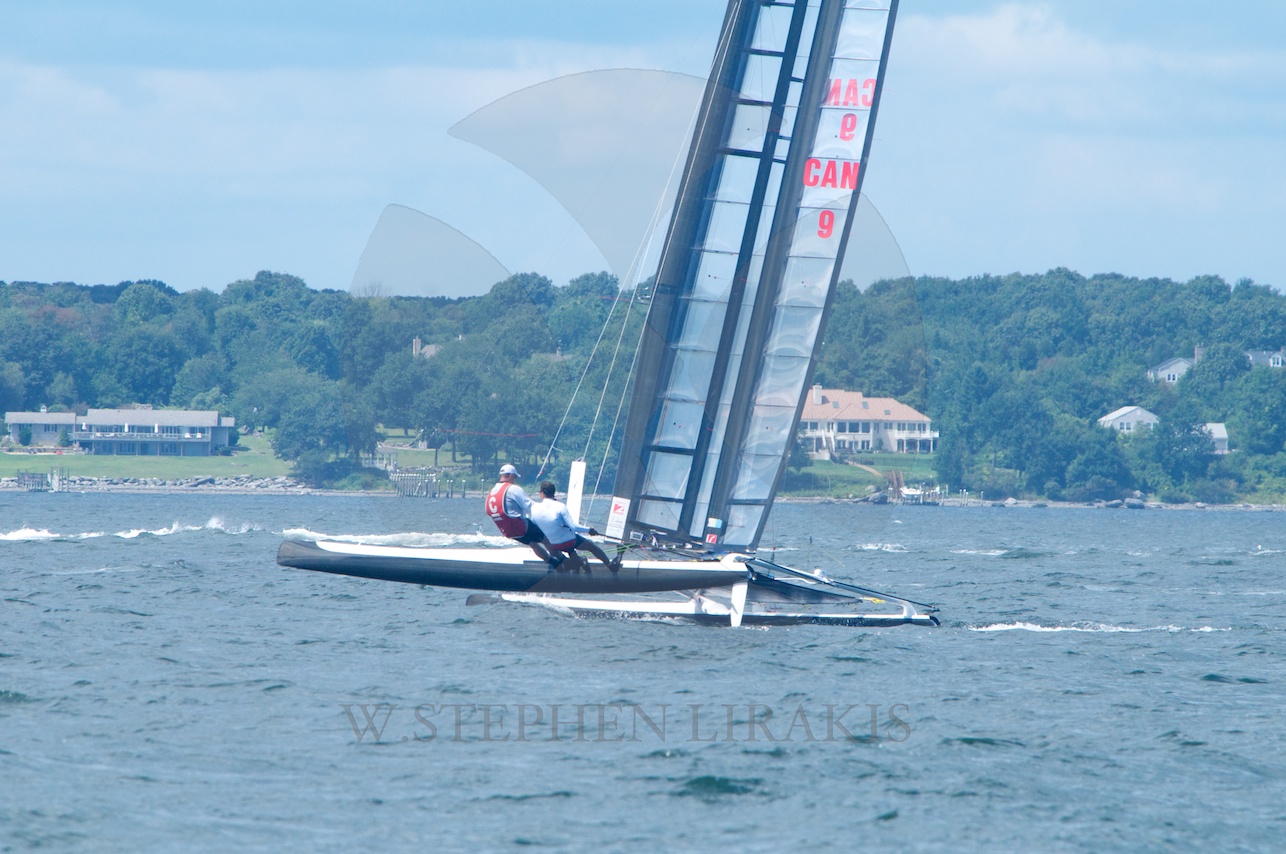
Foiling is the “new” standard in fast sailing. Hydroptere is the recent big boat success. The America’s Cup it is a must do. the Moth class as well. Can the “C” class cats be far behind? There have been foiling “C” class boats but will it be a must for the upcoming championship in September of this year?
23 September – 28 September
International C Class Catamaran Championship
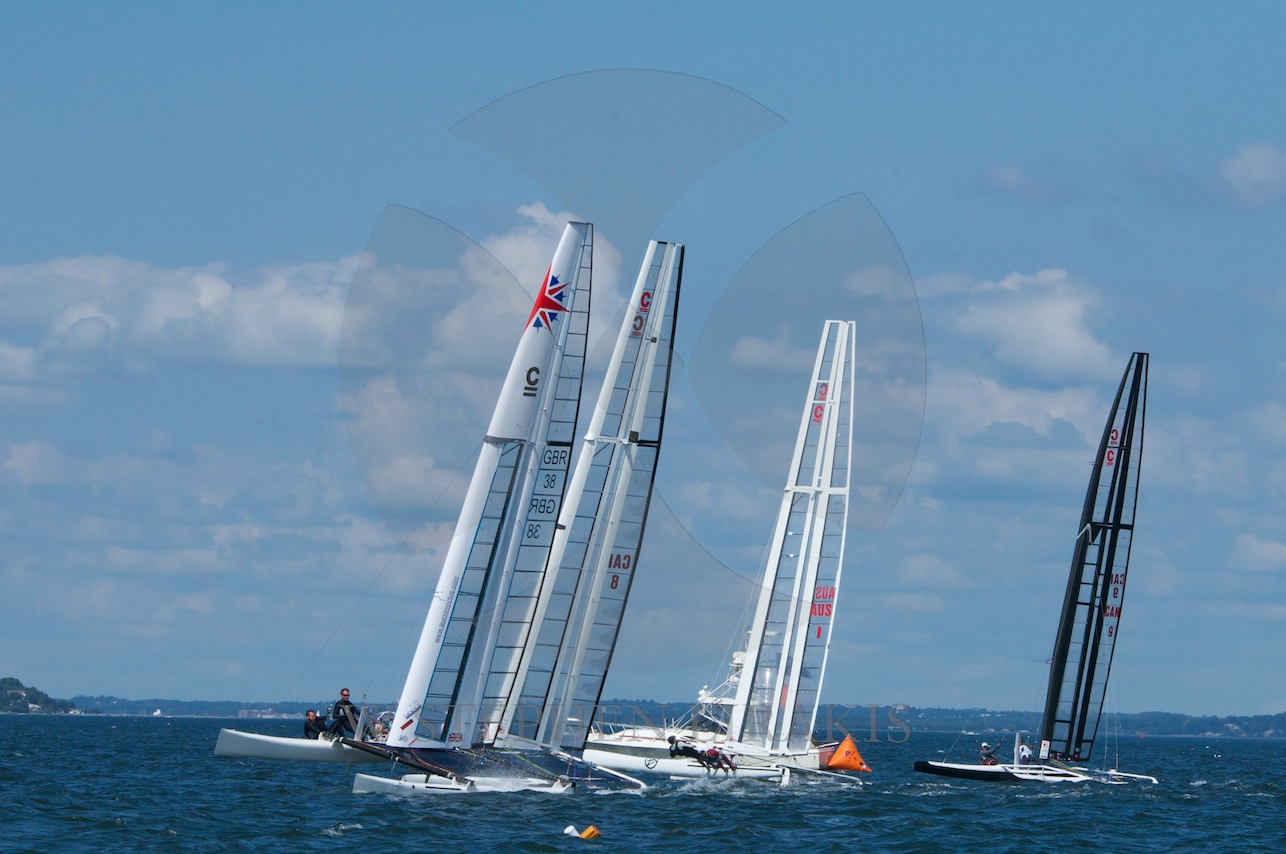
International C Class Catamaran Championship is a competition for C-Class catamarans that is held every 3 years. The boats are 25 feet long, 14 feet wide, with a crew of two and a 42 feet high solid “wingsail”, they are capable of a spectacular 25 knots. This is the first competition in Britain since the 1960s. First sailed in Britain in the 1960s, the Cup has not been won here for over 40 years. In Rhode Island USA, the 2010 event was won by the Canadian team; The GB team Invictus came third out in a field of seven.
You can expect 16-20 craft taking part in the International C Class Catamaran Championship. This many have never been seen together before; they will come from the US, Canada, Australia, New Zealand, France, Italy, Sweden and Britain. They will practice in the first week, which is then followed by fleet racing and finally match racing between the leading two boats. Each day the boats will sail from Restronguet Sailing Club to the race area and return on completion of racing.
Racing will be in Falmouth Bay or the Carrick Roads, depending on wind and sea conditions. They can be watched from Pendennis Point car park or Trefusis headland if in the Roads and from the water.
FAST AND WET BLOCK ISAND RACE 2013
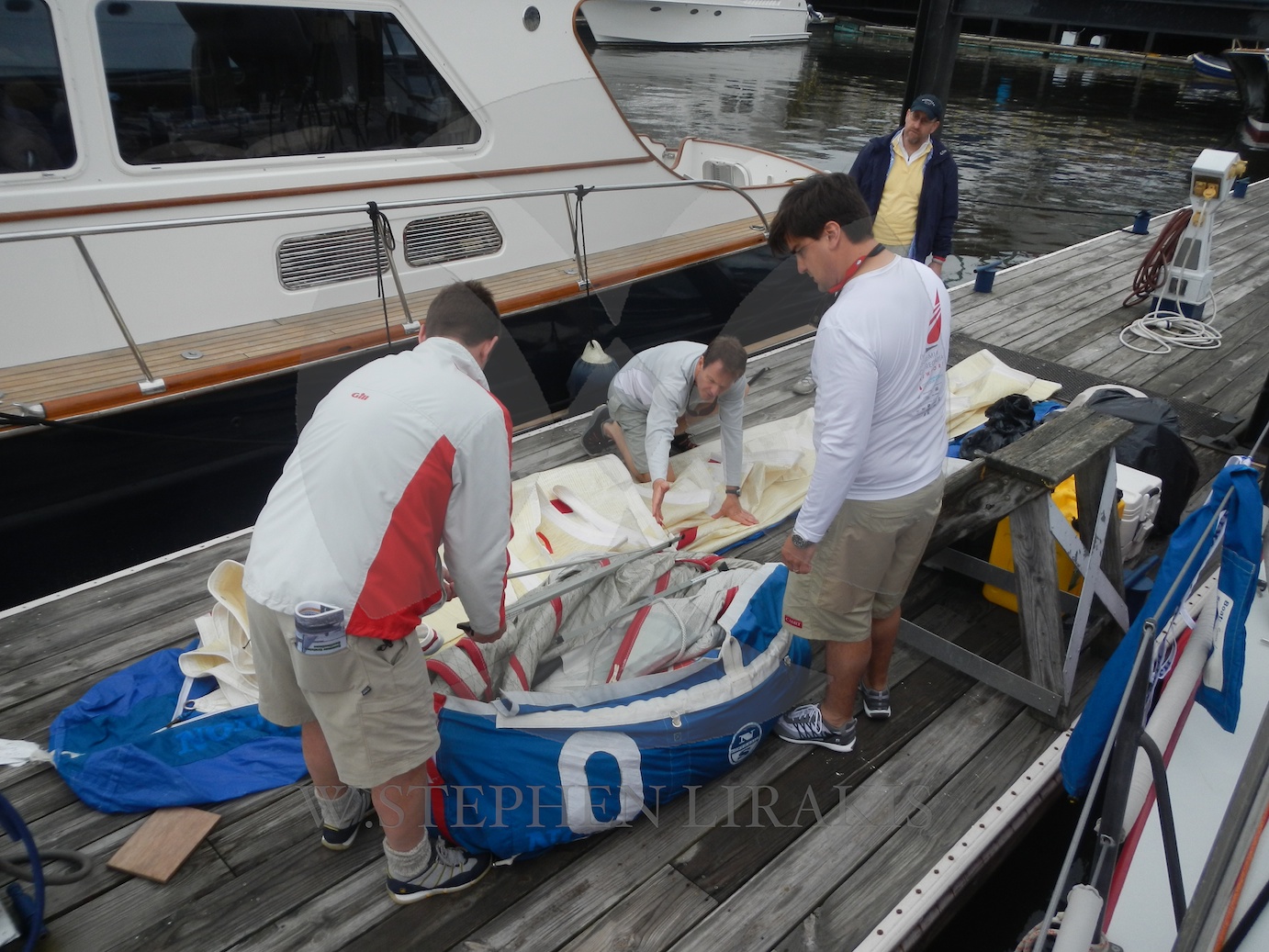
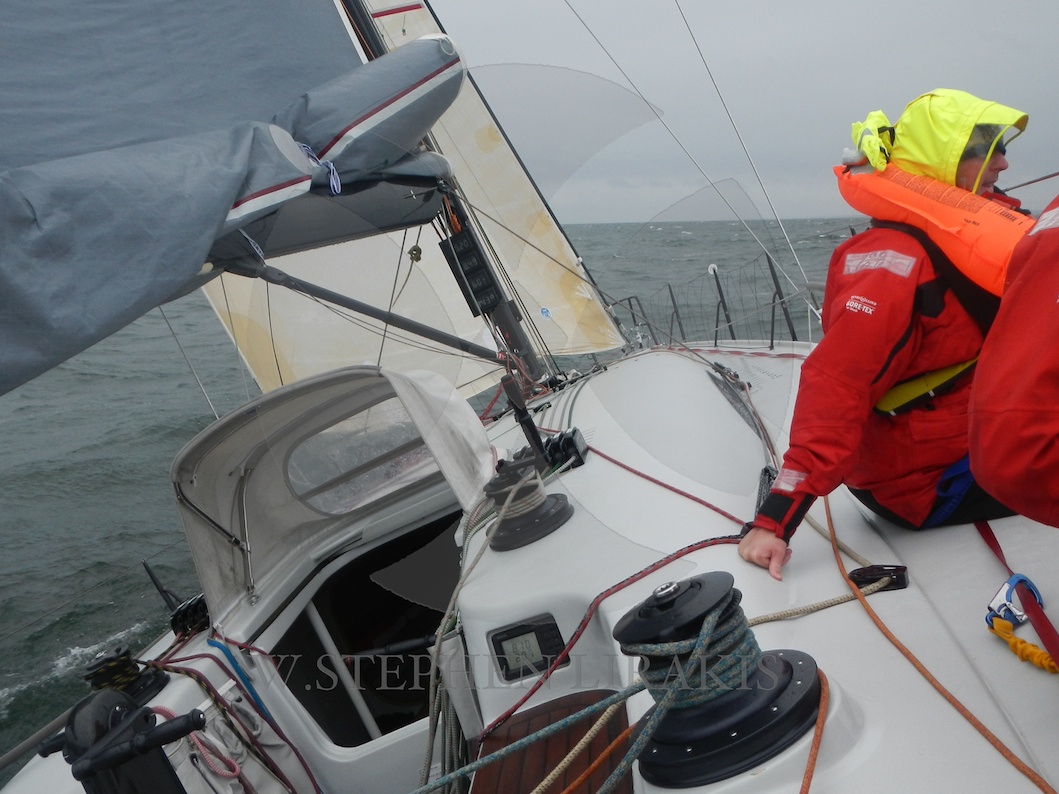
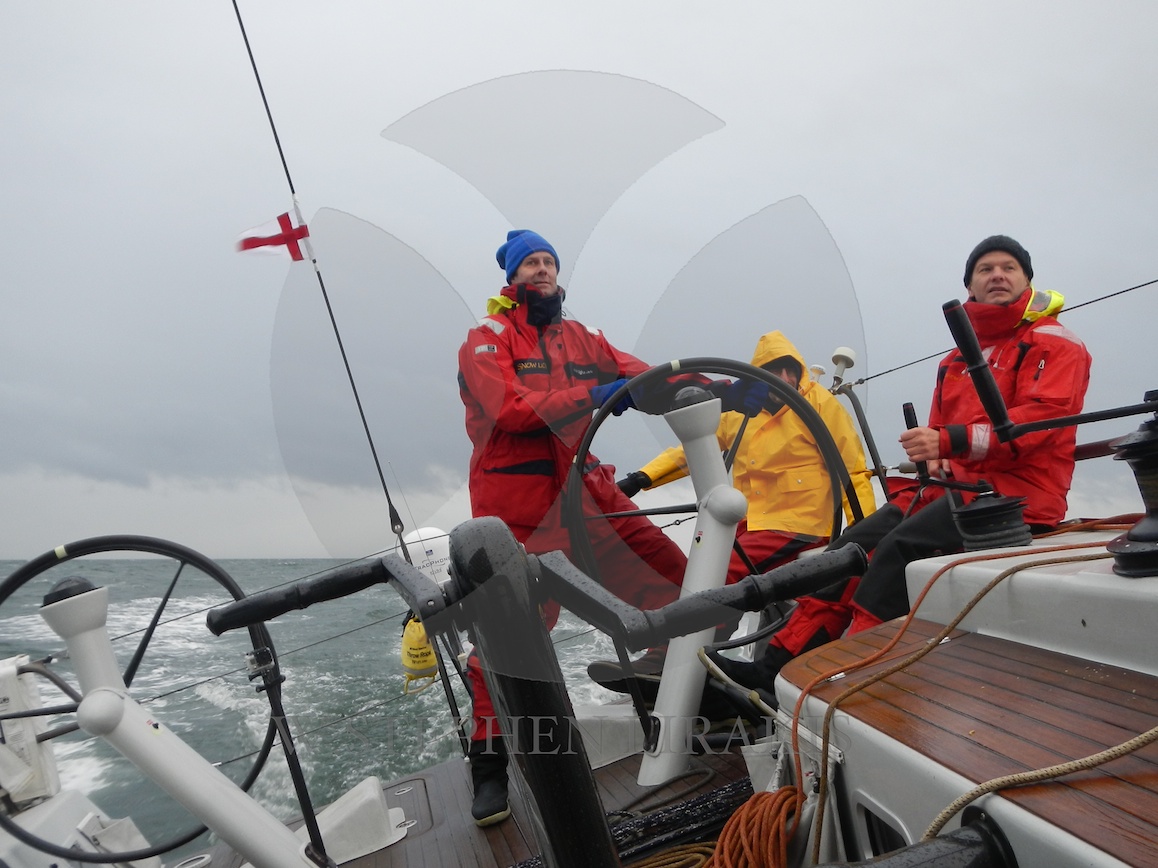
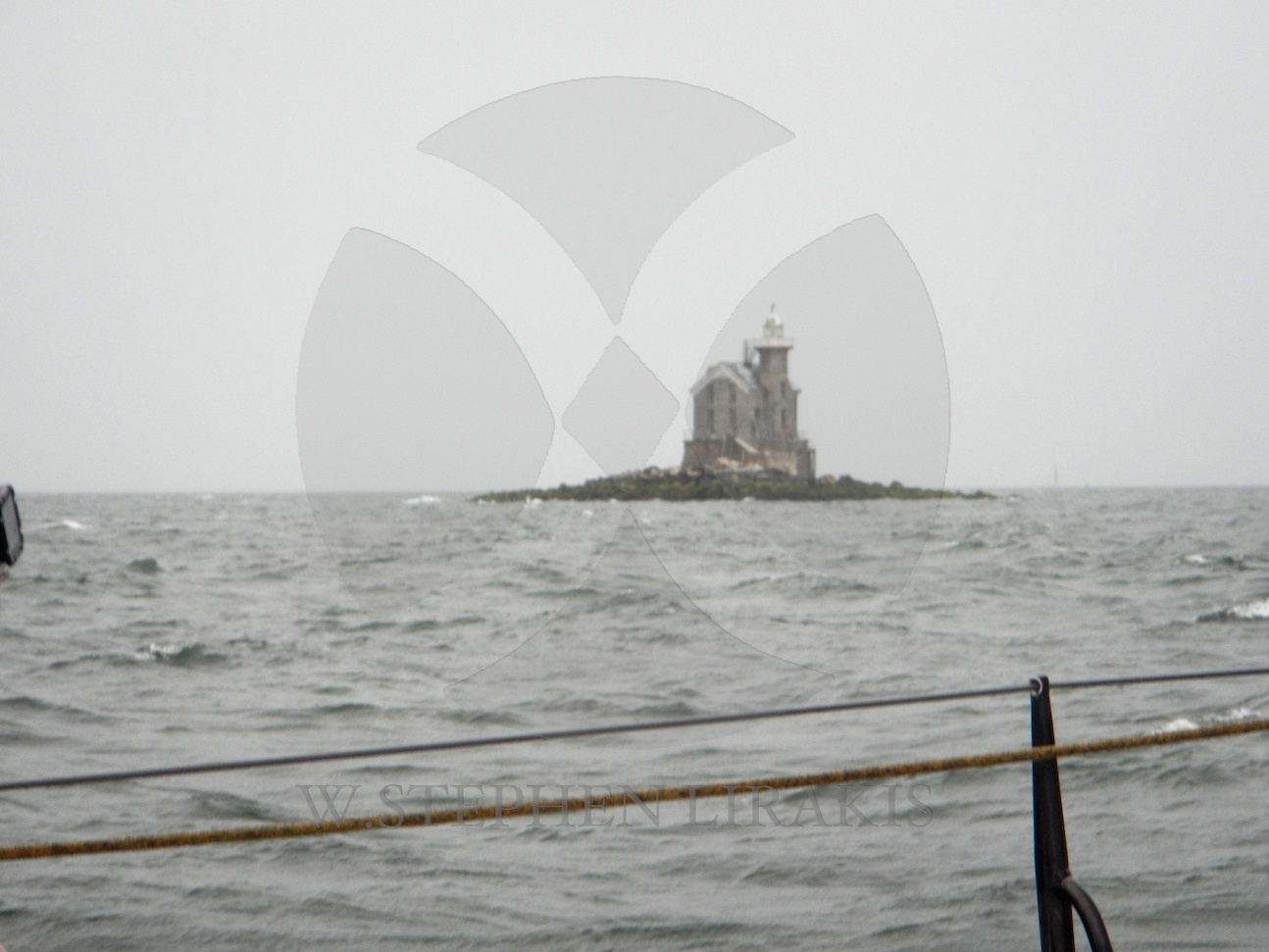
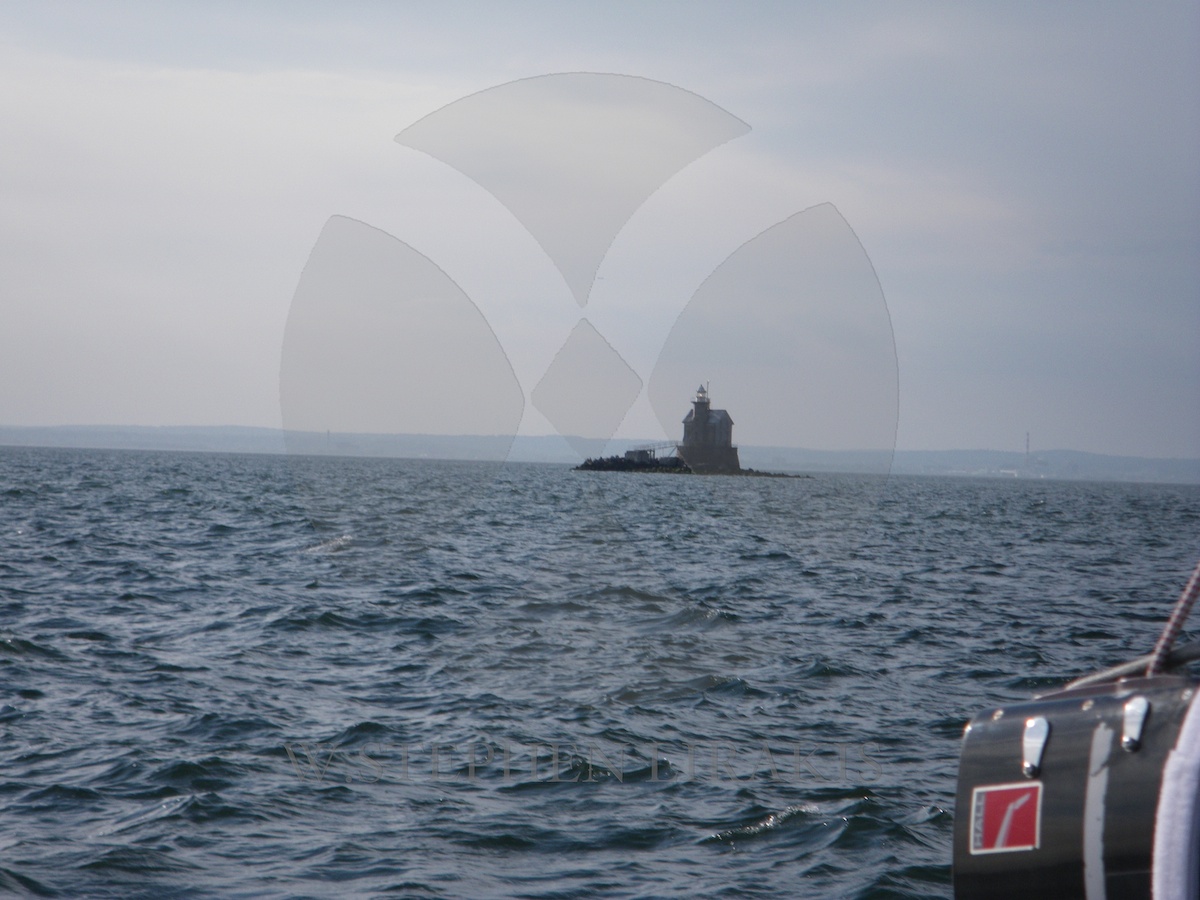
As I indicated earlier, every Block Island Race race is unique this one was no different. We sailed the course in just under 21 hours; the fastest I have ever completed the course. However, every other boat also sailed their fastest race. We started at 3:15 pm on Friday afternoon, we were out of the sound by 9 pm, 1BI at 1am Saturday morning, finishing at 12 noon Saturday. The wind was 15-35 knots from 315-015 compass bearing, with rain on and off. Back in Newport by 6:30 pm that night.
BLOCK ISLAND RACE STARTS TODAY
The Block Island Race starts today. I have driven, like so many others; route 95 since the sixties to sail this race. It is the hardest part of the race. Each and every race is unique, the weather, current are never the same. Full report when I return.
NEW SAFETY RECOMMENDATIONS FOR THE AMERICA’S CUP
While there are few surprises in the recommendations, the obvious extra cost is evident. More important, what exactly do the recommendations say about the sport of sailing?
1. AC72Yacht
Regatta Director Recommendations
Issued at 1600 May 22, 2013 (PDT) to AC34 Competitors, Golden Gate Yacht Club, & America’s Cup Event Authority
- 1.1. AC72YachtStructuralReview:CompetitorsinconsultationwithACRMto collectively identify and complete a process of competent third party review or testing process of the structural integrity of the platform and wing.
- 1.2. DaggerboardRakeControlHydraulicSystem:Competitorsinconsultation with ACRM shall identify and complete a process of competent third party review and testing process of their daggerboard rake control hydraulic systems to ensure an acceptable safety margin and level of reliability.
- 1.3. RudderElevators:
a) minimum total area 0.32 m2 per rudder;b) minimum depth of elevators on rudder span of 2.1m;
c) maximum elevator span of 1.4m;
d) rudder elevators to be symmetrical in plan form and allowed to extendbeyond maximum beam of the Yacht; and
e) elevators permitted to be adjusted until warning signal. - 1.4. CrewRestraints:Competitorstoeffectivelyrestraincrewthroughbearing-off manoeuvres, severe deceleration, or capsize, such as installation of cockpits, foot-straps, handholds, tether and/or belay points.
- 1.5. MaximumAC72YachtSailingWeight:Themaximumsailingweightspecified in AC72 Class Rule 5.10 shall be increased by 100kg.
- 1.6. SoftSails:Competitorslimitedtocarryingtwosoftsailsandeliminatingthe minimum weight in 26(c) of the AC72 Class Rule.
- 1.7. GuestRacers:NoguestracersaboardanAC72yachtwhilstracing.
- 1.8. ACRMPersonnel:AC72ClassRule25.1(b)tobemodifiedtoremovereferenceto“ACRM personnel” – this was originally intended to be a camera person and it
has since been agreed to remove such a person from the boat.
- 1.9. SoftCoveringsandSoftFairings:Softcoveringsandsoftfairingsshallbemade of predominantly see-through/transparent material.
2. PersonalEquipment
- 2.1. BuoyancyAids:Wornbuoyancyaidswornbycrewtohaveaquickrelease mechanism.
- 2.2. BodyArmour:Armourincorporatingprotectionforspine,punctureandimpact wounds is to be investigated by Competitors and managed by ACRM.
- 2.3. ElectronicHeadCountSystem:AnelectronicHeadCountSystemtobe investigated by Competitors and managed by ACRM.
- 2.4. CrewLocatorDevices:Underwatercrewlocatordevicestobeinvestigatedby Competitors and managed by ACRM.
- 2.5. BreathingApparatus:Underwaterbreathingapparatustobecarriedand capable of hands free operation, the volume of air to be carried to be
investigated by Competitors and managed by ACRM.
- 2.6. Helmets:Helmetstandards(highvisibilitycoloursandspecifications)reviewbyCompetitors managed by ACRM, with the assistance of recognised expert
advisors.
- 2.7. Self-loweringEquipment:Equipmentcapableofself-loweringtobecarriedbyeach crewmember.
3. AdditionalSupportEquipment
- 3.1. SupportBoatLimits:Removepresentlimitoffoursupportboatsper Competitor (art. 35).
- 3.2. TwoRescueBoats:MinimumoftworescueboatstosupporteachAC72yacht whilst sailing.
- 3.3. RescueDivers&RescueSwimmers:Twodiverswithsupportingrescue swimmers ready to enter the water immediately, one diver and one rescue swimmer on each rescue boat.
- 3.4. Paramedic:Aminimumofoneparamedic(oranappropriatemedical practitioner) on one of the rescue boats.
- 3.5. Defibrillator:AnAEDdevice(defibrillator)tobecarriedontherescueboat carrying the paramedic (or an appropriate medical practitioner) who shall be trained in its use.
- 3.6. RecoveryNets:Rescuenetstobeinstalledonallsupportingandrescue boats to recover crew.
- 3.7. SafetyChannelforCompetitors:Adedicatedsafetychannelforinter-team safety communications.
- 3.8. OneWayCommunications:One-waycommunicationspermittedfromAC72 yacht to chase boat during all sailing and racing operations.
- 3.9. Regardless:ACRM’svesselRegardlesstobenotified,andbeplacedonstand by for recovery operations upon each sailing of an AC72 yacht.
4. RaceManagement
- 4.1. Round Robins: Number of Louis Vuitton Cup Round Robins reduced from seven (7) to five (5) to allow for more maintenance periods.
- 4.2. Soft Marks: Soft marks to replace mark-boats.
- 4.3. Starting Procedures: Racing Rules to be reviewed by skippers andCompetitor rules advisers with ACRM to remove potentially dangerous
situations including agreeing an alternative starting procedure.
- 4.4. Wind Limits: Reduced to 20kts in July, 21kts in August, and 23kts in September (as measured pursuant to art. 21.1), but with additional wind limit adjustments fortide and sea state.
- 4.5. First Mark: First mark to boundary to be approximately 45 seconds.
- 4.6. Buffer Zones: Safe buffer zones around course boundaries and obstructionsto be determined by ACRM.
- 4.7. Start Time: Flexible start time and flexible pre/post race programme based on
wind and projected tidal flows.
- 4.8. Post Race Dock – In: Eliminate the planned dock-in after racing at Pier 27, but skippers to be transferred to a dock-in show at Pier 27 approximately 45 minutes after a race.
- 4.9. No-Race Fine: Remove fines for not competing (art 21.2 (d)).
- 4.10. Race Course Debris: Process to inspect and endeavour to clear course ofdebris and obstructions with assistance from Army Corps of Engineers.
4.11. Capsize While Racing: Upon a yacht capsizing it shall be disqualified and the
race awarded to the other yacht, to allow efforts to be concentrated on capsized
yacht.
4.12. Develop Standard Operating Procedures Between Competitors for
Rescue: ACRM shall develop common safety procedures between competitor’s rescue boats, medical personnel, and divers.
5. FutureSailing:EachCompetitormusttakefullandsoleresponsibilityfortheirown sailing arrangements.
6. ExistingACRMAC72SafetyRecommendations(revisedMay22,2013)
Except to the extent that some of the recommendations may have been altered by the above, the AC72 Safety Recommendations notified to competitors on November 21, 2012 as revised on May 22, 2013 (copy below) form part of these Regatta Director recommendations.
Important additional notes to be read in conjunction with the recommendations
- (i) These recommendations are made by the Regatta Director after the Review Committee interviewed team personnel from all Competitors, and will be refined as the further work identified above is completed.
- (ii) The majority of the Regatta Director recommendations represent a consensus of the Competitors.
- (iii) These recommendations do not alter the responsibilities assumed and allocated by the provisions of the Protocol or any other rules or document referred to in the Protocol.
- (v) Each Competitor is responsible for the method of implementing the recommendations.
- (vi) No recommendations can cover all possible risks or address risks that are specific to Competitor specific designs.
- (vii) No recommendations can ever eliminate risk of injury or death in what is an inherently risky activity, and the participants must assume full responsibility for all risks involved.
- (viii) Each Competitor and crew member remain responsible for their own safety at all times. Each Competitor and crew member must continue to make their own decision to race, or to continue racing.
Iain Murray
Regatta Director
AC72 Safety Recommendations
(Issued November 21, 2012 & Revised May 22, 2013)
Safety Recommendations that should be implemented immediately
- Personal Equipment
- ACRM recommends that each crew member wear:a) Personal flotation meeting the requirements of RRSAC 40(a) worn as the outermost garment. Note that crewmember names would need to appear on the flotation device
b) A helmet meeting the requirements of RRSAC 40(b) c) At least one knife that is accessible by either hand d) A personal air supply of at least 45 liters
e) A harness with a tether or belay device - ACRM recommends that there be a separate maximum weight allowance for personal safety equipment.
- ACRM recommends that each crew member wear:a) Personal flotation meeting the requirements of RRSAC 40(a) worn as the outermost garment. Note that crewmember names would need to appear on the flotation device
- Training
• ACRM recommends the following training:
a) Personal air supply training
b) Training which mimics escaping from under the net when the platform is
capsized
c) At least two crew members on board shall have completed First Aid
Training with specific course content focused on treating injuries more likely to occur on board the AC72’s and how to deal with them while out on the water
3. AC72 Equipment
• ACRM recommends the following equipment on the platform:
- a) Righting lines permanently attached to each corner of the platform with all righting lines accessible when the platform is at any orientation
- b) Knives in the four corners of the trampoline accessible when the platform is upright or capsized
- c) Four spare personal air supplies of at least 80 Liters each on the trampoline
4. Rescue Boats and Equipment
- A rescue boat with at least 3500 kg towing capability
- ACRM recommends that the team rescue boat carry the equipment listed inAttachment A as a minimum.
Safety Recommendations that need to be considered
- Establishing common emergency drop off zones with the local authorities.
- Establishing common safe recovery areas for capsized yachts.
- 1K liters of flotation in the top of the wing to keep it afloat until a team rib can access it.
- The preference seems to be inflatable air bags
- ACRM believes it is best to allow the teams to determine how they prefer toimplement this.
- A separate minimum weight allowance would be added for this equipment.
Attachment A
Team Rescue Boat Minimum Equipment List
Medical Equipment
• Medical backpack
• Comprehensive First Aid Kit
• Spine Board x 1
• 2 x Yellow foam waist rings with tethers • 1 x bag of various pump/air splints
• 1 x small Trauma Kit
Cordage
• 2 x 130 tow rope, 25mm diameter nylon/polyprop, breaking strength of 5 ton. • 1 x 100 meter anchor line, Anchor.12mm polyprop
• 100m of 16mm spare line
Dive Equipment
• 1 x complete dive kit
o BCD with integrated weights
o Fins
o Mask
o 1 x regulator, gauge, low pressure hose
• 1 x drysuit/wetsuit
• 1 x Pony bottle with back harness and single regulator • 2 x 10 liter dive tanks
Salvage Equipment
• Airbags
• 4 x 500 kilo lift
• Trash pump with a flow rate of 1200 L/min or greater
• 1 x cable cutter with long handles capable of cutting rigging away from the platform • Powered abrasive cutter
ANTHROPOCENE
NASCAR ON WATER
With All Due Respect: The Risk of Marketing Yachting as “NASCAR on Water” is That You’re Creating NASCAR on Water
Comments (0)By Joe Eskenazi Wednesday, May 22 2013
In the NASCAR-themed epic Talladega Nights, Will Ferrell‘s character explains that prefacing his statements with “With all due respect” allows him to subsequently say whatever he wants (in this specific case, telling his boss “With all due respect, I didn’t realize you’d gotten experimental surgery to get your balls removed.”).

ASSOCIATED PRESS
The fatal wreck.
Related Content
- San Francisco Bay Area Will Host Super Bowl L in 2016
May 21, 2013
- S.F. Officials Now Have An Excuse to Cancel 4/20 Fun, but Will They?
April 23, 2013
- Michelle Obama Caught “Kaepernicking” on Camera With 49ers QB Colin Kaepernick
May 8, 2013
- America’s Cup: A Novel Take on Vastly Scaled-Back Expectations
March 13, 2013
- Loser Pudding: Jell-O Celebrates 49ers’ Loss
February 13, 2013
More About
Today’s San Francisco version of “With all due respect” is unfurled by critics of the NASCAR-themed epic that is the America’s Cup: They issue de rigueur wishes for a successful boat race to preface a scathing evisceration of the planning and funding of the event. Sadly, in recent weeks, the definition of “success” was radically altered by the death of British Gold Medalist Andrew Simpson, after Team Artemis’ massive boat broke apart in routine conditions and trapped him beneath it.
Race organizers’ promise that they’d deliver “the crash and burn” of “NASCAR on water” has been one of the few elements of the regatta to go as envisioned — with disastrous results. Now event backers and critics alike will be on pins and needles during races, hoping no one else gets killed.
In the wake of Simpson’s death — and unnamed America’s Cup sailors venting in the New Zealand Herald that the AC72 catamarans are “Godforsaken deathtraps” that should be relegated to “museums and pictures” — race organizers last week opted to sail forward with the event with little deviation from the course at this juncture.
Let’s hope this plan works out. With all due respect, not much has.
The America’s Cup was pitched by erstwhileMayor Gavin Newsom as just the thing to compensate for the 49ers skipping town after spurning his plans for their new stadium to be built atop a radioactive Superfund site.
Rosy economic projections conjured up possibilities of 15 free-spending yachting syndicates taking up residence in San Francisco and helping to generate $1.4 billion in dinero, while providing work for 8,800 locals. These were numbers that inspired even stalwart America’s Cup supporters to tellSF Weekly at the time, “extremely optimistic is an understatement.” But they would be regurgitated, for years, even after the bloom was off the America’s Cup rose.
The promise of San Franciscans being able to remove their socks and shoes and wade through the money was used to justify forking over vast swaths of the city’s central waterfront to yachting billionaire Larry Ellison. This mayorally backed move would have cost the city and port hundreds of millions of dollars — and, SF Weekly reported in 2011, resulted in port staff clandestinely bending the ears of city politicos to halt a plan that would have eviscerated port finances.
Halted it was, leading to a tidier giveaway of less-vast swaths of the northern waterfront. This would have cost the city mere scores of millions of dollars and could have left the port reimbursing Ellison’s heirs into the 22nd century. This plan, too, was abandoned last year on the cusp of an all-but-certain Board of Supervisors’ vote of approval when, per inside sources, Ellison abruptly backed away.
That led to the current, pared-back Cup iteration (like Dr. Who, the regatta manages to regenerate into something new and peculiar every time it dies). In the current plan, the city isn’t reimbursing anyone into the 22nd century. But it’s highly unclear if the city will be reimbursed.
Despite years of unambiguous warnings from budget-minded officials that private America’s Cup fundraisers’ loose obligation to “endeavor” to reach their goal could leave the city holding the bag, just such a scenario manifested itself this year. This was the inspiration for Supervisor John Avalos‘ primal lament that “All the members of the Board of Supervisors were fucking played.”
Along the way, a welder inadvertently incinerated Pier 29, America’s Cup organizers tossed half their staff overboard in a cost-cutting move, preliminary races were nixed, projections confirmed port officials’ fears the Cruise Ship Terminal could be a money pit, teams publicly considered dropping out, and city residents are now menaced by pending appearances of 311 and Train during the America’s Cup Concert Series.
It started with a vision of 15 sailing teams out on the water. Now there are four — and the Jonas Brothers.
Simpson’s death exposes the macabre paradox undermining the sole element America’s Cup cheerleaders and haters could agree on — that the spectacle of massive boats hitting damn near a mile a minute within a few yards of shore would be exhilarating.
In order to maximize the new experience of near-shore yacht racing and create a television audience for an event normally as engaging as chess, organizers pushed the AC72s. There have never been ships like these hulking, cutting-edge marvels – and, now, there may never be again. Their vast power and speed — and the ever-lurking possibility of a fantastic smackup — were selling points; your humble narrator witnessed an America’s Cup official showing a gathering of marine professionals a five-minute “highlight reel” of oversize catamarans colliding, flipping, and sending Lilliputian crew members hurtling into the sea.
This is the essence of “NASCAR on water.”
Perhaps in the future, TV networks might pay to put America’s Cup races on the air – instead of the opposite, which is now the case. The marine professionals, however, didn’t seem overly enthused by the notion of Rock ‘Em Sock ‘Em Yachting, and it remains to be seen how the nautically challenged take to the event. The great risk is that the America’s Cup is now too NASCAR for the yachting crowd and too yachting for the NASCAR crowd.
Of course, sailing these amazing but dangerous ships carries risks of a far graver nature. Let’s hope for no more unsuccessful boat races.
STARLING BURGESS AND BUCKMINSTER FULLER
Dymaxion blueprints discovered in attic going up for auction
Daniel Strohl May 20th, 2013 at 8am | 24 comments

Photos courtesy Wright Auctions.
Long hidden away in a New England attic, a set of blueprints for the futuristic Dymaxion automobile – allegedly the only privately held Dymaxion artifacts – are now seeing the light of day as they head to auction next month.
Collected in a three-ring binder, the set of 18 blueprints all appear to date to 1933 and cover chassis details, metal specifications, and wiring diagrams for the first and second Dymaxion cars, which Buckminster Fuller and Starling Burgess designed and built in the old Locomobile factory in Bridgeport, Connecticut. The blueprints turned up only recently in the attic of a house in Dudley, Massachusetts; the discoverer then donated the blueprints to filmmaker Noel Murphy, who will use the proceeds from the sale to help finish his documentary on the Dymaxion.
“We don’t know exactly how the blueprints got to that attic, but we can put two and two together,” Murphy said. “When Nannie Dale Biddle Else Foss (a financial backer of the 4D Company, which produced the Dymaxion) ended up with controlling interest in the company, Buckminster Fuller hid Dymaxions No. 2 and 3 at Waterhouse in Webster, Massachusetts. So the best I can figure is that when he hid the cars, he lived in a rooming house near there, and Dudley is just one town over from Webster.”


According to Murphy, the blueprints going up for auction are the only known set of original Dymaxion blueprints outside of Stanford University’s Dymaxion Chronofile archives, which includes the complementing body blueprints for Dymaxion No. 1. “Nothing [original related to the Dymaxion automobile] is in private hands,” Murphy said. “We spent plenty of time and a lot of searching looking for other Dymaxion materials.”
Fuller envisioned the Dymaxion automobile – a front-wheel-drive Ford flathead-powered rear-engine three-wheeler with rear-wheel steering and a teardrop-shaped body – as part of an overall philosophy that combined urban planning, architecture, and social criticism. He enlisted yacht builder Starling Burgess to design the unique vehicle and built three Dymaxions in total: The first became involved in the infamous fatal accident in Chicago, then later became a productmobile for a while before being destroyed by a fire; the second, the only Dymaxion extant, today resides in the National Automobile Museum in Reno, Nevada; and the third was reportedly scrapped during the Korean War in Wichita, Kansas. Crosthwaite and Gardiner recently completed a re-creation of Dymaxion No. 3 for British architect Lord Norman Foster, and Jeff Lane of the Lane Motor Museum has embarked on his own Dymaxion re-creation.
Murphy said that his film, The Last Dymaxion: Buckminster Fuller’s Dream Restored, should be finished in the fall.
The blueprints, which will appear in the Wright Auctions Important Design sale June 6 in Chicago, are estimated to sell for $20,000 to $30,000. For more information, visit Wright20.com.
Two people I have always found most interesting, Starling Burgess was a complicated man, who in my opinion has never been recognized adequately for his genius. His drawings, at Mystic Seaport are marvels. I attended several lectures by Buckminster Fuller when I was young.
THE KETTLE CALLING THE POT BLACK
From William Sandberg:
The America’s Cup has decided to investigate the Artemis Racing tragedy and has named the Regatta Director, Iain Murray, the same man who said such a disaster was not on the committee’s radar screen, to Chair the investigation.
Let me see, the Army investigated itself in the My Lai massacre and laid all the blame on a Lieutenant. Similarly, the State Department is investigating itself on the Benghazi catastrophe and you can be certain they will get to the bottom of it. Sure, and now the America’s Cup is going to investigate itself too.
Might I suggest that it would have been far better to have a committee led by a person with no vested interest in the Cup, with Mr. Murray serving as liaison. Then look at the committee itself. John Craig and Sally Honey are immensely talented individuals, but one is the event PRO and the other is married to a member of the AC Committee. I’m sure they will do a very professional job, and I have only the greatest respect for both but it would be better if they chose people with no involvement with the Cup at all.
It seems it is business as usual and the show must go on. Very sad time for our sport.
Comment: Since the America’s Cup organizers are certain the event can remain on schedule, it seems safe to assume the accident occurred as a result of something unique to the Artemis Racing boat. Remember that the US Coast Guard has yet to issue an event permit, and likely will not do so if the review committee raises significant concerns about the safety of the sailors. – Craig Leweck, Scuttlebutt