SEPTEMBER SHOWDOWN

Americas_Cup_September_Showdown

The “September Showdown” for the 34th America’s Cup begins this weekend. ORACLE TEAM USA skipper Jimmy Spithill has cast his team as the underdog. Emirates Team New Zealand skipper Dean Barker says nothing less than victory will do. Such are the storylines for the defender and challenger with the biggest race of their lives set to begin Saturday.

“Anytime you’re the defender, there’s a target on your back,” said the 34-year-old Spithill. “The challengers get together and their goal is simple: They want to come out, knock you out and take the America’s Cup off you. No matter what games transpire on shore, to take the trophy you have to win on the water. That’s what we’re looking for, to get on the water and go racing.”

RELATED STORY: Spithill: ‘We’re the Underdogs’

“I think both teams are ramping up to rip into it on Saturday,” said the 41-year-old Barker. “We’re very keen to get racing and I’m sure they are as well. It’s going to be a very, very interesting first weekend to try to get a feel for how the two boats shape up. Whether there are differences upwind, downwind, maneuvering, starting; all the different aspects we try to evaluate in house, that’ll all become reasonably apparent after the first four races.”

RELATED STORY: Dalton: We’ve improved since Louis Vuitton Cup

Spithill and Barker are familiar foes, having raced against each other for many years. And the two teams have long tenures in the America’s Cup arena: Emirates Team New Zealand can trace its genesis to the 1987 Cup off Fremantle, Western Australia. ORACLE TEAM USA has been racing since the 2003 Cup in Auckland, New Zealand. Collectively they’ve won the America’s Cup three times with ORACLE TEAM USA winning most recently in 2010 and Emirates Team New Zealand winning in 1995 and 2000.

The first race is scheduled to start at 1:15 pm PT on Saturday. It’s always a special day, one that’s eagerly anticipated by the fans, who are keen to see the two crews line up against each other. It’s also a day filled with anxiety for the teams. “Are we fast enough?” is the common thought for the racing sailors on the way to the start line. Each team, of course, has an idea, an inkling of what lies in store, but neither really knows what the other has up its sleeve.

That unknown is amplified in this Cup because of the new class of boat, the AC72. A development class, the AC72 features wing sails and hydrofoils that enable it to reach speeds in excess of 45 knots (52 mph/83 kph). Those speeds are previously unheard of in America’s Cup racing. Reliability has been an issue in the challengers’ racing, but that’s because it is a very complex boat. It shouldn’t be an issue for these teams. ORACLE TEAM USA has logged more than 110 days on the water and today is the Kiwis’ 100th day sailing.

“I think the development of both teams’ boats has effectively come to the pointy end of the spear,” said Emirates Team New Zealand wing trimmer Glenn Ashby. “We’ve come from one direction, they’ve come from another, but foil wise, aerodynamically, both boats are quite evenly matched, and I think the sailing teams are evenly matched as well.”

ORACLE TEAM USA may or may not be an underdog, but Spithill does have in his crew one of the most experienced sailors to ever race on San Francisco Bay, tactician John Kostecki. Kostecki estimates he’s raced on the Bay for more than 45 years, and labels it one of the best sailing venues in the world.

“It’s fantastic to have the America’s Cup here on the waters where I grew up sailing,” said Kostecki. “It’s an incredible venue – great seabreezes, tricky course conditions with currents changing every day, the winds change every day, and you can view the course from all over the Bay area. So for me personally, it’s one of the best venues in the world for this type of event.”

In the U.S., the America’s Cup Finals will be broadcast live on NBC and NBC Sports Network. Replays will be available on the America’s Cup YouTube channel. Saturday’s and Sunday’s racing will be broadcast live nationally on NBC, from 1:00 to 3:00 pm PT.

Internationally, the America’s Cup Finals can be viewed in more than 170 territories. All racing is also live on the America’s Cup YouTube channel (subject to territorial restrictions).

You can also follow racing with America’s Cup App for android and iOS devices.

The winner of the 34th America’s Cup will be the first to win 9 points. For the Kiwis that means nine race wins and for ORACLE TEAM USA it means 11, due to a penalty imposed by the International Jury. Racing is scheduled for Saturdays, Sundays, Tuesdays and Thursdays, with two races per day scheduled to start at 1:15 and 2:15 pm PT. Let the showdown begin.


GAME ON, STARTS SATURDAY AND ICE IN THE NORTHWEST PASSAGE

Saturday, Sept. 7: Final Race 1 (1:10 pm PT), Final Race 2 (2:10 pm PT)

Sunday, Sept. 8: Final Race 3 (1:10 pm PT), Final Race 4 (2:10 pm PT
Tuesday, Sept. 10: Final Race 5 (1:10 pm PT), Final Race 6 (2:10 pm PT)
Thursday, Sept. 12: Final Race 7 (1:10 pm PT), Final Race 8 (2:10 pm PT)
Saturday, Sept. 14: Final Race 9 (1:10 pm PT), Final Race 10* (2:10 pm PT)
Sunday, Sept. 15: Final Race 11* (1:10 pm PT), Final Race 12* (2:10 pm PT)
Monday, Sept. 16: Reserve Day
Tuesday, Sept. 17: Final Race 13* (1:10 pm PT), Final Race 14* (2:10 pm PT)
Wednesday, Sept. 18: Reserve Day
Thursday, Sept. 19: Final Race 15* (1:10 pm PT), Final Race 16* (2:10 pm PT)
Friday, Sept. 20: Reserve Day
Saturday, Sept. 21: Final Race 17* (1:10 pm PT)
Sunday, Sept. 22: Reserve Day
Monday, Sept. 23: Reserve Day

Finally the boats and teams get on the water. A point when all the talk and squabbling is left ashore. It becomes a sailboat race. Even in my era once you left the dock it was about sailing and nothing else.

In unrelated news, I am not sure why people are surprised the the ice is back, August 15th used to be the latest date before the ice started migrating towards the south.


North West Passage blocked with ice – yachts caught
‘North West Passage – showing ice blockages’    © Environment Canada

The Northwest Passage after decades of so-called global warming has a dramatic 60% more Arctic ice this year than at the same time last year. The future dreams of dozens of adventurous sailors are now threatened. A scattering of yachts attempting the legendary Passage are caught by the ice, which has now become blocked at both ends and the transit season may be ending early. Douglas Pohl tells the story: 

The Passage has become blocked with 5/10 concentrated drifting sea ice at both the eastern and at the western ends of Canada’s Arctic Archipelago. At least 22 yachts and other vessels are in the Arctic at the moment. Some who were less advanced have retreated and others have abandoned their vessels along the way. Still others are caught in the ice in an unfolding, unresolved drama.

The real question is if and when the Canadian Coast Guard(CCG) decides to take early action to help the yachts exit the Arctic before freeze-up… or will they wait until it becomes an emergency rescue operation?

The first blockage area is at Prince Regent Inlet in position 73.7880535N, -89.2529297W which became blocked on 27th August with 5/10 ice concentration with 7/10 ice pushing.

This effectively closes the 2013 Northwest Passage without Canadian Coast Guard icebreaker escorts for transit. The alternative is a very technical and risky southern navigation through Fury & Hecla Strait mostly blocked with sea ice.

Currently there is a commercial cruise ship on a west to east passage which will reach Prince Regent Inlet in another day. It is unknown if there is a CCG icebreaker in the area to provide assistance since government ships do not provide Automatic Identification Service (AIS) to public AIS websites.

Since one of the Canadian Coast Guard’s prime missions is to provide icebreaking for commercial shipping it will be interesting to see if Canada Prime Minister Stephen Harper’s Government views this as an opportunity for good public relations to help recreational yachts transiting the Northwest Passage.

Another choke-point stopping marine traffic is on the western Canadian Arctic at Cape Bathurst in position 70.6672443N, -128.2763672W which became blocked on 26th August with 2/10 ice concentration and quickly filled with 5/10 ice on 27th August and today has 8/10 ice pushing towards Cape Bathurst. Latest word is the ice is retreating at an agonizing 1 nautical mile per day northward.

Empiricus – one of the ice-blocked yachts, still smiling –  © Environment Canada

There are a number of yachts known to be in the Cambridge Bay area heading west: ACALEPHE (CA), ISATIS (NEW CALEDONIA), LA BELLE EPOQUE (DE), LIBELLULE (CHE), NOEME (FRA), and TRAVERSAY III (CA). PAS PERDU LE NORD (DE) was ahead by 10 days and has already gone on to Arctic Alaska waters. While BALTHAZAR (CA) departed from Inuvik a month ago and is now on the hard in Nome Alaska.

The following yachts are enroute from the west to the east: ANNA (?), rowboat ARCTIC JOULE (CA), DODO’S DELIGHT (GBR), EMPIRICUS (USA). rowboat FAIRMONT’s PASSION (USA), tandem-kayak IKIMAYIA (CA), in Russian sea ice is LADY DANA (POL), POLAR BOUND (GBR), rowboat ROWING ICE (FRA), in Russian sea ice is TARA (FRA), and a group of jetskis known as DANGEROUS WATERS (USA) reported east of Gjoa Haven.

Several updates on known others:
LE MANGUIER (FRA) is wintering over in the ice at Paulatuk. Motor Yacht Lady M II (Marshal Islands) was escorted by CCGS icebreaker HENRY LARSEN through Bellot Strait eastbound on 20130824. ARCTIC TERN (GBR) and TOOLUKA (NED) retreated to the east towards Greenland/Newfoundland away from Bellot Strait on 20130822 with the opinion that the Arctic ice was finished melting and freeze-up would prevent them from reaching the Northwest Passage finish line at the Arctic Circle in the Bering Strait.

FINAL DAY OF THE RED BULL YOUTH CHAMPIONSHIPS

Perhaps the bright spot in the America’s Cup event. 20 somethings sailing hard in fleet races in the AC 45’s.
Click :HERE

As one might imagine much has been written about the penalties handed down by the international jury. I am inclined to agree with those that have said that the 2 race penalty was unfair. The two events; the AC 45 world tour and the America’s Cup are indeed separate events and the line between them should not be blurred. There should not have been a “carry over” penalty.

BIG JURY DECISION

ORACLE TEAM USA Statement on Jury Decision

Today, the America’s Cup Jury announced that one Team USA sailor, our primary wing trimmer, and two shore crew have been excluded from further participation in the 34th America’s Cup. This penalty was assessed because of a rules breach occurring in early 2012, well over a year ago, involving modifications to the team’s AC45 yachts, not the larger AC72 yachts that will be used in the America’s Cup.

The Jury has also penalized the team by deducting two races from Team USA in the upcoming 34th America’s Cup. That means Team USA will have to win 11 races to win the America’s Cup while Team New Zealand will only have to win nine races.

“The rules infractions involved only a few of our 130 team members, and were done without the knowledge of either our team’s management or the skippers who were driving the boats,” said team CEO Russell Coutts. “While we disagree with the unprecedented penalties imposed by the Jury, we have no choice but to make the necessary changes to personnel on our race boat and do our best to use the next four days for the new team to practice and get ready for the start of the 34th America’s Cup.”


READ THE OFFICIAL DECISION: HERE

LABOR DAY WEEKEND, SUMMER IN REVIEW

BILTMORE
BILTMORE
MIST OF THE ROAD
MIST OF THE ROAD
POST OFFICE
POST OFFICE
NATACHEZ, MS
NATACHEZ, MS
LOUISIANA
LOUISIANA
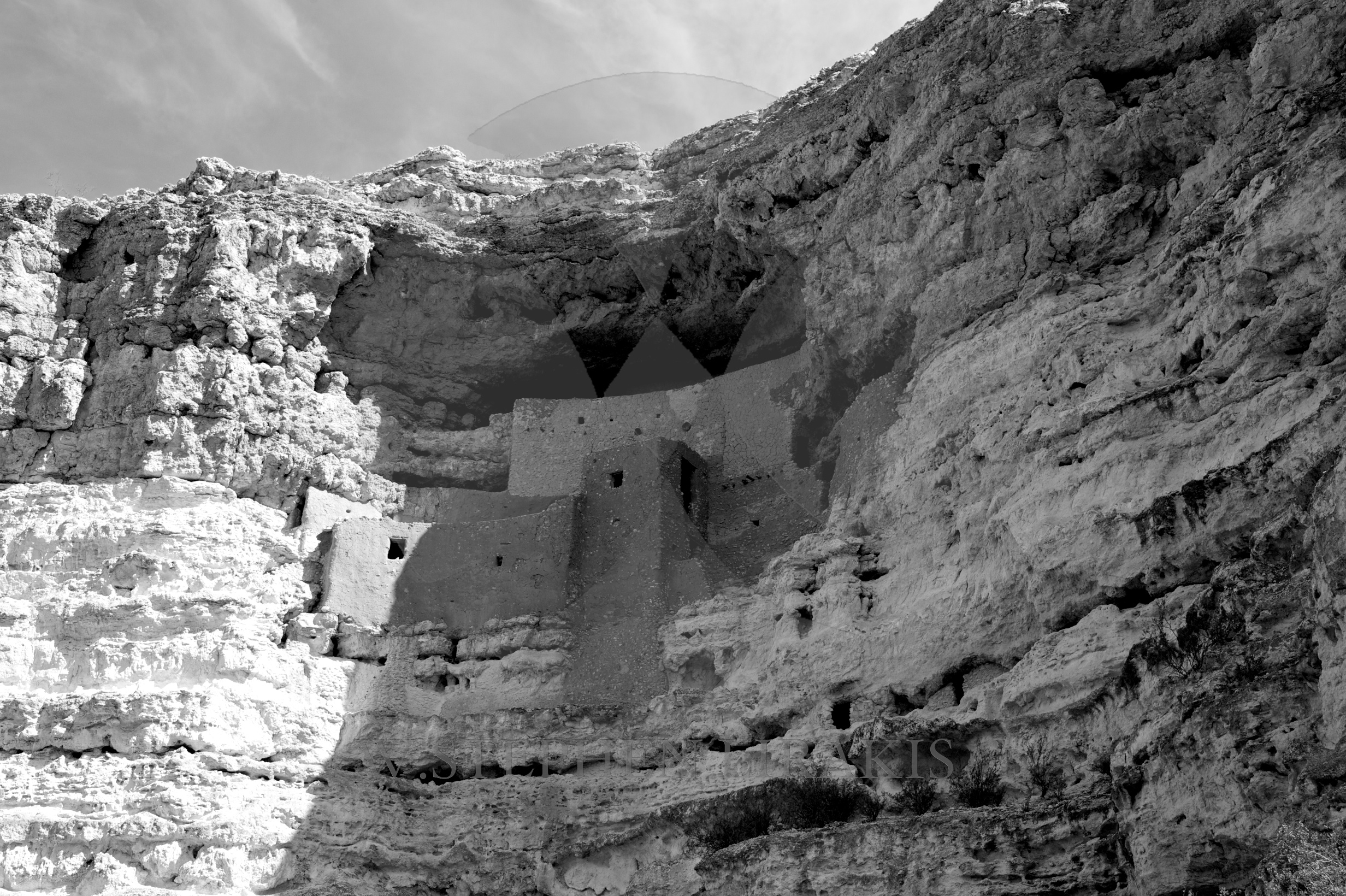
MONTAZUMA'S CASTLE
MONTAZUMA’S CASTLE
NEW MEXICO
NEW MEXICO
SAN LOUIS REY
SAN LOUIS REY
MILLION DOLLAR THEATRE
GETTY VILLA
GETTY VILLA
GRIFFITH PARK
GRIFFITH PARK
BEVERLY HILLS
BEVERLY HILLS
SAN MIGUEL
SAN MIGUEL
MORRO BAY
MORRO BAY
SONOMA
SONOMA
DANIEL AND BROTHER
DANIEL AND BROTHER
KASHA-KATUWE
KASHA-KATUWE
SHIPROCK
SHIPROCK
RED VALLEY, AZ
RED VALLEY, AZ
SWIMMING POOL
SWIMMING POOL
DRINK COKE
DRINK COKE
BLUE MOON
BLUE MOON
MILK MOUSTACHE
MILK MOUSTACHE

Labor day weekend, the unofficial end to summer, and a moment of reflection on the summer that was. For us, it began on June 25, when we left Newport to drive to Los Angeles; arriving 5500 miles later. We enriched our view of the United States, still having seen only a small part of what the country has to offer. For my part, the greatest change was the west. It’s natural beauty and sheer vastness. It truly has a different scale of time, distance and size. It is hard to pinpoint the singular moments and places that most touched us.

It also marked our 40 wedding anniversary; a milestone that we were able to enjoy in a different way; crossing the country to see our children and grandchildren.

DICK NEWICK A MAN AHEAD

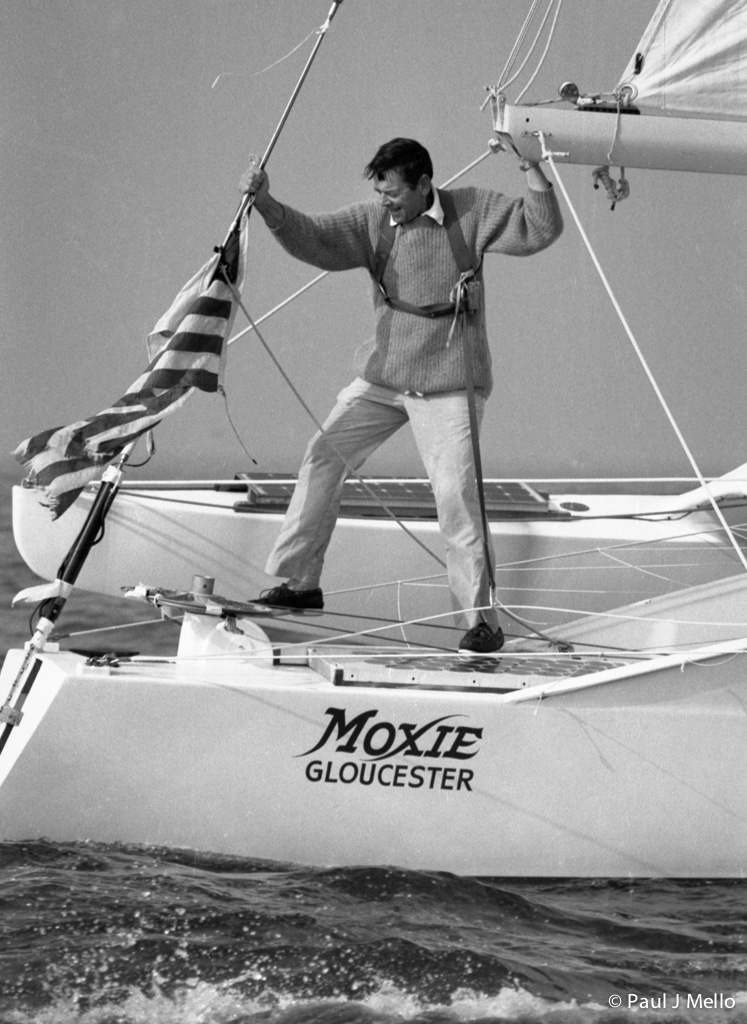
PHIL WELD AND NEWICK DESIGNED MOXIE


I first met Dick Newick at the finish of the 1980 OSTAR in which a “senior” Phil Weld won the singlehanded race from Plymouth UK to to Newport RI in Moxie his Newick designed trimaran. I will confess I thought the boats did not look very elegant. But that an older man could beat all the hotshots of the time must have been a wonderful feeling for Dick Newick.


The Following Article

Is Provided

Courtesy of Professional Boatbuilder magazine

&

Steven Callahan

Articles are presented exactly as they first appeared in Professional Boatbuilder © Professional Boatbuilder & Steven Callahan; All Rights Reserved

Permissions to reprint or otherwise reuse is required.
For permissions, please contact the author; email at: steve@stevencallahan.net
Or click on the email address on the bottom of the Home Page.

To return to Steven Callahan’s Home Page, click below:

http://www.stevencallahan.net/schome.html

To return to Steven Callahan’s ProBoat Articles Page,
which includes links to a number of articles on leading designers, click: http://www.stevencallahan.net/proboat.html

To return to Steven Callahan’s Publications Page which includes links to both articles and books, click: http://www.stevencallahan.net/publications.html

OR
You can go directly to the Articles Page,
which links to both the Professional Boatbuilder Articles Page
and other sites containing articles by Steven Callahan,
by clicking: http://www.stevencallahan.net/articles.html
Or
You can go directly to the Books Page,
which links to books by Steven Callahan and his associates,
plus descriptions and links to books recommended by Steven Callahan, by clicking: http://www.stevencallahan.net/books.html

page2image6592 page2image6752 page2image6912 page2image7072 page2image7232 page2image7392 page2image7552 page2image7712 page2image7872 page2image8032 page2image8192 page2image8352 page2image8512 page2image8672 page2image8832 page2image8992 page2image9744 page2image10328 page2image10488 page2image10648

The magazine for those working in design, construction, and repair

NUMBER 122 DECEMBER/JANUARY 2010
$5.95 U.S.

N EWICK MULTIHULLS LONG-TERM LAYUP NICHE-MARKET DIESELS WEB-ASSISTED MANUFACTURING

1 Professional BoatBuilder

122 PROFESSIONAL BOATBUILDER Newick Multihulls • Long-Term Layup • Niche-Market Diesels • Web-Assisted Manufacturing DECEMBER/JANUARY 2010

Intuitive Dynamics

The venerable Dick Newick, a pioneer in sailing multihulls, continues to deliver designs whose simplicity and grace, even at rest, are evocative of seabirds. His fast, safe, ocean-proven multihulls can truly be said to have been “ahead of their time.”

by Steve Callahan With circumnavigating sailboat races now capturing more press than the Super Bowl; with mul- tihull speedsters as plastered with multinational corporate logos as any Daytona 500 racecar; with multihull workboats proliferating like eels; and now, with 90′ (27.4m) multihulls lined up to race for the America’s Cup—it’s hard to recall just how reviled multihulls were as recently

as the 1980s.
Like most art that has reconfigured

the future, designer Richard “Dick” Newick’s creations threatened some as much as they enlightened others.

At times, his trimarans’ simplicity, structural reliability, and astounding speed seemed like grenades tossed into yacht clubs. One sailing maga- zine editorial, titled “Unsafe on Any Sea,” took all multihulls to task, and featured a photo of Newick’s Trice — despite the fact she never suffered a structural failure or other mishap until destroyed by hurricane Hugo in 1989. Indeed, many of the concepts and design features that arose from Newick’s explorations have so shaped the norm of all sailboats over time, that we now might wonder why there was such a fuss in the first place.

Above—The Newick-designed Ocean Surfer, a 40′ (12.1m) solo racer skip- pered by Mark Rudiger, placed second in class in the 1988 OSTAR single- handed transatlantic race, completing the crossing in 18 days. She was the first boat built in the U.S. with Durakore, a then-new material sandwiching end- grain balsa between mahogany skins to be sheathed with fiberglass and epoxy. The boat’s maststep slides to leeward to heel the rig—itself another Newick first.

40 Professional BoatBuilder

COURteSy DICk NewICk

page4image552 page4image984

Left—Newick’s first trimaran, Trine, was designed and built by him for his and wife Pat’s day-charter business in the Caribbean. Trine remains active in that trade, under new owners, nearly 50 years later. The cockpit accommodates six guests comfortably; there’s a berth and WC forward. Construction is plywood, with cedar strip below the waterline, all glass-sheathed. Right—Lark, a 24′ (7.3m) 1962 design, is believed to be the first tri to employ “dagger-foils”—angled daggerboards—in the amas (outriggers). The boat was bought by banker David Rockefeller for use at his St. Barth’s residence. Newick had not yet developed the signature sculptural shaping of his tris, which better integrated the amas and vaka (main hull). Note the Herreshoff and Alden sailing yachts in near background at left, in Christiansted Harbor.

From an early age, Newick discov- Holland, Germany, and Denmark,

ered the joy of crossing water in slim, lightweight craft. He embraced the simple life that required keeping a vessel light, and the close touch with the sea it provides, leading him to explore cruising frontiers long before their value became obvious.

Newick’s first boat was a kayak he built at age 10 with his father and brothers in the family’s garage in Ruth- erford, New Jersey. “I was a skinny kid who was lousy at team sports,” he recalls. His father, a skilled craftsman, rightly thought the project would also build young Dick’s self-confidence. At 11, Newick built another kayak with family. At 12 he thought, “I can do this,” so designed and built two, one for a friend. At 14, he sold his first plans to a schoolmate for five bucks.

In the early 1950s—after a hitch in the U.S. Navy, after earning a college degree, after running a boatshop in eureka, California, and then work- ing with Quakers in Mexico to help prison inmates and schoolchildren— he loaded an 18′ (5.4m) kayak on a ship and headed for postwar europe.

there, Newick cruised 600 miles through the canals of Belgium,

decades before kayaking would become a global middle-class sport.

Newick’s design philosophy is firmly rooted in that trip. He reveled in living simply, sleeping under bridges or in haylofts or a small tent or youth hostels. Sailing a third of the way, paddling a third, and riding on work- ing canal craft a third, he became increasingly conscious of how every pound of gear added drag to the kayak.

wintering over in Denmark, living in a minesweeper’s discarded wheel- house lit by kerosene lamps, Newick fed a woodstove with bits of beached, dead commercial-fishing boats and, he recalls, “learned how to build a strong boat by attacking nearby hulks with an eight-pound [3.6-kg] maul and axe.” Once things thawed, he bought sev- eral Folkboats, the most expensive of them for $2,300, and shipped the sail- boats to San Francisco for resale.

Hitching rides down europe’s coast and across the Atlantic on a variety of watercraft, Newick extended his cruise to 22 months and 10,000 miles through 11 countries. He noted the sparkling performance of Uffa Fox’s Flying Fifteen and other small, fast

Dick Newick 30 years ago, cruising the Gulf Stream at the helm of Rogue Wave (see page 46). Now in his 80s, Newick runs his design practice in Sebastopol, California.

decemBer/January 2010 41

JIM BROwN FRItz HeNLe (BOtH)

english sailboats. He admired the practical arrangements of the numerous working sailing craft he encountered throughout.

Along the way, he met surprising numbers of early long-distance cruis- ers and singlehanded sailors follow- ing the lead of tom Crichton, “whose book Sailboat Tramp had helped to start my wanderings,” Newick wrote in a series of articles for The Rudder magazine in 1956. Crichton voyaged from Sweden to Israel in a 25-footer (7.6m).

Notably, many of the sailors Newick met also sailed quite small craft. Arne Christiansen, for example, sailed a 23-footer (7m); John Goodwin’s boat in Barbados was 25′ ; and tom Follett sailed a 23-footer to the United States from the United kingdom, accom- panied by Newick for the last 1,200 miles. the size of the boat seemed to be in inverse proportion to the adventure one could capture with it. “New friendships and ideas could not be numbered, much less evaluated, in ordinary terms,” Newick wrote. And all for a couple of thousand dollars.

After joining Follett on his passage to the mainland, Newick headed back to the Caribbean for St. Croix, in the Virgin Islands, where he met and sub- sequently married Pat, whom he now refers to affectionately as “that girl I used to go with.” together they built a day-charter business over the next 17 years with a native sloop and, signifi- cantly, multihulls Newick designed and built. “I had only one design customer, and he was easy to please,” he recalls, though others soon followed.

Crossing the Atlantic in a narrow 40′ (12.1m) monohull racer with long over- hangs had the effect of literally rolling catamarans into Dick’s considerations. So he built the 40′ catamaran Ay-Ay for $8,000, which proved to be an ideal charter platform for the next 42 years,

16 of them under Newick’s ownership. Soon, though, he turned to trimarans.

Caribbean-based designer-builder Peter Spronk (see Professional Boat- Builder No. 119, page 30) worked with Newick and went on to create some of the world’s most beautiful catamarans, primarily because, as Newick observes, Spronk never tried to cram too much accommodation and other “modern inconveniences” into them. Spronk’s low wing-decks slammed a good deal, though. Newick’s trimarans seemed more complex, provided a stiffer staying platform for the rig, greater wing clearance, and better maneuverability and upwind performance. Newick started out with 24′ and 32′ (7.3m and 9.7m) daysailers, then created the 36′, 2-ton (10.9m, 1,814-kg) Trice, a boat that signaled future developments.

So-called “first generation” mod- ern multihulls, such as Piver-designed trimarans, had capitalized on rela- tively new plywood; the results, how- ever, were boxy cabins, hard angles, and flat-sided V hulls. By contrast, Newick’s strip-planked bottoms and tortured plywood yielded hullforms with more curved V-sections. Also, the rounded edges on the bottoms of his connective platforms began to suggest gull wings. In addition, Newick raised the amas (known then as “floats” or “outriggers”) until they danced lightly on the sea with the boat at rest. when sailing, the weather hull lifted well clear of the water, reducing drag. the centers of volume on the amas also moved forward, in order to counteract the real direction of sail forces, espe- cially downwind.

Subsequently, designers would strug- gle for decades to really appreciate the huge loads on a multihull—owing to

its enormous righting moment and power to carry sail. But Newick him- self didn’t hesitate to employ substan- tial beam structures that made up a large percentage of the boat’s weight.

At a time when conventional boat design was substantially oriented around stock hydrostatic formulas, Newick established himself as a wiz- ard of intuitive dynamics.

So in 1964 and 1965 he set off on Trice, with her spartan accommoda- tions, and sailed round-trips of 3,200 miles to New england. “Newick gave the impression it was all in a day’s work,” later wrote designer Robert Harris. eager for a performance yard- stick, Newick sailed Trice alongside the 1964 Newport–Bermuda Race, with a crew of four. She was beaten only by the big monohull racers in the fleet, Niña and Stormvogel.

to the small cadre of multihull affi- cionados, Dick Newick was already regarded as an innovative designer, builder, and sailor. But it took the 1968 Observer Singlehanded trans- atlantic Race, or OStAR—at the time the premier event for singlehanded sailors and their no-holds-barred boats—to telegraph Newick’s talent around the world.

In 1968, it was impossible to put the Newick-designed Cheers into context, except that she’d finished third. She looked extracted from a sci-fi novel. Curvaceous hulls and the

N

ewick’s structurally reliable

boats, unrestrained by conven- tional hull speeds, were racing and winning—routinely, locally. But, says Newick, “I was living in the boon- docks and had no real competition. I wanted to see how my boats stacked up against the big boys.”

Cheers, a radical design in its day (1968), shown dockside in Port Saint Louis in the south of France, in August 2008. The 40′ (12.1m) boat, which Newick calls an “Atlantic proa,” was raced transatlantic by skipper Tom Follett. He became the first American to finish

an OSTAR, and Cheers the first multihull ever to place. Cheers, recently rebuilt by her French owners, has been designated a “historical monument” by the multihull- conscious French government.

42 Professional BoatBuilder

RON GIVeN

COURteSy DICk NewICk

occasional rounded form on deck OStAR, and Cheers the first multihull

In 1972, Newick would offer similar innovation in a 46′ (14m) trimaran called Three Cheers, also to be raced by Follett and also commissioned by Cheers’ original owners, Jim and “tootie” Morris—the first in a series of multiple-boat clients. Freed of con- ventional forms, thanks to laminated wood veneers (and later, compos- ites), Newick created an entirely new aesthetic.

A “wing aka” spanned Three Cheers’ now-trademark Newick canoe hulls; with ends aimed upward, the vaka bow was elegantly flared to shed water. Previously, even other multihulls had largely clung to a traditional monohull for- mat, wearing angular cabin trunks spread onto flat-topped wing decks; or installed trussed or cantilevered beams bolted to amas.

By contrast, Newick’s aka smoothly bent its wings over the whole struc- ture. He had effectively eliminated angles where stresses might concen- trate, and added generous fairings to corner joints forward. In so doing, the deck and wing-bottom became widely separated webs for a large, super-stiff, yet lightweight beam spanning a third of the boat’s length, integrating and stiffening the entire boat’s structure while providing headroom and vol- ume below. though primarily stream- lined for reducing wave resistance, the wing aka also reduced wind resistance. Three Cheers’ wing aka

might beautify other boats, but on Cheers there was nary a straight line or angle in sight. two needle-thin 40′ canoe hulls, with spoon bows and rounded decks, were spanned by highly arched beams. On the weather hull, a reserve-buoyancy pod bulged from the streamlined cabintop. Amidships and to leeward, the ama’s freeboard rested just inches above the water. the boat didn’t tack; she changed ends, like Pacific proas with which islanders had explored the Pacific basin centuries before euro- peans found the nerve to sail monohulls to the Americas.

Prior to Newick, proas had been nearly forgotten, even in parts of the Pacific, and were virtually unknown to western eyes. Furthermore, his Cheers was abnormal even for a proa. what he referred to as an “Atlantic proa” kept the vaka (main hull), with accommodations, to weather, rather than to leeward as in the Pacific tra- dition, giving her even more stabil- ity per pound than a catamaran of equal beam. She had no keel or cen- terboard as such; instead, there was a pair of dagger-rudders. the crew would lower the aft rudder to steer while swinging the mainsails around on their unstayed masts.

Such a departure from all traditions usually is destined to face scores of fundamental problems. But after get- ting caught aback and knocked down to weather in trials, and then gaining her pod, Cheers went on to be sailed by the capable tom Follett across the Atlantic twice. In an upwind race in conditions so foul that half the fleet retired and two badly conceived tri- marans fell apart, Cheers finished right behind purpose-built 57′ and 50′ (17.3m and 15.2m) monohulls honed to race to weather. Avoiding the worst storms by sailing a course nearly a thousand miles longer, Follett became the first American to finish the

to place.
Newick boats would finish in

the top five in all three of the next OStAR races as well, including a win in 1980, thereby launching not only Newick’s career as a preeminent multihull raceboat designer, but also the golden age of multihulls generally.

“the Cheers project will stand as a perfect example of the sort of thing the OStAR was designed to encour- age. I don’t know which to admire most: the extreme unorthodoxy of the boat’s conception; or the strength and simplicity of her construction; or perhaps her wild good looks; or tom Follett’s impeccable seaman- ship,” wrote Blondie Hasler, famed adventurer and one of the OStAR’s originators.

“Carry substantial liability insurance with you when you take Cheers out for a sail,” wrote Follett the follow- ing winter. “this goes for anything like her at the present (experimental) stage of the design,” he added—a sentiment echoed by Newick, who attributes much of the boat’s success to Follett. though Newick and oth- ers later created other Atlantic proas, none ever achieved Cheers ’ success.

Ironically, this American boat, after decades in a museum, was bought by doctors Vincent and Nélie Besin in France, where she has been made a French national monument. And sails again.
The 46′ (14m) Three Cheers, shown leaving St. Croix for the U.K. in 1972 for the start of that year’s OSTAR, in which skipper Tom Follett placed fifth. Newick notes, “The boat was very fast. But before the appearance of electronic autopilots, self-steering was a

problem: wind vanes were no good; the apparent wind angle varies too much.”

decemBer/January 2010 43

presaged a continuing trend toward: monocoque construction, the elimina- tion of point loadings, and streamlin- ing to reduce both wave and wind drag. even today, few designers have exceeded the sublime form of Three Cheers.

Three Cheers clocked 20 knots with a dozen people on board the day of her launch, and later hit up to 27. Follett sailed her to fifth in the OStAR. then Mike McMullen bought her, and helmed her to second in the doublehanded 1974 Round Brit- ain Race, 49 minutes behind the 70′ (21.3m) cat British Oxygen and ahead of Phil weld’s new Newick-designed 60′ (18.2m) tri Gulfstreamer and the French 70′ OStAR winner Manureva (ex–Pen Duick IV), among many other multihull entries.

In 1976, Newick achieved a seem- ingly unreachable pinnacle of racing- multihull design with a humble 31-footer (9.4m): his stock Val-class trimaran. By then, the OStAR had become carnage. Boats broke. Skip- pers disappeared. yet Newick’s diminutive Third Turtle, skippered by Mike Birch, beat three cats, 14 tri- marans, and 106 monohulls, finish- ing right behind Pen Duick VI —a uranium-ballasted monohull maxi, skippered by one of the most success- ful singlehanded sailors and design innovators of all time, eric tabarly, and ahead of the 236′ (71.9m) four- masted schooner Club Med, which
was penalized for outside assistance. Newick’s Val was a conventional oceangoing trimaran in all respects, except she was designed as a day- sailer/camper, with canvas seats and cuddy cabins fore and aft just big enough to squeeze in a berth. Racers walter Greene, placing eighth with a modified Val, and Rory Nugent (46th) reinforced a Val’s capabilities. Until then, efforts to win had concentrated on facilitating the handling of ever- larger craft, leading to the absurdly oversized Club Med. From now on, designers would focus more on effi- ciency. Newick proved that small, simple boats are easier for skippers to handle and drive closer to speed

potential, more often.
Ultimately, over 30 Vals would be

built whose evolved models (includ- ing a recent Val II) would enjoy expanded cabins in wing akas.

the year 1976, however, also ended tragically. en route to that edition of the OStAR, a huge wave capsized Phil weld’s 60′ Gulfstreamer. worse, Mike McMullen’s wife was electro- cuted prior to the start while prepar- ing Three Cheers. And in the race itself, McMullen and the boat disap- peared without a trace, presumed vic- tims of a ship or iceberg collision.

Nevertheless, from those grim cir- cumstances arose another lasting and productive relationship. Phil weld—a blue-blooded publisher, writer, and adventurer—soon employed the Gou-

geon Brothers boatshop (Bay City, Michigan) to build a lighter sister to Gulfstreamer, which weld’s wife, Ann, sug- gested he name Rogue Wave. when size lim- its were imposed for OStAR 1980, weld built a Newick 50-footer named Moxie. At age 65, even though

handicapped by what he called his “geriatric rig” (an in-mast roller-furling mainsail), weld captured the first American win.

For another quarter-century, multihulls would win all offshore shorthanded events in which they were allowed to enter.

T

to facilitate construction while generating beautifully balanced hull shapes, Newick began drawing boats using a “master curve” body- section pattern. Moving a point on the curve along a reference diagonal or waterline, he would join sheer to fairbody at each station. By exploit- ing this technique, he could lay up the amas for Gulfstreamer in the main hull mold, and for a later boat, generate all hull parts by means of a half-hull mold.

years later, multihull builder- designer Jim Brown would be inspired by Newick’s master curve system to develop Brown’s Constant Camber method of cold-molded con- struction, which allows builders to stack-cut veneers, rather than spiling them individually. Subsequently, Brown would follow Newick’s lead of employing variable curves athwart- ships to create more sophisticated “Camberwood” molds that still allow builders to efficiently cold-mold hulls with fine bows, but with fuller hull shapes and transom sterns.

“keep it simple, keep it light,” Newick advises. “you have to be pretty sure what you’ve drawn is going to work, to have faith in the original concept and math, but don’t get beguiled by thinking: ‘If this fails, the whole thing is going to fall apart, so I’ll just make it 10% heavier.’ Beginners think: ‘I don’t know what I’m doing, or maybe my designer doesn’t know what he’s doing, so I should make it stronger.’ Before

o discipline the theoretical with

the workable, Newick tried to balance his time: a third of it sail- ing, a third in the shop, and a third at the drafting board. this approach led him to innovations in construc- tion that complemented those in design. His shapes were far from easy to build, but conceptually, the extra effort to build the basic package was well worth the reduction in com- plex and expensive gear and boat size that were otherwise required to achieve speed.

Dick and Pat Newick’s own cruising boat, the 51′ (15.5m) Pat’s, was launched in the late 1980s and is now in Europe under new owner- ship. Auxiliary power is
an 18-hp (13.4-kW) Volvo. Accommodations are spa- cious enough to permit a pair of double berths.

44 Professional BoatBuilder

COURteSy DICk NewICk

One of the original 36′ (10.9m) racer- cruisers built to Newick’s Echo model, shown racing in the New Zealand Coastal Classic. According to their designer, several of these boats were owner-built in that country; one, professionally built. Newick’s comment on this photo: “We like to sail to windward. In warm weather.”

you know it, the whole boat is 10% heavier—and not a success.”

with Newick boats formalized in style and consistently winning races worldwide, other designers would naturally push the envelope and explore new concepts to win. Says Newick, “Sitting with some of the world’s best designers looking at my boats, I thought I could see inside their heads: ‘How can I beat this guy’s boat?’ Lo and behold, they’d come out a year later with something a half-ton lighter with 20 square meters [215 sq ft] more sail, and more beam to carry the sail. If you start with my conserva- tive design, you might pull off that iteration once, but then somebody else will try to do it again. Neptune and Aeolus are drinking buddies up in heaven, and they look down and say, ‘Let’s teach that S.O.B. a lesson.’ the world’s oceans are scattered with lessons.”

Just as monohulls have become more specialized as pure racers or cruisers since the early 1980s, so have multihulls. ever more highly engi- neered, wider and more powerful

racers are designed and driven to the very edge. you win, or you crash and burn—a philosophy engendered by what became a fully professional, high-stakes, mostly ocean-racing game in the late 1980s.

N

since moved away from these amas because they require speed to work properly.

to keep the noses up at slower speeds, especially downwind when hit with a gust, he’s reverted to fuller amas with almond-shaped sections. early on, he also employed wing masts, and even tried a canting rig on the 1988 OStAR racer Ocean Surfer. In recent years he’s put revolving unstayed rigs on cruisers like White Wings and Damfino. Following hull- design trends from the up-and-coming Nigel Irens, Adrian thompson, et al., Newick expanded his boats’ overall beams and ama volumes for his newer racer/cruisers like Echo II and Traveler (his personal favorite, not to be confused with Traveller, the first of that model). Ama decks also became routinely rounded to facilitate reemergence when nosing through a wave. though the first Traveller ’s amas are notably flat in profile, Newick typically chooses more rocker and easier sections than are found in today’s Open-class multihull racers, to provide a softer ride in waves and more rounded performance.

ewick never stopped innovat-

ing and adapting—within lim- its. In the early 1980s, in his amas near the forward beam, he employed asymmetrical daggerboards (dagger- foils), canted to provide dynamic lift and more stability with the boat at speed, a feature that eventually became the norm in racing trima- rans. He later introduced “new moon” amas, with convex outboard sides to produce similar dynamic lift, but has

The 51′ (15.5m) Traveller is a Corecell/ E-glass/epoxy wing-mast sloop built in Brisbane, Australia, in 2003, and cur- rently based in Auckland, New Zealand. The owner, an experienced transatlantic sailor, cruises Polynesia shorthanded; 300+ mile days are common. A sister- ship won the doublehanded Round Britain & Ireland Race, in 2006.

decemBer/January 2010 45

COURteSy ANDRew BARtHOLOMew

teRRy FONG

The 60′ (18.2m) Rogue Wave, designed for ocean racer Phil Weld and built by Gougeon Brothers in 1978. Weld was the first American to win the OSTAR (in a smaller Newick tri). Eric Tabarly, the famed French racer, declared Rogue Wave to be the boat he’d like for himself when he “retired.”

page9image4880

As must be evident by now, Newick has never been one to follow any pack closely. “I admire the savvy that goes into the newest racing machines, but it’s just not my way of doing things. I’m no longer involved with OStAR, or its recent iterations, because I’m not interested in racing against somebody who’s able to buy first place with an unlimited bud- get. From 1960 into the 1980s, OStAR

was about the only race that allowed all kinds of boats to race together. we could quickly estab- lish what works and what doesn’t. that was a great challenge. I really enjoyed it,” he says. But that was then.

while he respects the engineering prowess and design skills of Irens, Morelli & Melvin, and others, Newick rarely cites other multihull designers as major influences. Instead, he peri- odically rereads The Common Sense of Yacht Design by L. Francis Herreshoff and applauds designer Dave Gerr’s The Nature of Boats, which provided him with essential aid designing

monohulls. He most admires the design work of william Garden, Olin Stephens, Robert Harris, C. Raymond Hunt, and others with distinctive styles and affable characters. He says, “If I had to go to sea and stay out awhile, my favorite boat is Agantyr,” a hefty cruising monohull from MacLear & Harris’s diverse portfolio. “Speed is one thing we can live with- out when we go to sea. you can’t live without accommodation. you can’t live without safety. you don’t need to go 30 knots,” he confesses, adding, “but it’s fun to try.”

every man has his limits, how- ever. even as the racing world has turned toward new kids on the block, Newick’s clients still want to sail fast, but on reliable structures aboard which one can live reasonably well at sea. “the boats I have evolved fall between hot racers and comfy cruis- ers,” he says. “I’m pushing 30 knots with my racers”; a Newick cruiser, on the other hand, “may be a 20-knot design, or even a 15-knot design. Below 15, I get antsy…. On Rogue Wave, if we weren’t doing 15, I was bored.

“I can give you 20 knots and a snug place to eat and sleep, but I can’t give you luxury and performance and low cost at the same time; nobody can” is a realistic axiom he relates to clients.

Rogue Wave’s study plans: the fore-and-aft views strongly suggest Newick’s characteristic seabird-like shapes. 46 Professional BoatBuilder

DICk NewICk

COURteSy DICk NewICk

that is, you can have a fast, inexpensive boat with limited accommodation; a roomy, fast boat that is expensive; or an inexpensive, roomy boat that is comparatively slow.

“Forty years ago when I was start- ing out with multihulls, we finished an hour or two ahead of big, fancy, well-sailed monohulls in ocean races,” he recalls. Right now, the more com- petitive “60′ [18.2m], twin-rudder, canting-keel, daggerboard monohulls are fine if you want to go fast, but they’re impossible to live aboard.” In contrast, Naga, a stock 38′ (11.5m) Native-model design of Newick’s has not only raced competitively trans- oceanic and throughout the Caribbean, she has also served as a liveaboard

for her owner, Jack Petith, for decades. At this writing, Naga is halfway through a world cruise.

tremolino—a small camp-cruiser that at first utilized Hobie Cat 16 (4.8m) hulls for amas—the Sum- mersault 26 (7.9m), and the Val are models that have all been in limited production, but Newick has not enjoyed the financial success of designers whose work is widely mass- produced. Still, he says, “I do what interests me. Pearson and others have already turned out 300 models of Clorox-bottle sloops. I’m not going to do that. I’d much rather find a small vacuum to fill. I never give a pro- spective client a hard sell, but always question: ‘Do you really want this? I’m

not sure you do.’ I lose design work that way, but I accept that.

“Pat has been telling me for years to stop telling people what they want and give them what they want, or what they think they want. My response is: If they have enough faith in me to hire me, they should lis- ten to me rather than tell me how to do my job, which is to make them happy and safe on the water. If I don’t do that, I’ve failed. My favorite client comes with, say, a one-page list of the attributes he wants in a boat. He may tell me the number of berths, but doesn’t tell me color or go into great detail. then I feel I have a free hand to give him my best work. Ifhetellsmeithastolooklikea

Newick on Vals I & III

Three of the original Val 31′ (9.4m) trimarans that I’d designed were raced in the 1976 OStAR. Mike Birch finished sec- ond in his, behind eric tabarly sail- ing a 73′ (22.2m) monohull. walter Greene placed eighth in his modified Val, and Rory Nugent was 46th (he had equipment problems). Birch’s boat was subsequently sold to Bill

Homewood, who did two more OStARs in her, beating Birch’s 1976 time.

By the year 2000, when the Val III was introduced, it became rare for an unsponsored boat to place well in this type of transoceanic race. (Phil weld’s 50’/ 15.2m Newick- designed trimaran, Moxie, won the 1980 OStAR, the last “amateur” winner.)

Nevertheless, Val III can provide good racing for people without sponsorship or riches of their own.

Construction: strip-planked cedar, or Corecell, glassed both sides. Hull halves joined on the centerline after fabrication over

Continues on page 49

Plans defining the hullforms of a Val III model, at 30′ (9.1m) overall. Newick’s mid-career-and-later vakas and amas appear deceptively simple: their shapes are in fact quite sophisticated. Space here does not permit the full measure of calculations that accompany the lines shown above, in which the designer enumerates separately for the Val III vaka and ama, their displacements (in both fresh and salt water), coefficients (prismatic, block, etc.), ratios (D/L, L/B, etc.), centers (VCG, LCG, etc.), areas (waterplane, lateral plane, etc.), and precise dimensions (including freeboard, and fairbody draft). Newick says of his tris: “High performance is an over-used and often purposely vague advertising term. As used by me, it means the ability to sail safely and comfortably, faster than winds up to about 14 knots, and to achieve over 20 knots in ideal conditions with

a minimum of effort.”

decemBer/January 2010 47

DICk NewICk

certain william Hand motorsailer, I tell him: ‘I’m not your guy.’ Phil weld was the right mix. He was a great guy, the life of the party. He made things happen, and he could afford whatever he wanted—but he didn’t want much.”

Vincent and Nellie Besin are Dick’s most recent dedicated patrons, own- ing Cheers and a Newick trimaran, as well as commissioning Newick to update Cheers by way of a new 56′ (17m) proa with which to sail around the world. “It’s so big it scares me,” Newick admits. Although he is actu- ally keen on the project, sorting out the proa’s technical problems—such as creating reversible rudders so the forward one can be deployed as an efficient foil—with simple solutions remains a daunting assisgnment.

Newick’s aspirations were never really limited to such arcane interests as proas, or even ultimate speed. Pat’s involvement with nutrition and organic foods, decades before it became popular, buttresses Newick’s wider practical concerns about the

planet’s bigger social issues. Dur- ing the first energy crisis in the early 1970s, Dick Newick and Jim Brown, coupled with Phil weld’s bankroll and enthusiasm, focused on working sail, particularly for third world countries. they built SIB (for Small Is Beautiful, after e.F. Schumacher’s seminal book), a working trimaran featuring unstayed masts, Constant Camber hull, and lashed beams. A subsequent design of similar concept sailed to Guyana. Unfortunately, third world politics killed the project, but Brown would go on doing development work in what he more accurately calls the “two- thirds world”; as for Newick, he never forgot the wider needs that boats and creative design might address. “If you have so much money to throw at a problem—like current leading multi- hull racers seem to—and it keeps you out of the bar, then I guess that’s all right. But it’s much better to spend that money developing a cure for cancer or mass-produced electric automobiles,” he says, referring to a design of his own he submitted to Ford. “we desperately need a 35-mph,

two-person car for $5,000.”
As for what people want in boats

coming out of the current recession, he says, “they’ll be cheap and because of that, they’ll be simple.” He designed a slim monohull powerboat for the original owner of Traveler, and now has a model for a powercat runabout, which he estimates will weigh 600 lbs (272 kg) and do 15 knots with four people on board, driven by just a 20-hp (15-kw) outboard. [See “Design Challenge,” page 24 in this issue —Ed.]

Newick’s boats of all types will inevitably remain platforms with which sailors can approach becoming sea creatures in flight, as integrated as nature and machine can get.

Looking back, Newick says, “there’s not much I regret doing. what I regret is not doing some things, not following through. that’s one of my biggest mistakes: I’ve tried something and moved on before per- fecting what was viable because there hasn’t been anyone else’s R&D bud- get to allow it.” Otherwise, “I’m cer- tainly happy to have had the boatshops in eureka, St. Croix, and

48 Professional BoatBuilder

Continues from page 47
temporary frames spaced 24″ /61cm

apart (full-sized patterns are supplied with the plans). Akas and wing mast are similarly built, but with the addi- tion of carbon fiber. to save weight and money, the rudder does not swing up if struck, as in most of my designs; rather, the board has the usual Newick “crash box” to minim- ize damage from grounding or col- lision with a whale. the board will usually be carried deep enough to protect the rudder.

Accommodations: a sheltered steering station, a dry place to sleep with sitting headroom, a single- burner stove, and two buckets.

Electronics: autopilot, GPS, hand- held VHF radio, log, speedometer,

and depthsounder, plus whatever is required by the race rules.

No motor will be carried for rac- ing; a 5-hp (3.7-kw) four-stroke out- board would serve well when not racing. Plans do not include elec- trical or cabin-ventilation details, which will depend on the skipper’s needs. two or more large photo- voltaic panels with either a small wind generator or towed propeller will supply the autopilot and running lights. there is no room for a cap- size escape-hatch; however, sealed compartments would float her high enough to leave a large air bubble in the main hull that would permit a wet exit through the cockpit. No thought has been given to complying

with national or european Union regulations. Buyers should assure themselves that, as racers, they will be able to live with their own bureaucracies.

there are only three sails, all eas- ily handled. the original Vals do 20 knots occasionally. the latest ver- sion will do more than that, and do it more often. After the race, a Val III can daysail several people and cruise one or two spartan types.

Finally, Val III is for sailors who would rather actually race a 30-footer (9.1m) than dream about racing a 60-footer (18.2m). Plans cost $2,000. they are in english units, easily converted to their metric equivalents with an inexpensive calculator.

—Dick Newick

Martha’s Vineyard, where I learned a lot. I’m delighted to have spent two years bumming around europe in lit- tle boats. It was invaluable, especially sailing down the coast with the old

Dane [Asker kure]. And then, 17 years in St. Croix building up the charter business and designing my own boats, and starting to design a few for others—that was a great opportunity.

I think it would be harder for a young guy starting out to do those things now.”

Despite Newick’s near-mythic status, it was with some surprise that any

decemBer/January 2010 49

multihull designer might be in the running for the North American Boat Designers Hall of Fame, jointly spon- sored by westlawn Institute of Marine technology, the Landing School, Mystic Seaport Museum, and the American Boat & yacht Council— especially in only its fourth round. In 2008, Newick joined a very select list of designers: Nathanael G. and L. Francis Herreshoff, Philip Rhodes, John Alden, Olin Stephens,

C. Raymond Hunt, and Jack Hargrave. each judge listed 10 names in order of preference. Dave Gerr, westlawn’s director, then put the lists on a spreadsheet, multiplying points for position on each list. Newick had been on many panelists’ lists since the first selection for 2005, but in 2008, out of 35 nominees, “he ended up toward the top on quite a few lists as well as appearing on quite a few of the other panelists’ lists,” says Gerr,

adding that Newick’s boats “are very distinctive…instantly recognizable as Newick designs. I think the panelists liked the almost austere simplicity of his design approach, which anyone who is a serious designer really appreciates. Dick’s boats are pure and elegant. they work. they are unique. And they are incredibly successful and influential. All these multihulls racing around the world would not exist without the work Dick did.” [For more on this new hall of fame, see PBB No. 113, page 18.]

It seems especially fitting that N.G. Herreshoff and Newick should book- end the 20th century. N.G. Herreshoff accompanied the birth of the techno- logical age with his brilliant catama- ran Amaryllis challenging the yachting establishment; Newick has escorted the multihull into the 21st century, the once radical now embraced.

Newick does not claim this role alone, but acknowledges the sponta- neous evolution of ideas: when many elements of technology and culture are ready, and the ideas are right, then someone will discover them. He notes that elisha Gray and Alexander Gra- ham Bell both applied for patents for telephonic devices on the same day, just as Alfred wallace and Charles Dar- win simultaneously developed theo- ries of natural selection. Perhaps the multihull revolution/evolution would have inevitably happened with- out Piver, Choy, Newick, Crowther, kelsall, Brown, and many others on whose shoulders they stood; but as it happened, they dared to carry and reinvigorate the torch.

Newick, a believer in reincarna- tion, says, “People ask me, ‘where do I get these ideas?’ I can only say, I must have been a Polynesian canoe-builder.”

Perhaps, someday, between the planets there will sail upon the solar winds a daring spacecraft designed by a guy who must have once been… Dick Newick. PBB

About the Author: Steve Callahan has designed and built several boats, authored two books, and written widely in the marine press on modern sailing design, designers, and technologies—including a series of designer profiles for this magazine, reflecting Steve’s special interest in multihulls, a genre in which he’s an accomplished sailor.