SEPTEMBER 7 BERMUDA RACE PREPARATION

SEPTEMBER 7 HAS A LOT HAPPENING. THE OPENING RACES OF THE AMERICA’S CUP AND A BERMUDA RACE PREPARATION SEMINAR.

NEWPORT BERMUDA RACE PREPARATION SEMINAR

Brewer Pilots Point Marina, Westbrook, CT September 7, 2013

Registration – Coffee and pastries provided

It’s Not as Complicated as it Seems! – Rives Potts and Michael Keyworth

Planning for a Successful Bermuda Race: Entering and qualifying for the race, optimizing the boat, selecting crew, provisioning, sailing fast, having fun, what to expect on arrival, where to stay and keep the boat, getting back to the mainland afterward.

Entering the Race and Navigating the Paperwork – Bjorn Johnson

The entry process and where to turn if you run into problems. The race’s updated website and online entry offers a more intuitive and less stressful means of data submission and tracking your progress through the entry system.

Preparing for Inspection – Michael Keyworth

Inspection doesn’t have to be intimidating and time-consuming. Michael will walk through a typical inspection and point out tips for making it quick and painless.

Race Strategy: Navigation, the Gulf Stream and Weather – Bill Biewenga

Strategy on the 635-mile course: weather scenarios, tactics for using the Gulf Stream, navigating the 300+ miles south of the Stream, and electronic packages for various budgets.

Lunch and Boat Visits – Rives Potts and other skippers

Come on board Carina and other race-ready boats and query their captains and crews. A box lunch will be provided.

Optimizing Your Boat – Rives Potts, Butch Ulmer, Jack Orr, and Jim Teeters

How to make your boat fast and competitive while complying with race requirements (and not breaking the bank). Plus, rating optimization and sail selection.

When the Going Gets Tough – Kit Will and Michael Keyworth

Heavy-weather tactics and skills as well as spares and tools to have aboard – and how to use them in a pinch. Included in the talk will be several practical demonstrations, including cutting standing rigging, using an emergency tiller and controlling flooding.

A Safe Return Trip – Anne and Larry Glenn

The sail home can be as trying as the race down. Many serious safety related incidents occur on the return passage. Anne and Larry will review recent incidents and resources available to owners to help ensure the boat and crew arrive home safely.

Wrap Up

Q&A over Gosling’s new canned and complete Dark & Stormies. Speakers, members of the Bermuda Race Organizing Committee, Race Inspectors, and Brewer staff will be available.

Brewer is the Official Race Preparation Resource for the 2014 Newport Bermuda Race

www.byy.com

OUR SPEAKERS

NEWPORT BERMUDA RACE PREPARATION SEMINAR

Brewer Pilots Point Marina, Westbrook, CT September 7, 2013

Rives Potts – Owner-skipper of the two-time Saint David’s Lighthouse Division winner Carina and President and COO of Brewer Yacht Yard Group. Rives has sailed in 5 America’s Cup campaigns, 15 SORC’s, and multiple transatlantic and transpacific races. Rives is currently serving as Vice Commodore of the New York Yacht Club. (23 Bermuda Races)

Michael Keyworth – Long time Bermuda Race Inspector and General Manager of Brewer Cove Haven Marina (Barrington, RI). Michael has extensive ocean racing experience, including setting a course record in the 1985 Fastnet Race aboard the maxi Nirvana, participation in the SORC, Skagerrak (Norway), Marblehead-Halifax, Miami-Jamaica, and New England Solo-Twin races. (13 Bermuda Races)

Bjorn Johnson – Former Newport Bermuda Race Chief Inspector and Race Chairman, Bjorn has close to 80,000 nm sailing experience, much of it short- and single-handed. He has competed in Newport Bermuda Races, Bermuda One- Two’s, and Marion Bermuda Races. Bjorn is currently serving as the Executive Director of the Offshore Racing Association. (21 Bermuda Races)

Bill Biewenga – Offshore sailor with over 400,000 miles, Bill has raced and delivered boats in every ocean of the world. With 39 trans-Atlantic crossings and more than 60 passages to and from the Caribbean, Bill has been listed multiple times in the Guinness Book of Records for a variety of speed records. As the former owner of a highly regarded weather routing company, he has helped to guide sailors around the world, has published over 400 magazine articles, and written “Weather for Sailors,” a guide to understanding and using weather in sailing. (Number of Bermuda Race Sailed – “I’ve lost track”)

Jack Orr – Jack has been a Sailmaker at North Sails since 1988. During that time, he has been involved in the evolution of sail manufacturing from rolling out cloth on the floor and cutting it by hand, to the latest high tech processes. Jack is an experienced offshore sailor, having sailed in three Bermuda races, two Fastnet races, and a Transatlantic race. (3 Bermuda Races)

Brewer is the Official Race Preparation Resource for the 2014 Newport Bermuda Race

www.byy.com

page2image24040

OUR SPEAKERS (cont’d)

NEWPORT BERMUDA RACE PREPARATION SEMINAR

Brewer Pilots Point Marina, Westbrook, CT September 7, 2013

Butch Ulmer – President, UK Sailmakers NY. Butch is a highly accomplished ocean sailor and racer. His accomplishments include 17 Bermuda Races, 8 Annapolis to Newport Races, 18 SORC’s, and 7 Marblehead to Halifax Races. Butch is a member of the Intercollegiate Sailing Hall of Fame and has won National Championships in the International Tempest and Mobjack classes.

(17 Bermuda Races)

Jim Teeters – Associate Offshore Director at US Sailing, Developer of the Offshore Racing Rule (ORR), and Member of the Technical Committee of the Bermuda Race Organizing Committee. Jim has worked for five separate America’s Cup campaigns as well as for Langan Design Partners and Sparkman and Stephens.

Kit Will – Kit has sailed numerous ocean races, including Bermuda Races, Transpacs, the Middle Sea Race, and the Sydney-Hobart Race. As part of Roy Disney’s Morning Light Project, Kit sailed with some of the world’s top offshore sailors including Mike Sanderson and Stan Honey. Kit has over 35, 000 blue water miles including a 3 month delivery from Sydney to the USVI in 2012.

(4 Bermuda Races)

Anne and Larry Glenn – Anne Glenn is the Chair of the Cruising Club of America Safety at Sea Committee. She and her husband Larry grew up sailing and racing on Western Long Island Sound and have raced various one design classes together during their 50 years of marriage. Currently, they co-own their J- 44 Runaway, which they have cruised and raced extensively with their family. Larry has crossed the Gulf Stream 24 times and Anne 15. (Combined, 22 Bermuda Races and 17 return passages).

page3image18680

Liferaft and Survival Equipment, Inc. will be on hand throughout the day to consult with on safety gear potentially suitable for the race. In addition, LRSE will collect any of your safety gear needing service for transportation back to their shop in Tiverton, RI. All gear will be serviced and returned this fall so it is ready for the 2014 race.

PLEASE NOTE: The Brewer Race Preparation Seminar is not intended as a substitute for the U.S. Sailing sanctioned Safety at Sea events. No credit will be given to attendees of this seminar toward the Safety at Sea requirements.

Brewer is the Official Race Preparation Resource for the 2014 Newport Bermuda Race

PROTECTING THE REPUTATION OF THE AMERICA’S CUP

JURY CASE AC33 JURY NOTICE JN113

Protocol Article 60 and Oracle Team USA

Protecting the Reputation of the America’s Cup FURTHER DIRECTIONS

DIRECTIONS AS TO HEARING (JURY NOTICE JN102)

1. 2.

3.

On 19th August 2013 the Jury issued Jury Notice JN102.

Jury Notice JN102 stated that on 4th August 2013 the Jury received a report from Richard Slater of Oracle Team USA (OTUSA). Jury Case AC30 followed.

Jury Notice JN102 also stated that the Jury has made an enquiry and two members of the Jury carried out an investigation over the period 13th – 16th August 2013 interviewing 16 members of OTUSA and five employees of America’s Cup Race Management.

HEARING

  1. Jury Notice JN102 stated that the Jury has decided to conduct a hearing to determine if the Competitor, OTUSA has breached Article 60.1 of the Protocol. The hearing was scheduled for 26th August 2013.
  2. On 20th August 2013 the Jury issued Jury Notice JN107 advising that the date of hearing has changed to 29th August 2013.

FURTHER REPORT FROM THE MEASUREMENT COMMITTEE (JURY NOTICE JN112)

6. On 24th August 2013 the Jury issued Jury Notice JN112 attaching a further report from the Measurement Committee. The report referred to the different length of king posts and the depth of engagement of the spigot of the upper main king post fittings on OTUSA AC45 Yachts, boats 4 and 5. The conduct or activity referred to in such report, including racing with such modified equipment will now be a

28th August 2013

part of and included in the hearing to determine if the Competitor OTUSA has breached Article 60.1 of the Protocol.

7. Jury Notice JN112 also included directions that ACEA was required to provide a written submission by 12h00 PDT on 28th August 2013 as to what they consider is the effect of the conduct or activity referred to with reference to Protocol Article 60.1 on ‘the best interests of the America’s Cup, or the sport of sailing’. ACEA filed a submission on 28th August 2013.

INFORMAL DIRECTIONS HEARING

8. An informal directions hearing took place on 28th August 2013 concerning the timing and procedural aspects of the hearing which OTUSA wished to discuss. OTUSA’s Counsel Phil Bowman and Thomas F. Ehman Jr were present.

NEW HEARING DATE

9. To enable the Jury to provide a written Decision following the hearing under Racing Rules of Sailing America’s Cup Edition (RRSAC) Rule 69 in Jury Case AC31, which Decision OTUSA wish to consider before proceeding with the hearing of this Case, the date of hearing is changed to 30th August 2013 commencing at 11h00 at the ACEA Meeting room, Pier 23. It is anticipated the hearing will be completed that day.

COURT REPORTER TRANSCRIPT AND JURY CASE AC31 DECISION

10. The court reporter uncertified rough draft transcript of all of the proceedings to date in Jury Case AC31 and the Decision in AC31 will be made available on a confidential basis to OTUSA, ACEA, ACRM and ETNZ. The parties to Case AC31 have agreed that such transcript be included in this Case and OTUSA have agreed it form a part of the evidence and record in this Case.

ORDERS

CASE AC31 Hearing Transcript

11.1 The court reporter uncertified rough draft transcript of the proceedings in Jury Case AC31 is ordered to remain confidential until further order.

Appearance of Witnesses
11.2 The following witnesses are ordered to be available to give evidence:

Nick Nicholson (Chairman Measurement Committee) Russell Coutts (OTUSA CEO)
Grant Simmer (OTUSA General Manger)
Jimmy Spithill (OTUSA Skipper)

Mark Turner (OTUSA Shore Team Manager) Richard Slater (OTUSA Rules Advisor) Andrew Henderson (Rig Team Manager)

Parties and the Jury are entitled to call other witnesses at the hearing.

David Tillett
JURY: David Tillett (Chairman), John Doerr, Josje Hofland, Graham McKenzie, Bryan Willis.

FIRST ENCOUNTER

KISS ON THE NOSE
KISS ON THE NOSE
40TH WEDDING DINNER WITH FAMILY
SWINGING
SWINGING
ARRIVING IN SANTA ROSA
TELLING STORIES
TELLING STORIES
FELIX AND SAMSON FIRST ENCOUNTER
LUC AND FELIX
LUC AND FELIX

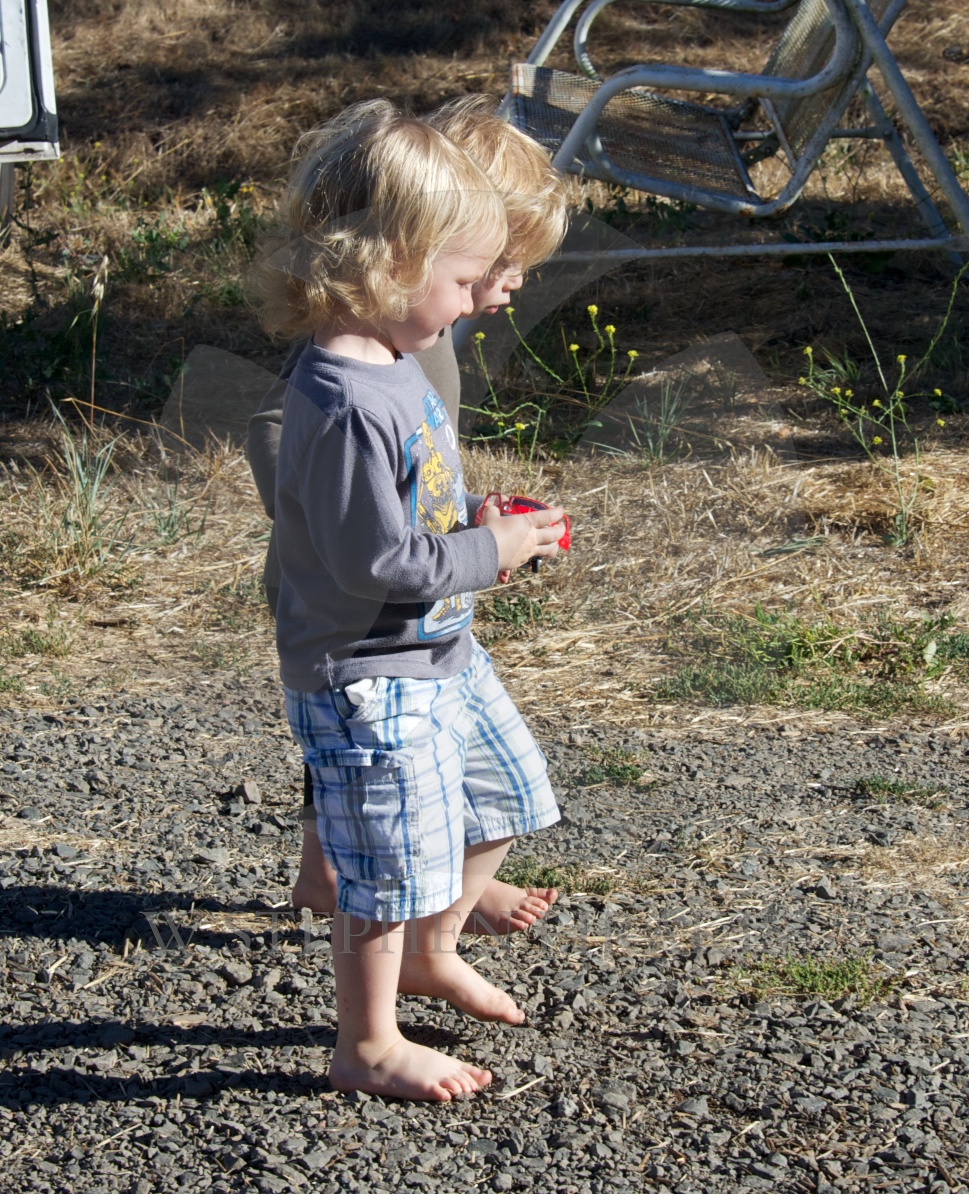
It is the first time Luc and Felix, 2 1/2 and 2 respectively have met since before they could walk. A re-union oragnized for our 40th wedding anniversary. Within minutes they were fast friends.

Our adventure this summer began on June 25th in Newport, 15 days driving across the country arriving in Los Angeles a month later driving to Sonoma.

The dinner last night in Sebastopol was the gift was hoped for.

On September 7 the America’s Cup action will resume.

JOHN LONGLEY “CHINCK” ON AC 72’S

America’s Cup: What you may not know about the AC72

By John Longley, 1983 America’s Cup winner
After spending a week in San Francisco and having the opportunity to talk to a number of people who have actually sailed the extraordinary AC72s, I have gathered a bit of AC72 trivia to share…

* If you had an engine to power the hydraulics rather than grinders, you could sail the AC72s with 4 people rather than the crew of 11 they now sail with.

* There is really only one trimmer on board and he controls the wing. The helmsman controls the cant and rake of the board with buttons on a control pad in front of him but only has 3 seconds of stored power before he has to “throw bananas” into the grinding pit i.e. ask for more hydraulic power.

* They have seen 47 knots as the top speed so far but expect to see the 50 knot barrier broken in the Cup match.

* The boats go directly downwind 1.8 times faster than the wind. So if you let a balloon go as you went around the top mark you would easily beat it to the bottom mark.

* There is only 4 degrees difference to the apparent wind from going on the wind to running as deep as you can.

* If you lost the hydraulics while the boats were foiling they would be completely uncontrollable and would most likely capsize.

* It is faster to find the strongest adverse current going downwind because the stronger apparent that is then generated translates into more speed than if you were sailing in slack water. (Warning – this takes a bit to get your head around)

* When sailing downwind you look for the puffs in front of you not behind you.

* It is actually quite dry on the boats, unless you make a mistake and come off the foils, as you are flying a couple of metres above the water. Waves have almost no impact on the boat when foiling.

* In strong wind you carry negative camber at the top of the wing to “reef” or de-power the wing.

* All crew carry personal tackle so they can effectively rappel down the netting if the boat capsizes.

* Gennakers are only used below about 8 knots; the jibs only provide about 3% of the lift up wind.

* The foil on the rudder generates about 800 kg of lift with the rest coming from the center board foil to lift the 7 ton yachts clear of the water.

* The centre board foil’s tip comes out of the water so it effectively works like a governor on an engine i.e. as the board generates too much vertical lift it comes out of the water, the area is thus reduced so it goes back down etc until it finds equilibrium.

ENERGY STORAGE IS STILL KEY

MIT researchers have engineered a new rechargeable flow battery that doesn’t rely on expensive membranes to generate and store electricity. The device, they say, may one day enable cheaper, large-scale energy storage.

The palm-sized prototype generates three times as much power per square centimeter as other membraneless systems — a power density that is an order of magnitude higher than that of many lithium-ion batteries and other commercial and experimental energy-storage systems.

The device stores and releases energy in a device that relies on a phenomenon called laminar flow: Two liquids are pumped through a channel, undergoing electrochemical reactions between two electrodes to store or release energy. Under the right conditions, the solutions stream through in parallel, with very little mixing. The flow naturally separates the liquids, without requiring a costly membrane.

The reactants in the battery consist of a liquid bromine solution and hydrogen fuel. The group chose to work with bromine because the chemical is relatively inexpensive and available in large quantities, with more than 243,000 tons produced each year in the United States.

In addition to bromine’s low cost and abundance, the chemical reaction between hydrogen and bromine holds great potential for energy storage. But fuel-cell designs based on hydrogen and bromine have largely had mixed results: Hydrobromic acid tends to eat away at a battery’s membrane, effectively slowing the energy-storing reaction and reducing the battery’s lifetime.

To circumvent these issues, the team landed on a simple solution: Take out the membrane.

“This technology has as much promise as anything else being explored for storage, if not more,” says Cullen Buie, an assistant professor of mechanical engineering at MIT. “Contrary to previous opinions that membraneless systems are purely academic, this system could potentially have a large practical impact.”

Buie, along with Martin Bazant, a professor of chemical engineering, and William Braff, a graduate student in mechanical engineering, have published their results this week inNature Communications.

“Here, we have a system where performance is just as good as previous systems, and now we don’t have to worry about issues of the membrane,” Bazant says. “This is something that can be a quantum leap in energy-storage technology.”

Possible boost for solar and wind energy 

Low-cost energy storage has the potential to foster widespread use of renewable energy, such as solar and wind power. To date, such energy sources have been unreliable: Winds can be capricious, and cloudless days are never guaranteed. With cheap energy-storage technologies, renewable energy might be stored and then distributed via the electric grid at times of peak power demand.

“Energy storage is the key enabling technology for renewables,” Buie says. “Until you can make [energy storage] reliable and affordable, it doesn’t matter how cheap and efficient you can make wind and solar, because our grid can’t handle the intermittency of those renewable technologies.”

By designing a flow battery without a membrane, Buie says the group was able to remove two large barriers to energy storage: cost and performance. Membranes are often the most costly component of a battery, and the most unreliable, as they can corrode with repeated exposure to certain reactants.

Braff built a prototype of a flow battery with a small channel between two electrodes. Through the channel, the group pumped liquid bromine over a graphite cathode and hydrobromic acid under a porous anode. At the same time, the researchers flowed hydrogen gas across the anode. The resulting reactions between hydrogen and bromine produced energy in the form of free electrons that can be discharged or released.

The researchers were also able to reverse the chemical reaction within the channel to capture electrons and store energy — a first for any membraneless design.

In experiments, Braff and his colleagues operated the flow battery at room temperature over a range of flow rates and reactant concentrations. They found that the battery produced a maximum power density of 0.795 watts of stored energy per square centimeter.

More storage, less cost

In addition to conducting experiments, the researchers drew up a mathematical model to describe the chemical reactions in a hydrogen-bromine system. Their predictions from the model agreed with their experimental results — an outcome that Bazant sees as promising for the design of future iterations.

“We have a design tool now that gives us confidence that as we try to scale up this system, we can make rational decisions about what the optimal system dimensions should be,” Bazant says. “We believe we can break records of power density with more engineering guided by the model.”

Yury Gogotsi, a professor of materials science and engineering at Drexel University, says eliminating the membrane is the next step toward scalable, inexpensive energy storage. The group’s design, he says, will help engineers better understand the physics of membraneless systems.

“You cannot have an inexpensive energy-storage system by piling up tens of thousands of individual small cells, like cellphone or computer batteries,” says Gogotsi, who did not contribute to the research. “As any new technology, the laminar flow battery will need time to prove its viability. It’s like a newborn baby — we’ll only know what the technology is good for after a few years.”

According to preliminary projections, Braff and his colleagues estimate that the membraneless flow battery may produce energy costing as little as $100 per kilowatt-hour — a goal that the U.S. Department of Energy has estimated would be economically attractive to utility companies.

“You can do so much to make the grid more efficient if you can get to a cost point like that,” Braff says. “Most systems are easily an order of magnitude higher, and no one’s ever built anything at that price.”

Energy storage has always been the key for any advancement in what we refer to as alternative energy. For autos,computers, cell phones, boats, camping, research,space exploration, homes, buses. Without it we cannot move forward.

WILDFIRE IN YOSEMITE


Yosemite wildfire threatening San Francisco’s water and power supply, as well as giant sequoias

FoxNews.com
  • yosemite_wildfire_082513.jpg

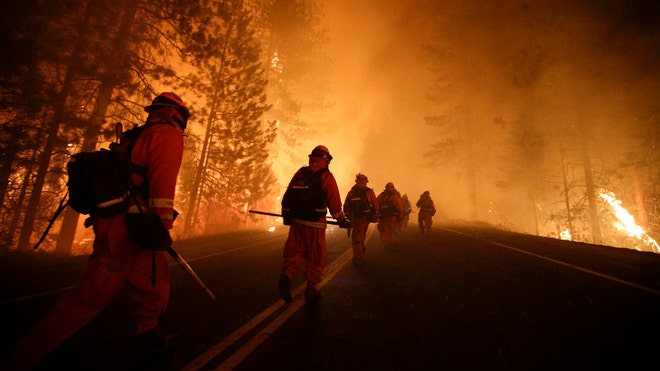
    Aug. 25, 2013: Inmate firefighters walk along Highway 120 as firefighters continue to battle the Rim Fire near Yosemite National Park, Calif. Fire crews are clearing brush and setting sprinklers to protect two groves of giant sequoias as a massive week-old wildfire rages along the remote northwest edge of Yosemite National Park. (AP)

  • Western Wildfires_Cham08252013.jpg

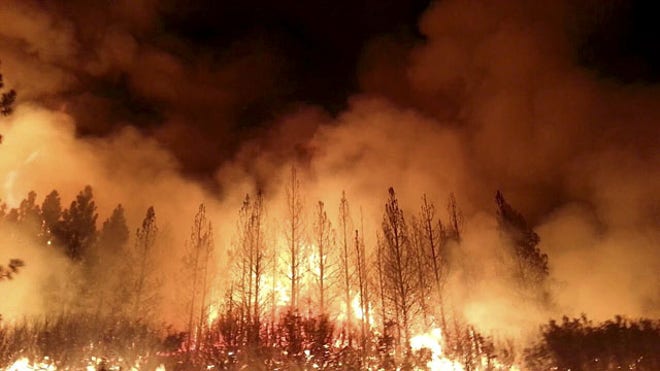
    In this undated photo provided by the U.S. Forest Service, the Rim Fire burns near Yosemite National Park, Calif. (AP Photo)

A massive wildfire racing through the Yosemite wilderness — fueled by high winds — is threatening San Francisco’s fresh water and power supply as well as California’s iconic giant sequoias.

It’s one of several fires statewide being fought by more than 8,000 firefighters across nearly 400 square miles. The fire has consumed approximately 225 square miles of picturesque forests. Officials estimate containment at just 7 percent.

“This fire has continued to pose every challenge that there can be [in] a fire: inaccessible terrain, strong winds, dry conditions,” Daniel Berlant of the California Department of Forestry and Fire Protection said on Sunday.

The fire continues burning in the remote wilderness area of Yosemite, but park spokesman Tom Medena told the Associated Press it’s edging closer to the Hetch Hetchy Reservoir, the source of 85 percent of San Francisco’s famously pure drinking water, as well as power for a number of key city buildings, including the airport. The city has issued assurances that the water quality remains good, but the San Francisco Public Utilities Commission has shut two hydro-electric stations fed by water from the reservoir and cut power to more than 12 miles of lines. The city has been buying $600,000 worth of power on the open market to ensure San Francisco doesn’t go dark.

Meanwhile, park officials are clearing brush and setting sprinklers to protect two groves of giant sequoias. The iconic trees can resist fire, but dry conditions and heavy brush are forcing extra precautions to be taken in the Tuolumne and Merced groves. About three dozen of the giant trees are affected.

“All of the plants and trees in Yosemite are important, but the giant sequoias are incredibly important both for what they are and as symbols of the National Park System,” park spokesman Scott Gediman told The Associated Press on Saturday.

The trees grow naturally only on the western slopes of the Sierra Nevada and are among the largest and oldest living things on earth.

The Tuolumne and Merced groves are in the north end of the park near Crane Flat. While the Rim Fire is still some distance away, park employees and trail crews are not taking any chances.

Fire officials are using bulldozers to clear contingency lines on the Rim Fire’s north side to protect the towns of Tuolumne City, Ponderosa Hills and Twain Hart. The lines are being cut a mile ahead of the fire in locations where fire officials hope they will help protect the communities should the fire jump containment lines.

Firefighters were hoping to advance on the flames Monday but strong winds, gusting up to 50 mph in some places, were threatening to push the blaze closer to Tuolumne City and nearby communities.

“Winds are increasing, so it’s going to be very challenging,” said Bjorn Frederickson, a spokesman for the U.S. Forest Service.

The Forest Service confirmed late Sunday to KTVU.com that the fire had burned through the Berkeley Tuolumne Family Campsite, which was owned by the city of Berkeley, Calif., and had been in operation since 1922. Firefighters were unable to immediately assess the damage, and it was not clear if any structures survived. The camp had been evacuated Tuesday and no injuries were reported.


“It’s a very difficult firefight,” Berlant said.

Frederickson added that the fire is slowing down a bit, but still growing.

The high winds and movement of the fire from bone-dry brush on the ground to 100-foot oak and pine treetops have created dire conditions.

“A crown fire is much more difficult to fight,” Berlant told The Associated Press on Sunday. “Our firefighters are on the ground having to spray up.”

The blaze sweeping across steep, rugged river canyons quickly has become one of the biggest in California history, thanks in part to extremely dry conditions caused by a lack of snow and rainfall this year. Investigators are trying to determine how it started Aug. 17, days before lightning storms swept through the region and sparked other, smaller blazes.

The fire is the most critical of a dozen burning across California, officials say. More than 12 helicopters and a half-dozen fixed wing tankers are dropping water and retardant from the air and 2,800 firefighters are on the ground.

Statewide, more than 8,300 firefighters are battling nearly 400 square miles of fires. Many air districts have issued health advisories as smoke settles over Northern California. On Saturday, organizers canceled the 24th annual Lake in the Sky Air Show at Lake Tahoe because of poor visibility.

The U.S. Forest Service says about 4,500 structures are threatened by the Rim Fire. Berlant said 23 structures were destroyed, though officials have not determined whether they were homes or rural outbuildings.

Jessica Sanderson said one of her relatives gained access to the family’s property in Groveland, just 26 miles from the park’s entrance, on Saturday and was able to confirm their vacation cabin had burned to the ground.

The family saw firefighters on a TV news report a day earlier defending the cabin.

“It’s just mind-blowing the way the fire swept through and destroyed it so quickly,” said Sanderson, who’s been monitoring the fire from her home near Tampa Bay, Fla. “The only thing left standing is our barbecue pit.”

At the nearby Black Oak Casino in Tuolumne City on Sunday, the slot machines were quiet as emergency workers took over nearly all of the resort’s 148 hotel rooms.

“The casino is empty,” said casino employee Jessie Dean. “Technically, the casino is open but there’s nobody there.”

As thick smoke portends the fire’s fast approach, the area has been cleared of everyone but locals and emergency workers. Dean lives on the reservation of the Tuolumne Band of Me-Wuk Indians and left her four children at relatives’ homes in the Central Valley.

But the tourist mecca of Yosemite Valley, the part of the park known around the world for such sights as the Half Dome and El Capitan rock formations and waterfalls, remained open, clear of smoke and free from other signs of the fire that remained about 20 miles away.

The Associated Press contributed to this report.

Read more:http://www.foxnews.com/weather/2013/08/26/officials-try-to-protect-giant-sequoias-from-california-wildfire/#ixzz2d5AV6drn

This kind of event has been happening this years all over the west. Remember 19 firefighters died in Arizona. About a year ago we drove through Yosemite on route 120.

It shows how interconnected life is when a wildfire in Yosemite could have such a direct effect on the city of San Francisco.

AT LEAST THE SHEEP ARE EXCITED ABOUT THE NEW ZEALAND WIN

JUST CAN'T GET ENOUGH
JUST CAN’T GET ENOUGH


THE SHEEP ARE CHEERING TEAM NEW ZEALAND
COUNTRY
COUNTRY
SONOMA HILLS
SONOMA HILLS

The win by team new zealand was pretty much a foregone conclusion, I am reluctant to say it but I am not certain what the Italians expected or if they came for the party. I hope they got what they wanted given the price of admission.

Team New Zealand is, I believe, favored to win the America’s Cup. It will be certainly closer than the Louis Vuitton.

NEW ZEALAND WINS LOUIS VUITTON FINALS

Team New Zealand wins the Louis Vuitton Finals 7 to 1; and will meet Oracle September 7 for the best of 17 series.

There was never really any doubt of the outcome; with the exception of breakdowns. The New Zealand team was higher and faster upwind and lower and faster downwind; causing them to jibe fewer times.

See you in September.

JARDINE TWINS XOD RACING

Surprise 80th Birthday Party for the Jardine twins in Lymington

By Mark Jardine & RLymYC on 23 Aug21 August 2013

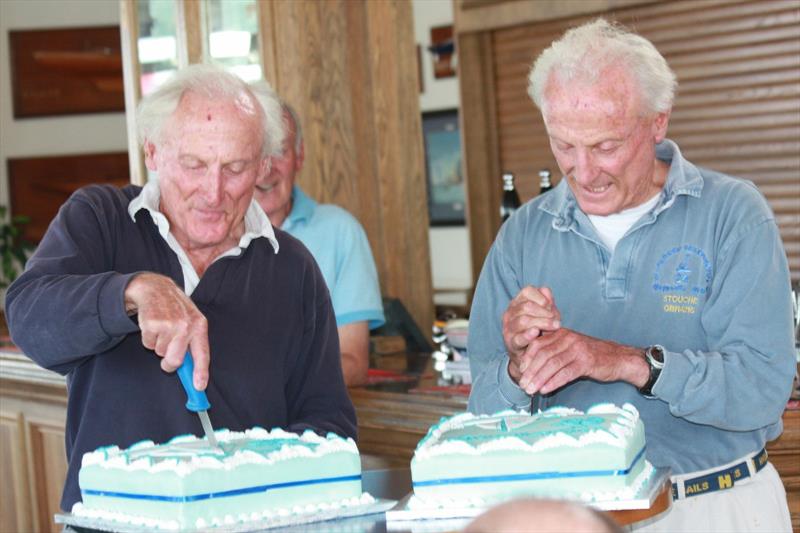
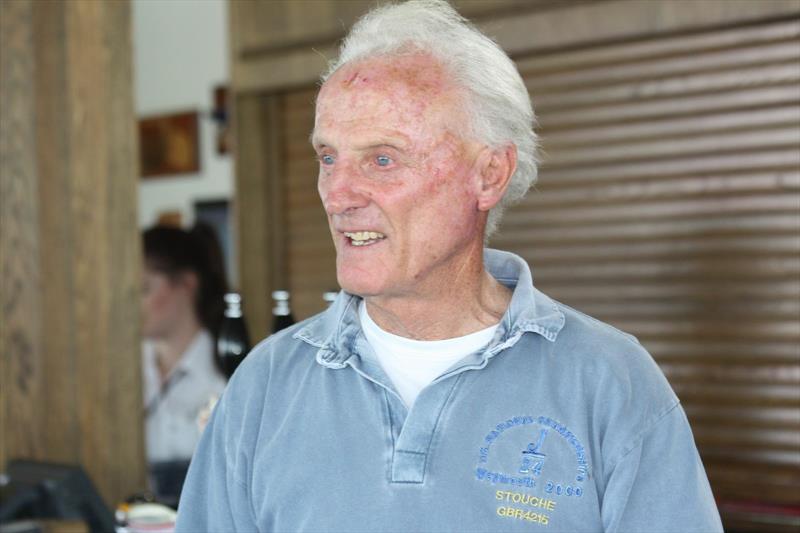
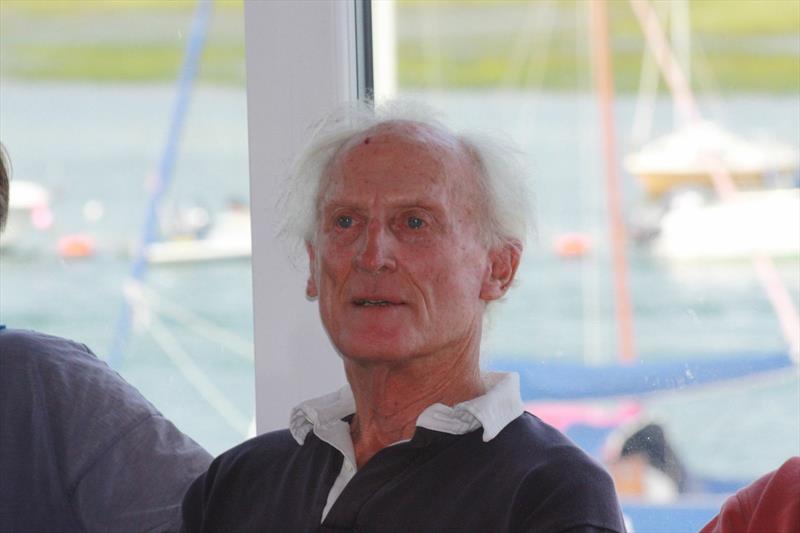
Stuart & Ado Jardine at their surprise 80th Birthday Party

Stuart & Ado Jardine at their surprise 80th Birthday Party

All photos © Doug Rogerson

Stuart & Ado Jardine at their surprise 80th Birthday Party

Stuart & Ado Jardine at their surprise 80th Birthday Party

Lymington sailing twins Stuart and Ado Jardine received a shock when they stepped ashore after Wednesday afternoon XOD racing in Lymington this week when they found a surprise 80th birthday party had been organised for them at the Royal Lymington Yacht Club.

The legendary pair, who have both sailed at Olympic level with Ado winning bronze in the Mexico 1968 games, are still winning races as they enter their ninth decade.

Fellow sailors presented the pair each with a bucket and line to use as a sea-anchor to slow them down! Two huge cakes were then cut and served to all and the twins thanked everyone for organising the party which genuinely came as a complete surprise to the pair.

In the last 15 years, Stuart and Ado have increasingly focussed on repaying what they see as their debt to the sport and to the Club, be it as Race Officers, week in week out for our Monday night dinghy racing series, running Open events, organising and captaining Club team entries for team and other racing events, and organising an array of children’s sailing events, whether in Optimists, Lymington River Scows or model yachts. They know what it takes to make the best sailors and don’t flinch from encouraging their charges.

Having now sailed at Lymington for nearing 70 years, Ado said the both plan to continue “As long as they’re still in one piece”. One XOD sailor said, “When Stuart is not at the front of the XOD fleet, Ado is.”

Chris Neve, RLymYC Rear Commodore Sailing said, “The Royal Lymington Yacht Club is honoured to have the Jardine brothers as Members. Both Stuart and Ado have been at the top of this wonderful sport for 60 years through their illustrious Olympic and international racing careers. They are both also still giving so much to the Club day in and day out, whether it be the XOD Class, the juniors or in fact any Member who asks for help in improving his or her sailing. We are very grateful to Stuart and Ado for all that they do for us and also to Mary-Ann and Wendy, who have helped them every inch of the way. Long may they continue to be an inspiration to us all!”


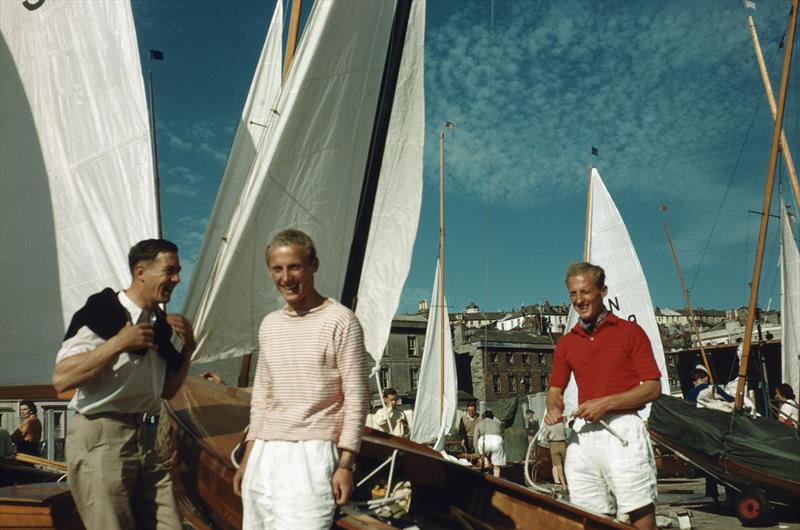
Stuart & Adrian Jardine with their National 12 in Falmouth around 1951 - photo © Archive