
This if it works as advertised, is a huge step forward in search and rescue.
RENEWABLE ENERGY
Small is beautiful

ONE problem with renewable energy is that neither the wind nor the sun is reliable. That cannot, however, be said of the tides. The Newtonian clockwork of sun and Moon can always be relied on. The problem with exploiting tidal power has, rather, been finding places to do it efficiently: bays or estuaries with a suitable tidal reach and a topography that permits a barrage to be constructed. Only then, with established designs, can turbines be installed through which the tide can ebb and flow.
That would change, though, if turbines could simply be attached to the sea floor. And several firms are trying to make it so. Some, such as Andritz Hydro Hammerfest, in Norway, and Marine Current Turbines from Bristol, in Britain, take the relatively simple approach of sticking what are little more than strengthened wind turbines onto the seabed.
In the case of such turbines, though, bigger is better. And, since a turbine is not much use if its blades stick above the surface, that means they need to be located in reasonably deep water. Which is a shame, because a lot of otherwise-suitable sites are too shallow.
Not all wind turbines work this way, though. Some smaller ones are skeletal cylindrical structures whose axes of rotation are at right-angles to the direction of the wind, rather than aligned with it. And that, with the important modification that this axis is horizontal rather than vertical, is the basis for several novel designs for tidal-power generators which can operate in shallow water too.
Engineers at Ocean Renewable Power Company, in Portland, Maine, and Kepler Energy, in London, both use this approach. And Ocean Renewable is starting to commercialise it. In September 2012 its TidGen generator was deployed in the Gulf of Maine. It thus became the first plant to deliver offshore-generated power of any kind (wind, wave or tidal) to an American electricity grid.
Kepler is a little behind, but is hoping to try out a full-scale version of its Transverse Horizontal Axis Water Turbine in the Bristol Channel soon. Its engineers’ calculations suggest this device will generate 50% more power from a given tidal stream that a conventional turbine can manage.
Nor are such submarine waterwheels the only new approach. Engineers at Pulse Tidal, in Sheffield, Britain, have decided to use hydrofoils rather than turbines. A hydrofoil is, in essence, an underwater wing. As water flows past it, the current generates lift. Pulse Tidal’s hydrofoils are mounted in such a way that this lift causes the ’foil to nod up and down. Since it is attached to a generator, that nodding generates electricity.
Even with innovations like these, tidal power has a long way to go before it becomes an important source of electricity. The wet, salty environment of the ocean is a hostile (and expensive) place for mechanical engineering to work. But if it can be made to do so, the lure of a reliable, free fuel source may mean the seabed eventually becomes littered with tiny power stations.
SPEED DREAM?
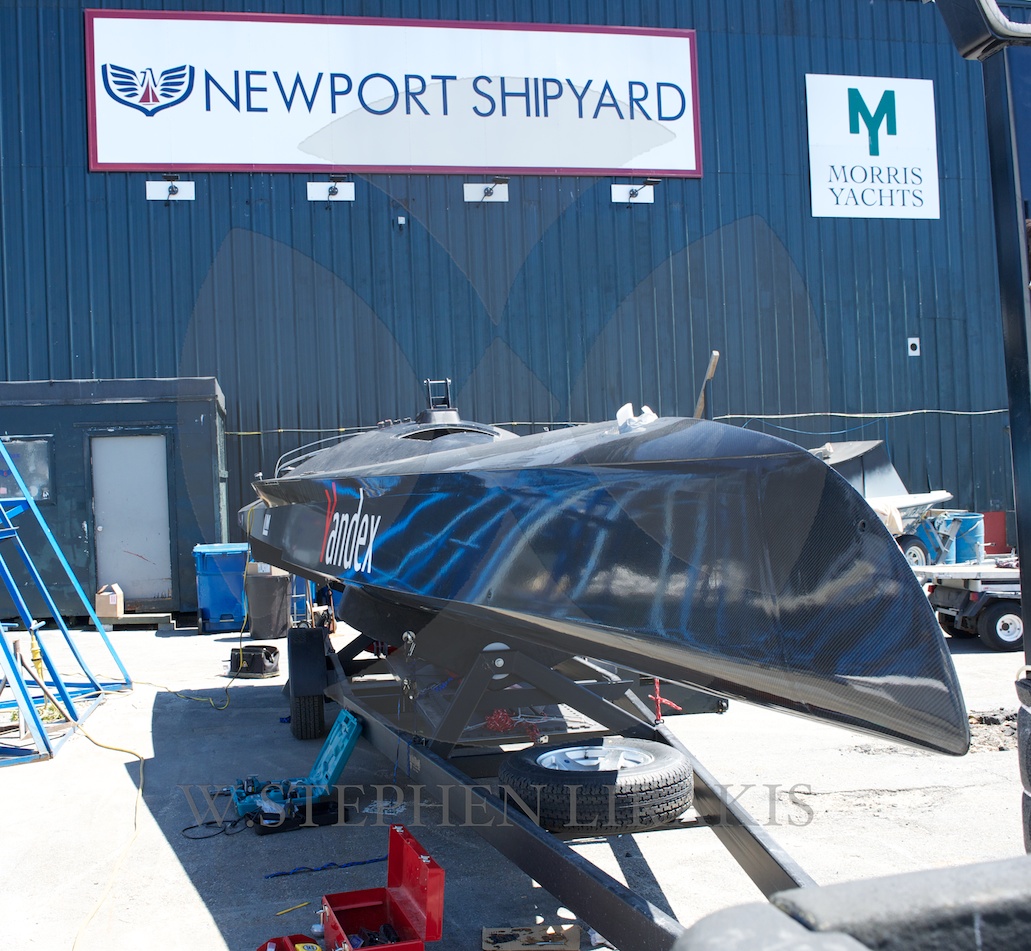


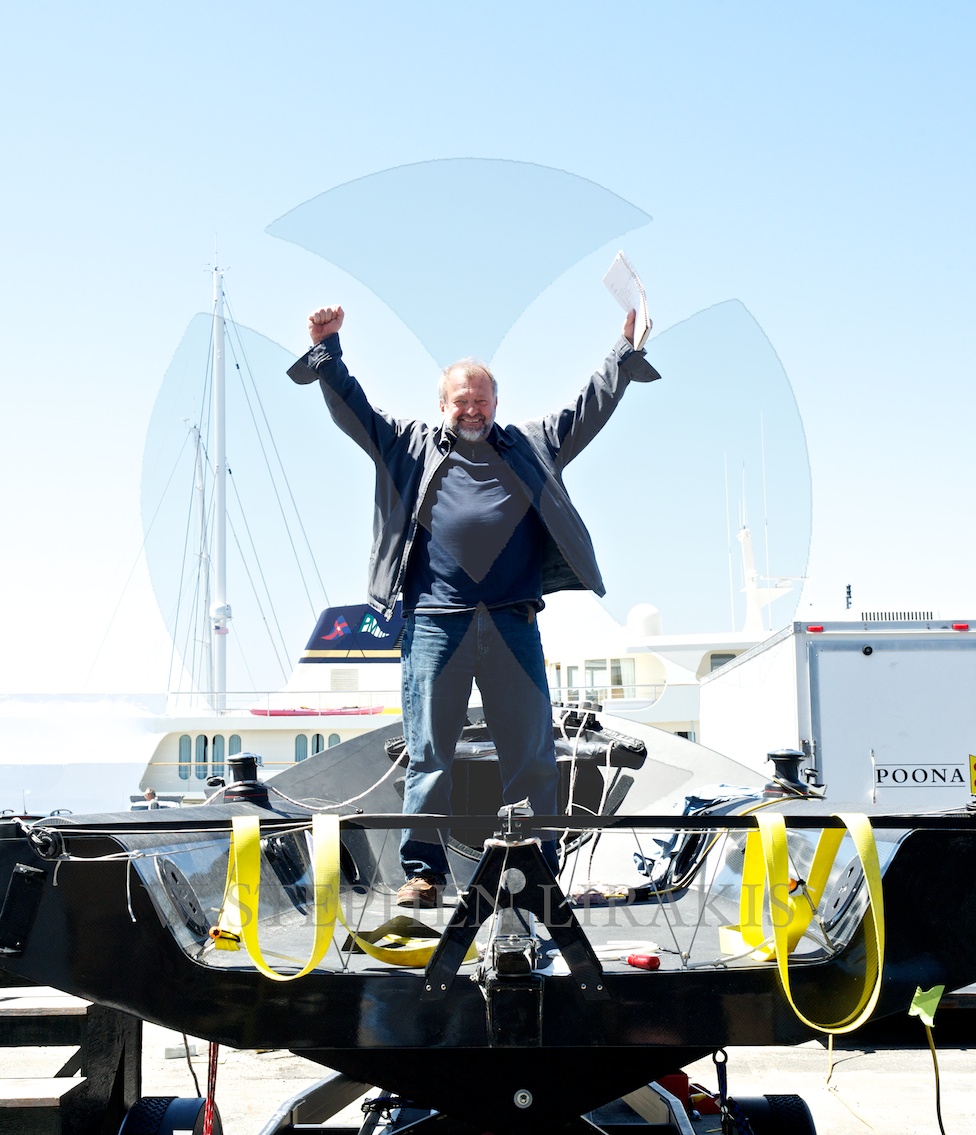 Vlad Murnikov
The search for speed under sail has captured man’s mind since the first time he set sail. The tea clipper “Cutty Sark” was the speed demon of her time. “Amaryllis” designed by Nat Herreshoff in 1876, the precursor to the catamarans that are racing for the America’s Cup now.
If Vlad Murnikov is successful, and there is no reason that he will not be, it will be the next step forward for monohulls.
AMERICA’S CUP 1983 RE-VISITED
BOSTON






Boston since the marathon bombing, has been the center of attention of the world, overwhelming the explosion in Texas and any other news story. These are photos of the way things were.
TODAY






Spring has arrived in New England. Today was a wonderful example. Those who had been cooped up all winter by the cold, the snow, ice, short days. Winter makes doing anything hard. Spring is a release.
DID THE AUTHOR MISS APRIL 1ST?
Scientists find gene for love of the sea
Researchers at Mystic University in Connecticut have identified a gene associated with seafaringness, according to an article to be published tomorrow in the journal Genetic Determinism Today. Patterns of inheritance of the long-sought gene offers hope for “sailing widows,” and could help explain why the sailing life has tended to run in families and why certain towns and geographical regions tend historically to have disproportionate numbers of sea-going citizens.
The gene is a form of the MAOA-L gene, previously associated with high-risk behavior and thrill-seeking; another form of the gene, found last year, made news as the “warrior gene.” The current variant, dubbed 4C, was found by a genome-wide association study (GWAS) on 290 individuals from Mystic, CT, New Bedford, MA, and Cold Spring Harbor, NY—all traditional nineteenth-century whaling villages. Residents showed the presence of the 4C variant at a frequency more than 20 times above background in neighboring landlocked towns.
C. M. Ishmael, the lead researcher on the study, said the findings could be a boon to medicine. Although the International Whaling Commission outlawed commercial whaling in 1986, the research could benefit literally hundreds of “sailing widows” left alone for Wednesday-evening sailboat races up and down the East Coast. Each year, an average of 11 salt-stained Polo shirts wash up on the New England and Mid-Atlantic coasts, the only remains of lantern-jawed investment bankers and their half-million-dollar boats. Ishmael said he is trying to have the irrational urge to sail entered into the Diagnostic and Statistical Manual, standard reference for psychiatric diseases, in the next, fifth, edition.
“This receptor is an exciting potential target for new drug therapies,” Ishmael said in a phone interview. “We hope lots of companies will be interested in it. And venture capital, too.” Ishmael is himself CEO of a company, MysticGene, formed to develop such therapies. When asked about potential conflict of interest, he replied cryptically, “Well, duh.” Shares of MysticGene closed higher on Monday following the announcement.
The gene for seafaringness has long been an object of study for human geneticists. The trait was first described in 1919 by Charles Davenport, director of Cold Spring Harbor Laboratory, who named it “thalassophilia.” Using pedigree analysis and anecdotal correlation, Davenport identified thalassophilia as a sex-linked recessive gene and distinguished it clinically from wanderlust, or love of adventure. Although one might think naively that people living in towns with good harbors would tend to go to sea, Davenport suggested the reverse: those with the thalassophilia trait have tended to migrate toward regions with good harbors and found settlements there. The current study does nothing to refute Davenport’s analysis.
Further, a tentative expansion of the GWAS analysis to various racial groups largely confirms Davenport’s observations that thalassophilia is more prevalent in Scandinavians and the English, and less common in people of German ancestry.
Thalassophilia joins a rapidly growing list of complex behavioral traits that have been shown to have a genetic basis, thanks to GWAS. Besides the warrior gene, recent studies have found genetic links to promiscuity, aggressive behavior, especially while drinking, religiosity, and bipolar disorder, or manic depression—all traits that Davenport and other early human geneticists were deeply interested in. The difference is that modern science better understands the mechanisms involved.
“Seamen know very well that their cravings for the sea are racial,” Davenport wrote in 1919. “’It is in the blood,’ they say.” Today we know it’s not in the blood—it’s in the genes.
SONG FOR MAGNUS
Duran Duran rock superstar Simon Le Bon sailed with Magnus Olsson on board Drum in the 1985-86 edition of the race. Le Bon has sent us this personal tribute to his smiling Swedish friend, who died on April 20 at the age of 64.
 Barry Pickthall /PPL
A musician and the owner of the maxi yacht Drum, Le Bon was participating in the Fastnet with skipper Skip Novak when the boat lost her keel and capsized.
Before being rescued, the crew members were trapped underwater, inside the hull, for 40 minutes.
Despite the accident, the Duran Duran singer went on to complete what was then the Whitbread Round the World Race in 1985-86, with Magnus Olsson, his “flat footed friend”, among the crew.
We’re sailing down a wave
you and me
and all shipmates bunched like knuckles in the cockpit
a lazy fist punch through the spray and the spindrift
white arrow gleaming, touched by the sun
but your smile is brighter
and you laugh louder
than the howling old sea when she bangs on our Drum
Goodbye flat footed friend
and many other things which set you apart
for in the cold and damp
the world has need of folk like you
to keep the ember alive
when you blow on its heart
Simon Le Bon
CHARLESTON RACE WEEK
I have not given this event proper acknowledgement. This video comes to us via “Sailing Anarchy”.
RICHARD III
Visit NBCNews.com for breaking news, world news, and news about the economy
The truth about Richard III may yet be revealed. There is controversy surrounding the history of this man.