GLEN ASHBY EXPLAINS THE NOSEDIVE

A lot has been written and expressed about the performance of the 72’s. When someone like Glen Ashby speaks, we should all listen.

Glenn Ashby explains the Emirates Team New Zealand nosedive.

August 20, 2013

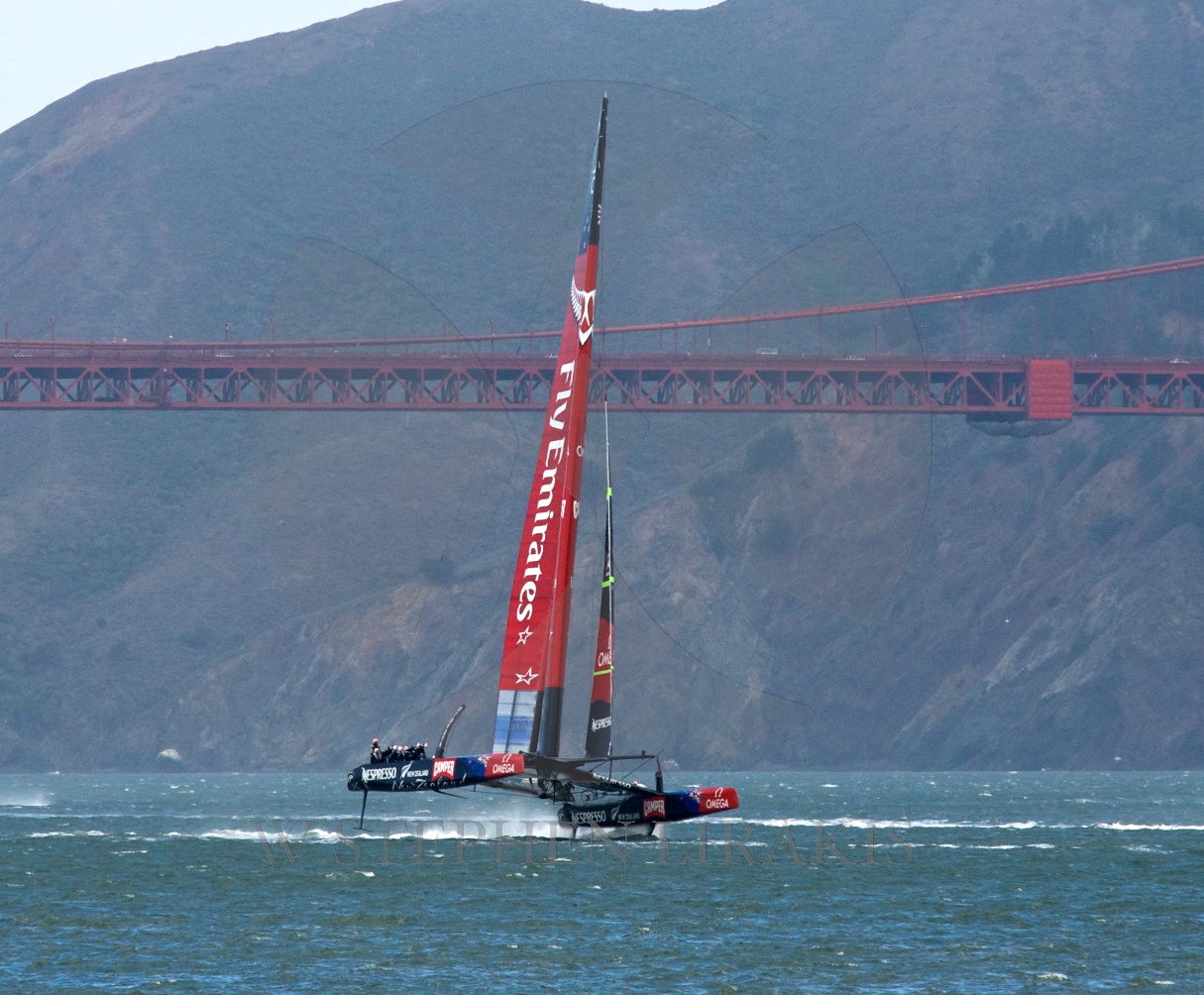
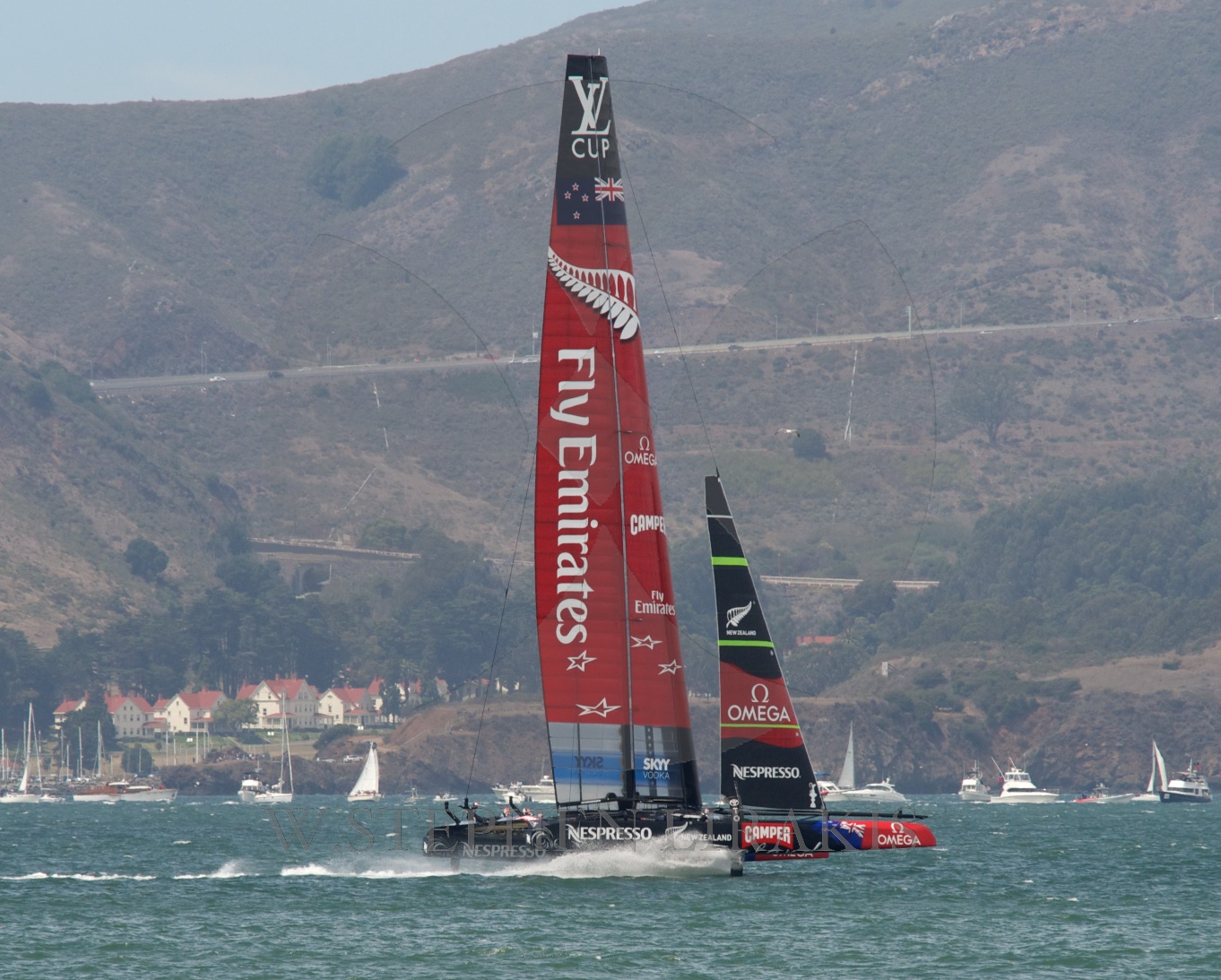
The most heart stopping moment of the 34th America’s Cup action so far was the huge bear away crash which saw the Emirates Team New Zealand AC72 nosedive at the windward mark in race two. (In case you have been living up a mountain with no internet or left the planet temporarily in the last few days the video clip is at the end of this article).

So what exactly went wrong on the Kiwi boat to trigger such a spectacular nose dive that it thew the majority of the crew into a tangled heap and flicked two of them unceremoniously into San Francisco Bay.

To find out from one who would know for sure, we got Emirates Team New Zealand wing trimmer Glenn Ashby to talk us through it.

First we asked Glenn to explain what he is doing to the massive wing sail when the boat goes around the windward mark.

“The goal for me is control the angle of heel as we transition from upwind to downwind. To do that I am basically twisting the wing profile and easing sheet as we initiate the turn. You are getting more and more power as you transition through that 90 degrees until you get to a sort of neutral ground where you are really in the meat of the power zone. At that point you have a low boat speed but a huge amount of thrust.

“So as you are punching through that power zone the guys will be winding the sheet and I will be sort of fanning the sheet to try to keep that angle of heel constant through the turn.

“Once you realise that you are through the power zone I’ll be immediately trying to stand the leech up or bring the head of the wing back, because if you punch through that zone and you don’t get the sheet back on and the power back into the wing the apparent wind is basically on your bow and you will do a big windward hull touchdown.

Then, because you will have board rake on the leeward side the leeward hull will be flying, your windward hull will be stuck in the water and you will have absolutely no power to turn the wing back up to lift that windward hull back out of the water again. That can actually turn itself into a bad bow down situation quite easily.

“By being able to pace the boat up enough, put the board rake on, even pop the boat up on to the foils before you start your turn, you are not having to drag the whole hull through the water, it won’t wash off enough speed and as you pass through the power zone you don’t have to ease as much sheet because the apparent stays forward. That means you can get the sheet on again much faster and that can give you a really good slingshot or whip out of the top mark. You will often see the boatspeed go from 30 knots to 45 knots in the space of a few seconds.”

So what happened during the second race to cause such a huge crash?

“The other day we just got into a really big, right hand heading puff as we went round the mark. It probably went from 15 or 16 knots to low twenties as we went around the mark. What that did was to widen and increase the density of the pressure in that power zone as we were punching through. It got to the stage where we were half way round and I was having to ease a huge amount more wing than I normally would – just with the extra thrust that we had.

“Unfortunately it was one of those bear aways where our leeward elevator pierced the surface at one stage. Once you lose the effect of that elevator which is basically holding the boat down you are effectively into an old school multihull bow down situation. It happened in an absolute blink of an eye. We have never had it happen before but that time the stars had aligned to give us that finger of God just as we got to the top mark.

“When you go back and look at the data on the breeze that we sailed into, it was a huge shift – possibly with a lot of sheer from top to bottom too – combined with a big increase in pressure. When you are sailing through the power zone you only need a half a knot or a knot of increase in pressure to make a massive difference to the power zone. We had a good three or four knots of increase as we went around and that was enough to load everything to a point where for a standard maneuver it would have been no problem; but we recognise that we were a bit foot to the floor with that one.”

Despite having gone though a crash which would have put most of us off going afloat ever again, Ashby said instead that the incident had actually given the Kiwi crew more confidence in their boat and how hard they could push it.

“It was a good one, but it was also a good example of Team New Zealand’s design and engineering capabilities to be able to create something that us as sailors can throw that sort of punishment at it and it will just pop up with nothing but a bit of cosmetic damage to the fairings.

“The boat performed extremely well. We have designed a boat that will allow us to push it really hard and it will be forgiving and look after us. That means we can keep our foot on the throttle. It let us know that we were probably pushing a bit too hard the other day.

Ashby, like the rest of the crew – other than helmsman Dean Barker who was braced behind the wheel – was thrown on the floor of the windward hull as the boat slowed dramatically from 41 knots to 13 in the blink of an eye.

“The biggest thing that stopped us was when the front beam hit the water and that’s when I went for a little bit of a tumble. It happened quick like every down the mine episode – whether it be on a Moth, A-Class, or a 49er, you generally get a split second before hand to say to yourself “Oh bugger!” and then you know you are on your way.”

Ashby maintained that having studied the nose dive in detail and debriefed it amongst the crew, they had no plans to make changes to their bear away technique.

“At the end of the day we are not going to change anything we do. In fact if anything it gives us more inspiration to keep pushing hard and learn the limits. We are still learning about the boats the whole time and we have really good confidence that we can pull off some pretty wild maneuvers in good breeze and shifty conditions and get away with it.

“Having never had that experience with the boat before it’s good to know that the boat is safe as house and that the performance is hopefully good enough as well.”
ROGER VAUGHAN and IAIN MURRAY ON THE AMERICA’S CUP

From Roger Vaughn, Oxford, MD:
I’ve tried hard to get behind the 2013 America’s Cup. I really have. I’ve been covering this event longer than I want to admit. I’ve written three books about it, including one about about Dennis Conner’s precedent-setting multihull defense in 1988, so I understand the nature of the multihull beast. I wrote the book (as yet unpublished) about Oracle’s dramatic, nail-biting victory in 100- foot multihulls in 2010, the match that led to using multis for 2013.

Along the way I wrote scripts for the videos produced about the AC 45 World Series.Those events convinced me there really could be arresting match race competition in high-tech, winged multihulls. And I wrote the introduction to the striking new book about the 2013 Cup, Sailing on the Edge. I wrote in a positive way about it, relating how John Cox Stephens had a catamaran in 1820, and how his businessman’s smile would be broad as a Cheshire cat’s if he could watch the AC72s flying by.

But it’s time to rethink. There have been 3 matches in the Louis Vuitton final and we have yet to see a race. Three matches, three breakdowns, and one frightening bow plunge by New Zealand that was a miracle of survival. Why that boat wasn’t totalled is a mystery. Three matches without one display of tactics by either boat. Three matches with no light sail handling. How can there be light sails when the apparent wind angle on the leeward legs is 25 degrees? Gone is the compelling ballet of billowing spinnakers, the sets, the jibes, the takedowns that are the lyrical melody of sailboat racing. All we’ve got is big, hugely expensive, overpowered, dangerous machines ripping at 40 knots and more, with crews wearing body armor suits and crash helmets with oxygen bottles and commando knives strapped to their bodies just in case….

We are still calling it sailing, calling it the future. The speed and the technology is intriguing, even momentarily arresting. But is it sailboat racing? Here we are well into the Louis Vuitton final — the final! — and I have yet to see any.

Iain Murray, AC’s Cool Head In The Hot Seat

By Michelle Slade
It’s hard to say if Iain Murray, America’s Cup Race Management’s quietly spoken head honcho, will be pleased to see the end of AC34, or whether he almost wishes he could have it over again to make serious amends to a sailing event that has proven to be unpredictable. Here Murray explains how he is dealing with the daily frustrations of AC34.

How are you managing to juggle all the curveballs that must consume you on a daily basis?

IM: [Laughs] It’s just what I have to do. It’s my job to keep this show running. I’ve got a lot of good people helping me and there’s a lot of experience in the race management team. The America’s Cup has always been difficult, I think going forward it’s no less difficult. There’s been a lot of difficult instances in the past, whether it’s been wing-keels, or plastic yachts.

Is this what you expected two years ago?

IM: No, I can’t say it’s turned out quite how I expected. I think with all the action and bits and pieces, responsibility and liability has taken on a whole new level that I don’t think anyone could have anticipated.

Where and how did things start going wrong in your opinion with this event?

IM: It’s easy to sit here now, look back and say, “We should have done this or that.” I think probably the biggest disappointment to people is the fact that we’re so short on challengers, and you can ask yourself why is that so? Clearly the cost of the campaign is an issue, the complexity of the campaign is another issue. I think everyone looking forward is saying, “These boats are really cool, the guys love sailing them, we’re in the first generation of boats foiling and understanding the race formats.”

We came off something that was pretty good at the end with the AC45s and high expectations with 10 boats roaring around, a great event in Naples, great events here in San Francisco, and Newport [R.I.]. In many ways coming back to three boats has been a dip. If you look back, you can say we need more controls, we needed something more like an AC45, something that was maybe not an AC72, but not an AC45. Maybe we should have done it in an AC45—I don’t know. I think a 55- to 60-foot semi one-design boat is probably what you’ll see the teams looking toward.

I believe in November 2011 teams were given a choice to move forward with the 72, or go to another boat. A unanimous decision was required, and two teams – Artemis and ETNZ – chose not to. Can you comment?

IM: I put all the principals of the teams together in San Diego in 2011 and did ask them that question. It was clear by that time in the year what it was we were doing, and because there were challenges in the financial world post 2008 that the money wasn’t flying like it was in 2006-‘07. Getting teams to be able to step up from the ACWS to the America’s Cup was a lot more difficult than people had anticipated. The options were there and discussed. People had made commitments to designs and were well down the path of the 72 and the decision was to continue. Read On

Current LV Cup Finals Schedule

Wednesday, Aug. 21: Final Race 4 (1:10 pm PT), Final Race 5 (2:10 pm PT) – ESPN3, live
Friday, Aug. 23: Final Race 6 (TBD) – ESPN3, live
Saturday, Aug. 24: Final Race 7 (1:10 pm PT), Final Race 8 (2:10 pm PT) – NBC Sports Network, 7pm ET (tape delayed)
Sunday, Aug. 25: Final Race 9 (1:10 pm PT), Final Race 10 (2:10 pm PT) – NBC Sports Network, 7pm ET (tape delayed)
Wednesday, Aug. 28: Final Race 11 (1:10 pm PT), Final Race 12 (2:10 pm PT) – NBC Sports Network, 5pm ET (tape delayed)
Friday, Aug. 30: Final Race 13 (1:10 pm PT) – NBC Sports Network, 5pm ET (tape delayed)


DAY 3 LOUIS VUITTON SERIES

I am going to make some statements.

6 races were scheduled to take place as of this afternoon.

not one race has been completed by both boats.

3 points total have been awarded all because a second boat could not complete the course.

As I stated, a war of attrition.

TODAY’S RACE:

CLEANING THE RACECOURSE
THE START (SMOKE)
THE START (SMOKE)
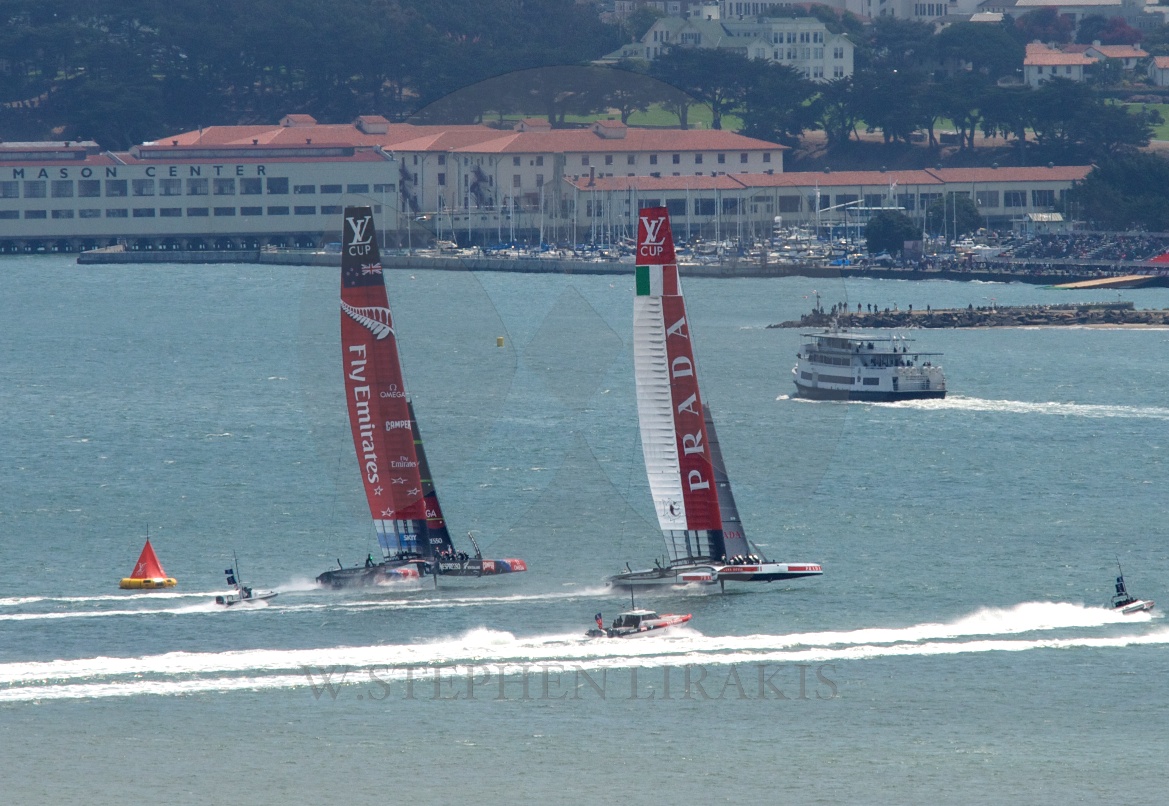
APPROACHING THE FIRST MARK
LEEWARD OVERLAP
LEEWARD OVERLAP
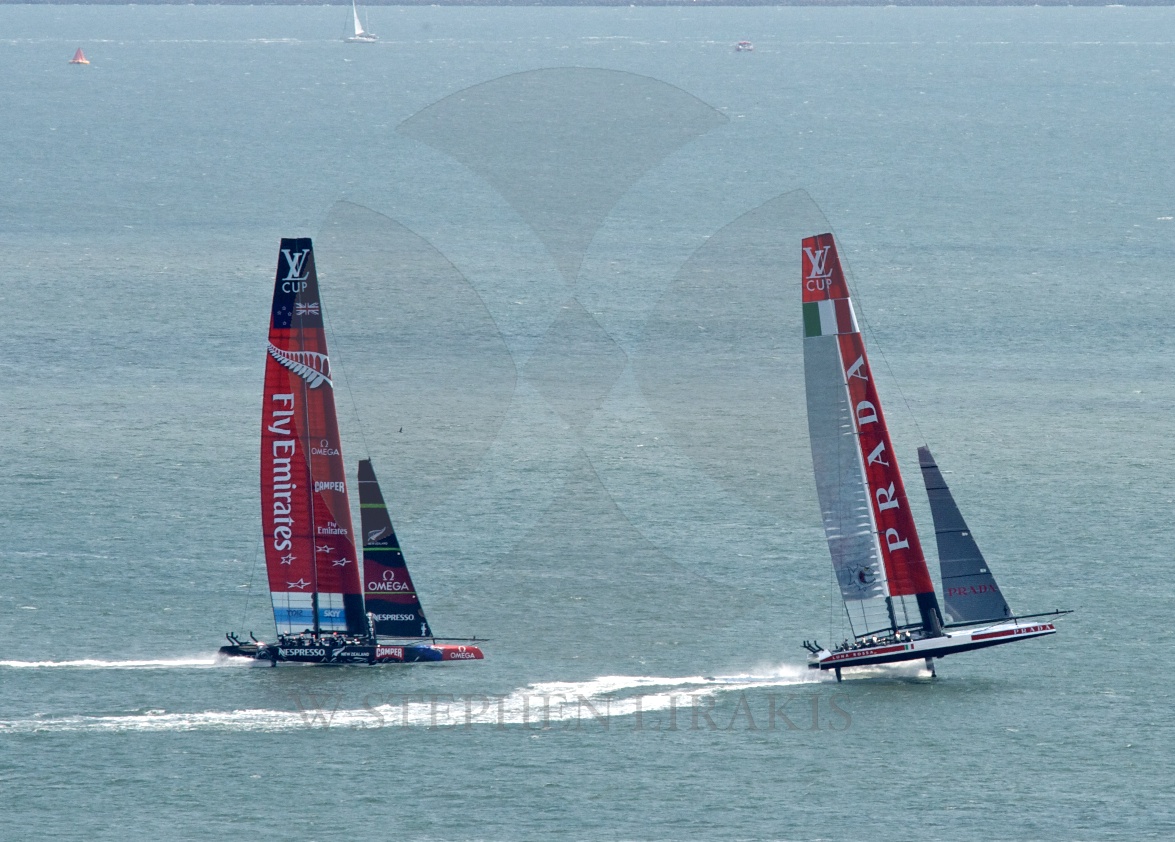
PUSHED WIDE
PUSHED WIDE
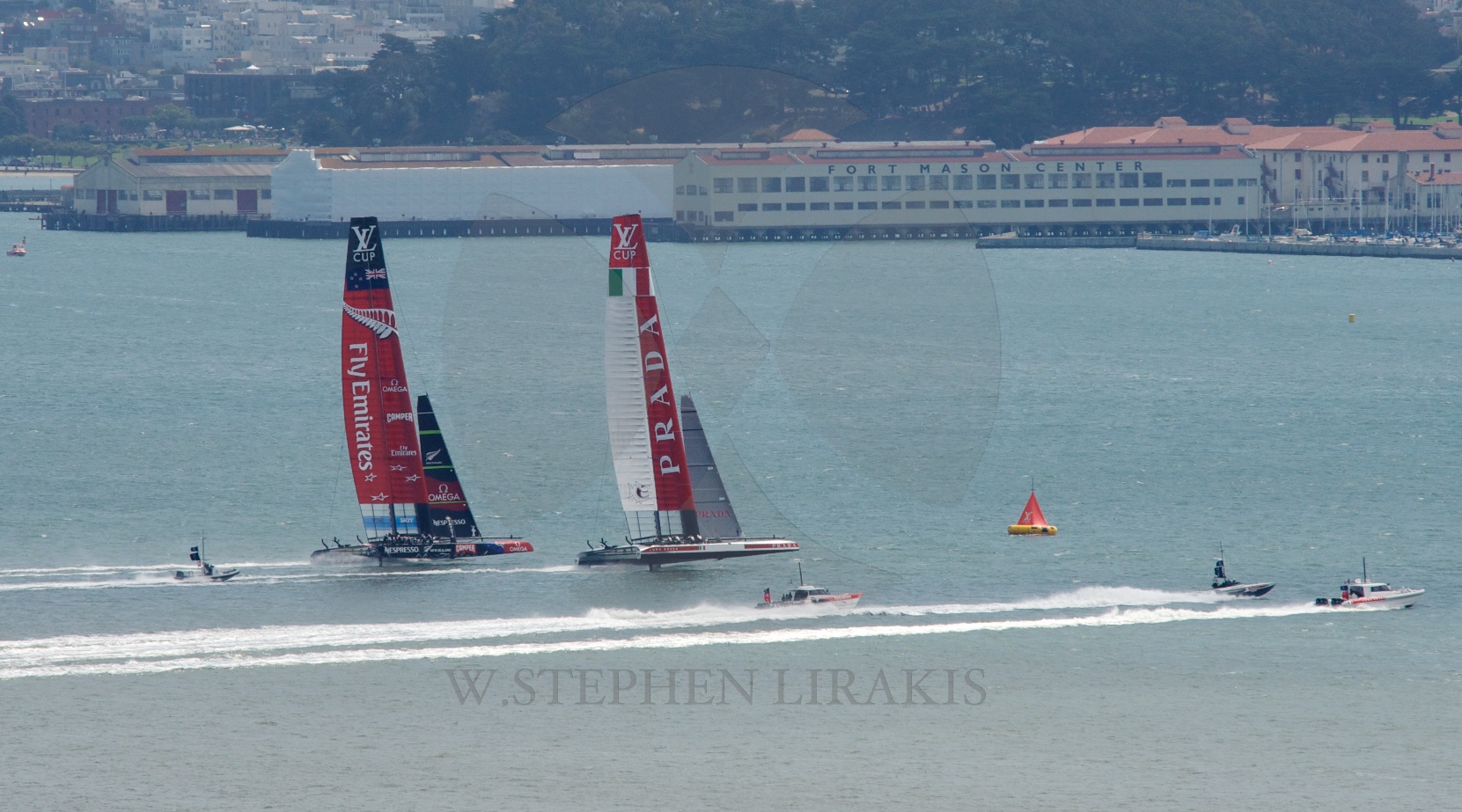
FOILING BEFORE THE START
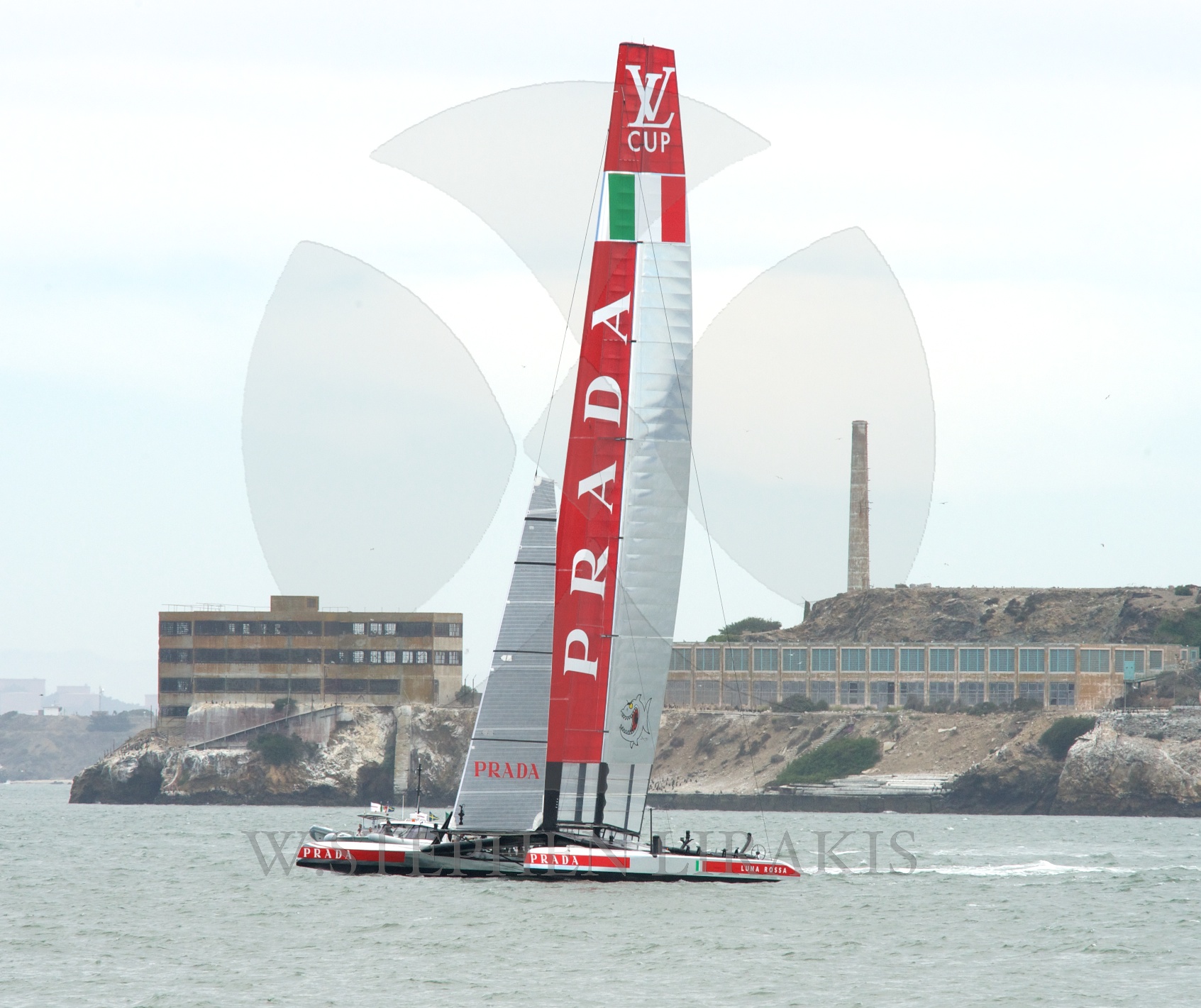
LUNA ROSSA KICKING UP THEIR HEELS BEFORE THE START

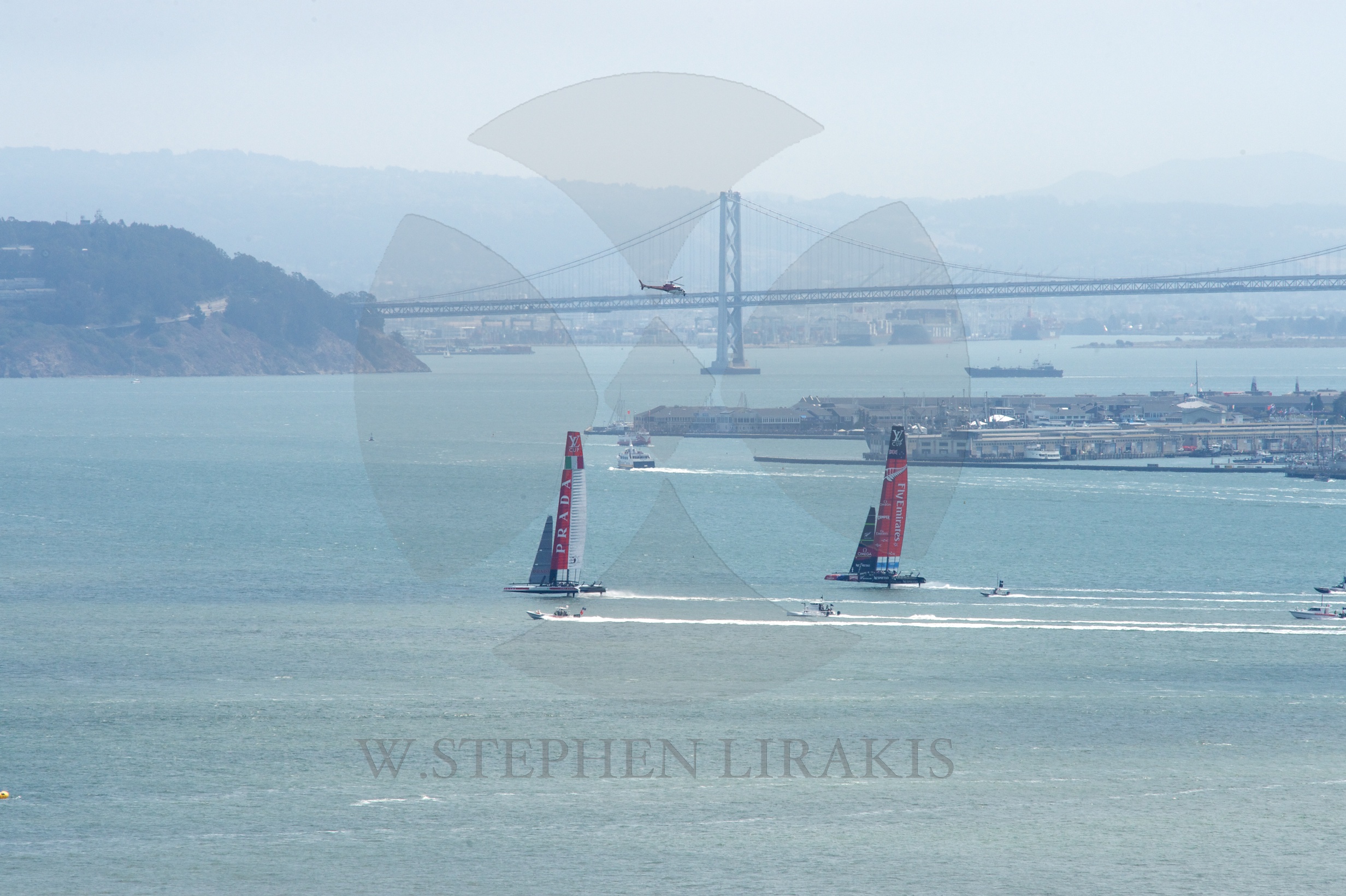
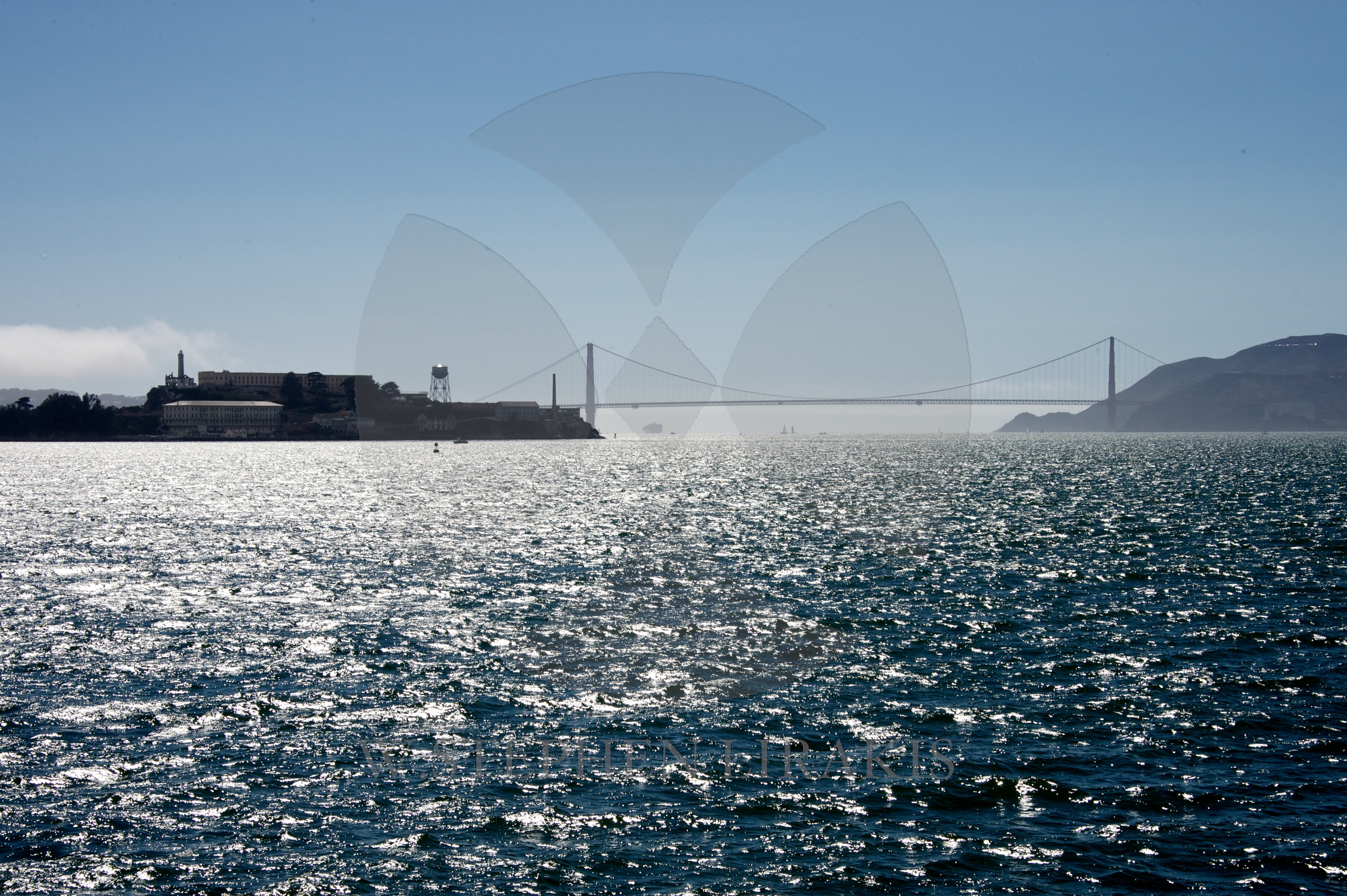
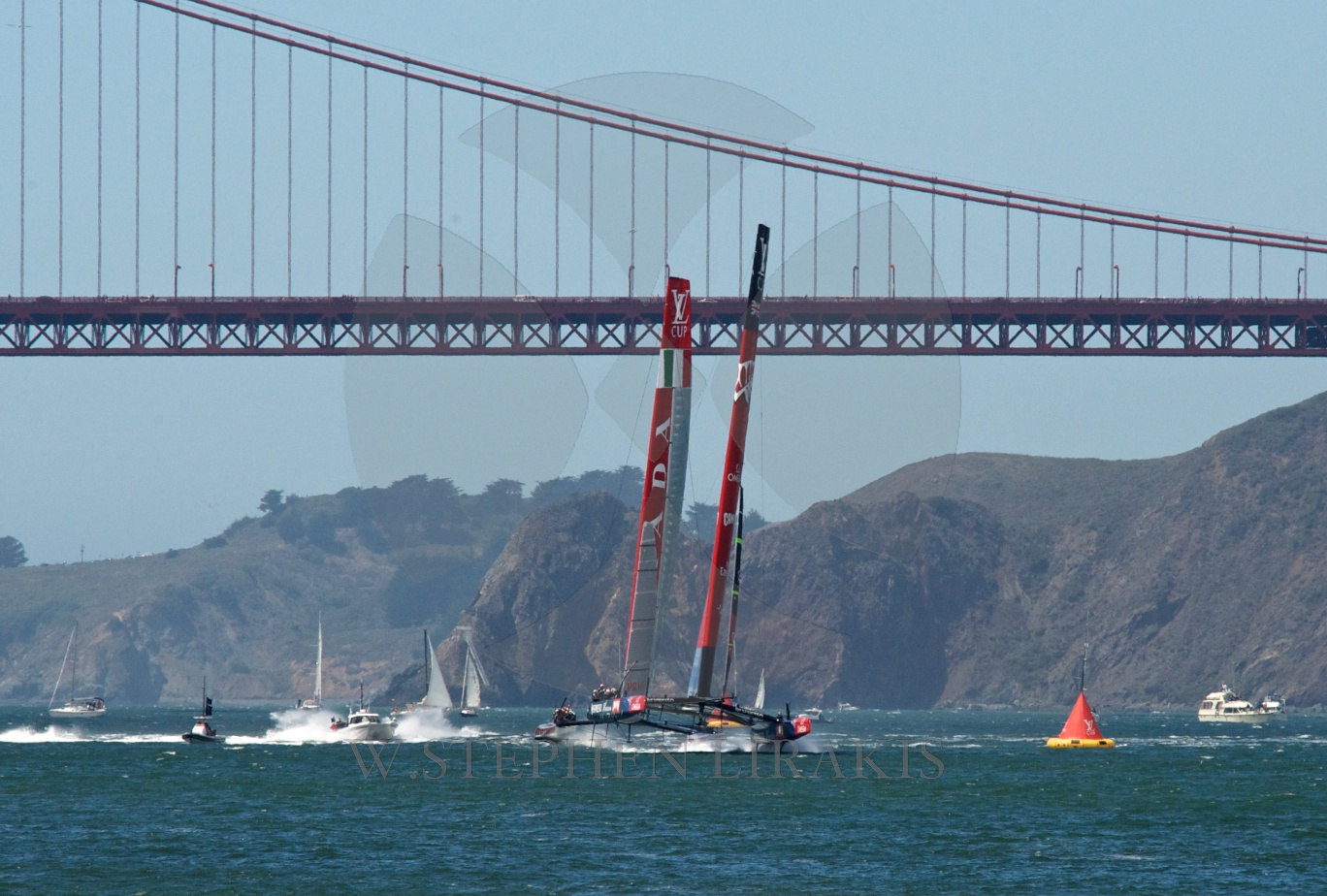
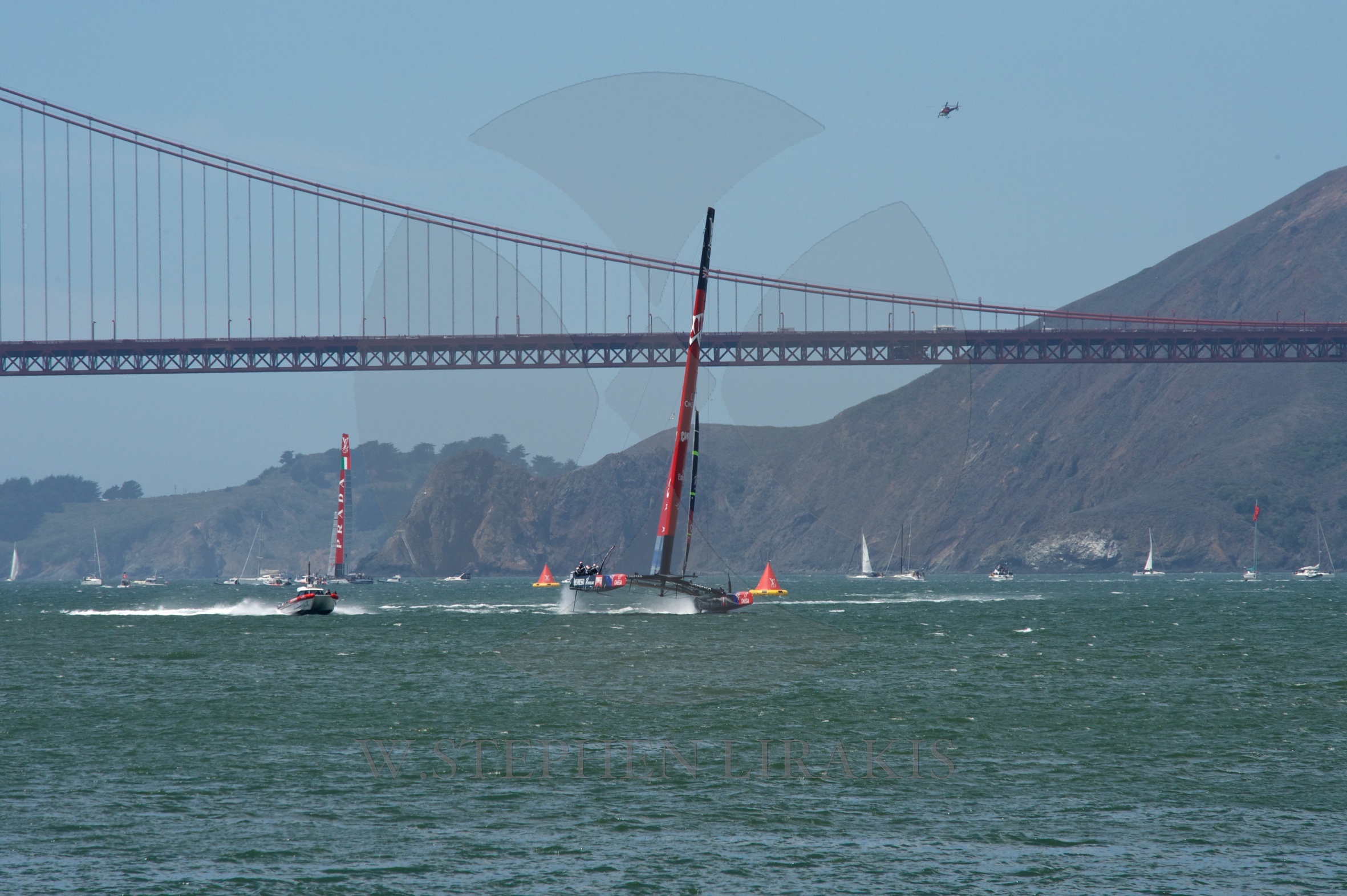
Today I watched from the Golden Gate Bridge. A perspective I had not seen or used before. I will confess that I still have trouble without a watch and the precise start time seeing the whole picture.

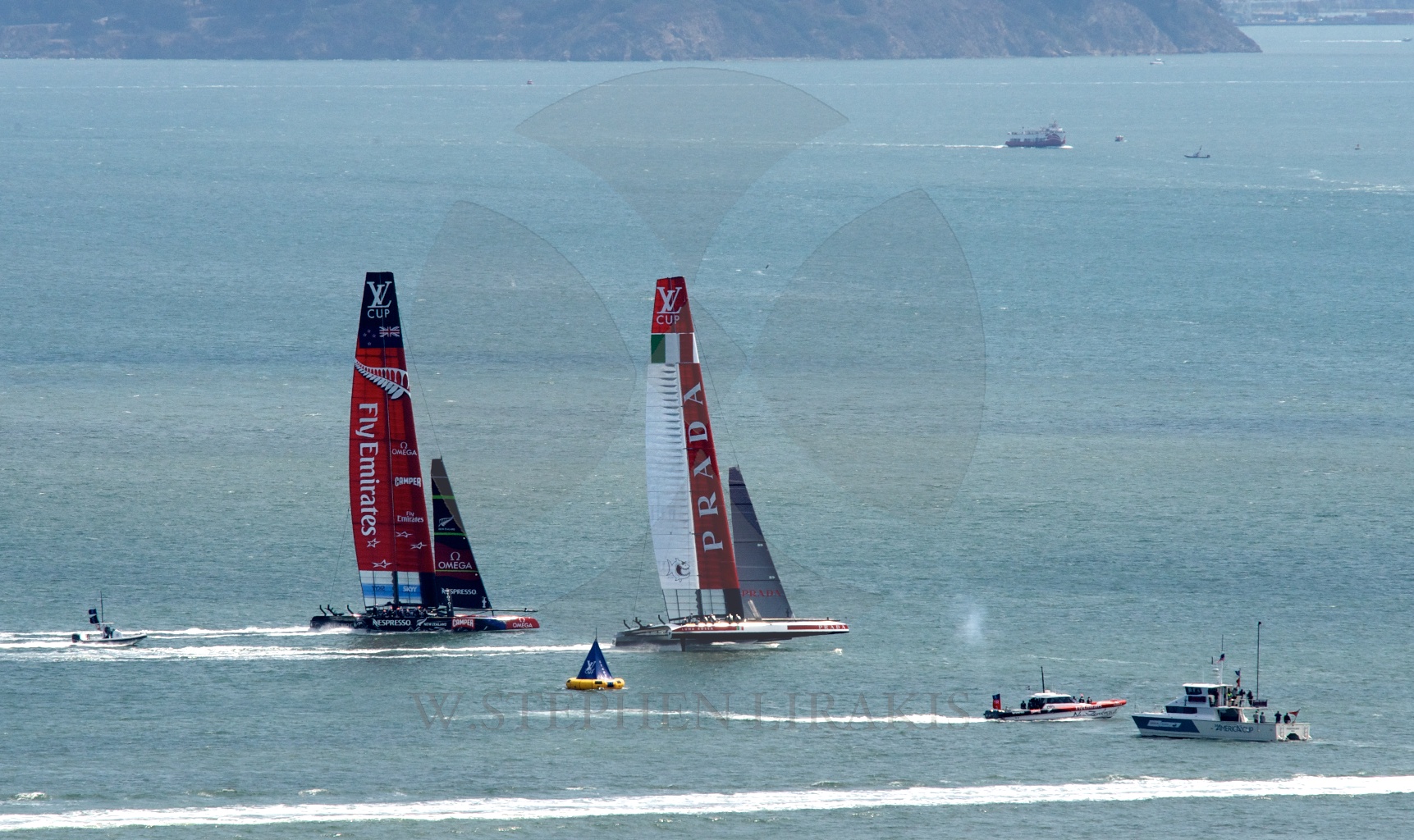
While Chris Draper was credited with winning the start. I wonder. I watched Russell Coutts sailing the AC45’s always start to leeward. the “first leg” is so short if you maintain a leeward overlap you can keep the windward from bearing away downwind. Russell won almost every race this way. It is not always about winning the start, it’s about winning the race.

I thought the above images illustrate very well this maneuver.


MORE NEWS OF THE LOUIS VUITTON FINALS

Couldn’t resist this spoof of yesterday’s event. Today Luna Rossa gained one point because Team New Zealand had a breakdown. This could be an event won by attrition. Whoever has the fewest breakdowns. You can’t win if you don’t finish. I don’t know how to get around that thought.

Team Oracle had it’s share of problems as well with the boat Ben Ainslie was steering breaking a rudder.

FIRST DAY OF THE LV FINALS

I was on shore watching. I took lots of photos I have added a few, but this video footage is a much better representation of the day.
I do not see how anyone gained points. I do not think New Zealand finished within the time limit and certainly not with all crew members aboard.

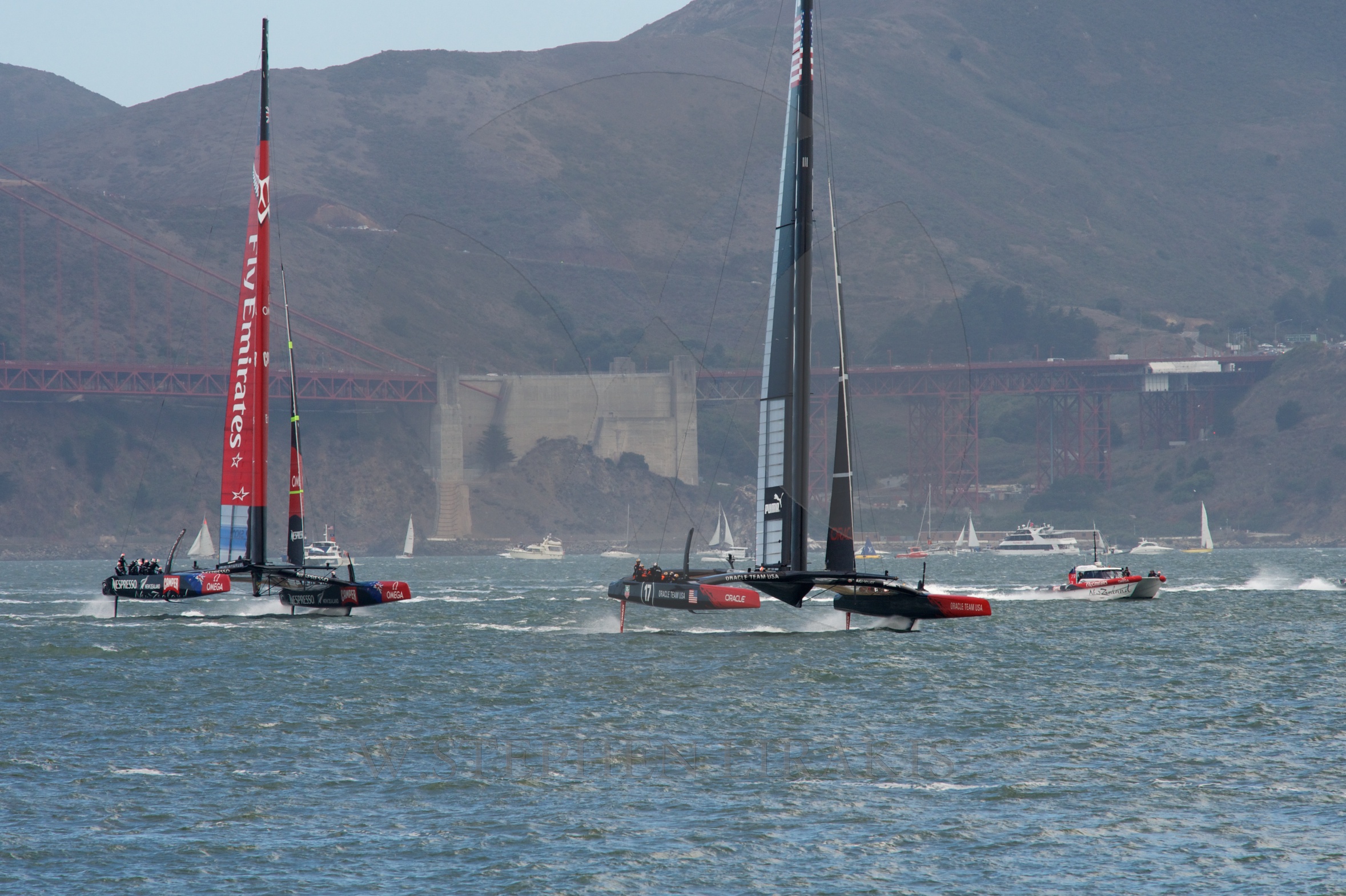
TEAM ORACLE FOILING
TEAM ORACLE FOILING
NEW ZEALAND LEADING LUNA ROSSA
NEW ZEALAND FOILING
NEW ZEALAND FOILING
CROSSING
CROSSING
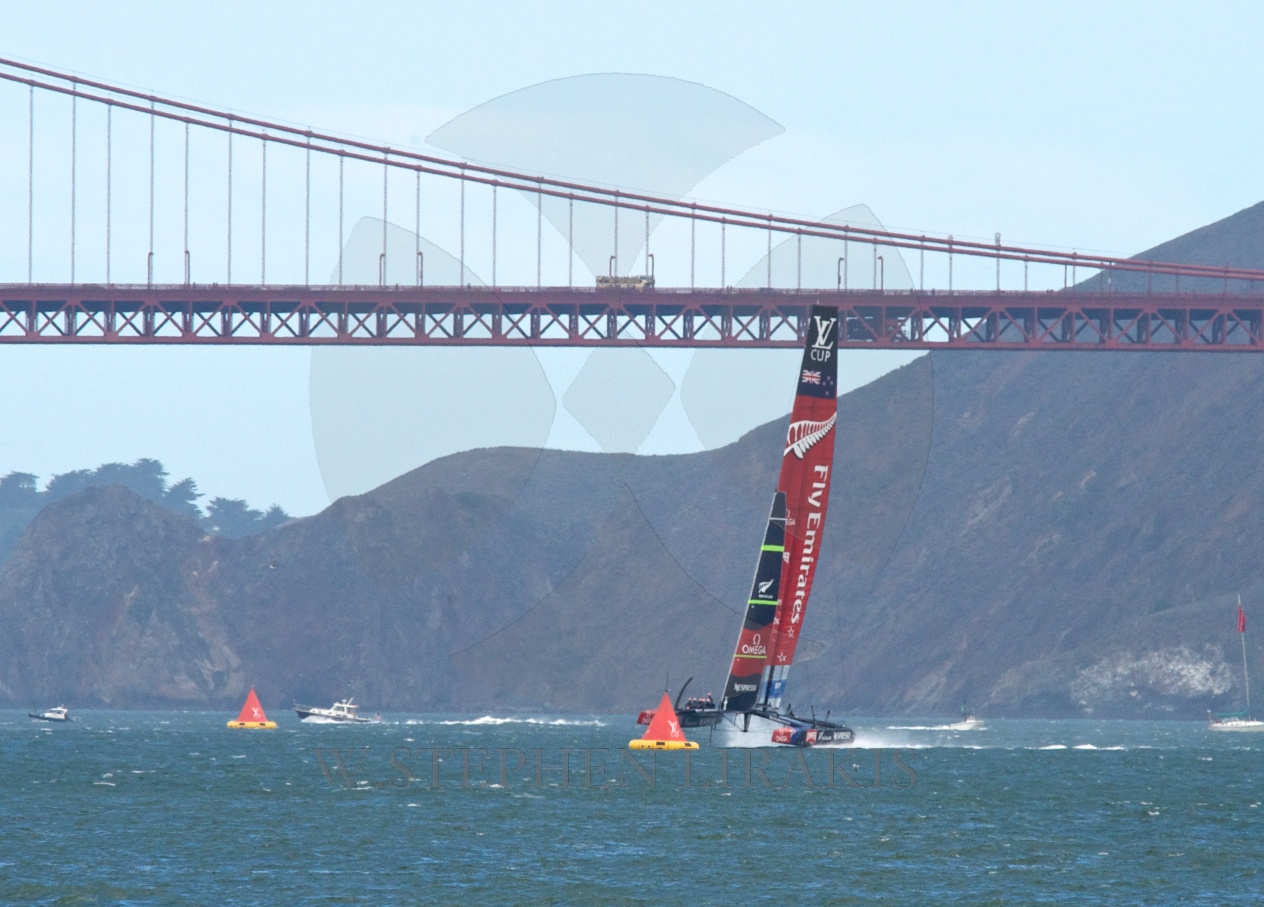
NEW ZEALAND NEAR THE BRIDGE
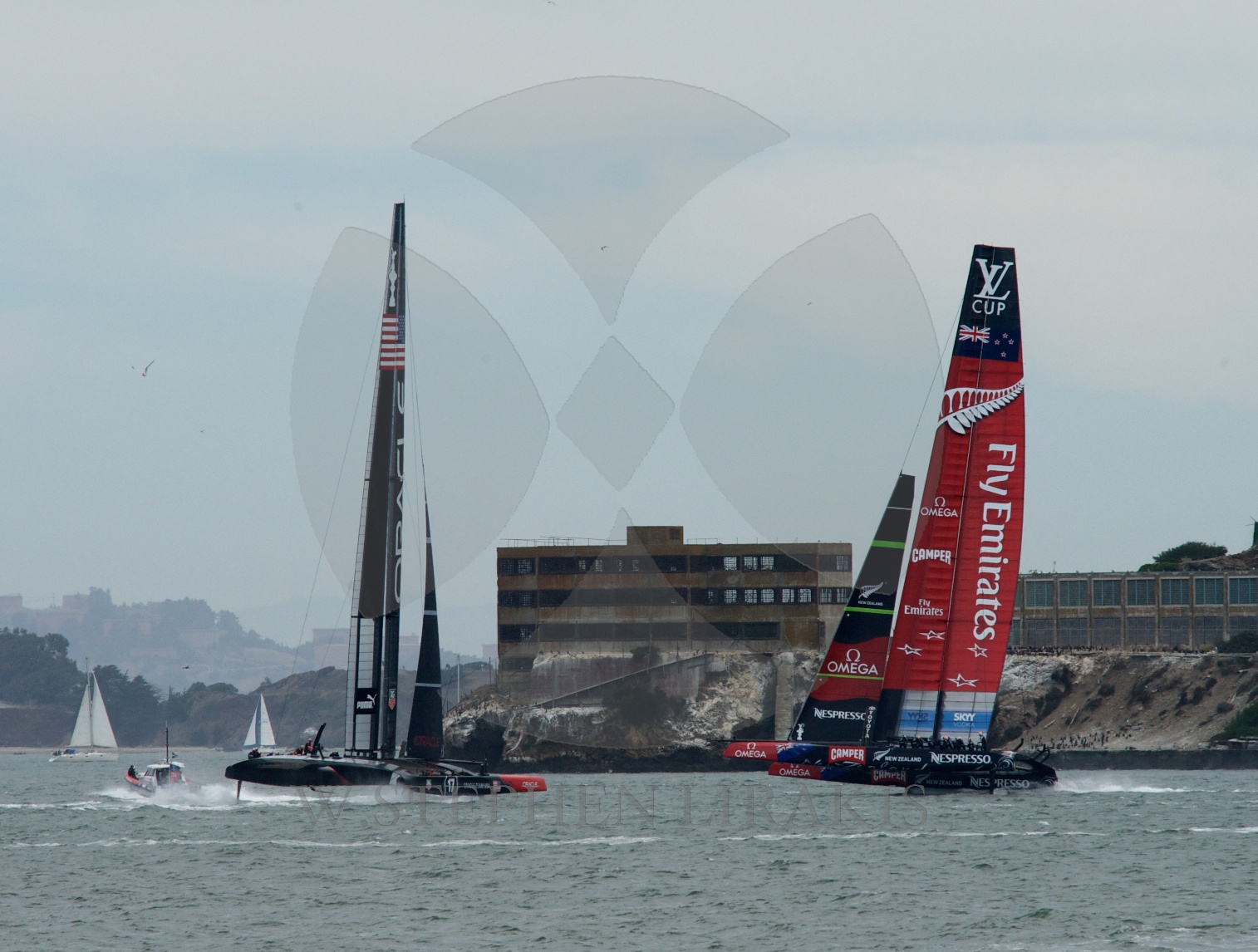
TEAM ORACLE AND BIG OBSERVER
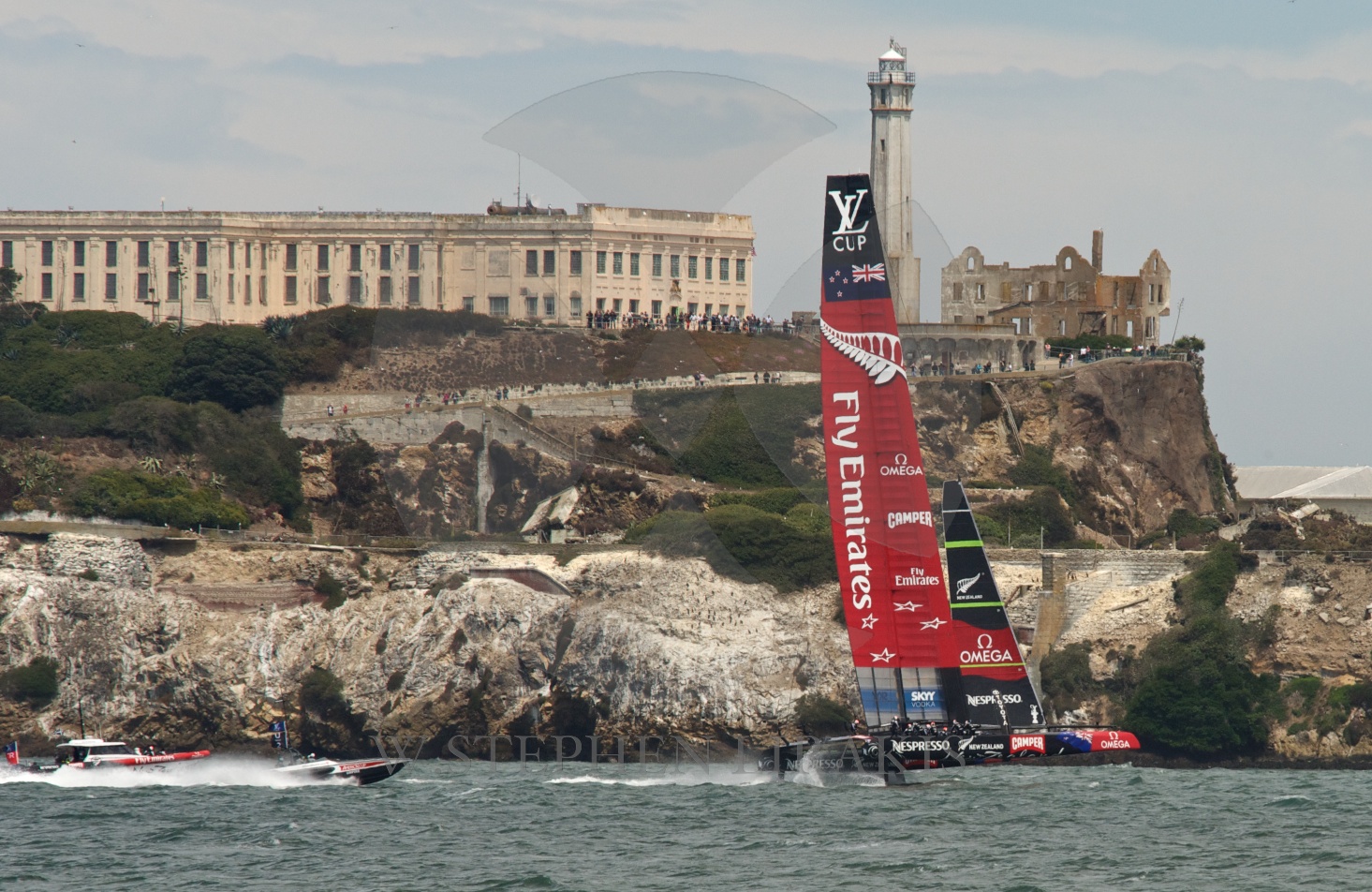
NEW ZEALAND BY ALCATRAZ

MORE SANCTIONS FOR ORACLE?

Oracle Team USA could face more sanctions; ETNZ’s Dalton accuses team of cheating

Oracle Team USA, the defender in the America’s Cup, could be in serious trouble.

Having already admitted rules violations during the America’s Cup World Series, a warm-up to this year’s regatta, the team has been described by a Cup committee as having made “an intentional effort’’ to circumvent the rules.

And on Tuesday, Oracle’s chief rival directly accused the American team of cheating. “You can’t actually get to any other point than the fact they were cheating,’’ Emirates Team New Zealand managing director Grant Dalton said in an interview. “I think it’s really serious.’’

Oracle could wind up forfeiting one or more race wins in the best-of-17 America’s Cup finals, or it could be thrown out of the regatta altogether, an international sailing expert said.

A five-member international jury “could dismiss them from the event, which would hand the trophy to the winner of the Louis Vuitton (challengers) Cup,’’ said Bob Fisher, an America’s Cup historian. “Still taking a strong line, they could give the Louis Vuitton Cup winner one or more wins in the America’s Cup finals. It depends on how strongly the jury feels about it.’’

The latest developments add to the troubles of a series plagued by soaring boat costs, a scarcity of challengers, a crash that killed a crew member, intense rules disagreements and one-sided races.

Meanwhile, with the major league baseball season entering the home stretch and the NFL exhibition season in full swing, the Louis Vuitton Cup is  attracting scant attention in the Bay Area. The finals begin Saturday between Team New Zealand and Italy’s Luna Rossa Challenge.

Oracle admitted last week its shore members illegally placed weights in the bows of all three of its 45-foot catamarans during the America’s Cup World Series. One of the boats was loaned to a British team.

In a report to regatta director Iain Murray, the America’s Cup measurement committee said, “The modifications appear to be an intentional effort to circumvent the limitations of the 45 class rule.’’

The committee’s report was used as the basis of Murray’s filing a protest to the international jury of the International Sailing Federation. The jury is investigating the violations.

In disclosing the violations on Thursday, Oracle team chief executive Russell Coutts said a team employee, possibly more than one, added the weights without the knowledge of management. He called the placement “a ridiculous mistake’’ because “it didn’t affect the performance.’’

Oracle voluntarily forfeited its wins in four ACWS regattas and its two overall season championships.

In an interview, Dalton disputed Coutts’ contention that the weights didn’t affect the boats’ performance.

“Why would you actually do it, if it didn’t make a difference?’’ Dalton said. Properly placed extra weight does improve the performance of the boat, he said.

“Because of the design (of the 45) you like the weight forward,’’ he said. That’s why “you put one guy really far forward to keep the bow in the water.’’

He called Coutts’ insistence that management didn’t know about the placement of the weights “complete nonsense.’’ He said he felt Oracle was trying to “snow’’ people with its explanations.

“It’s inconceivable,’’ Dalton said, “that a shore crew member woke up one morning and decided it was a good idea — that management would think it was a good idea  — that to make the boat faster you would put some weight in the boat, and then you’d come in to work one day and do it.’’

At Team New Zealand, for example, if someone were to add weights or move them around, the team would run tests to see if it would help performance or not, he said. He didn’t buy the idea that rogue employees committed violations on their own.

According to the measurement committee, a five-pound combination of lead and resin was found inside the bow strut on one Oracle boat. Bags of lead of roughly the same weight were found in similar positions on the other two boats.

Dalton said it’s possible that somebody placed several weights in the boats and, in removing them afterward, forgot about the telltale lead and resin. The weights were not discovered during the ACWS because detailed weight testing was not done on the AC45s, all of which were the same design, Murray said last week.

The violations were not discovered until July 26, when the boats were tested in preparation of the upcoming Red Bull Youth America’s Cup. If it hadn’t been for the youth sailing regatta, the violations probably would not have been discovered at all.

Asked last week to explain why it took two weeks after the violations were detected to disclose them, Coutts said, “We had to make sure it actually happened.’’ He did not elaborate.

Coutts was unavailable for comment Tuesday, a team spokesperson said. “We’re not going to be able to comment today,’’ she said.

Dalton steered clear of accusing Coutts personally. “I can only say that there’s a management failure,’’ he said.

Stephen Barclay, the American’s Cup chief executive, and Tom Ehman, the Cup director of external affairs, could not immediately be reached for comment.

Dalton said he didn’t expect the jury to take a long time to reach a decision. “We have absolute faith that the jury will get to the bottom of it,’’ he said.

He likened the use of illegal weights to bicyclists using performance enhancing drugs in the Tour de France.

He was asked why a team would take such a risk in a low-stakes event like the ACWS, far from a pinnacle like the Tour de France. Dalton replied, “I’m the wrong person to ask why. We didn’t do it. That’s a fair question: Why would you cheat? But there is no doubt that they did.’’

THE PROBLEM WITH THE AMERICA’S CUP

The problem with the America’s Cup venue was painfully clear during the challenger racelast Saturday. As the teams approached the leeward gate on San Francisco Bay, leader Luna Rossa Challenge (ITA) chose the right mark and their opponent Artemis Racing (SWE) followed.

This was a must-win race for the Swedes. Lose and they are eliminated. But on San Francisco Bay, with a strong tide flooding, their best tactical option was to follow. For Artemis Racing to have chosen the left mark, that would have taken them straight into the mouth of the current.

“It is the San Francisco Bay playbook,” explained broadcast commentator Ken Read. “(In a flood tide), you have to play the tidal cone behind Alcatraz Island, and then split to the left hand side for relief along the shore. It doesn’t make for a lot of passing lanes when you’re behind because, quite frankly, the playbook is in place on the Bay every single day.”

Another problem for the trailing boat has been the race course boundaries. With a narrow course, getting leverage on the leader is limited. But with the tidal impact, the natural boundaries are as real as the course boundaries.

“These tight race courses with the boundaries take away a lot of options for the guy behind,” said Read, “but given the impact of the current, I’m not sure you can make them wider.”

So what will the tide be doing this weekend when the Louis Vuitton Cup challenger finalsbegin between Emirates Team New Zealand and Luna Ross Challenge? With two races a day on Saturday and Sunday between 1300-1500 PDT, there is a light ebb predicted.

This reversal, in both strength and direction, could make for a more interesting race. Oh gosh, we hope so.

Anyone who sails has been aware and wondering about this since san francisco was chosen as the venue; particularly in a match race scenario.

NEW REVELATIONS ABOUT ORACLE

A previously confidential report by the Chairman of the Measurement Committee reveals that according to an internal inquiry by Oracle Team USA, one member of their sailing crew was involved along with three members of the team Shore crew in the AC45 Measurement incident which broke late last week.

The incident relates to the finding on July 26, that a builder supplied part of three AC45’s managed by America’s Cup Defenders Oracle Team USA, had been tampered with, and had over 2kgs of ballast added to it.

The discovery was made by boatbuilders working for America’s Cup Regatta Management (ACRM).

The amount of additional weight added is miniscule, and it is equally hard to understand why it would be located forward in the boat, however the point is that it was a breech of the class rules for the AC45 – which is a one design manufacturer supplied class.

The flipside of that situation is the time taken to clear off what should have been a very simple matter of the team identifying the people involved, the circumstances, and providing the Measurer with an explanation – all within 24 hours. Maybe they could have avoided the ignomy of withdrawing from the last four events of the America’s cup World Series, of which Oracle team USA had won three and finished second in the other.

Instead what should have been a minor error, has dragged on for over two weeks and now the investigatory phase of a Rule 69 Hearing has got underway involving a substantial number of the team members, at a time when they should be preparing for the Defence of the America’s Cup.

That situation is not of the Measurer’s or Jury’s making – but of Oracle Team USA. And their fans have got to ask why?

Members from one of the two Oracle Team USA teams sailing in the America’s Cup World Series Naples 2013 – celebrate their success after the Final Race Day –  Gilles Martin-Raget: AmericasCup©   Click Here to view large photo

The AC45s were sailed in nine America’s Cup World Series Regattas in USA, UK and Europe as a preliminary to the America’s Cup Regatta currently being staged in San Francisco.

Late last week August 8, 2013 almost two weeks after the discovery of the use of unmeasured parts, Oracle Team USA issued a media statement saying that they had decided to withdraw from the last four rounds of the America’s Cup World Series after a Protest had been made by the Regatta Director, Iain Murray to the International Jury attaching a report from the Measurement Committee.

Murray’s accompanying note to the Jury requested confidentiality on the matter citing potential damage to the event, however this issue was put into the public domain four days later.

The Oracle Team USA media release did not mention that, while their offer to withdraw had been accepted by the Regatta Director, the matter was still subject to an investigation by the International Jury under the provisions of International Sailing Federation’s Racing Rules, and specifically Rule 69 dealing with Allegations of Gross Misconduct.

That investigation is currently underway in San Francisco, where various members of Oracle Team USA are being interviewed by the International Jury.

Class Measurement infringements often result in serious penalties, including suspension from the sport. The investigation will usually focus not just on those who are directly involved, but anyone who had knowledge of the infringement, and failed to take action.

The Full Report from the Measurement Committee, reporting to Iain Murray, the America’s Cup Regatta director reads:

On July 26, 2013, the Measurement Committee were notified by ACRM boat builders preparing AC45 yachts for the Youth Americas Cup that the forward kingpost belonging to the AC45 yacht Ben Ainslie Racing (boat 9 ex-Aleph) was unusually heavy. The Measurement Committee inspected and weighed this kingpost.

Oracle Team USA celebrate on the podium in the San Francisco round of the ACWS in October. This was one of four regattas from which the team subsequently withdrew. –  Guilain Grenier Oracle Team USA©   Click Here to view large photo

The suspect forward kingpost appeared to have been filled with a resin/ballast slurry of some type. and weighed 3.744 kg.

The Measurement Committee inspected an AC45 kingpost that showed no evidence of having been modified, and found that it weighed 1.390 kg, a weight difference of approximately 2.35 kg

The Measurement Committee could not independently verify that the modified forward kingpost belonged to BAR, other than the fact that the BAR yacht did not have a forward kingpost installed while we were weighing the one reported to have been removed from that yacht.

We did not weigh forward kingposts from the other AC45 yachts belonging to OTUSA. but the ACRM boatbuilders reported to us that they were similarly heavy.

Later that afternoon we met with Richard Slater rules advisor to OTUSA and reported our findings. Mark Turner OTUSA construction manager, called me later that evening and said he would get to the bottom of the situation, but said he had no prior knowledge of it.

Between Friday 26th July and Wednesday July 31 the Measurement Committee chairman had several further conversations with both Mark Turner and Richard Slater about their in-house investigations.

Mark Turner confirmed that he had determined based on interviews that all three AC45 yachts competing in the ACWS and maintained by OTUSA (Boats 4 5 and 9) had been modified in a similar fashion and that boats 4 and 5 were modified by the insertion of bags of lead shot into the kingpost He further reported that he had identified the responsible persons which included a member or members of the shore team charged with the maintenance of the AC45 yachts as well as at least one member of the sailing team.

The diagram supplied showing the ballast had been located in the forward kingpost –

Mr Turner also confirmed that to the best of his ability to determine, the modifications to boats 4 (Oracle Team USA Spithill) and 5 (Oracle team USA Coutts) had been made during or prior to the Newport ACWS regatta in June, 2’012.

Ben Ainslie Racing (boat 9) did not compete in an ACWS event while under the control of OTUSA until the first San Francisco regatta in August of 2012, so it is unknown to the Measurement Committee when that boat might have been modified.

The AC45 Class Rule C 1 5 prohibits modification to components of the yacht without permission from the Measurement Committee. Permitted modifications are posted on the official Noticeboard. No request has been made for modifications of this type nor would such permission be granted if it were to be requested.

The AC45 Rule 0.1 6 stipulates that corrector weights. if required, are to be fitted within 0 420m of the chain plate bulkheads. The forward kingpost does not fall within this permitted region.

The modifications appear to be intentional efforts to circumvent the limitations of the AC45 class rule, and are therefore serious in nature.

Nick Nicholson. Chairman
For the Measurement Committee

As a footnote, three of the current International Jury were involved in the apparently simple case, satrting in May 2005, leading to the 32nd America’s cup in Valencia, of determining whether a designer Phil Kaiko was entitled to leave one team (Mascalzone Latino) that had not at that time entered, but was formed and intending to do so. Kaiko wanted to join a Spanish team, El Reto.

The apparently simple case became complicated, eventually being decided in favour of Mascalzone Latino and cost El Reto an eye watering 134,000 Euro in Jury costs alone (of a total cost for the process of 180,000 Euro). In the end El Reto did not progress to the 32nd America’s Cup.

richard gladwell