Deprecated: trim(): Passing null to parameter #1 ($string) of type string is deprecated in
/home/stephenl/public_html/wp-content/plugins/sexybookmarks/public.php on line
388
Deprecated: trim(): Passing null to parameter #1 ($string) of type string is deprecated in
/home/stephenl/public_html/wp-content/plugins/sexybookmarks/public.php on line
394
Deprecated: trim(): Passing null to parameter #1 ($string) of type string is deprecated in
/home/stephenl/public_html/wp-content/plugins/sexybookmarks/public.php on line
400
The Bermuda race starts in 5 days. And we are all conscious of safety at sea. The following is copied from scuttlebutt.
STAYING OUT TROUBLE
Randy Smith is old enough. Old enough to know how to play the sailing game at a high level, and old enough to know that it is only a game. Here Randy reflects on how he stays out of trouble when heading offshore…
———————————————————————-
I have grown up sailing, cruising, racing and delivering boats up and down the California and Mexican coastlines, along with racing to Hawaii numerous times. Even on my early trips as a kid with my parents on the family Cal 29, we encountered ships on the way to Catalina Island. I was always taught by my dad to know where the shipping lanes were on the chart and what VHF Channel 16 was for.
Fast forward 40 years, experience has made me a huge proponent of safety procedures: talking about them, practicing for them, writing down notes and most importantly, asking the questions that nobody wants to hear. Having everyone on board know how to use the GPS in an MOB situation, how to start the engine, where the ditch bag is, where the flares are, how to light one off, etc. People who I have sailed with know that I have become a bit of a fanatic in this regard, sort of a safety nerd. But the good news is, it is starting to become cool to be a nerd. Just like the movie Revenge of the Nerds.
With regard to protocol on commercial traffic, it is simple. The watch captain on deck has the ultimate responsibility to keep track of the surroundings. Ships are quite easy to see in day or night, and if you don’t have people on board with the knowledge of what a ship looks like in all conditions, you probably shouldn’t be out there.
I have sailed on boats with and without AIS (Automatic Identification System). For offshore and coastal racing, my experience with AIS is the same as radar. AIS is a very nice convenience, but we usually use it to confirm what we are already seeing with our eyes.
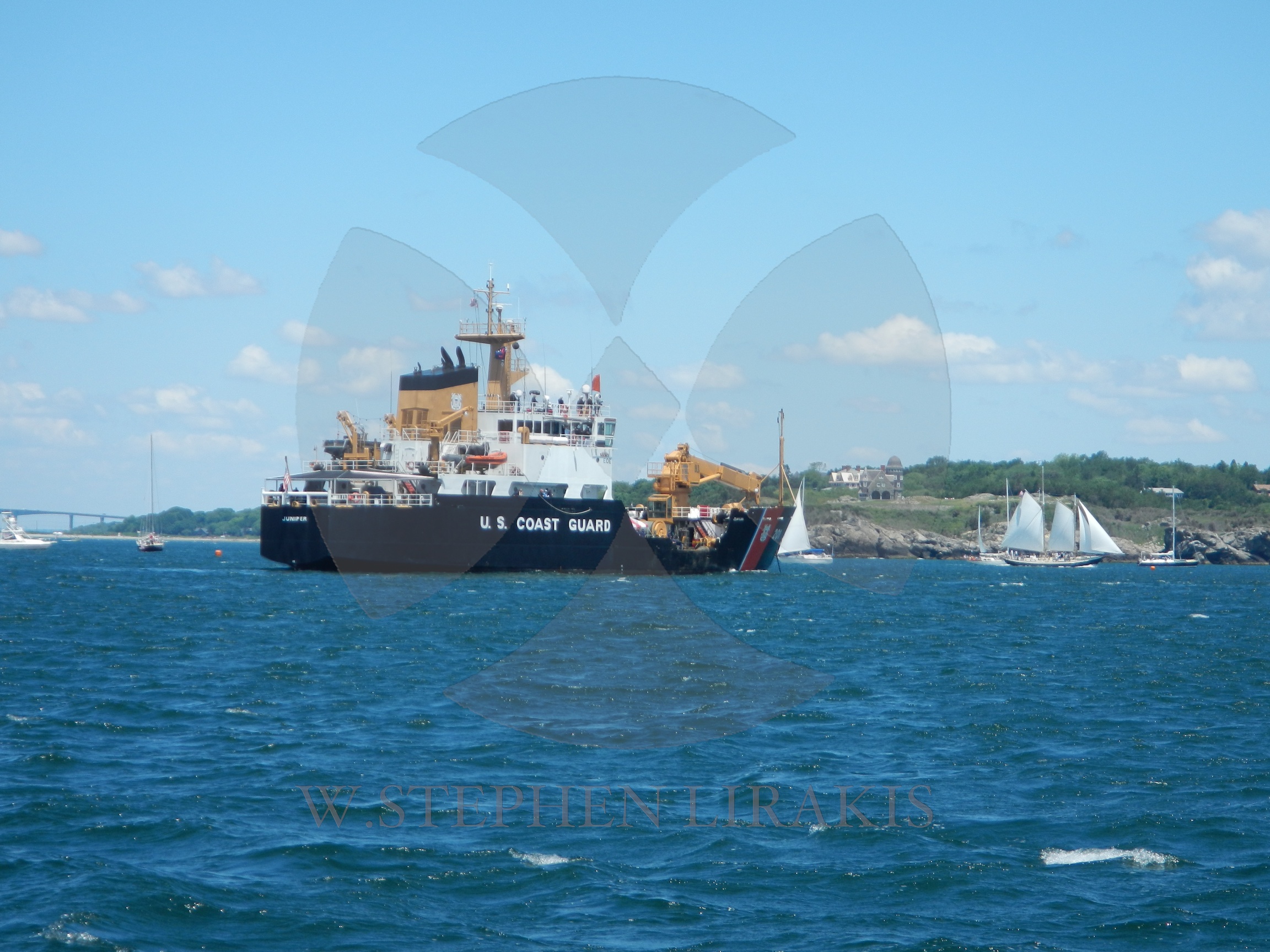
I have had some interesting close calls, including a large aircraft carrier off San Clemente Island, oil tankers in the shipping lane between Anacapa Island and Santa Barbara, and even large unlit commercial fishing vessels in Mexico with very confusing lights. Even in last year’s Transpac Race, we encountered a very large container ship coming up from astern at a steady collision course bearing. We heated up our course by 15 degrees well in advance, and it was as if he was trying to get close to us just to see us. When they were within 1/2 mile or so, they hit us with a giant spotlight and then turned right by about 45 degrees. Our next step would have been to call on VHF 16 and ask “WTF?”
When in doubt, we immediately get on the radio and/or make a course alteration to make our intentions obvious to the ship. In the event of fog, we would immediately deploy our radar reflector if not already rigged. I really cannot imagine a scenario where you could not see a large ship coming in day or night.
As always, most races are won and most tragedies are avoided before the boat ever leaves the dock. Attention to detail and confirmation that EVERY crewmember on board has an understanding of the following items seems to be the most sure fire way to interact with commercial shipping traffic and problems:
– Keep a diligent watch at all times.
– Upon sighting a ship, confirm changes in range and bearing or if bearing is not changing and too close. Determine what action is necessary.
– If AIS equipped, confirm with navigator the data on the ship.
– Without AIS, call on VHF 16 sooner rather than later.
– If a gybe or sail change will be required to avoid, get the off-watch up early to be prepared.
– Empower EVERY crewmember on the boat to know how to use the tools you have and establish a clear line of communication.
– Most importantly, remember this is just a sailboat race. Getting too close to a ship or land to make a small gain is just not worth it.
– If you sail with new people or on a new boat, confirm the level of experience and knowledge. Ask questions… your life could depend on it.
– When joining a new team, BE A NERD. Bring a higher level of knowledge, safety and seamanship to the team. They will appreciate you.