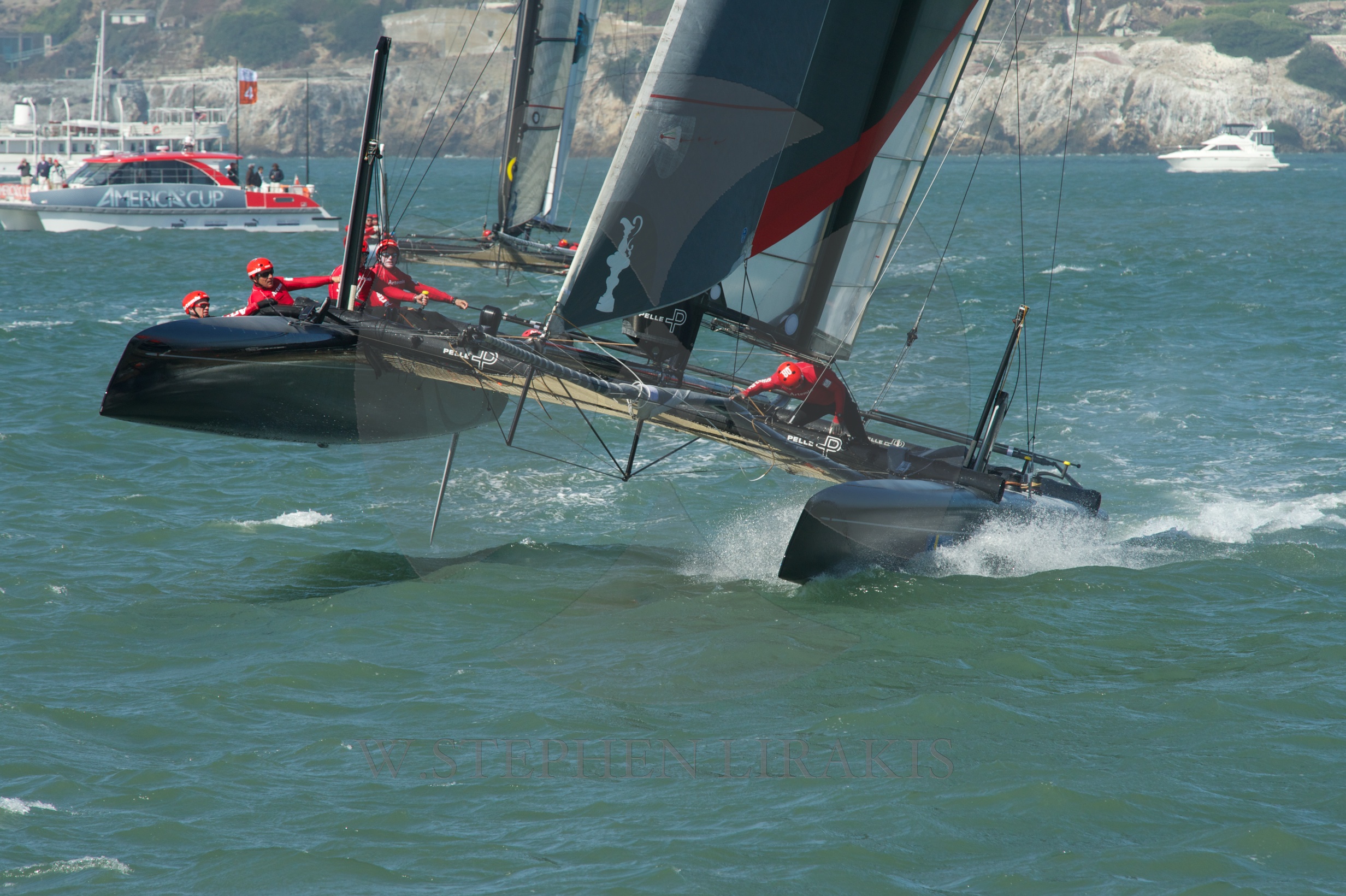
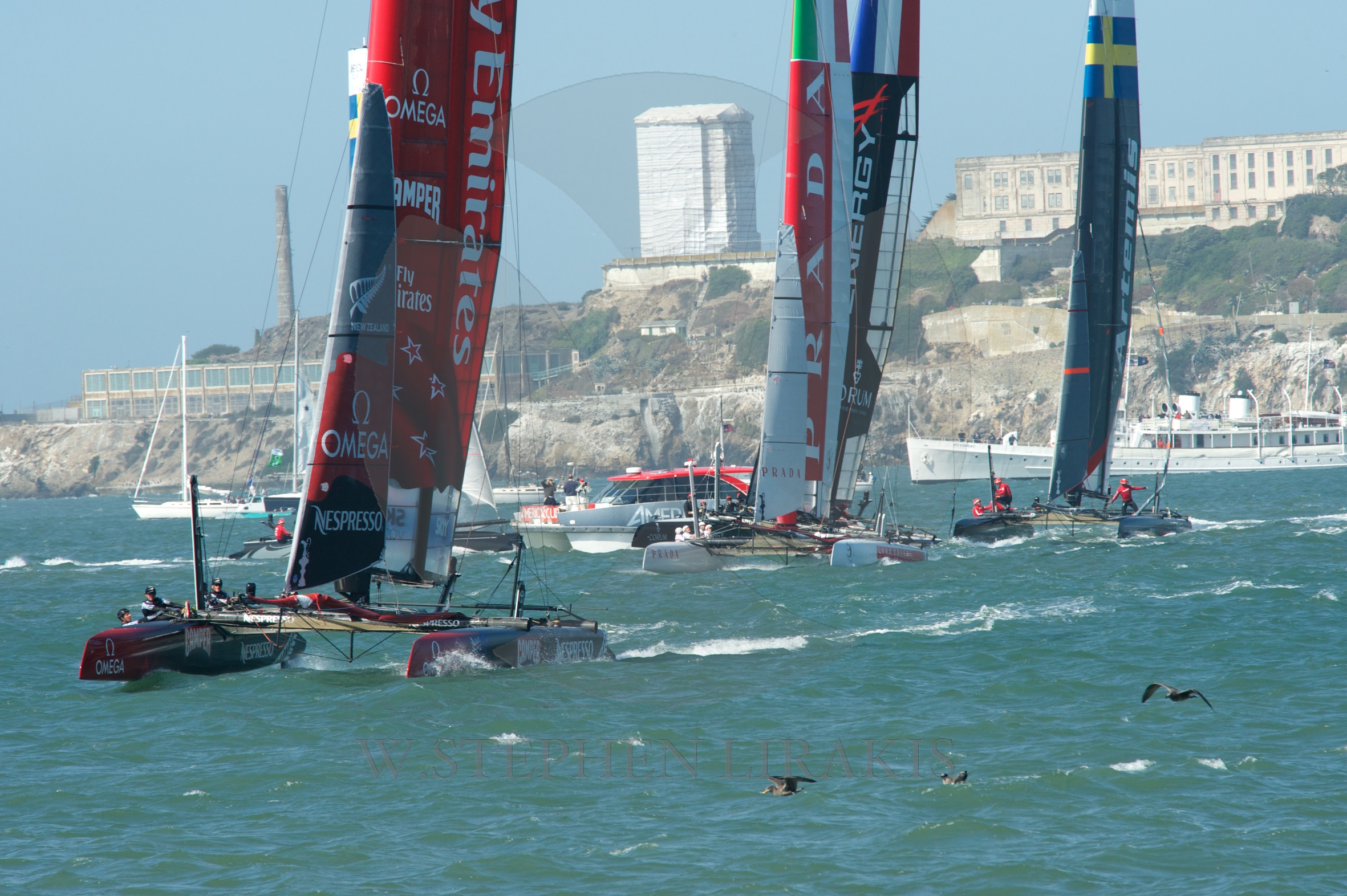
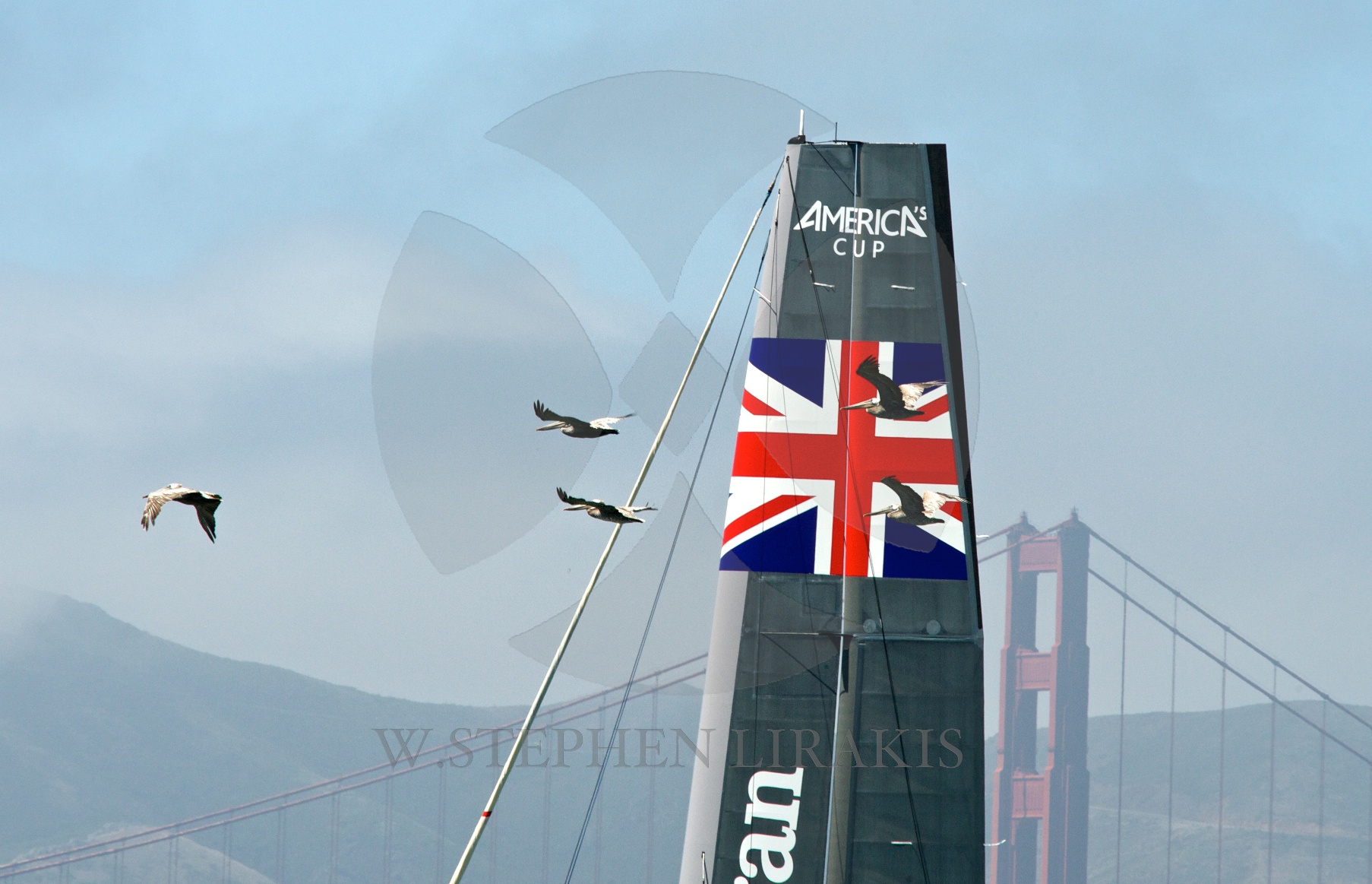
AMERICA’S CUP SOAP OPERA

TAKING A STERN
TAKING A STERN


CAPSIZE
CAPSIZE
FAST
FAST
HEADING INSHORE
HEADING INSHORE
PELICANS DRAFTING
PELICANS DRAFTING

The twists and turns of the pregame shenanigans leading up to the actual sailing are hard to imagine. It is a good thing they created a full concert schedule.

Legal troubles loom for America’s Cup


By Cory E. Friedman, Scuttlebutt legal analyst

“Don’t you know what’s goin’ on out there? This is no Sunday School picnic!” – Night of the Living Dead, Public Domain 1968.

“Just when you thought it was safe to go back in the water…,” – Jaws 2, Universal Pictures 1978.

Until recently the shambolic mess that is AC34 has been so busy with its business “issues” that legal issues have been buried. Now that the event is months past the deadline for issuance of a Coast Guard permit and only two weeks from opening ceremonies a potentially show stopping legal issue has arisen which, characteristically, those in charge do not even seem to be aware of.

AC34 could easily wind up mired in litigation, just like AC33.

As you may already know, America’s Cup Event Authority (ACEA) and America’s Cup Race Management (ACRM) cannot get an event permit unless they convince the Coast Guard that they have safety under control. With one unnecessary death already, it is not surprising that the Coast Guard is treating this as a serious issue. (Apparently, insurance – and even a potential source of insurance – has not been tied down either.)

The safety issues that were not resolved as of the start of the confidential mediation presently in progress are many and varied, requiring amendment of the Protocol, Class Rules, race schedules and other documents. Apparently, just about every proposed change will help some teams and hurt others. A lot of oxen will be gored before safety is sorted out.

Where the legal issue arises is a result of Stephen Barclay’s statement that if the teams cannot agree to all the safety changes in mediation, the International Jury (IJ) will decide (so don’t bother taking the mediation too seriously, you get another bite of the apple). Wrong. The IJ simply does not have the power to amend the Protocol or the Class Rules without the consent of whatever teams must consent under the terms of those documents.

So what’s the problem, they can just do it and there is no appeal? Everyone is stuck with their decision? Wrong again. The losing team can go straight to the Commercial Division of the New York State Supreme Court at 60 Centre Street with a very good chance of getting the IJ decision thrown out.

How, can that be if the IJ’s decisions are supposed to be final? Not quite. As the Protocol necessarily provides in section 15.12, the IJ is an arbitral body governed by New York law and the Federal Arbitration Act (FAA). The FAA is very friendly to arbitration with certain key exceptions. New York law is much less friendly to arbitration and often is out of line with the FAA, which New York is required to follow but often does not. NY courts often expand those exceptions.

Application of the FAA should be straightforward, but turns out to be fairly complex. Indeed, the U.S. Supreme Court has issued two split decisions in the past two weeks with different results. What is clear from all the U.S. Supreme Court’s decisions is that a decision that exceeds the arbitrator’s powers can be vacated by a court of relevant jurisdiction – in this case, the New York State Supreme Court as guardian of the Deed of Gift.

There is nothing in the Protocol or Class Rules which even arguably allows the IJ to amend them as it sees fit without the relevant teams’ approvals. Thus, any changes would exceed the IJ’s power and NY Supreme Court could vacate the award at the request of the aggrieved team – after litigation of indeterminate length and a possible stay of the event. The Coast Guard would not even need to drop the hammer.

What this means is that contrary to what Barclay is telling the teams and the world, they had better agree during the mediation or there is not going to be an AC34.

Apparently, somebody is running around claiming that section 16 of the Protocol, which requires compliance with governmental laws and regulations, gives the IJ the power to alter the Protocol and Rules on the basis of safety. That is a laugher. It does not pass the straight face test.

No law or regulation requires any of the safety changes. If they did everyone has been in violation for months. The changes are only necessary to get a permit. Not getting a permit and not running the event is not a violation of any law or regulation. Nor is there any “IJ, do what is necessary clause.” If failing to agree crashes the whole event in flames, the IJ cannot prevent it.

Of course, even if a team believes it was unfairly treated, it need not seek relief from a court if it can live with the changes. A team could also give up all its leverage and take what it gets by disclaiming in advance any resort to the courts.

How did the event get to this sorry state so close to the opening ceremonies?

The answer makes for a long story, but the bumper sticker version is simple. Soon after the Kiwis used Larry’s money to stage a successful hostile takeover of the Cup in Valencia (2010), they ethnically cleansed the operation of Americans, including Oracle’s American licensed in house counsel. In her place they hired a Brit and a Kiwi, neither of which is licensed to practice law (or Medicine or Dentistry, although they may do that as well) in California. (Sometimes they claim they are not practicing law, but just kibitzing about Cup related issues, even though sometimes titled “General Counsel.”) Clearly, they do not have a clue about arbitration in the U.S. under the Federal Arbitration Act. The other things they don’t have a clue about are for another installment, but for now AC34 better find U.S. licensed in house counsel who know what they are doing. Accurate knowledge of the law by all involved is key to avoiding miscalculation.

Hopefully, they will do so before I have to answer the question I was asked today: “What happens under the Deed of Gift if the event doesn’t happen?”

– See more at: http://www.sailingscuttlebutt.com/2013/06/20/legal-troubles-loom-for-americas-cup/#sthash.yTobdAWX.YWHuKYdA.dpuf


AROUND THE ISLAND RACE VIDEO

I have edited the video footage of the around the island race down to a time I considered people might actually watch. The consequence of that is that once again I sped up the video in order that the race as a whole is shown. The windward beat with close crossings, the reach, the run with jibes, and the leeward mark rounding where a lot of boats of various sizes arrived at the same time.

HIGHER AND FASTER THE AROUND THE ISLAND RACE 2013 from ws lirakis on Vimeo.

FOILED

courtesy of sailing anarchy

With lifting foils getting more and more important and complex at the top end of multihull racing, our pal Dario from Carbonic Boats wrote a relatively simple little guide to the different solutions and how they work.  

1) Angled Board

The simplest way to obtain a vertical component by just canting the foil lift vector.  This solution is extremely constrained in angle and span if a beam limit is to be respected when the foil is retracted. The same constraint also forces the foil exit point in the hull inboard toward the middle of the boat, moving the hull/foil junction closer to the free surface and reducing righting moment (because the centre of vertical lift moves inboard).

Every part of the foil span contributes evenly to vertical lift so, assuming enough foil angle is possible to lift the boat clear of the water, there is no stability in heave (ride height).

Using two such foils together on a very wide platform such as Hydroptere (diagram 
below) can give heave stability by simply reducing immersed foil area with altitude.  But this arrangement is not practical in most classes racing ‘around the cans’.

2) C, J, and L Foils:

C Foil: Sideforce (to windward) is unevenly vectored to generate upward lift. Vertical component is greatest near the bottom. By tightening the radius, more extreme lift characteristics can be obtained regardless of beam restrictions. On the practical side, C foils are easy to install because they fit in a constant-radius foil case.

 C foils are unstable in heave: as ride height increases, vertical force does not decrease. Given constant thrust, if lift is greater than total weight, the boat will rise until the foil stalls, causing a crash. C foils are helpful in foil-assisted sailing as long as they lift less than 100% of the weight of the boat.

J Foil: Similar to C foils but maximum lift remains available when a J foil is partially retracted (shown orange). The lower part of a J foil stays ‘canted’ until the junction radius reaches the hull. Unlike a C foil that becomes more upright as you pull it up. J foils are also unstable in heave so are suited to foil-assisted sailing rather than full foiling. They potentially have less drag when sailing downwind because their draught (and hence frontal area) can be reduced when vertical lift is still beneficial but less sideforce is required.

Both C and J foils can have high induced drag when set for max lift (raked – see last diagram below) because the lift distribution along the span becomes biased toward the tip. End devices such as winglets or washout at the tip help alleviate this but cause parasitic drag at other times and add complexity to the foil case design if the foil is to be fully retractable. Note that tightening the transition radius on a J foil progressively gives a ‘traditional’ 90 degree L foil that is also unstable in heave.

‘Acute L’ Foil: A very elegant way to automatically regulate heave for full foiling on only one (leeward) foil. First “stumbled upon” by the ETNZ design team, this idea is a great example of how rule constraints can push innovation by forcing competitors to think laterally.

As ride height goes up, the immersed area of vertical ‘strut’ decreases (lateral area is lost). This makes leeway increase, in turn reducing the Angle of Attack (AoA) on the ‘horizontal’ foil.  To get your head around this, imagine what would happen if you made leeway extremely large (like 90 degrees): The horizontal foil would actually start pulling down!  Under normal conditions the change in leeway is small (say 5 degrees) but the component across the boat works to reduce the AoA on the horizontal foil, moderating lift to stop a runaway leap into the air.

So: boat goes up > lateral area gets smaller > boat starts slipping sideways a bit more > horizontal foil moves toward its own low pressure field > lift decreases > boat settles > lateral area increases > leeway decreases > vertical lift grows again… And so on until an equilibrium is reached.

The higher the inboard tip relative to the outboard root/junction, the closer the coupling between ride height (through sideforce) and vertical lift.

At extreme ride heights, the acute L foil begins to work as a conventional (powerboat) V hydrofoil: When the inboard tip of the horizontal foil breaches the surface, immersed foil area is gradually reduced regardless of sideforce. This is vital to avoid a crash when pulling away to a near square run in reaction to a gust. It is a good ‘safety valve’ in situations where speed (and lift) may be high but sideforce is small.

3. Combos

With the basic components described above, designers have a kit of parts that can be mixed and matched to suit the particular application at hand.  The principal groups that can be seen when observing recent AC72 testing are described below in the order pictured above.

L Foil with Polyhedral: The bent inboard tip provides stability in the same way as an acute L foil. Kinking the horizontal foil reduces junction angle between vertical strut and horizontal foil to 90 degrees. In a way similar to introducing a bulb or aradius, this decreases drag where interference effects are most prevalent.

The root of the horizontal is heavily influenced by the low pressure area inboard of the vertical strut so is less affected by leeway than the tip. It makes sense therefore to use the root to generate the bulk of vertical lift and exploit the tip for heave control.  The penalty is a bit more parasitic drag as there is more foil area for a given effective span.  The bent horizontal foil can also hug the hull more snugly when the foil is retracted, reducing drag when the windward hull is near the water.

Acute L with Kinked Strut: Bending the vertical strut enables some adjustment of the angle of the horizontal foil so that stability in heave can be fine-tuned. A bend may also be necessary to stay inside the beam restriction if designers want to cant the strut inboard to get an effect similar to a C-L foil.

C-L Foil: Combines the heave stability of an acute L with some lift vectoring of the strut for lower overall drag. The cost is ashift inboard of the centre of lift which reduces righting moment.

S-L Foil: Similar objective to a C-L: more even lift sharing for lower overall drag. But the inflection at the top moves the bottom outboard again, recovering full righting moment.
The S also fine-tunes the angle of the horizontal foil to adjust ride height and heave stability. The downsides are mechanical complexity at the bearings, a foil case that holds more water, and more friction when raising and lowering.  Bending the foil at the highly loaded area between hull and deck bearings is also structurally more demanding, especially on bigger boats.

And finally, a diagram (left) showing how foil rake affects vertical lift.

Remember that heave stability is the tendency for lift to vary inversely with ride height.  For effective foiling it must be combined with pitch stability which is a bit simpler to obtain using properly sized T+ or Lrudder foils.

On small boats such as the A Class, it may be possible to ‘stay on top of’ an unstable platform by actively managing weight placement and sideforce, countering in real time the continuous tendency to depart stable flight. Like riding a unicycle this is difficult but humanly possible.
Until now this solution, though far from optimum, seems to be the best real world choice for racing around the course in the A Class, mainly due to rule constraints on foils. The challenge for the future is getting stability with an acceptable drag penalty within the rule.  Bigger boats do not have the option of quickly shifting weight and aggressively trimming the sails so true stability is important for safety and speed.

HAVE THEY LOST DIRECTION?


Lack of progress in safety provisions frustrating America’s Cup in wake of Andrew Simpson death

Just two of original 37 proposals have been incorporated into the rules following death of British sailor

SUNDAY 16 JUNE 2013

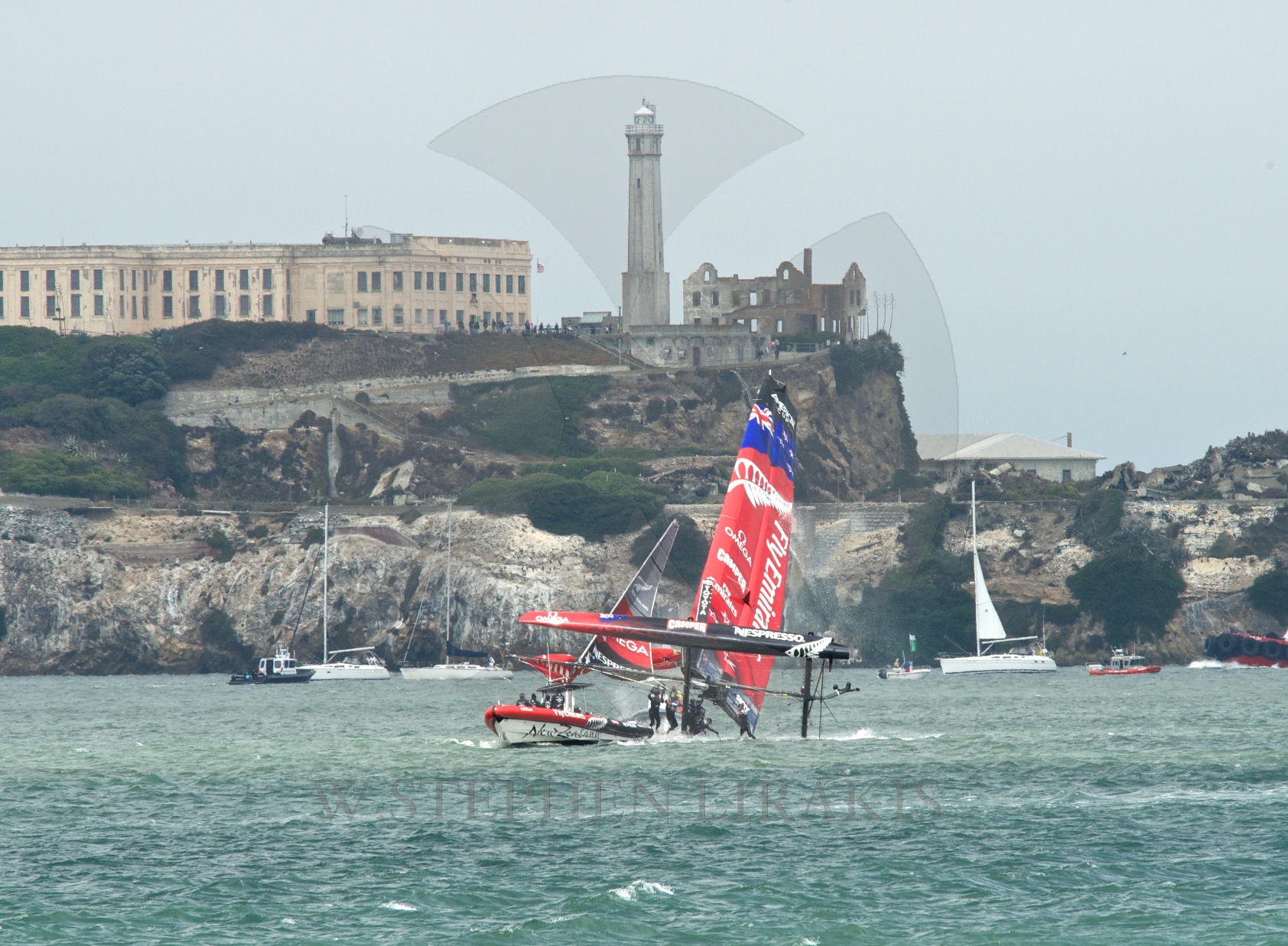
Slow progress is being made in San Francisco on changes to the America’s Cup safety provisions following the death of Andrew Simpson during a training accident on the Swedish challenger Artemis.

With considerable fanfare, a review committee under the chairmanship of the regatta director Iain Murray produced a list of 37 recommendations, though the other members of the committee were told by the lawyers not to put their names to the proposals.

Over the weekend two, well one and a half, of the recommendations were incorporated into the rules for both the Louis Vuitton Cup (LVC) challenger elimination series and the match between the eventual winner and the defender, the locally-based Oracle Racing.

One covers technical matters surrounding the structure of the 40-metre carbon fibre solid wings and the dagger boards which lift the 72-foot catamarans so that they skim on foils above the water.

The second confirms that there will be no guest position when the yachts are racing. But it does not include, as originally proposed, a ban on on-board television camera operators. There is no indication when the remaining 35 proposals would, if at all, be adopted.

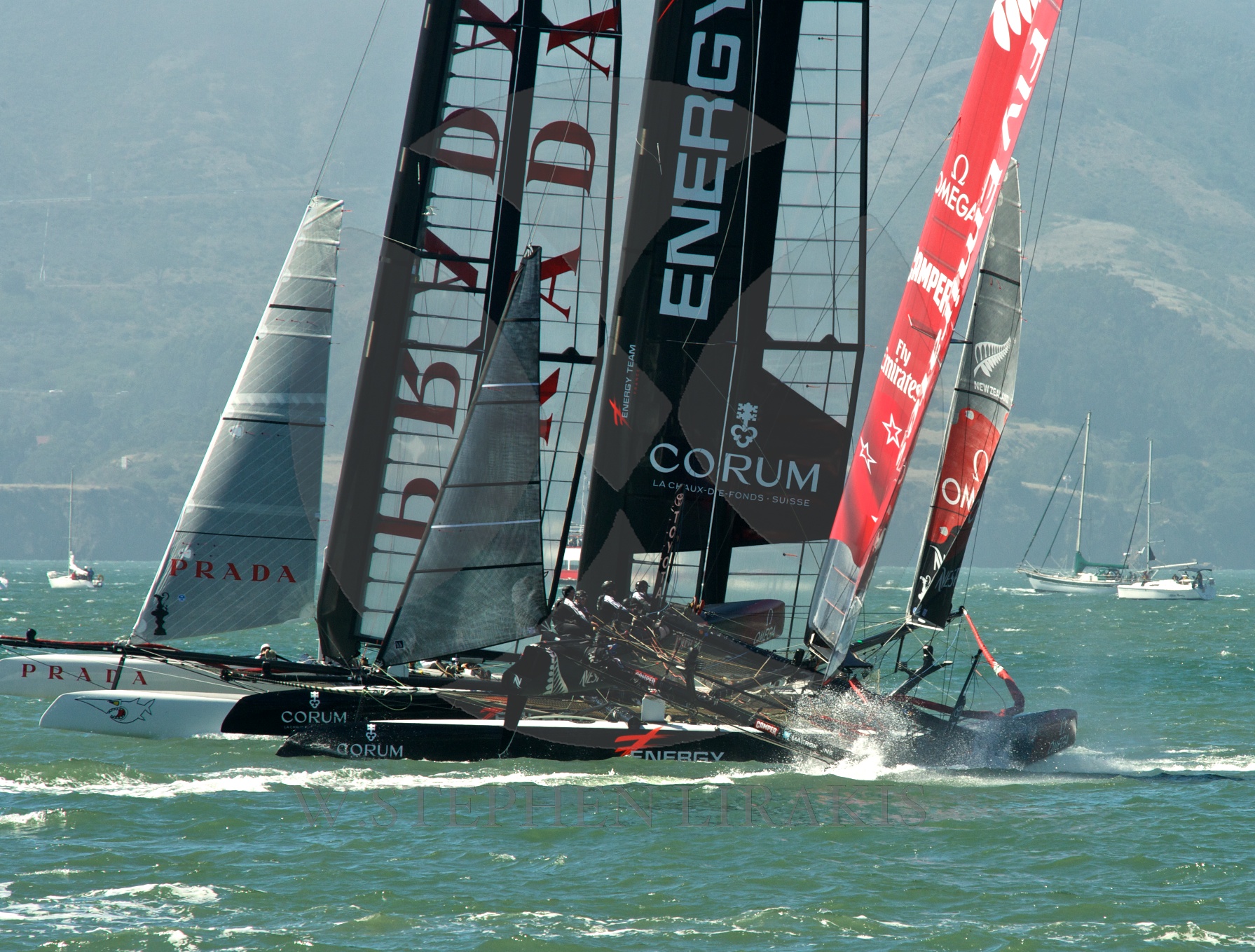
The opening exhibition race is scheduled for two weeks on Friday, 5 July, with the first LVC race between Emirates Team New Zealand and the Prada-backed Italians in Luna Rossa two days later.

An ETNZ proposal, backed by the Italians, to delay the whole event until 19 July and then run a condensed LVC was vetoed by the Swedes, even though they are indicating they may not be ready to race until 6 August and then only if their latest boat, which has yet to be launched, comes through all its sea trials successfully.

That veto is being investigated by two members of the international jury, one Britain’s Bryan Willis, the other a New Zealand lawyer, Graham McKenzie. But the whole thing may, as time runs out, have to be referred to the full five-person jury and the work of Willis and McKenzie is not due to start until Wednesday.

Nor has the United States Coastguard announced that it has granted the event a permit to race. The San Francisco Police Department is still preparing its report on ‘Bart’ Simpson’s death, though that will focus largely on criminality, and the Medical Examiner’s (coroner’s) report, a public document, has yet to be published on the causes of his death.

NEW RECORD AND OVER EARLY

Francois Joyon has broken the singlehanded transatlantic record by over 16 hours. The new record is 5 days 2 hours 56 minutes and 10 seconds; not quite setting a new 24 hour record in the process.

SAILING TO WINDWARD IN 25 KNOTS
OVER EARLY?
OVER EARLY?

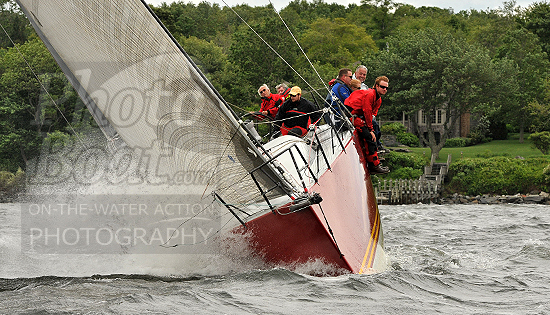
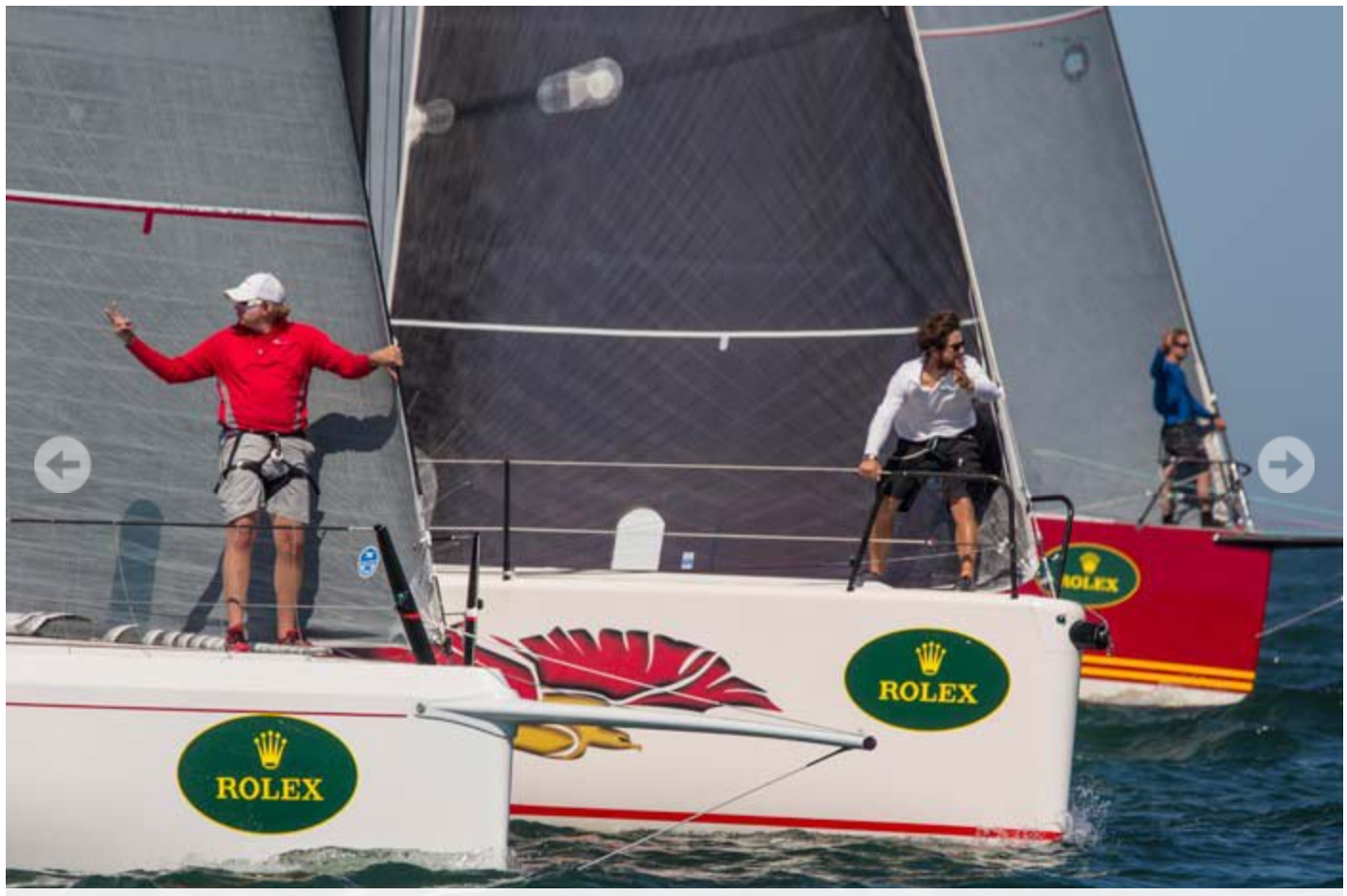
Yesterday I was called over the line early on a start. Traffic was heavy so I was watching the bowman. As you see he has his thumb up (the red and yellow boat). I won’t argue for a moment that we were on the line but the boat to leeward was bow out on us. Oh well, as the saying goes ” you’re not trying unless you’re over on occasion”.


NEW YORK YACHT CLUB ANNUAL REGATTA

RACE PREP
RACE PREP
FRIDAY MORNING
FRIDAY MORNING

This weekend is underway; the NYYC Annual Regatta, yesterday was what is becoming a fixture, the round the island race (around conanicut island) plenty of wind and the tide running hard. Today I am almost certain we will sail outside, heading to R2 at the entrance of Narragansett Bay. The weather forecast was spot on as events unraveled as predicted. Today, if the forecast is as predicted we may well start with an answering pennant, signaling a delay; as we wait for the wind to settle.

Francois Joyon and IDEC are now only 31 miles behind Thomas Coville and SOBEDO.

WEEKEND SAILING

Today is the Round the Island race the unofficial official beginning of the NYYC Spring regatta. The weather is improving. Three days of intense sailing.

Francois Joyon aboard “IDEC” is 140 miles behind the record set by Thomas Coville, but the weather system looks promising. The kind of sailing Joyon is doing makes a statement like the one I made about intense sound a bit silly.