


Hippocrates is historically known as the father of western medicine. I am ever amazed at the thought process that arrived at these words.
The Death Masks are Victorian; an era that developed a fascination with death.
Hippocrates is historically known as the father of western medicine. I am ever amazed at the thought process that arrived at these words.
The Death Masks are Victorian; an era that developed a fascination with death.

Today was the six meter class meeting in the harry anderson library in the Seaman’s Church Institute in Newport. Toby Rodes presiding. With a bit of luck there will be more than 10 boats on the line for the NYYC spring regatta june 11-12.
Three boats will leave for the world championship in Helsinki, which promises to be a wonderful event with over 50 boats.
This is a subject that has been on my mind for awhile. The America’s Cup has developed racing rules for the Cup. They may create “flow” to the racing; for those who are not sailors and for Television. For me, it is tangential to the idea that sailing is developing into two separate and distinct classes. Professional and Amateur. It is a subject that has been discussed in earlier posts. This link to Matt Knowles blog discusses the subject with insight and clarity.
We may be watching the evolution of the sport before our eyes. So far I have seen no reaction.
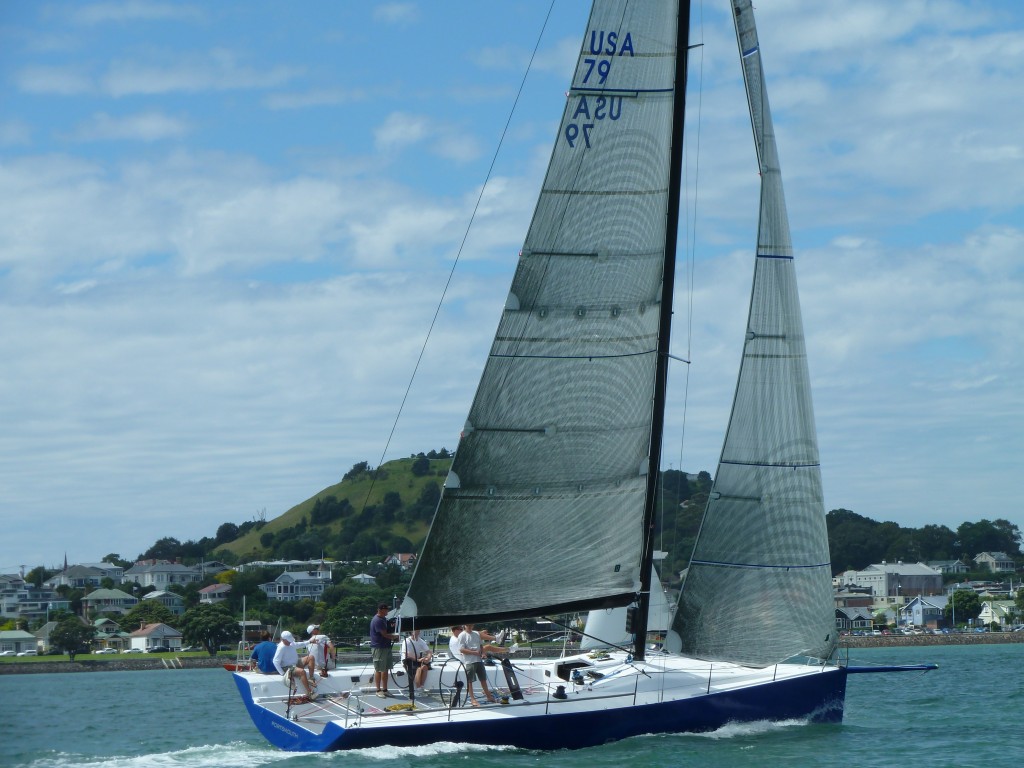
Jason Ker has certainly evolved in his thinking since he designed “Snow Lion” in 2005
|
Increased Interest Prompts Extension of Transatlantic Race Entry Deadline to March 31
New York, NY, March 3, 2011 — The organizers of the Transatlantic Race 2011 (TR 2011), the Royal Yacht Squadron, New York Yacht Club, Royal Ocean Racing Club and Storm Trysail Club, have extended the deadline to enter the Race to March 31, 2011. With the transatlantic fleet now over 30 entries and many new inquiries following the success of the RORC Caribbean 600 – part of the companion Atlantic Ocean Racing Series – the organizers encourage those interested to enter the TR 2011 as soon as possible to secure a spot since the Notice of Race notes a maximum of 50 yachts for the Race.
The TR 2011 will cover 2,975 miles from Newport, R.I., to the Lizard in England. The focus of pre-race activities will be the New York Yacht Club’s Harbour Court clubhouse in Newport, R.I. There will be three staggered starts from June 26 to July 3. The awards ceremony on August 9th and other post-race activities will be held at the Castle, the home of the Royal Yacht Squadron in Cowes, England.
The fleet will include IRC Racing, IRC Racer/Cruiser, Classic and Open divisions with a minimum length overall (LOA) of 40 feet and no maximum. Competition is building within several segments of the diverse fleet, notably the 100’ and up range which includes Sojana, Rambler 100, ICAP Leopard, and Maltese Falcon.
Tight racing is also expected in other classes and divisions, such as yachts in the under 50’ range in IRC Racing and IRC Racer/Cruiser including the Class 40s – Concise 2, Dragon, and Kamoa’e, the Rogers 46s – Shakti and Varuna, as well as British Soldier ASA, Jacqueline IV, Sasha, Dawn Star, and Carina. For a complete list of entries click here.
Prospective entrants in the TR 2011 will find the Notice of Race here and the Entry Form here. Entry forms should be returned as soon as possible – but no later than March 31, 2011 – to sailingoffice@nyyc.org. All race documents are available at www.transatlanticrace.org.
The TR 2011 is the centerpiece of the Atlantic Ocean Racing Series (AORS), and is organized in concert with the following clubs: Royal Malta Yacht Club, Annapolis Yacht Club, Ida Lewis Yacht Club, Montego Bay Yacht Club, Naval Academy Sailing Squadron, Jamaica Yachting Association, Antigua Yacht Club and Real Club Nautico de Sanxenxo.
Two races in the AORS have been completed: the Pineapple Cup – Montego Bay Race and the RORC Caribbean 600. The Pineapple Cup, from Ft. Lauderdale, Fla. to Montego Bay, Jamaica, a distance of 811 miles, was won by Genuine Risk, a 97-foot canting keel super maxi skippered by Hugo Stenbeck. In the RORC Caribbean 600, George David’s Rambler 100, took line and overall IRC honors and set the monohull record of one day, 16 hours, 20 minutes and 2 seconds for the course’s 600 miles.
In addition to the TR 2011, upcoming races in the AORS are the Annapolis to Newport Race (June 3); Rolex Fastnet Race (August 14); Biscay Race (September 11-12) and Rolex Middle Sea Race (October 22).
Interest in competing for the Series has been increasing rapidly with nearly half of the TR 2011 entries planning to compete for the AORS. Of the seven races in the Atlantic Ocean Racing Series, three races including the Transatlantic Race 2011 must be completed to qualify. Races will be weighted equally with the exception of the Transatlantic Race 2011, which will be weighted 1.5 times. Cox-Sprague points will be awarded within individual races in the series to accommodate differences in fleet sizes. A yacht will be scored in the series using its two best finishes in addition to the Transatlantic Race 2011. Awards for the AORS will be presented in November, 2011 at the New York Yacht Club’s Annual Awards Dinner in New York.
Contacts at the organizing clubs are:
Brad Dellenbaugh New York Yacht Club +1(401) 845-9633 Trish Lewington Royal Yacht Squadron +44 (0)1983 292191 Ian Loffhagen Royal Ocean Racing Club + 44 (0)207 493 2248 Marcy Trenholm Storm Trysail Club +1(914) 834-8857
Newport Shipyard – official sponsor of the TR 2011 Home to the America’s Cup for half a century, Newport continues to be one of the most sought after yacht harbors in the USA. Rich in yachting history, Newport is home to the best sailors, best boats and is ground zero for major yachting events. Newport Shipyard brings all this together on Newport Harbor, including Belle’s Cafe, a gym, and the can-do attitude the Shipyard is known for. This year the magnificent J’s from the 30’s will base at the Shipyard for a summer regatta, major Transatlantic Race contenders will visit before they depart, and the 25th anniversary of the Bucket will call the Shipyard home. For downtown dockage, lifts and a dedicated workforce, look no more. www.NewportShipyard.com |
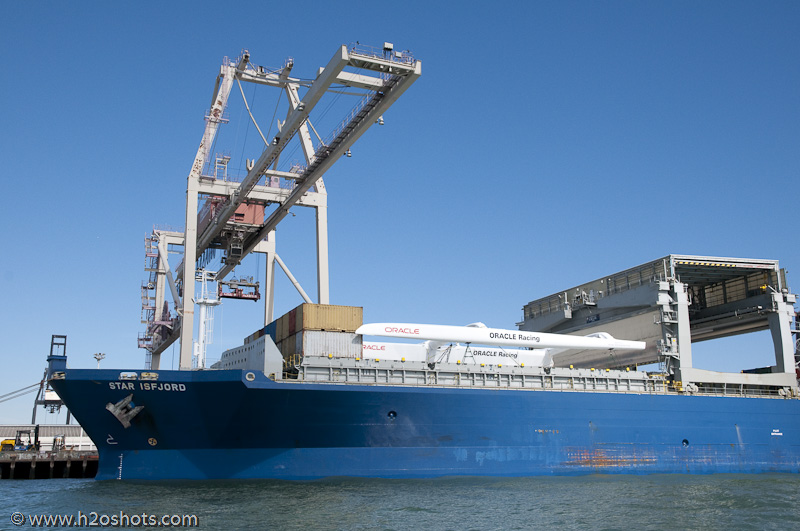
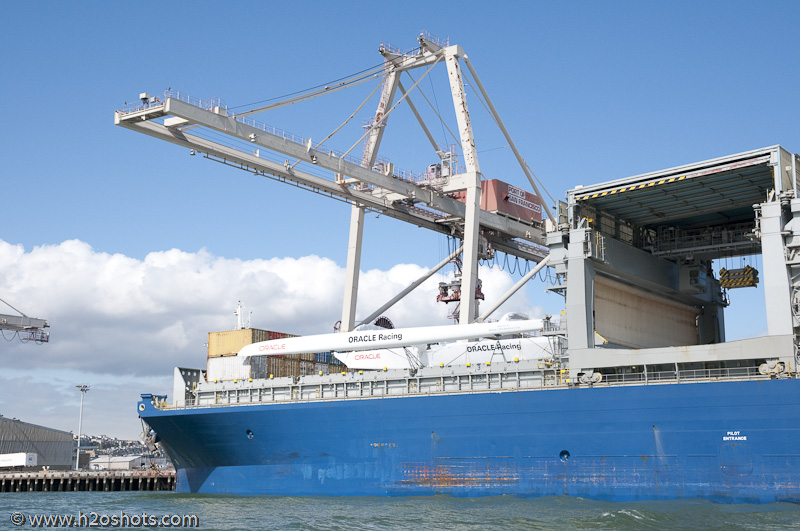
The engineering marvel of the 21st century has arrived in San Francisco. Perhaps this is the opening day event for the port. If you have an opportunity to see this boat do it. Pier 80.
The All American Offshore Team is focused on offshore sailing. I can spend more time speaking about sailing offshore having done a fair amount and loving it. I am probably showing my age but I do not see clearly how this works as a system. Perhaps I am showing that I am indeed not part of the Facebook generation as stated by Russell Coutts. What I see is a system that throws money at a perceived problem to solve that problem. It is so far from the way I grew up and what I came to love about offshore sailing; that this remains an unresolved issue in my mind. I see this a merely a vehicle to feed professional sailing.
Most top boats are now crewed by entirely paid crews and I am not going to try to turn back the hands of time. Besides the boats are now so technical, in many cases it is frankly safer to have a professional crew who are familiar with the systems.
My memories and stories are so far from the world today, it makes me question my relevance. During my early years I worked building boats, masts, sails, rigging. Studied weather; sailed as many classes as possible(dinghys,catamarans, big boats), broadening my understanding of sailing as much as I could at the time.
The electronic monitoring of the boats racing in the America’s Cup instead of judges in boats will changes yacht racing again. The America’s Cup seems determined to alter yacht racing as we have known it. Personally I have long wondered when we would have this sort of thing. GPS has become very accurate. Judges and the boats necessary have made match racing very labor intensive and expensive. We should be using this technology in all yacht racing. It would allow very accurate guidance in a protest hearing at the least.
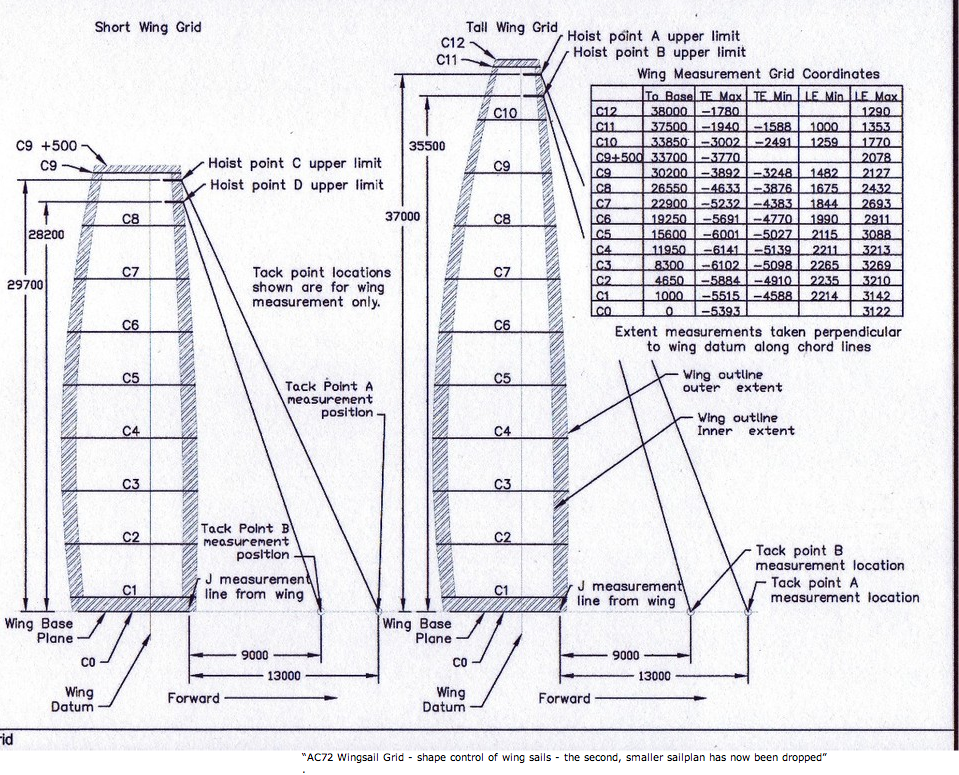
It has also been announced that the solid wings for the 72 foot boats will be only the smaller version, not several as originally planned.
This is the light side of sailing. Four Americans were killed this week in a part of the world that has become famous for Pirates.
Even for modern Navy, no easy solution to piracy
WEDNESDAY, FEBRUARY 23, 2011 AT 9:38 P.M.
/ USS STERETT
The 509-foot Sterett steams off Point Loma during maneuvers in 2010. The destroyer is among the Navy’s newest ships, having been commissioned in 2008.
In the vast waters around the Gulf of Aden, roughly 1 million square miles of sea, finding pirates and rescuing their victims is something even today’s sophisticated, nuclear-power Navy can’t always do.
After Tuesday’s killing of four Americans aboard their hijacked yacht off the coast of Oman, Navy officials remained silent about whether the American deaths will prompt a change in tactics. Meanwhile piracy experts say bulking up the U.S. military presence or even attacking pirate dens in Somalia isn’t necessarily the long-term answer. Any solution must change what turns people into high-seas criminals, they said.
Navy ships steaming out San Diego, including the Boxer amphibious group on Tuesday, are increasingly listing anti-piracy as one of their top deployment missions. But they are finding themselves operating in a part of the world where the brigands are not ideology-driven terrorists or warriors, but desperate youths being controlled by businessmen hungry for multimillion-dollar ransoms.
“Everybody’s going to say now we’ve got to go in there guns blazing,” said retired Rear Adm. Terry McKnight, who commanded the Navy’s anti-piracy task force when it was launched in early 2009.
“But, first of all, nobody wants to go after the pirates ashore in Somalia. And the other thing is, it’s a criminal event. You have to fall under the guidelines of international justice,” McKnight said.
“If we had a 1,000 ship Navy to go out there, we’d make a major dent in piracy … but the problem is the area is so vast you can’t be everywhere.”
Last year was the worst on record for mayhem on the seas. Pirates captured 1,181 mariners and killed eight, hijacking more than 50 ships, according to the International Chamber of Commerce’s International Maritime Bureau.
The situation is most bleak off Somalia, which accounted for 92 percent of all ship seizures in 2010.
International attention, including the Navy’s now 2-year-old Combined Task Force 151 and two European task forces, has decreased attacks in the Gulf of Aden. Navy officials said there are 34 warships, under 15 different national flags, now patrolling the gulf area.
But the pirates are pushing farther out.
Tuesday’s killings were an example of the new pattern: Somali pirates used a “mother ship,” a larger vessel they’d hijacked earlier, as a base to extend their skiff attacks northward into the Arabian Sea.
The 58-foot yacht, carrying a Marina del Rey couple and their two friends, was trailed by four Navy ships, including the San Diego-based destroyer Sterett.
Negotiation with the pirates was attempted but ultimately failed to save the Americans, who were killed by the pirates. A team of Navy SEALs raced to cover the 600 yards between the Sterett and the yacht after pirates fired a rocket-propelled grenade at the destroyer.
To Tom Wilkerson, U.S. Naval Institute chief executive, that loss of life means current anti-piracy strategy isn’t working.
Differing from McKnight, he is in the camp that says follow the pirates onto land.
“Finding pirates in the act in that area is a dice roll,” said Wilkerson, a retired two-star Marine general.
“If the U.S. and the international community are serious about reducing the piracy, they need to engage using the UN resolutions to put some kind of force ashore and remove the sanctuary.”
The Sterett is only the most recent in a string of San Diego warships drawn into pirate-fighting.
In September, a platoon of Camp Pendleton-based Marines aboard the Dubuque rescued the crew of the German cargo ship Magellan Star.
In a mission that required a White House green light, 24 force reconnaissance Marines captured 9 Somali pirates and saved the crew that was hiding in a fortified part of the ship.
Capt. Alex Martin, who led that team, said the Somalis almost instantly dropped their earlier bravado when the first Marine appeared over the bow.
“You felt like they were criminals who had been caught. It wasn’t like dealing with elements of al Qaeda in Iraq, where this is what these guys do, they believe in this,” said Martin, 28, a La Jolla High School graduate. “These were just criminals. And once they got caught, they were like, ‘Oh, God, what now?'”
The San Diego-based destroyer Howard had its pirate encounter in September 2008, when it rushed across 350 miles of ocean to aide the Faina, a Ukrainian vessel carrying military weapons.
In the end, the ship’s owners declined to risk their cargo in a raid, instead paying the pirates a $3 million ransom six months later.
And, in one of the most high-profile actions of late, Navy SEAL snipers bobbing on the back of a destroyer shot pirates holding the captain of the American cargo ship Maersk Alabama at gunpoint in April, 2009.
It was that incident, and the later 33-year sentence handed to one of the pirates by a New York court, that may have intensified the peril on the seas.
The Associated Press on Wednesday quoted Somali marauders who vowed that they will kill hostages before being captured during military raids and facing trial.
It’s not the way this business used to work, piracy experts say.
Somali pirates were known for taking hostages and holding them, alive, for ransoms that have ballooned in recent years. A common demand in 2005 was $150,000 to $200,000. Now the stakes have risen to as high as $9 million per ship, said Martin Murphy, author of the new book “Somalia, the New Barbary? Piracy and Islam in the Horn of Africa.”
If the international community promoted some other way for ordinary people to make money, that pirate bounty might not look so attractive, Murphy said, as much of it flows to the ringleaders, not the people taking the risks.
For cargo shippers, the high-stakes gamble appears to make sense for now, said Peter Chalk, RAND Corp. analyst. Using the Suez Canal and the Gulf of Aden cuts travel time from the Mediterranean Sea to the Indian Ocean by three weeks, saving the shipping industry an estimated $2 billion a year or more.
Efforts to make ransom payments illegal have gone nowhere, Chalk said. If the United States wanted to change that, or rewrite current rules of engagement for Navy ships fighting pirates, the task would be difficult because these maritime polices are international in nature, he said.
Pleasure boaters used to be somewhat safe from Somali pirates, as they weren’t seen as rich ransom targets. That may explain why the Marina del Rey couple entered the area off Oman.
“I think here they weren’t expecting trouble because they were so far away from major concentration of attacks,” Chalk said.
As Wilkerson, the retired Marine general, said about U.S. policy toward pirates, that strategy may need to be reworked in the future.
|
The winning America’s cup trimaran USA 17 belonging to Oracle racing is transiting the Panama Canal as I write on it’s way to San Francisco. America’s Cup World Series Dates Released The AC World Series venue assessment process has focused on the ability of prospective host sites to provide the infrastructure and support needed to stage a superior event on and off the water. Tens of thousands of fans are expected to watch in person at each venue. The 2011-2012 AC World Series will be sailed in the AC45, the forerunner to the next generation of America’s Cup boats. The 2012-2013 season will be sailed in the larger and faster America’s Cup boats, the AC72, and its champion will be crowned just prior to the start of the Louis Vuitton Cup (America’s Cup Challenger Series) in July 2013. This AC World Series will also enable all teams seeking to compete in the America’s Cup Finals in September 2013 to be race-ready for the AC72. 2011-2012 America’s Cup World Series Schedule* Event One: 16 – 24 July *Dates are subject to change |
This is of course exactly what everyone was hoping would happen. Fast boats are not really what the change to catamarans is about. It is about being more like NASCAR. Giving the audience the thrill of anticipation of a crash or other catastrophe. It is not about the sailing unfortunately.