Hurricane Earl, waiting for the other shoe to drop

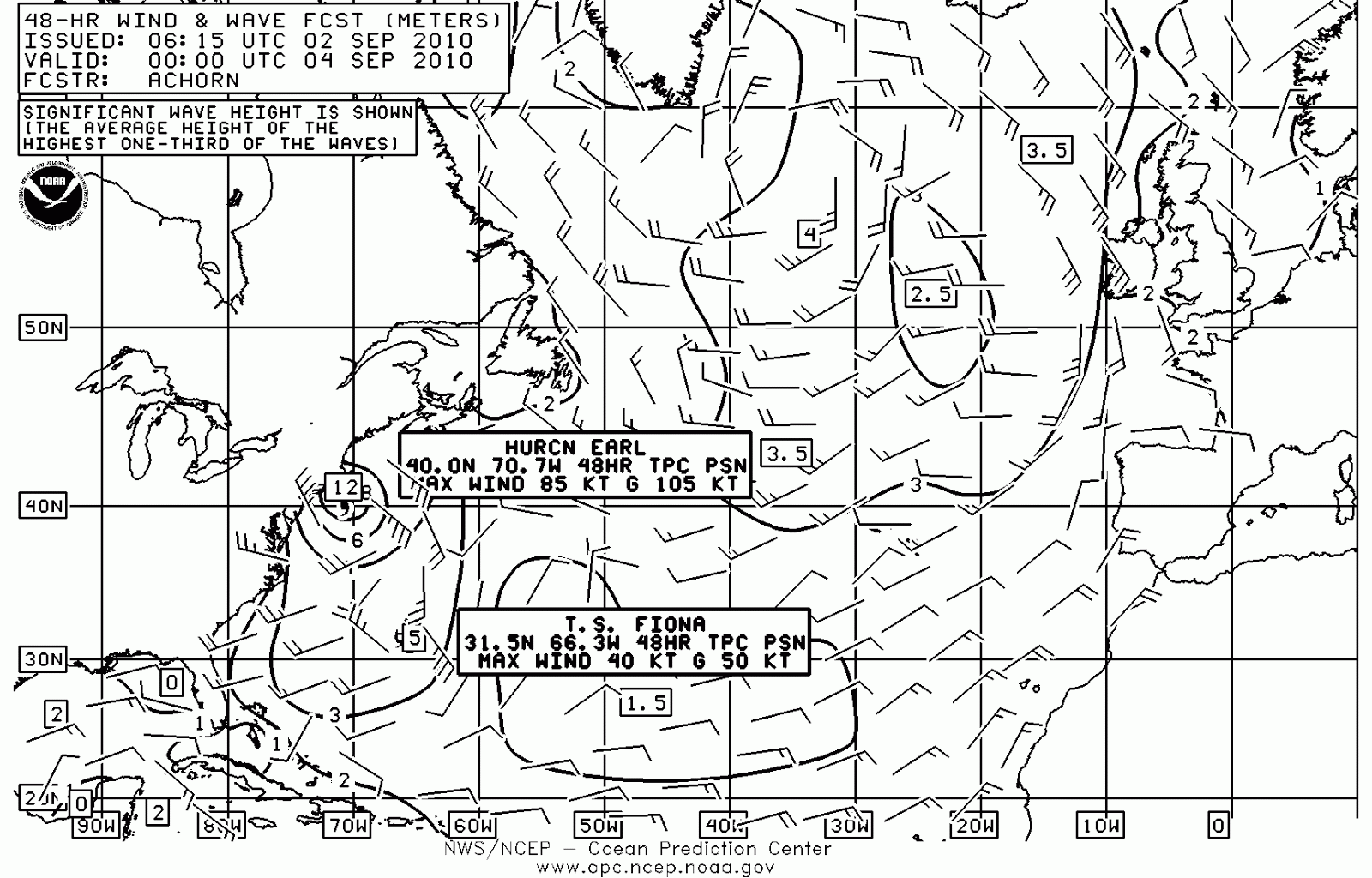
Earl is coming, The Stamford-Vineyard race start has been postponed until Saturday morning. A prudent decision, however how many opportunities does one have to sail in challenging conditions.  That said let’s hope Earl keeps his distance.

Another slightly random remark. I like Sailing Anarchy. They do an outstanding job of covering the sport of sailing. They amuse me as well. I do have a criticism however, The gratuitous use of foul language; for me totally unnecessary and mildly offensive. It is unfortunate that this has managed to get them into trouble (they are being sued by Dan Meyers)  I do not see that there is an upside for either party.

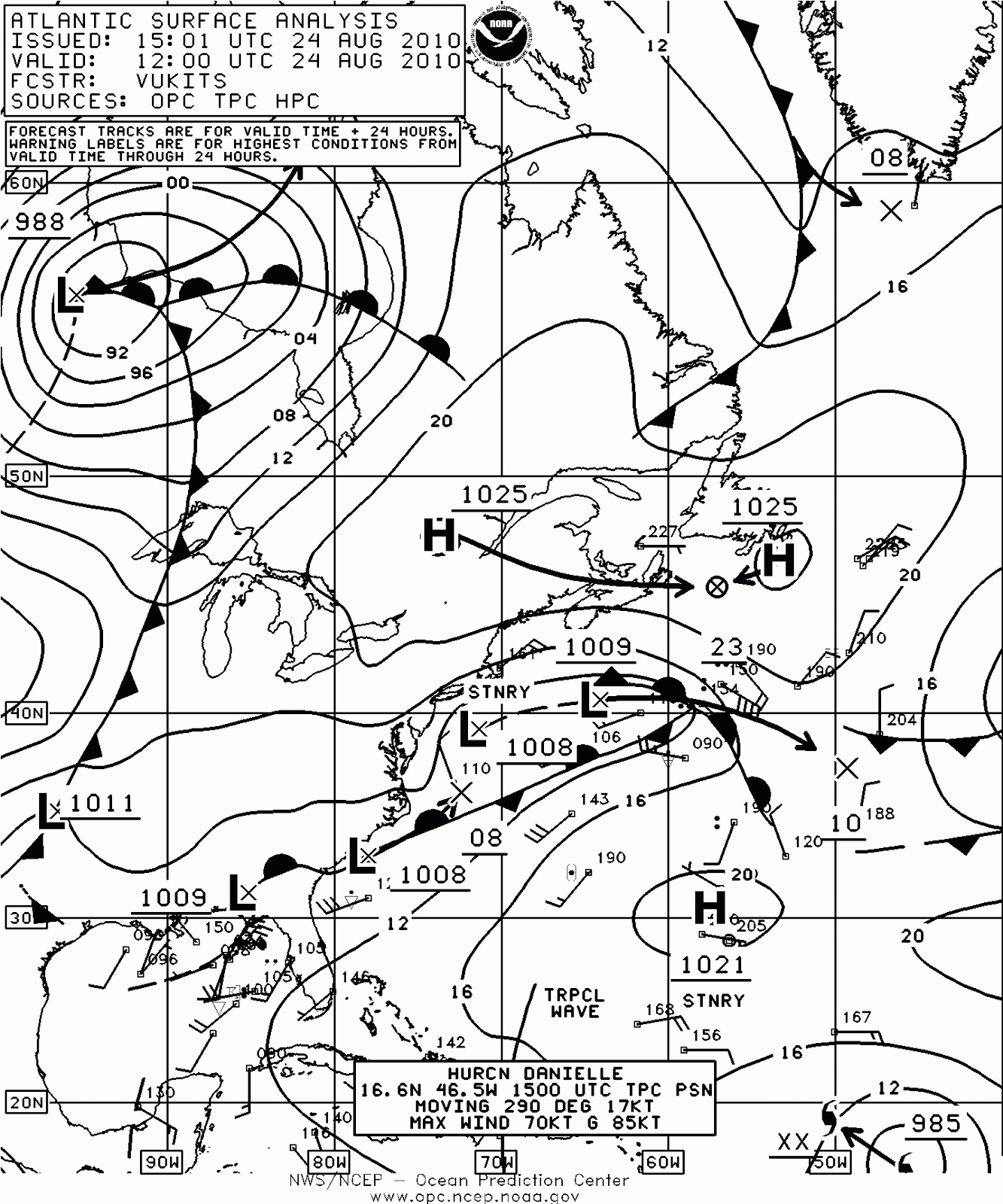
TRACKING EARL

TRACKING EARL
Hurricane Earl, the second major hurricane of 2010, began to menace the
eastern United States Tuesday, stirring up seas and promising a soggy and
potentially dangerous Labor Day weekend. To help affected U.S. residents
follow Earl’s progress is Sailing Weather Service (SWS), which recently
helped Ericsson 4 win the 2008-9 Volvo Ocean Race and BMW Oracle Racing win
the 33rd America’s Cup.

“We’ve opened a public page for folks to track Earl using data that is
normally available only to US Sailing Members,” said SWS Chief Meteorologist
Chris Bedford. “There are 1-hour time step images of our proprietary model
forecast along the U.S. east coast for the next 3-5 days. Some zoomed model
graphics are available over the Chesapeake and New England. Our plan is to
keep this open until Earl (and maybe Fiona) have passed. With a little luck
we won’t need it again, but to be honest, I’m not too optimistic about
that!”

The 2010 Hurricane Season in the Atlantic Ocean began on June 1, 2010, and
will end on November 30, 2010. The Sailing Weather Service Model Data can be
viewed here: http://www.sailwx.com/HURRICANE/

  The America’s cup update  It is looking more and more like the next America’s Cup will be in 72 foot catamarans, in Valencia.

1983 America’s Cup, when the right thing happened

going to the finish

rounding the first leeward mark

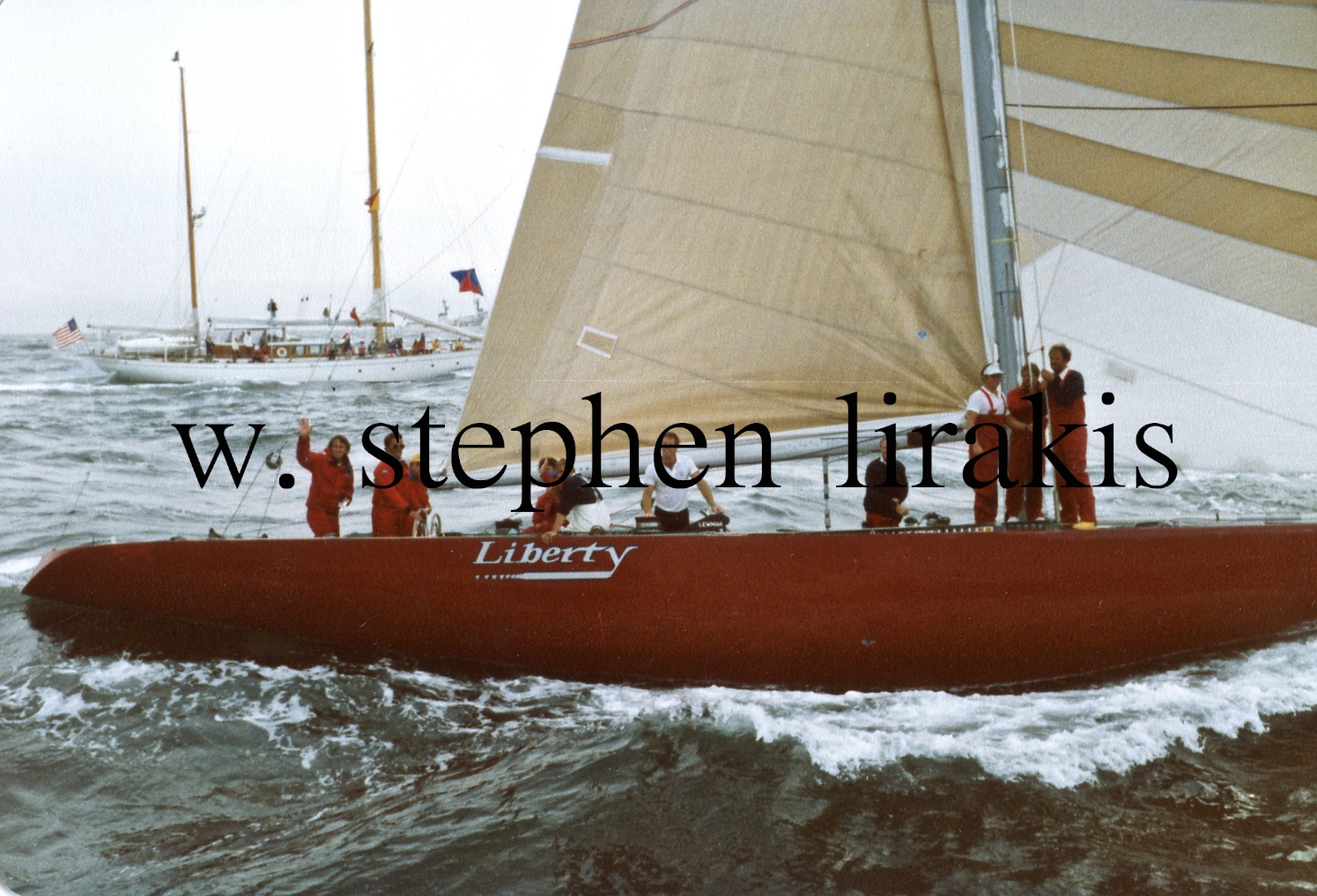
liberty

australia II

before the start

the morning after

Marble House

the CUP in 1983

1983, a date in America’s Cup history that will forever be remembered. The unthinkable happened. the New York Yacht Club and the United States lost a cup that they had held since 1851 (having won it as an upstart nation)
   For me, the right thing happened for all the wrong reasons. As hard as it was to see then, the America’s Cup had outgrown the New York Yacht Club. This forced change breathed new life into the competition. People can think that it was the cause of the problems we have seen since, I do not believe this to be true. It would have happened anyway. It is the world we live in. Change always comes difficultly.
   Newport, oddly was routing for the underdog, Australia,. This was spiting your face by cutting off your nose. Tourism in Newport was closely tied to the America’s Cup.
   Another thought, “Liberty” led the seventh and final race for five of the six legs. sailing brilliantly against a clearly strong rival. “Liberty” was not a slow boat, just not a faster boat. The Australian boat was using Ian Howlett’s bendy mast, giving them “free” sail area. The wing keel was probably more a psychological weapon than an effective design improvement. It was long from being understood. It did make a stiffer boat allowing a lower lead package.
  Curiously, the C-class may be facing the same sort of challenge to change, For so long being the step-sister, they may now find themselves in the center of significant changes, namely the America’s Cup in multihulls.

   Where is “LIberty” today??

1983 America’s Cup, when the right thing happened

going to the finish

rounding the first leeward mark

liberty

australia II

before the start

the morning after

Marble House

the CUP in 1983

1983, a date in America’s Cup history that will forever be remembered. The unthinkable happened. the New York Yacht Club and the United States lost a cup that they had held since 1851 (having won it as an upstart nation)
   For me, the right thing happened for all the wrong reasons. As hard as it was to see then, the America’s Cup had outgrown the New York Yacht Club. This forced change breathed new life into the competition. People can think that it was the cause of the problems we have seen since, I do not believe this to be true. It would have happened anyway. It is the world we live in. Change always comes difficultly.
   Newport, oddly was routing for the underdog, Australia,. This was spiting your face by cutting off your nose. Tourism in Newport was closely tied to the America’s Cup.
   Another thought, “Liberty” led the seventh and final race for five of the six legs. sailing brilliantly against a clearly strong rival. “Liberty” was not a slow boat, just not a faster boat. The Australian boat was using Ian Howlett’s bendy mast, giving them “free” sail area. The wing keel was probably more a psychological weapon than an effective design improvement. It was long from being understood. It did make a stiffer boat allowing a lower lead package.
  Curiously, the C-class may be facing the same sort of challenge to change, For so long being the step-sister, they may now find themselves in the center of significant changes, namely the America’s Cup in multihulls.

   Where is “LIberty” today??

C-class August 27 2010

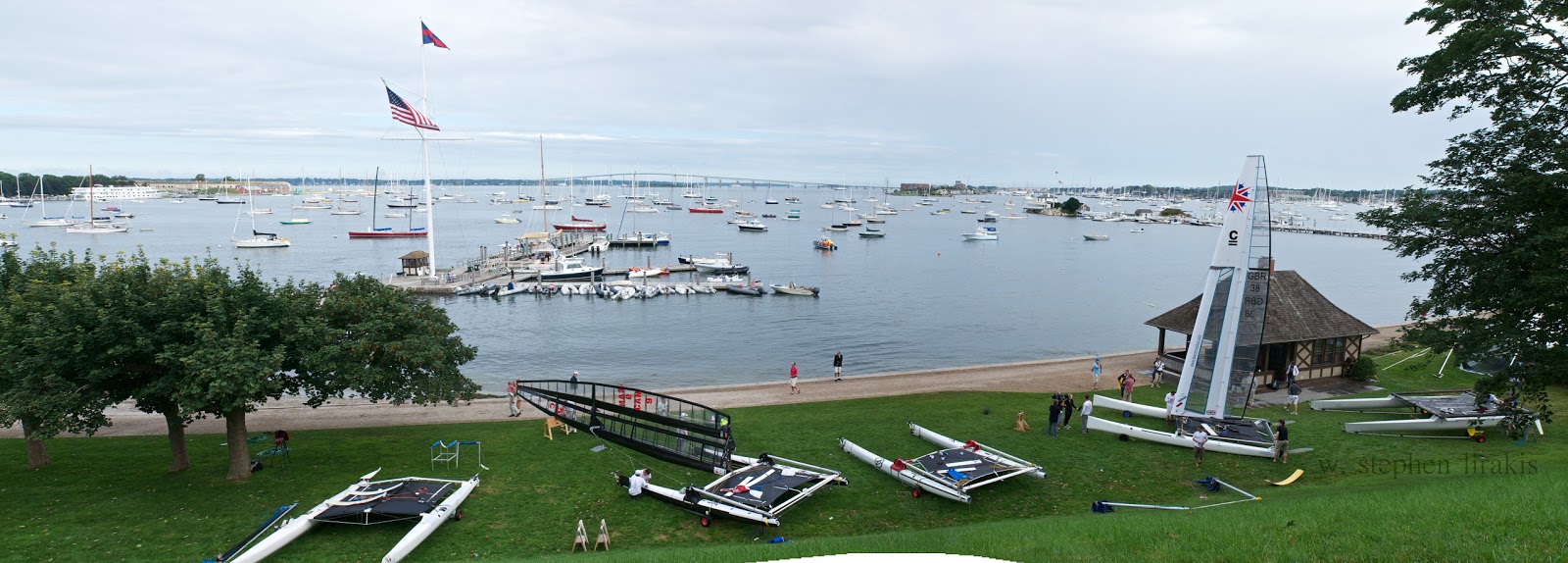
harbour court 8 27 10

“Invictus” airbus team

match race, “canaan” “orion”

tug of war

A morning northerly and sunshine greeted everyone. It seemed to reflect the spirits ashore. The top two boats were paired in match racing, “Canaan” is so fast, even if Glen Ashby and James Spithill won the start they were hard pressed to keep control.
    A little to windward of the start two tugs gave meaning to the words “tug of war” as they pulled against one another with force; to what end was unclear.

guy gurney, bob fisher, dan nerney, b. hovey

     It seems more and more likely that the next America’s Cup will be sailed in 72 foot  catamarans, in Valencia, Spain.

   This likely means that the C-class will become the test and training platform for the next contest. It will change the C-class forever despite what those involved think.  Too many people involved in the America’s Cup have come to this event, designers, engineers, sailors, heads of syndicates. 

What a difference a day makes/ C-class sunshine

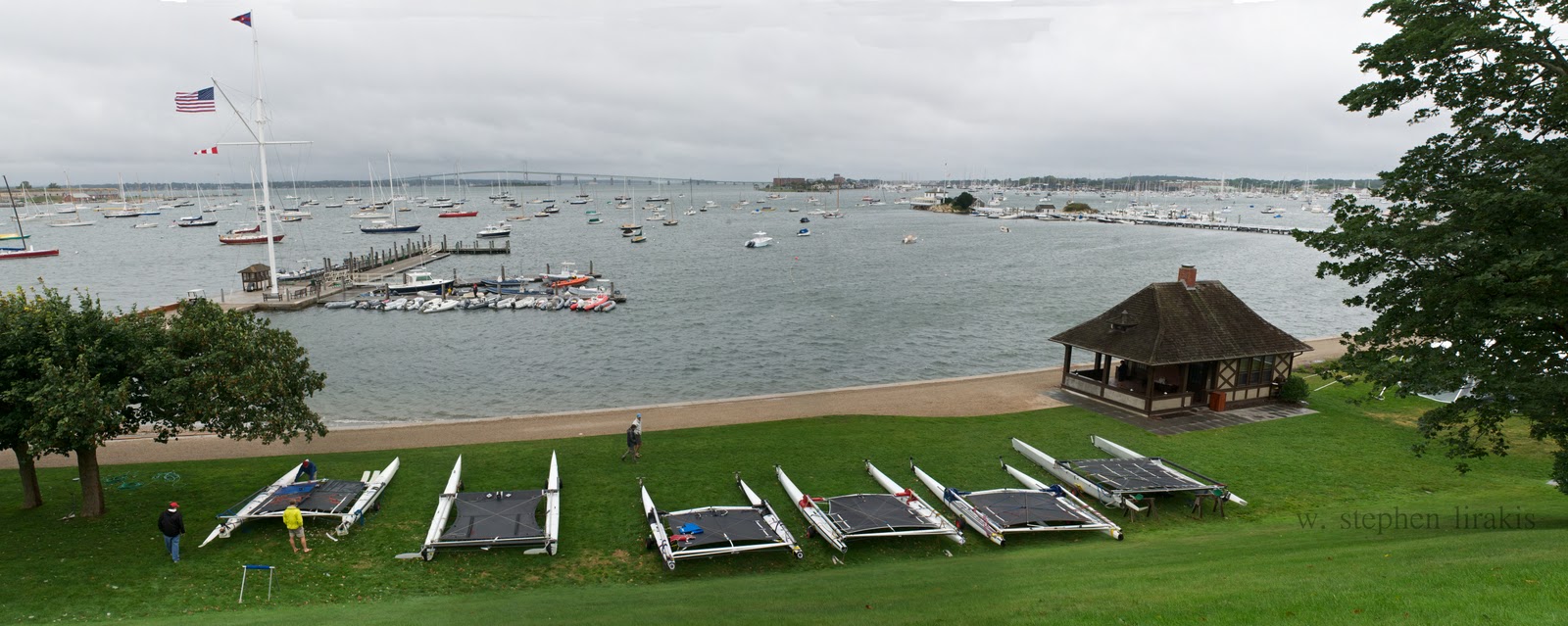
harbour court august 26 2010
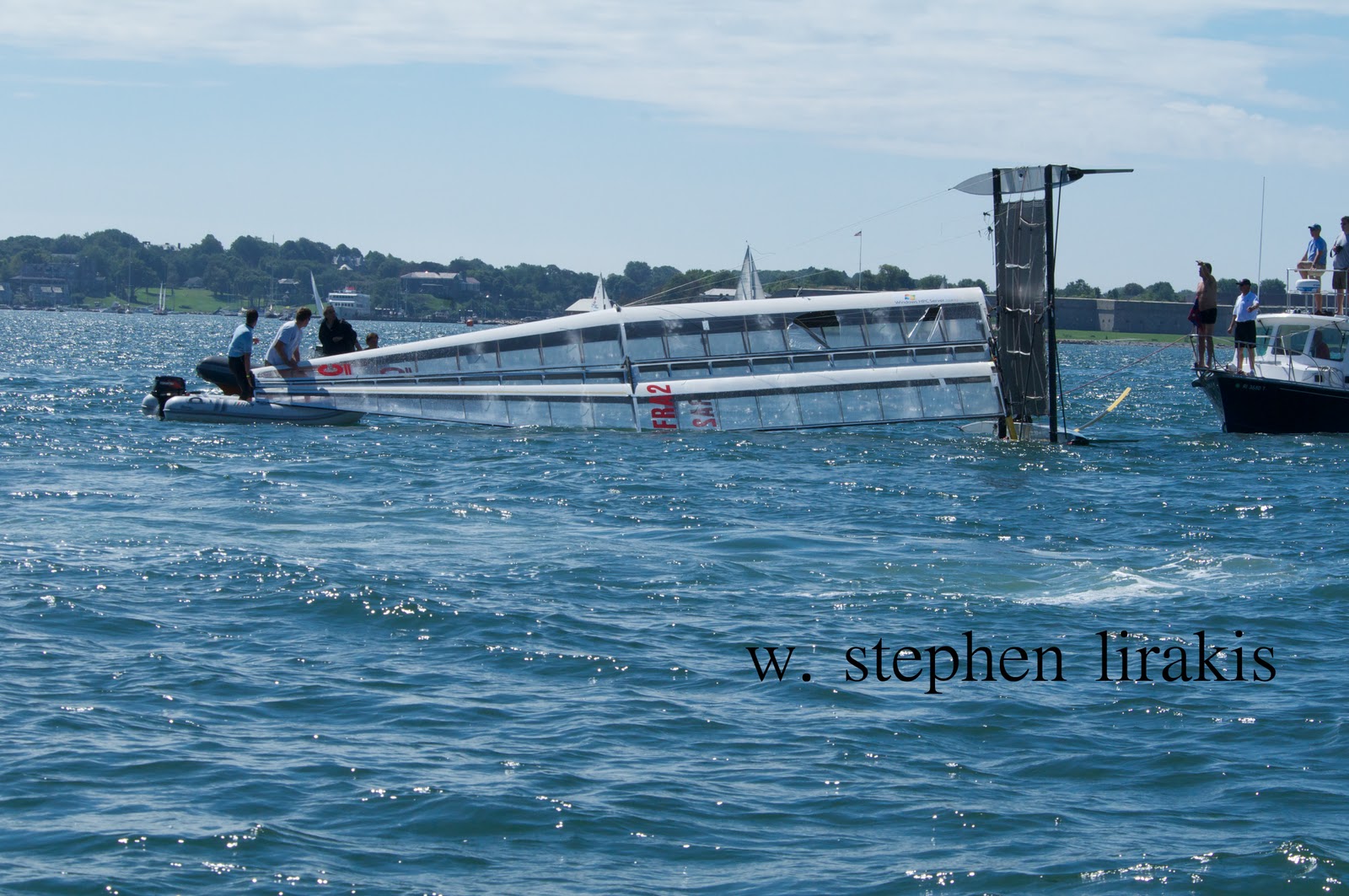
cogito rig in ruins

the french-patient lady iv

the start

canaan (fred eaton/magnus clarke)

alpha (glenn ashby/james spithill)

Yesterday saw the destruction of “Cogito’s” rig. The French capsized on the way out to the start today and towed back to the dock missing all the races today. “Canaan” won the three races, followed by “Alpha”
  This regatta has attracted a lot of attention. Most of the designers and project managers for the potential America’s Cup syndicates have come to look. In 2004 the last time this event was on Narragansett Bay it was a lonely site.
   Steve Killing who designed three of the boats here(Canaan,Alpha,Orion) should feel proud; his boats are showing great form.
  This is truly a developmental platform that is exciting; the possibilities for exploring speed are almost limitless.

C-class Catamarans blown out for a second day

Harbour court today 
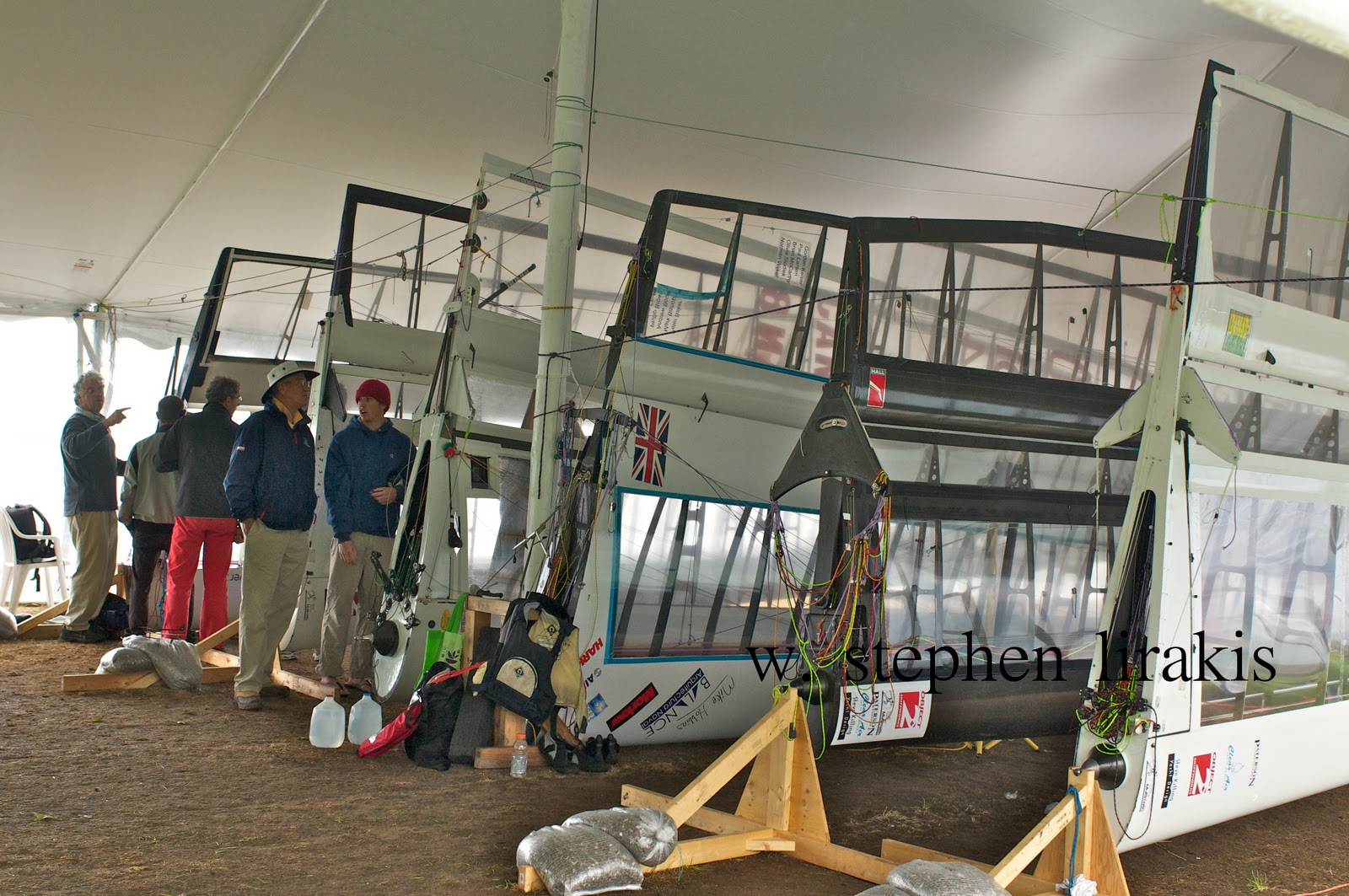
wings under the tent
Dave Hubbard and Duncan Maclean
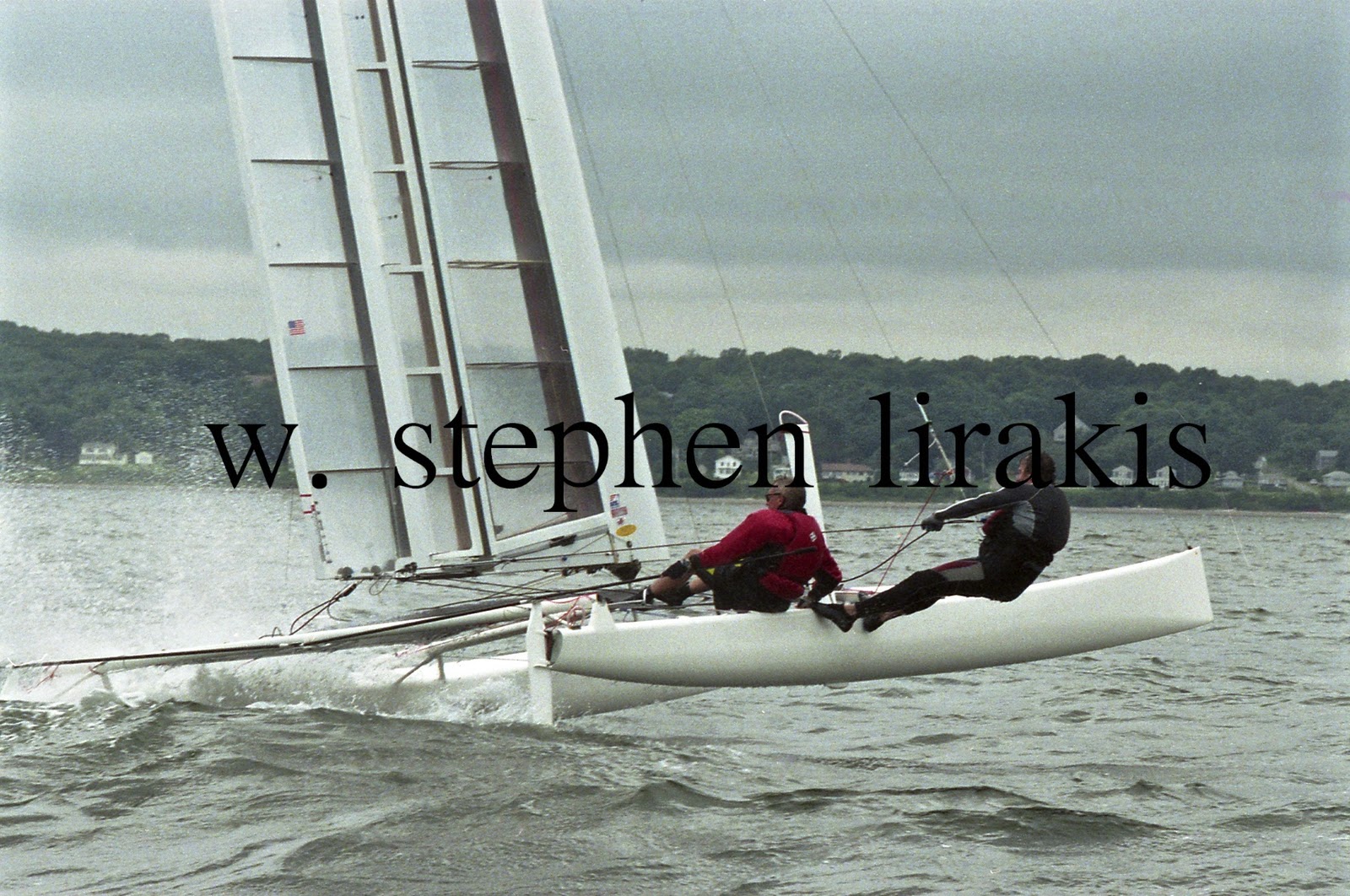
“Cogito” at speed

Duncan and Steve Clark

The big low that has been almost stationary over our area, brought an abrupt end to the heat of summer. It also brought plenty of wind and rain. The “C” class competitors who have travelled far to race against one another have been grounded for the last two days. Tomorrow should bring lower winds followed by sun.

These boats have long been at the fringe of the yachting world. It is the recent America’s Cup and the use of a wing mast by Oracle that has brought them out of the shadows.

C-class Catamarans are in Newport

wings in the mule barn

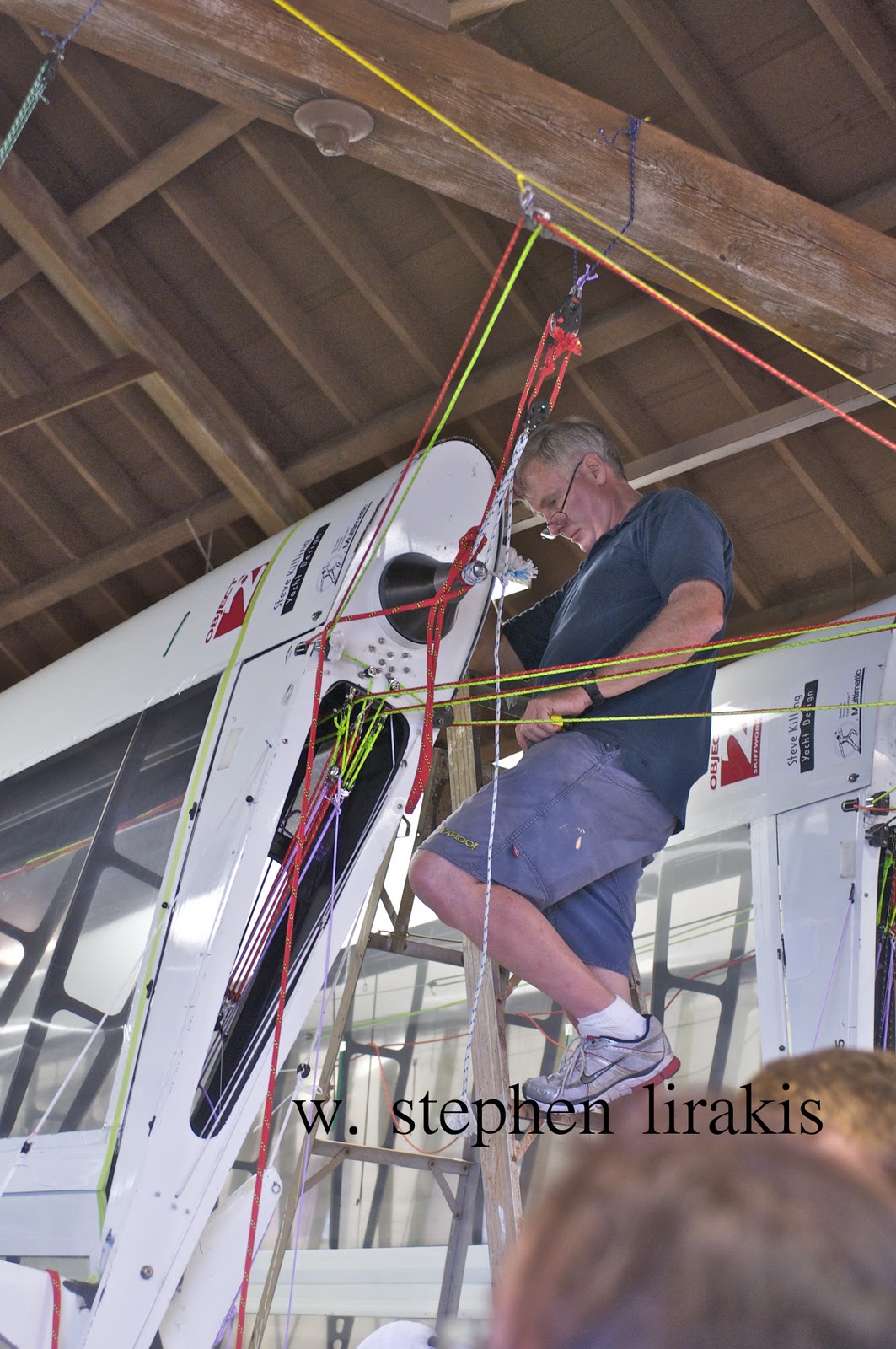
duncan measuring

It is raining, the rigs are in the mule barn at Ft. Adams being measured by none other than Duncan MacLean.
  Racing starts tomorrow, weather permitting. Unfortunately the forecast may not be what anyone hoped for; that’s sailboat racing. It does not diminish the excitement of having these boats assembled in one place.
  Paul Larsen and Helena Darvilia are here with “Invictus” the Airbus entry. Steve Clark with his new boat and old rig having had teething problems with the new one. Steve Killing’s design, the defender, is here. The French have chartered “Patient Lady IV”.

America’s Cup 1980

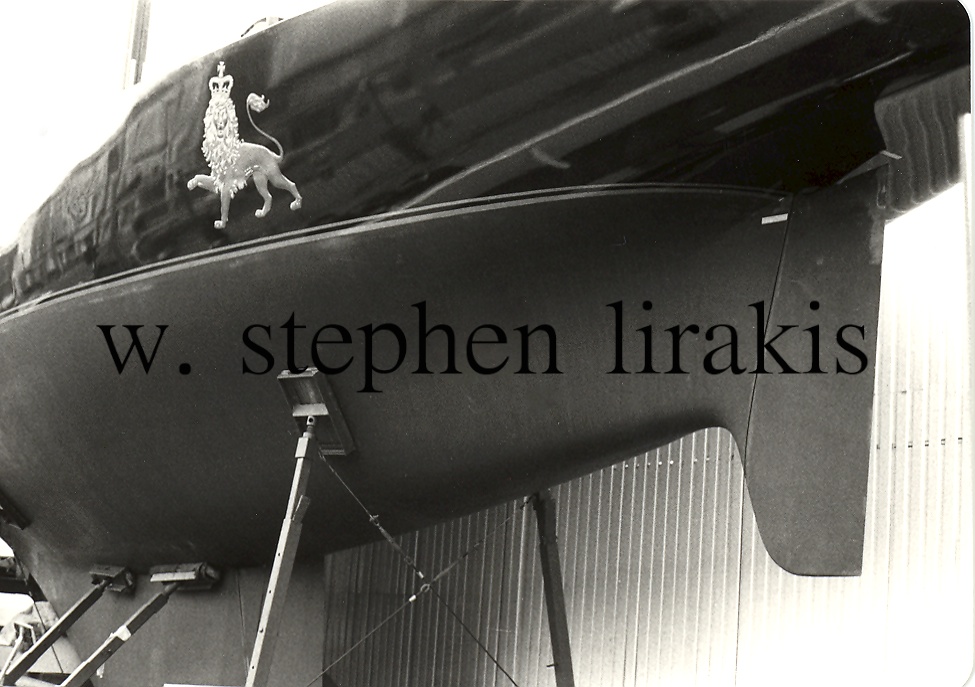
1980 brings ever increasing interest in the America’s Cup. Ian Howlett, who has had an abiding interest in the meter rule since he was young, designs “Lionheart”; named after a contest in England. He had explored the rule extensively and came up with the bendy mast. This added unrated sail area.
    “France III” has her best showing ever, making to the Defender finals, losing to” Australia.”
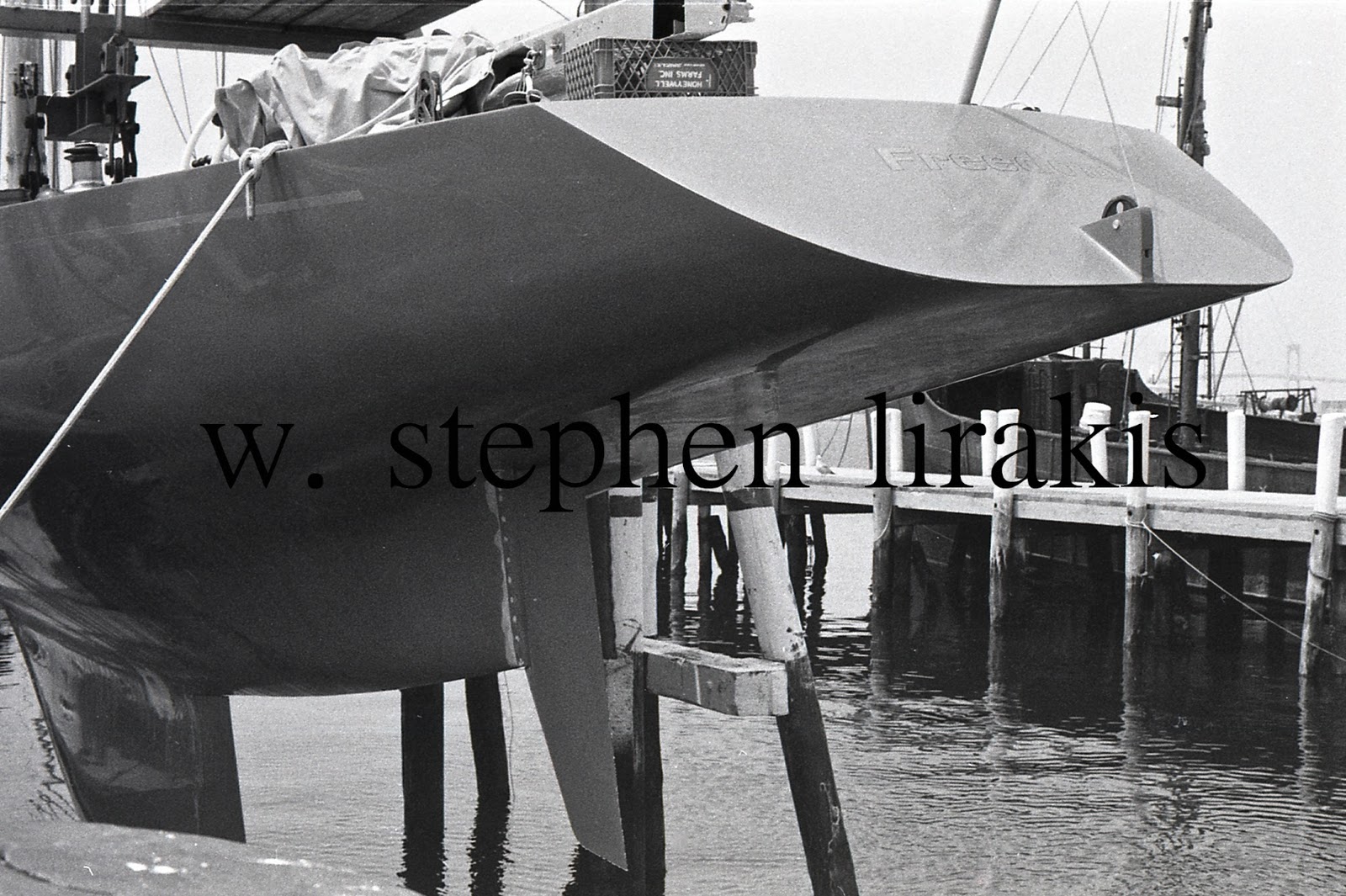
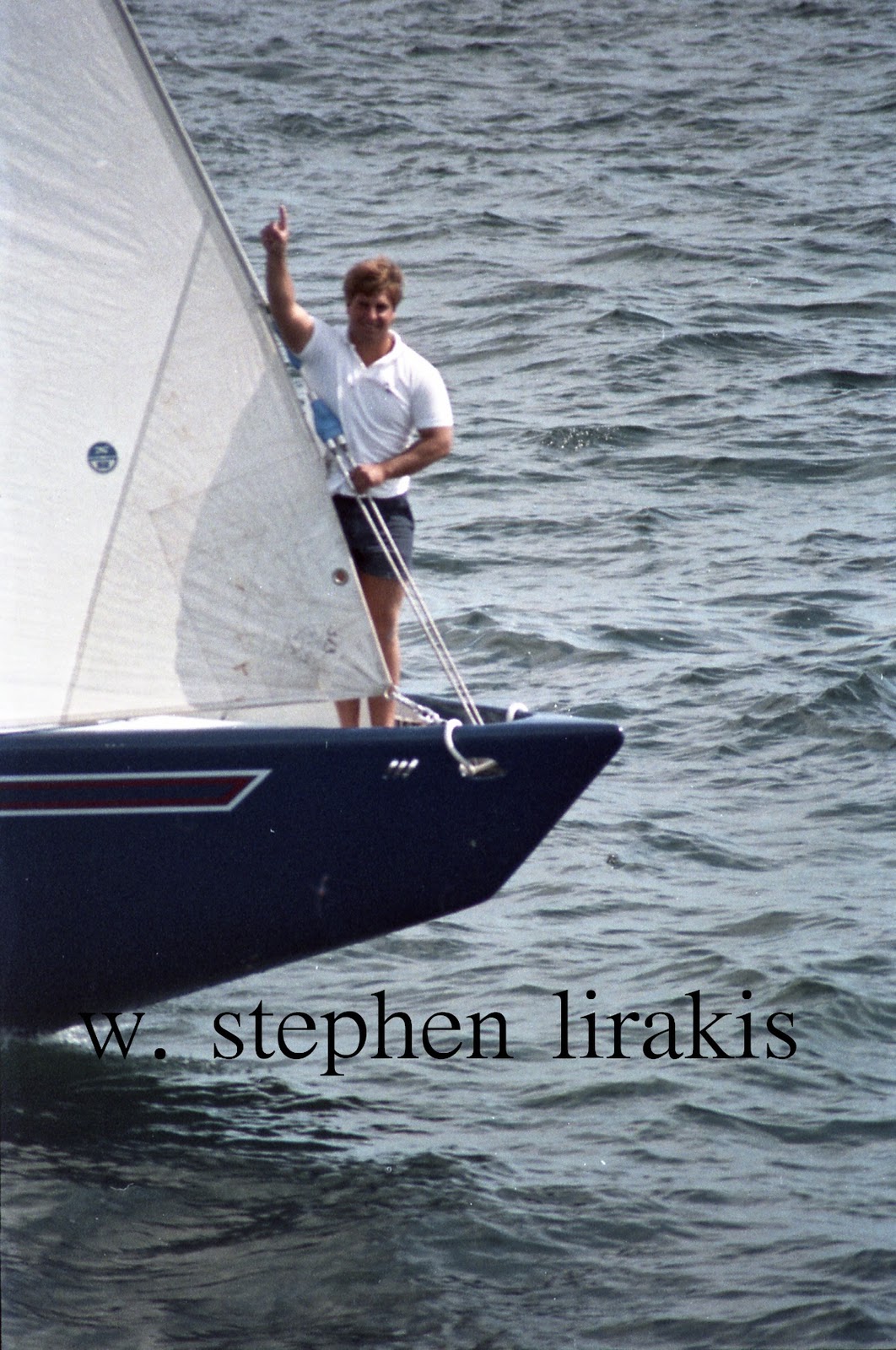
      “Clipper” designed by David Pedrick for Russell Long, probably needed more time to get the boat going fast. “Freedom” the last Successful Sparkman&Stephens 12 meter, again with small incremental changes, sailed by Dennis Connor. Dennis, with this challenge brought the America’s Cup to a new level. He logged more hours of sailing in more conditions than anyone had previously done, leaving no part of the 12 meter rule unexplored. Truly a well prepared defense. “Freedom” almost unbeatable in the trials; becoming the defender against “Australia” designed by Ben Lexan and Johan Valentijn  winning 4 to 1 in the races themselves.
      A new benchmark was set, and the course to where the America’s Cup is today was launched.
    My involvement in the America’s Cup finished in 1979 after Gerry Driscoll could not raise money to bring “Intrepid” back again. I was fully involved in Lirakis Safety Harness, and in fact stopped sailing altogether in 1980 until 2001, for the America’s Cup Jubilee.