
REGATTA OR SHOW?

This is an issue that I believe all sailors are wrestling with. Sailing is such a small community, perhaps it is the thought that we are concerned about how sailing will survive two distinct camps, amateur and professional. Rod Davis has addressed the concerns, identifying the issue.

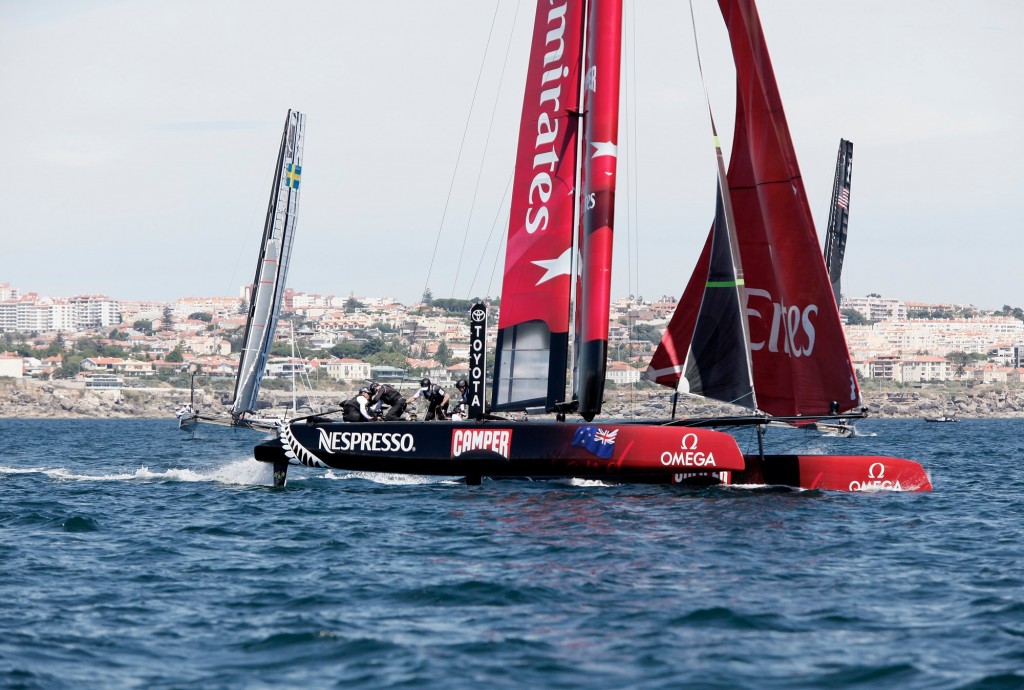
There is no question in my mind that the two events: the extreme 40 tour and the America’s cup are “shows” and are taking the sport in a different direction. We must recognize that it took a long time to get where we are and there is no stopping events.


THE BIGGEST QUESTION OF ALLBy Rod Davis, SeahorseThe show versus the competition. There is a new breed of regatta that Icall the ‘show’, because they have stepped into that murky bog thatseparates competition from theatre. The Extreme 40 and America’s Cup WorldSeries are the leaders in ‘show’ regattas, and if you believe everythingyou read in the media you could be forgiven for thinking that this is theway of all sailboat racing. Thankfully the vast majority of regattas areall about the competition.
To distinguish between the two, just answer this one simple question: whois the regatta run for? If your answer is the sailors, you have a regatta,if your answer is the sponsors, TV and the general public, then you have ashow.
It all sounds so wonderful. Get some sponsors to pay for regattas aroundthe world and for our sailing, then we can pay all our expenses and payourselves too. It will be like getting money for jam. The sponsors want tomaximise their exposure, so we seduce the media and the public!
Nice concept, but never forget this is a business deal… your sponsor willwant his pound of flesh and more. You have now entered the entertainmentbusiness. You might not think of it that way but your new boss certainlydoes. You will perform on their terms, not yours.
In the new world order of show regattas, sponsors’ ROI, TV airtime andengaging the public are the prime targets. Fact: the yachting fraternity issimply too small to justify the big money it takes to run events like theAmerica’s Cup World Series, or to participate in them. Just too small abase. Thus the need, and recent obsession, with taking yachting to themasses.
Many have tried, and few have been successful. The leaders are the Extreme40 series, the Volvo Round the World Race and, new to the scene but withBIG ideas, the AC World Series. The game plan is pretty basic: give thesponsors a viable return on their investment. The bigger the sponsorshipthe bigger the payback will have to be.
And how do you do that? Make it spectator friendly and exploit the magic oftelevision. And that, my friends, is a tough nut to crack.
It’s all about getting on TV. Sailboat racing is not a mainstream sport, sogetting a prime time slot is not easy. More like almost impossible. Youneed WOW factor. But if you can get airtime, get on the evening news aroundthe world, then it is fantastic exposure and free! Capsizes, great bigcollision – all good. Drama at sea – yep. Race results by themselves -nope, won’t make it to the airwaves.
Another emerging medium is live telecasts via the internet. Far cheaperthan TV but reaching people who actively seek out the event. Making onehand wash the other is part of the new world of professional sailing.
If you thought professional was just about being paid to sail… sorry; intoday’s world it has become all encompassing. The Coutts vision is a whollyprofessional take on our sport. Not just paying a few sailors, but ahundred people on the payroll to run all aspects of the event. Then buyenough powerboats to fill a marina to serve as marks, TV camera platforms,press boats, tents, cranes, the list is endless. We are talking big moneyhere, which comes from people or companies who want serious entertainmentto justify their investment.
When a sport or a section of a sport, any sport, dives across the line thatdistinguishes amateur, with foundations built on volunteering, andprofessionalism, then you are in for some interesting times. — Read on:http://forum.sailingscuttlebutt.com/cgi-bin/gforum.cgi?post=12691——–
AMERICA’S CUP HYPE

Share this pageEmailPrint
3
ShareFacebookTwitter
America’s Cup cost defended by Plymouth City Council

The nine racing catamarans have been unloaded from a cargo ship in Millbay Docks
The cost of bringing the America’s Cup to Plymouth has been “money well spent”, the leader of the city council has insisted.

The yachts are due to begin racing in Plymouth Sound on 10 September.

Suggestions that it could cost up to £500,000 to stage have been rejected by Vivian Pengelly, who said the council had budgeted £100,000.

Plymouth City Council has estimated the second leg of the world series could generate £10m for the local economy.

It said providing accommodation for the teams alone – 700 beds for 20 days – will benefit local hoteliers by £1.2m.

The council has previously said it could not disclose the “fee” it paid to host the event in the city.

Devon sailor Conrad Humphreys said staging the America’s Cup could cost the council “at least” £500,000, but Mrs Pengelly said that was “not quite true”.

Continue reading the main story

Start Quote

The public are going to see quite a spectacle”

Peter Greenhalgh
Team Energy competitor
“It’s not going to cost nearly as much as we thought, because we’ve got so much sponsorship from people like the university and business, who’ve been absolutely fantastic,” she told BBC News.

“It can cost anything up to £100,000, but until we know exactly what sponsorship we’re getting, we’re not really sure what the cost will be.”

A media city has been set up on Plymouth Hoe where a 100-strong television crew will beam the competition across the world.

The nine 45ft (14m) catamarans taking part in the challenge have been unloaded from a cargo ship which arrived in Millbay Docks last week.

An estimated 150,000 people are expected to watch the newly designed AC45 racing yachts from vantage points all around Plymouth Sound.

Peter Greenhalgh, a British sailor who will be competing on board the French catamaran Team Energy, said the boats were fast and the racing would be close.

“The public are going to see quite a spectacle,” he told BBC News.

“The boats are very easy to identify and I think they’ll find it enjoyable viewing.”

Mrs Pengelly said staging the America’s Cup was an opportunity to showcase Plymouth to the world and the cost was “money well spent”.

“Everyone’s getting very excited about it and there’s a real buzz around the town,” she said.

Entertainment programme
The first stage of the series took place earlier this month in the Portuguese town of Cascais and the final leg of the qualifying event will be held in San Diego, California, between October and December.

Visitors will also be able to enjoy a full programme of entertainment over the 10-day event, including live music, food, shopping and a yacht racing simulator.

The America’s Cup is named after the yacht America which sailed from the east coast of the United States in 1851 to race against British yachts.

America won the race and the trophy was donated to the New York Yacht Club under a Deed of Gift that still governs the competition.

Newport, Rhode Island has been “awarded” one of the acts, I have written about this before. How will it work in Newport? I am not sure. It will allow the state to spend money to improve the docks and facilities at Fort Adams. Anyone who has experienced a festival at Fort Adams and the traffic in Newport might understand the logistical problems that the city of Newport has inherently has to deal with.
The event will from a distance be a feather in the cap of Newport and it’s reputation as the sailing capital of the world.
San Francisco does seem to be overcoming the issues that stood in the way of having the event there. Work is moving forward on the waterfront.

NEWPORT TO HOST AMERICA’S CUP FINAL

Newport, RI will host the final event in the world tour of the America’s Cup in June  23 to July 1, 2012. This will be in the same AC 45 catamarans that are being sailed now; and the last event in these boats before the 72 footers will be sailing in San Francisco for the America’s Cup Event itself.  Big news for Newport and tourism. I am anxious about the “improvements” that will likely take place at Fort Adams in preparation for the event.

This event will follow the Newport to Bermuda race which starts on June 15 from Castle Hill in Newport. We will all have to hustle back if we want to watch any of the action.

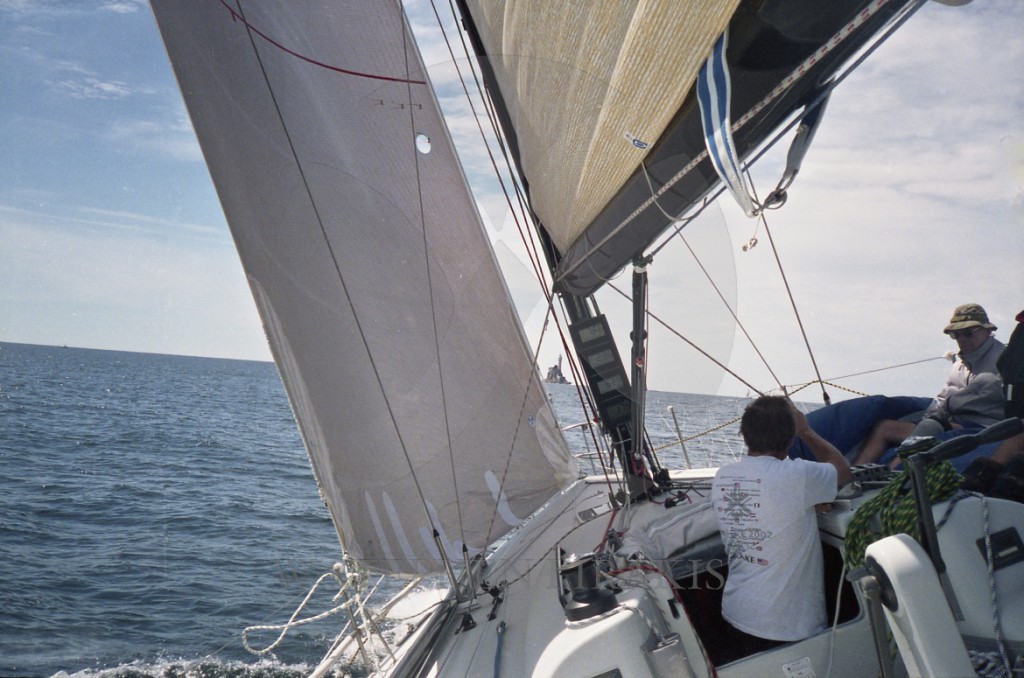
THE FASTNET RACE STARTS TOMORROW. This is probably my favorite of the 600 mile races in the world. The others being: the Bermuda race, Sydney-hobart race, the Middle Sea race.


fastnet rock on the bow


AMERICA’S CUP, CASCAIS

Here is the update from America’s Cup racing in Cascais, Portugal. Dean Barker of team New Zealand seems to have adapted quickly to multihulls. I am told he has been working with Glen Ashby; who started with James Spithill but left team Oracle to work with Barker. My friend Larry Suter, a sailing coach himself, has long said that Dean Barker was the best of the helmsmen in the group racing for the America’s Cup. He is off to a good start.

AND THEN THERE WERE NINE

The soap opera that there is the America’s Cup continues. Yesterday the organizers of the 34th America’s Cup along with the mayor of San Francisco to announce 8 challenger teams plus one more to be revealed on june 23rd.

Everyone would agree that this event is reshaping not only the America’s Cup but sailing as we have known it and has not been without growing pains exacerbated by a fragile economy.

THE COST TO SAN FRANCISCO

This is a story I have been interested in particularly given that Newport RI was the supposed runner up to host the America’s Cup. I wrote then: Be careful what you wish for. Newport never had and could never find the resources potentially available to San Francisco. It was clear even at the beginning that San Francisco would have an uphill battle. While from a viewing point of view, it is a great venue; from a logistical position, not so much. Tide is a huge factor. Sailing in the commercial traffic channel another potential problem.
The America’s Cup has it’s own issues with a number of teams withdrawing from the competition. I am not saying that the event will not take place, but the timeline may even be altered. there is a lot to accomplish. so far it is mostly a discussion.

Published on San Francisco Examiner (http://www.sfexaminer.com)
Home > America’s Cup short of cash for planning 2013 regatta
America’s Cup short of cash for planning 2013 regatta

The America’s Cup is supposed to provide a huge boost for the local economy while coming at no cost to taxpayers.
America’s Cup organizers have netted only a fraction of the funds The City needs this year to plan the massive 2013 yacht race, but officials said as soon as they receive their tax-exempt status, the money will start flowing.

If it doesn’t, San Francisco taxpayers will be on the hook.

Some $12 million is budgeted in the coming fiscal year for the Mayor’s Office of Economic and Workforce Development to conduct environmental planning and get necessary state and federal permits. Yet the nonprofit responsible for offsetting The City’s $32 million in costs has only $2 million on hand to mitigate the bill.

If the America’s Cup Organizing Committee can’t come up with the other $10 million, it would have to come from San Francisco’s general fund, which is dedicated to basic city services such as police, fire protection and road construction.

A big selling point of the America’s Cup was that it would provide a huge boost for the local economy while presumably coming at no cost to taxpayers.

San Francisco voters have traditionally resisted backing private endeavors with public money, including the rejection of two proposals in the late ’80s for taxpayer money to fund a new waterfront stadium for the Giants.

Under new ownership in 1995, the team announced it would build the first privately financed ballpark since Dodger Stadium went up in 1962.

Voters narrowly approved two 1997 measures that allowed San Francisco to borrow money to rezone and develop the area around Candlestick Park, but The City never moved forward with its $100 million in bonding permission.

Kyri McClellan, executive director of the America’s Cup Organizing Committee, said the tax-exempt approval is expected in August. After that, she predicted, donors will become more comfortable writing seven-figure checks and the committee should raise the remaining millions by October or November, when final impact reports are filed under the California Environmental Quality Act.

“I have every confidence we will meet our obligations in the host-city agreement,” McClellan said, adding that after this year’s $12 million goal, the committee would raise the additional $20 million over the next two years.

The America’s Cup money came into question last week at the Board of Supervisors Government Audit and Oversight Committee during an informational presentation by Mayor Ed Lee’s staff. Supervisor David Campos said later that the committee should be following the money and making sure the entire city has a chance to hear about logistics and impacts of the event.

Most of the 35 or so informational presentations about the America’s Cup “people plan” have been limited to The City’s eastern and northern shores, where the event will be focused. Hundreds of thousands of spectators are expected to watch the races.

“I think we can do a better job … this belongs to all of San Francisco,” Campos said. “The City doesn’t have money right now, which is why we need to make sure this is done right.”

A Board of Supervisors Budget and Finance Committee hearing on America’s Cup funding is set for June 20.

Costs and benefits

$300 million Projected cost for race

$32 million Cost to The City (to be raised by America’s Cup Organizing Committee nonprofit)

$270 million Remaining cost (to be paid by corporate sponsorships and broadcast rights)

$1.4 billion Estimated economic benefits for The City

8,000 Jobs created

Source: Mayor’s Office of Economic and Workforce Development

A LITTLE GOSSIP

If anyone cares to look, there may be a pattern of behavior here. (an internet search of Larry Ellison might prove interesting to the curious)

Pacific Heights: Larry Ellison Buys House Next Door for $40M, Shrubbery Fracas Settled

Tuesday, May 31, 2011, by Philip Ferrato

The latest twist in our tale of Mother Nature and the distress she causes among mere mortals: Curbed SF intel says Oracle CEO Larry Ellison will buy the home of late socialite/fashionista/philanthropist Dodie Rosekrans at 2840 Broadway- immediately next door to his- for $40,000,000. The Rosekrans’ extravagant Willis Polk-designed house, built in 1916, has twenty-two rooms and lacks a garage, but it does have unobstructable views of the bay. And the billionaire’s multi-year battle with his downhill neighbors/millionaires Jane and Bernard von Bothmer may be finally coming to a close. Apparently settled yesterday morning, with lawyers beavering away over the holiday weekend, the case is a log-book of Dickensian wrangling over an eighty-year-old acacia and some overly-enthusiastic redwoods and just how many feet of wood would get trimmed from their tops. Meanwhile, there’s been an attempt to landmark the acacia, plus during a recent deposition, Jane von Bothmer produced photos of Ellison’s employees illicitly strapped into her trees, ready to trim.

This past week, Ellison defended himself in the Wall Street Journal via his tree lawyer, and back in 2007, the von Bothmers turned down two offers from Ellison to buy their property. Having paid $6,900,000 for their house in 2004, renovating it and the garden extensively, the barnacle-like von Bothmers refused to be scraped away, but they have now agreed to maintain the redwoods at a height within two feet of the elevation of the yachtsman’s second floor.

The von Bothmer’s Mediterranean style house on Vallejo Street (not visible from the street) was designed by George Applegarth and built in 1925; it has a later garden by Thomas Church that was revised by another owner to be especially hummingbird-friendly. Back up on Broadway, the austere brown facade of the Rosekrans house hides an extravagant interior and a reproduction of a Spanish Rennaissance patio. In the 1970’s the Rosekrans hired Michael Taylor to decorate the interiors and Dodie apparently never changed a thing, although we expect it’s been emptied out since her death last year- her Picassos were sold earlier in May at Sotheby’s. In the gallery above, vintage shots, including Ellison’s new view, culled from Diane Dorran Saeks’s design blog The Salon Styliste. Ellison’s house was designed by William Wurster in 1958 for Anna Spreckels Coleman, but it’s been so extensively renovated there’s not much Wurster left. It does, however, have a three-car garage.