
It’s winter, it’s cold and if there is a way to profit from the season, what a joy.
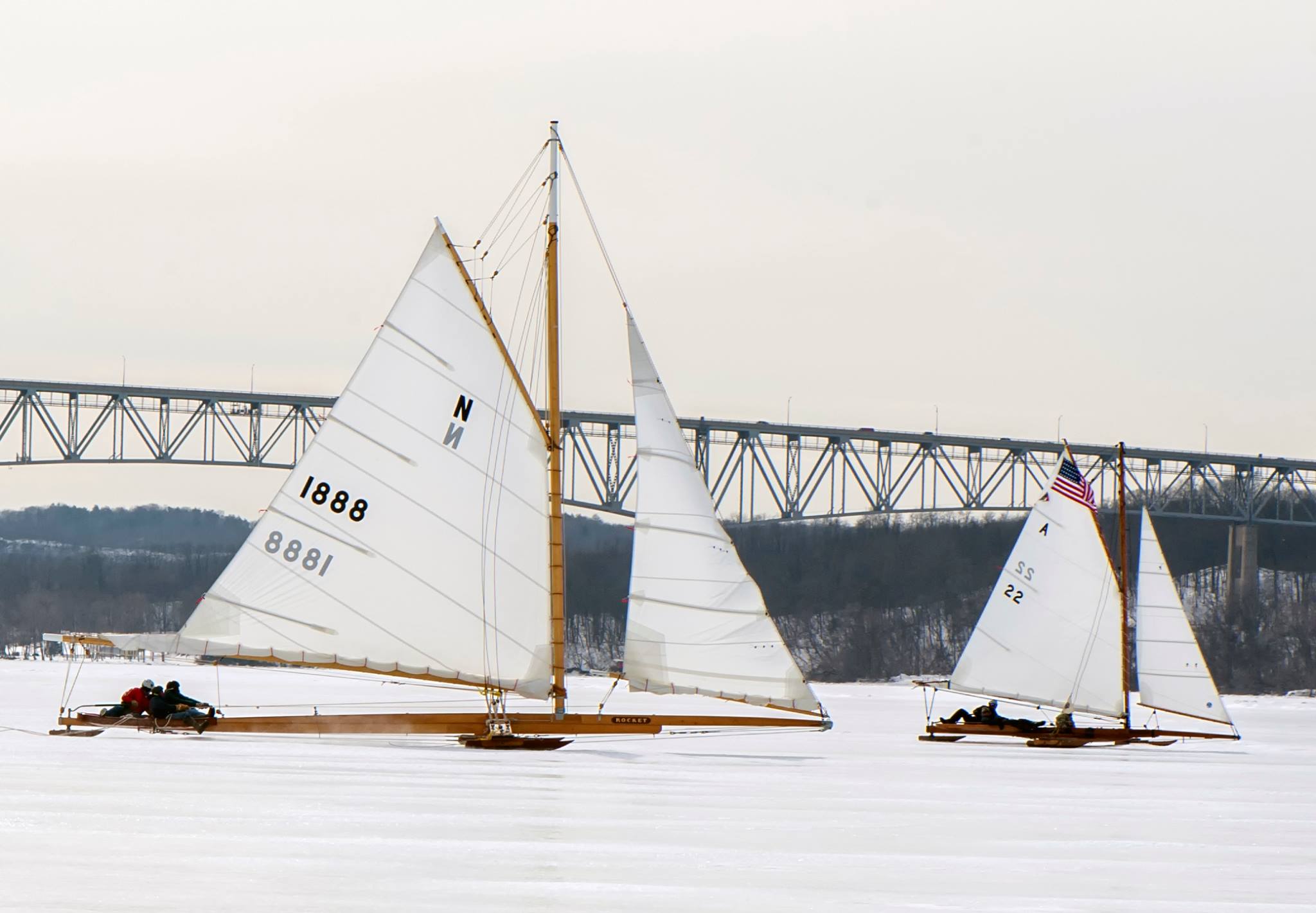
It’s winter, it’s cold and if there is a way to profit from the season, what a joy.
IN A QUEST TO PUSH OCEAN PASSAGE RECORDS INTO A NEW BENCHMARK, TECH GIANT JIM CLARK UNLEASHES A 100-FOOTER CURRENTLY DUBBED “NEWCUBED.”
 ENLARGE IMAGE
ONNE VAN DER WAL
CONSTRUCTION FOR JIM CLARK’S NEW 100-FOOTER IS UNDERWAY AT HODGDON YACHTS.
 ENLARGE IMAGE
ONNE VAN DER WAL
CONSTRUCTION FOR JIM CLARK’S NEW 100-FOOTER IS UNDERWAY AT HODGDON YACHTS.
CONSTRUCTION FOR JIM CLARK’S NEW 100-FOOTER IS UNDERWAY AT HODGDON YACHTS.
ENLARGE IMAGE
ONNE VAN DER WAL
CONSTRUCTION FOR JIM CLARK’S NEW 100-FOOTER IS UNDERWAY AT HODGDON YACHTS.
ENLARGE IMAGE
ONNE VAN DER WAL
CONSTRUCTION FOR JIM CLARK’S NEW 100-FOOTER IS UNDERWAY AT HODGDON YACHTS.
WHAT’S LENGTH GOT TO DO WITH IT? In the case of Jim Clark’s new ocean racer under construction at Hodgson’s Boatyard in Boothbay Harbor, Maine, quite a lot, or so says skipper Ken Read. Ken Read’s eyes light up when talking about Jim Clark’s newest ocean-racer project like a child at Christmastime who’s just unwrapped a Red Rider BB gun. The guilty pleasure lies in the fact that this is no ordinary 100-footer (if one can be ordinary). This yacht is designed to be a full-on record-breaker. You name the race or passage—Transat, Transpac, Bermuda, Fastnet, Hobart, to name but five—and it’s likely a target on their project whiteboard.
“This boat is going to be so cool,” says Read, Clark’s skipper and the President of North Sails who has experienced all types of campaigns—from J/24 World championships, to the America’s Cup and Volvo Ocean Race—in his decades-long experience in the sport. “This type of project isn’t for everyone, but it has a cool presence that will hopefully do the sport good, whether you’re a cruiser or a racer.”
Building a 21st century record-breaker is no small feat. It requires a plethora of designers to tank test scale models and run computer simulations, and there’s the “swat team” of boatbuilders to cook the pre-preg carbon-fiber hull and deck structures. All told, upwards of 32 people have contributed some input to the design and build through active participation or consultation. What will set this boat apart, says Read, is power, and lots of it.
THE BOAT WILL BE 100 FEET LONG WITH A DISPLACEMENT NEAR 30 TONS, BEAM IN THE MID-20S, AND A CANTING KEEL THAT WILL DRAW ALSO IN THE MID-20S.
They explored a lifting keel but determined it added too much drag for the desired upwind performance. Water-ballast tanks will aid stability, and fore and aft trim.
That makes it nearly identical in length, slightly lighter, and significantly wider and deeper thanWild Oats XI, the Reichel/Pugh maxi that has won line honors in the Rolex Sydney Hobart Race a record-equaling seven times. But with the mast stepped farther aft than Wild Oats XI, Read says Clarks’ yacht will look strikingly different.
“It’s going to be long, wide, and stable,” says Read. “With its power-to-weight ratio, there’s been nothing like it before. From a stability standpoint it’s a little stiffer, a little lighter, and with a little more sail area than Speedboat (the Juan Kouyoumdjian-designed 100-footer that’s now called Perpetual Loyal).”
FRENCH DESIGNERS
Clark’s as-yet unnamed yacht is from two French design firms, the renowned duo of Marc Van Peteghem and Vincent Lauriot-Prévost (VPLP), along with new star Guillaume Verdier. VPLP’s track record designing multihulls is second to none. Their designs include the giant multihullsGroupama 3 and Banque Populaire V. Groupama 3 measured 103-foot LOA and shattered records such as the 24-hour, Transatlantic, and Trophée Jules Verne, only to see those records fall – in the case of the 24-hour record just one day later – to the 130-foot long Banque Populaire V. Verdier, meanwhile, had more concentration on shorthanded monohulls in the 40- to 60-foot range.
In 2007 the two firms joined forces to take on the highly competitive IMOCA racing circuit, for singlehanders in 50- and 60-footers, and they’ve had great success ever since, capped by stunning performances in the 2012-’13 Vendée Globe singlehanded non-stop race around the world. VPLP-Verdier designs placed 1-2 and took three of the top four overall. And they were fast: The race-winner, Macif, set a new, ratified 24-hour singlehanded distance record of 534 nautical miles at an average speed in excess of 22 knots, and the first two yachts completed the circumnavigation in less than 80 days.
“No doubt, this new boat is a development of Macif,” says Read. “The scale of a project like this, from an engineering and structural standpoint, is nothing like that boat. But the designers took shapes they liked from the IMOCA 60s and developed from there.”
Macif, however, was designed as a horse for the course. Racing around the world is more about close reaching or off-wind sailing. Clark’s new yacht will have upwind capabilities that could be necessary in short offshore races, those of 600 to 1,000 nautical miles. It will have two rudders, but the weather rudder won’t be lifted out of the water because rating rules prohibit such features. Clark’s yacht also won’t have the cut-back rail that Macif sported along its sheerline and which made the hull appear like an ellipsoid. The crew of around 20 (still being determined) requires a rail on which to hike.
FEWER CREW; MORE TO DO
The surprising part in all of this is that the yacht’s winches will be manually powered. Six pedestals will be mounted with custom bevel boxes to create specific gear ratios for the power necessary to trim the enormous sails. Read said the sail plan is still being finalized, but the A5 gennaker could measure in close to 1,000 square meters. The gennaker for Alinghi 5, the catamaran that contested the 33rd America’s Cup, was reportedly one of the three largest ever built at 1,100 square meters. And that cat had powered winches.
“Keep in mind that Banque Populaire V went around the world with no push buttons, about 50 percent more righting moment, and the same size rig as this boat, with one less pedestal,” said Read. “We did a study and found that we can produce as much or more power to the winches with 12 guys grinding than with push buttons. With manual winches, if we do a Transatlantic we can save up to a ton and a half of fuel and won’t have to keep the engine running all the time. Also, if we set a record it won’t have an asterisk next to it because of the powered winches. It’ll just be more fun to sail.”
It certainly will be fun to sail according to the VPPs. Upwind the boat is projected to sail at 13 knots, but at its sweet angle, about 120 degrees true wind-angle in 25 knots of wind, it’s predicted to average 30 knots.
One feature Verdier changed after testing five models at the Wolfson Unit in Southampton, England, was the bow profile. Macif has a very full bow, and initially that was the look for Clark’s new yacht. “Designers have poked around the concept of full bows for a while now. A boat like Macif or the VO70 Abu Dhabi were full bows,” says Read. “Verdier was much higher on the concept before the tank tests, and I think the bow got considerably narrower.
“It’s more specific to upwind performance than anything,” Read continues. “We think we’re coming up with ways to get the bow out of water when planing off the wind. Other concepts such as keel and daggerboard placement will help lift the bow, so we aren’t using as much volume forward to lift the bow. It’s not a narrow bow but not a full bow. It’s probably more conventional than any other boat.”
STRUCTURE AND SAIL PLAN
As of this writing the outer skin of the hull had just been laid up and the hand-selected work force at Hodgson’s Boatyard, led by Tim Hackett and Brandon Linton (the duo helped build Read’s two Puma-branded VO70s) was beginning to install the bulkheads. Read says that the yacht will be compliant with scantlings established by Germanischer Lloyd, the marine classification society based in Germany that strives to ensure safety at sea. There will be bulkheads every eight to 10 feet, and the boat is expected to pass the 135-degree vanishing stability test. While the sail plan is still in development, Read says there’ll be nine or 10 sails total. Aside from the mainsail and J2, the 100-percent headsail that will be hanked on, all other headsails will fly on roller-furlers and from custom stays. The headsails are all just different shapes of genoas or gennakers. There are no spinnakers on the boat because the apparent wind angle isn’t expected aft of 65 degrees. The material of choice is 3Di except the downwind sail, which is cuben-fiber.
“Sail area and mast height are all pretty darn similar to what Speedboat was,” said Read. “It’s fascinating how little horsepower you need. Once it starts building its own apparent wind, you almost can’t get the sail area off fast enough.”
With the mast so far aft in the boat, says Read, it’s quite possible the sail plan will extend beyond the transom.
“Where the sail plan sits over the platform is very different, almost more like *Banque Populaire V,” says Read. “There’s nothing that says the boom can’t hang off the back of the boat or that the traveler has to be in the middle of the cockpit. Nothing says the sail plan has to be forward in the yacht.”
ABOUT THE RECORDS
Quick quiz: What monohull currently holds the crewed west-to-east transatlantic record and when was it set? This writer was amazed to see that Mari-Cha IV, Robert Miller’s powerful 140-foot ketch is still the record holder. In October 2003, a crew of 24 took Mari-Cha IVacross the Atlantic in 6d:17h:21m at an average speed of 18 knots. The maxi catamaranBanque Populaire V holds the outright record at just over three and a half days, an average speed just shy of 33 knots, but Mari-Cha’s mark still stands some 10 years later.
Ken Read pulled no punches when saying that the Transatlantic record is among the marks he hopes to slay with Jim Clark’s new 100-footer. “The goal of this boat is to break records and be first to finish in the classic offshore races,” says Read. “This boat isn’t for around the buoys. The deck layout isn’t set up for it and the draft is too deep. We want to tick off every major race.”
They’ll get their first crack at a record later this year when they enter the Rolex Sydney-Hobart Race, where they’ll expect to encounter Bob Oatley’s Wild Oats XI, the seven-time line honors winner.
After the Hobart, other classic races on the radar include the Newport-Bermuda, Fastnet, Transpac, the Middle Sea Race, the Pineapple Cup (Miami to Montego Bay), and the Caribbean 600. Besides those and the Transat, they also plan a crack at the 24-hour record of 596 nautical miles set by Ericsson 4 in the 2008-’09 Volvo Ocean Race. And for the cherry on the cake, they might even attempt the non-stop, round the world mark. Banque Populaire V also holds that outright record, at 45-and-a-half days. The WSSRC doesn’t list a crewed monohull outright record (the round-the-world monohull records are singlehanded), but Read thinks they could do it in 55 days, give or take. “You don’t build a boat like this without throwing something like that on the table,” says Read. “We did a 42-day leg in the Volvo one year, so 55 days around the world isn’t too bad.”
BY STU WOO
The winds on San Francisco Bay started kicking up in the late morning. Before long, they were blowing more than 20 miles an hour.
Jimmy Spithill and his 10 teammates put on their crash helmets and flotation vests and climbed aboard the AC72, a menacing, 13-story black catamaran capable of near-highway speeds. As a powerboat pulled them into the bay for Race 5 of the 2013 America’s Cup, Mr. Spithill shot a glance at the Golden Gate Bridge. It was shrouded in fog.

Jimmy Spithill in front of San Francisco Bay on Feb. 3, 2014. Drew Kelly for The Wall Street Journal
An unfamiliar, uncomfortable feeling was tugging at him. Mr. Spithill, skipper of Oracle Team USA, the richest and possibly most prohibitively favored team in the history of the world’s most famous yacht competition, had lost three of the first four races. Something was wrong with the way the Oracle boat was performing. Now he was facing the unthinkable: His team might lose.
The America’s Cup, first held in 1851, is believed to award the world’s oldest international sporting trophy. The contest also is one of the least professionalized. There is no permanent organization, commission or governing body. The winner gets to pick where and when the next race is held—typically every three to five years—and what type of boat is used. All that tends to make the racing rather lopsided. In most cases, the faster of the two boats in the finals wins every match—and the faster boat is usually the defending champion.
The 2013 Cup wasn’t supposed to be any different. But a competition that was expected to be humdrum turned into one of the most remarkable ever. This account of how that happened was pieced together through extensive interviews with the sailors, engineers and other team leaders.

Largely because of team owner Larry Ellison, the founder of software giant Oracle Corp. and one of the world’s richest men, Oracle had all the advantages conferred upon the incumbent, plus some.
The 11 sailors were a collection of international superstars. The engineers who designed the yacht and the programmers who built the software used to plot strategy had no peer. Oracle’s computer simulations suggested the AC72—which cost at least $10 million to build—wasn’t just the better boat in the final, it was the fastest sailboat ever to compete for the Cup, capable of 48 knots, or about 55 mph.
Mr. Spithill wasn’t sure why Emirates Team New Zealand, Oracle’s opponent in the final, had been faster so far. The prevailing theory among Oracle’s sailors was that they were just rusty. As the defending Cup champions, they hadn’t had to race in the preliminaries.
As the AC72 dropped its towline on Sept. 10 and headed for the starting line, Mr. Spithill hoped that in Race 5, the Oracle crew would get its act together.
The start of an America’s Cup race is an exercise in pinpoint execution. The two boats can’t cross the starting line until a countdown timer hits zero. On this day, both boats hit the line simultaneously.
The five legs of the racecourse sent the boats from near the Golden Gate Bridge to the downtown San Francisco waterfront and took anywhere from 20 to 40 minutes to complete, depending on wind. Through the first two legs, Oracle was in total control, building up an eight-second lead.

The upwind third leg was the one that had been keeping Mr. Spithill awake at night. Sailors have known since ancient times that sailing against the wind requires plotting a zigzag course—called tacking—steering the boat back and forth at a roughly 45-degree angle to the wind. Oracle’s aura of invincibility had crumbled on this upwind leg. If New Zealand was behind at the upwind turn, it would take the lead. If the Kiwis already had the lead, they would turn the race into a rout.
Tacking involves an elaborately choreographed routine. To initiate the turn, eight sailors crank winches resembling hand-operated bicycle pedals, powering the system that moves the sail. Two sailors pull ropes to adjust the angles of the enormous mainsail and the smaller jib. At precisely the right moment, the skipper—Mr. Spithill—spins the helm. Then all 11 sailors scurry from one hull, across a patch of trampoline-like netting, to the other side.
If everything goes right, the boat loses little speed. A small misstep or two, however, can cause the boat to bog down—or in extreme cases, to capsize.
As the upwind leg began, New Zealand headed out toward the San Francisco waterfront while Oracle vectored toward Alcatraz Island. Mr. Spithill looked over his shoulder and saw he was ahead of New Zealand by 2½ boat lengths. But the Kiwis edged closer with every turn. Within three minutes, New Zealand’s red yacht crossed in front of Oracle. Mr. Spithill had blown another lead.
By the time the boats reached the fourth leg, the gap was too large for Oracle to recover. New Zealand won by more than a minute. In racing terms, that might as well have been a week. New Zealand was now nearly halfway to the nine wins it needed to secure the Cup—and the time gap between the boats was only getting larger.
Even the Kiwis were surprised. After the race, Team New Zealand’s managing director, Grant Dalton, passed one of his sailors in the hallway and said: “I can’t believe we just won.”
As the AC72 skulked back to its berth, Mr. Spithill heard the voice of Russell Coutts, the New Zealand-born chief executive of the Oracle team, on his walkie-talkie: “Have you thought about using the postponement card?”
A postponement card is the America’s Cup equivalent of a timeout, envisioned as a way for teams to fix problems like broken equipment. By using it, Oracle would be able to delay the afternoon’s second race to the next race day, 48 hours later.
“We’re going to play it now,” Mr. Spithill told Mr. Coutts.
At the postrace news conference, the grim-faced skipper said: “We feel like we need to regroup, really take a good look at the boat.”
The following day, his team practiced in the bay and considered modifications to the boat, while the programmers ran simulations. In addition, the team’s tactician, who advises Mr. Spithill on wind, current and strategy, was replaced.
Mr. Spithill thought the break, and the small modifications they had made, might have done the trick.
The answer came quickly in Race 6. After getting blown out again on the upwind leg, Oracle lost by a margin of 47 seconds, and later that day, lost Race 7 by 66 seconds, its worst finish yet. New Zealand now needed just three more wins—and it had 12 chances to get them.
Already, the fans who gathered on the waterfront to watch the races had started cheering for the Kiwis. Unless Mr. Spithill figured out how to sail faster upwind, the affable sailor would forever be remembered as the engineer of his sport’s greatest flop.
Jimmy Spithill grew up in the tiny Australian town of Elvina Bay, just north of Sydney. He learned to sail in a leaky wooden dinghy that a neighbor had planned to throw away.
Being a sailor of modest means isn’t easy. Even as Mr. Spithill showed prodigious talent as a teenager, his parents—his father was an engineer, his mother a medical receptionist—struggled to send him to international competitions. Mr. Spithill exhibited an aggressive streak and a blue-collar mentality. Once, a week before the national high-school sailing championship, he broke his wrist playing rugby. He won the sailing contest in a cast.
In 1999, when he was 20, the Young Australia team made him the youngest skipper in America’s Cup history. The team lost, but he proved talented enough to get recruited to the U.S. team OneWorld in 2003. He lost again in preliminaries, to Mr. Ellison’s Oracle team, which went on to lose in the finals.
He returned in 2007 as helmsman for the Italian team Luna Rossa. During the semifinals of the challengers’ heats, he got his first glimpse of Mr. Ellison’s lavishly funded new Oracle team, with a budget that ran into the tens of millions. He routinely outwitted Oracle at the starting line and won the series, 5-1, before losing in the next round.
Mr. Coutts, the Oracle team’s CEO, was suitably impressed. When the Cup was over, he made Mr. Spithill one of his newest hires.
For the next Cup, team Oracle tricked out its three-hulled trimaran with a revolutionary carbon-fiber sail that looked like an upright airplane wing. Joseph Ozanne, then a 30-year-old engineer with a degree from a prestigious French aeronautics-engineering program, was responsible for designing the sail, which contained movable flaps like on an airplane.
Mr. Ozanne was in charge of a computer program, the Velocity Performance Predictor, that calculated optimal wing angles and projected speeds. But the sailors ignored his advice. “You did your job, now let us sail the boat,” Mr. Ozanne recalls being told.

Oracle Corp. founder Larry Ellison spent at least $10 million to build the AC72, the most technically sophisticated sailboat ever to compete for the America’s Cup.
After the sailors struggled for two days, Mr. Ozanne sat them down for a PowerPoint presentation. “You need to forget everything you’ve done on the conventional sail,” he said. When the sailors eventually heeded his suggestions, the boat began performing as advertised.
At the 2010 Cup, held in Valencia, Spain, Mr. Spithill led Oracle into the final. It was a cake walk, with BMW Oracle winning the first two races in the short best-of-three format. At age 30, he was the youngest winning skipper in the competition’s history.
For the 2013 Cup defense, Mr. Ellison decided to commission a new kind of boat, a decision that would turn the sport into something akin to Formula One on water. Picture two canoes, each one 72 feet long and made of carbon fiber, connected by a raft, with a 13-story wing, also made of carbon fiber, pinned to the middle. The software tycoon’s $10 million investment created a vessel that could do more than 50 mph.
The boat was so strange and powerful it was hard to handle. During training in October 2012, problems setting the sails and steering the boat caused the bows to nose-dive and the boat to pitch forward until the sail slammed into the water, leaving the sailors clinging to the yacht. The experience spooked everyone.
In May 2013, during practice for the Cup races, the Swedish team, Artemis Racing, had a similar mishap. One of the sailors got trapped underneath the boat and drowned.
Coming into the final, Mr. Spithill and his crew felt they were ready for the speed. And they had reason to be supremely confident. According to the computer, the AC72, with its skinnier hulls and drag-reducing dug-out cockpits, was superior to New Zealand’s boat.
If anyone had predicted that New Zealand would win six of the first seven races, they might have been thrown overboard. But that is exactly what had happened.
After his Race 7 drubbing, Mr. Spithill emerged from his shower to find that the team’s sailors, engineers, designers and computer scientists had started a meeting without him. All the chairs were taken.
Mr. Spithill sat on a desk and sipped a Red Bull as the 30 people took turns suggesting changes to the boat.
As mandated by America’s Cup rules, all the teams had to create boats of the same basic design—in this case a 72-foot catamaran. All of them had L-shaped boards under their hulls called “foils,” which stick down below the waterline like little feet. When the boats hit a certain speed, the hulls rise out of the water and ride on the surfboard-size foils, creating the illusion that the boats are actually flying.
Both Oracle and New Zealand had been foiling downwind. But New Zealand’s boat was getting partially up on its foils on the upwind leg, too.
Oracle had experimented with upwind foiling five weeks before the race at the insistence of Tom Slingsby, a redheaded Australian team member who had just won a sailing gold medal at the London Olympics. Mr. Slingsby had seen the Kiwis doing it in practice and the preliminary rounds, and to his eyes, they were sailing much faster than Oracle. Before the final, he had emailed Messrs. Spithill and Coutts, telling them it could be a “game changer” and they needed to try it.
For two weeks, they had—but for only a few minutes a day. Nearly every time they tried, Oracle’s hulls would fall off the foils and the bows would nose-dive into the water. There also was a bigger problem cutting into Mr. Spithill’s practice time. Cup officials were investigating a modification Oracle had made on its boat—one ultimately ruled a violation of the rules. Oracle was slapped with a two-race penalty before the competition even began.
There was little time to experiment with the new technique, and Mr. Ozanne’s software indicated Oracle would easily outsail New Zealand upwind even without foiling.
Now, with the Cup under way and New Zealand using the technique to smoke Oracle on the upwind leg, the topic was back on the table.
The engineers weren’t sure it was possible because modifications made before and during the race had created balance problems. When the AC72 was foiling, not enough of its load was borne by the rudders in the rear. That made the boat hard to control—sort of like an airplane with too much weight on its nose.
Oracle’s boat designers suggested redistributing the load, mainly by increasing the twist in the top of the sail and decreasing it down below. The shore crew worked through the night. Mr. Spithill went home to his apartment in San Francisco’s posh Marina District.
Each night, he would act out the farce of going to bed at 11—only to lie awake worrying. Before the races had begun, a confident Mr. Spithill had flirted with the idea of flying to Las Vegas during the middle of the competition to see a Floyd Mayweather Jr. boxing match. That never happened. Unable to sleep, he would eventually grab his laptop and dial up video of the losing races.
Each time, he jumped to the beginning of the upwind leg. Sailing upwind involves a trade-off between speed and distance—the tighter the angle to the wind, the shorter the total travel distance but the slower the boat moves. Mr. Ozanne’s computer program had given a target: Sail into the wind at a relatively tight angle of about 42 degrees, which would produce the optimal mix of speed and travel distance.
Looking at the video, Mr. Spithill could see that the Kiwis had come to a different conclusion. They were sailing at much wider angles to the wind—about 50 degrees, on average. They were covering more water but reaching higher speeds—more than enough to offset the greater distance traveled. Foiling appeared to be the key. Oracle’s computers hadn’t anticipated such speeds.
Nobody had expected this. Had team Oracle placed too much faith in the technology? Had its enormous budget lulled the team into overconfidence? Had Mr. Spithill gotten away from the lessons he had learned in Elvina Bay?
What especially galled him was the New Zealand team’s apparent contempt for Oracle’s approach. The managing director of the New Zealand team, Mr. Dalton, was openly disdainful of the costly, high-tech catamaran Oracle had chosen. The Kiwi boat had a similar, but more rugged, design. Dean Barker, the opposing skipper, was the son of New Zealand businessman Ray Barker, who had founded the menswear company Barkers.
Mr. Spithill didn’t relish losing the Cup to a team who could say, rightfully, that their win represented a triumph for the craft of sailing. With his team’s prospects getting dimmer by the hour, Mr. Spithill decided it was time to stop obeying the computers and start thinking like sailors.
The next morning, a scheduled off day, Oracle’s sailors made upwind foiling the focus of their practice. Rather than sailing 42 degrees off the wind, what the team called their “high and slow” mode. Mr. Slingsby suggested trying 55 degrees, which he called “low and fast.” When the boat got moving fast enough to get up on its foils, the crew made another discovery. It was able to tack more quickly—13 mph rather than 10 mph.
The mood began to lighten. But after three years of training, the America’s Cup might just come down to how well he and his crew executed a maneuver they had practiced for just one day.
In Race 8, New Zealand jumped out to an early lead. But after the boats turned upwind, Oracle was moving faster than ever. The difference was Oracle was now foiling, too.
The race was dead even until near the end of the upwind leg, when Oracle pulled off a quick turn and began heading into the path of the Kiwi yacht. In sailboat racing, the boat on “starboard tack”—when the wind is blowing from the vessel’s right side—has the right of way over a boat on the opposite tack, with the wind coming from its left side. Oracle’s turn gave it the right of way. The Kiwis would have to either slow down and turn or go behind Oracle.
New Zealand tried to turn quickly, but miscues caused the wind to catch the sail the wrong way. Its right hull lurched into the air and the giant yacht began tipping. Oracle was headed directly into the underbelly of the Kiwi yacht, which was teetering at a 45-degree angle to the water.

“Starboard!” Mr. Spithill yelled into his radio to alert race officials the Kiwis weren’t yielding the right of way. As he yanked the helm to turn away, the New Zealand boat stopped tipping and slammed back into the water. The near capsizing completely sapped its speed.
Oracle won the race by 52 seconds. The sailors pumped their fists. Despite their six-race deficit, they had clearly caught New Zealand by surprise. “We rattled them,” Mr. Spithill told his team.
Back at the Oracle base, Mr. Ozanne said he had found the flaw in the computer model. To get going fast enough upwind to get on the foils, the yacht initially had to sail at an angle that would force it to cover more water—something the computer wasn’t programmed to allow. When Mr. Ozanne input the wider angles into the software, the computer had recalculated the speed and showed the boat could sail faster that way, confirming what the sailors had found.
Six days later, early in the morning of Sept. 20, Jimmy Spithill drove through the empty streets of San Francisco to the Oracle base for what he thought could be the team’s final race.
While Oracle had figured out to how to match New Zealand’s speed upwind, it hadn’t yet mastered the technique. The Kiwis had rallied to win two of the next three races, giving them an 8-1 advantage—thanks to the two-race penalty meted out to Oracle at the beginning—then Oracle had taken a race. Still, one more loss for Oracle and it was done.
Instead of turning on the car radio, Mr. Spithill plugged in his iPod and played one of his favorite songs, Rage Against the Machine’s “Take the Power Back.”
It was another foggy afternoon and the winds were unusually light. At the start, New Zealand took an early lead. As Oracle fell behind, the team continued making mistakes. The Kiwis sailed away through the fog. Their lead grew to nearly a mile. It was, for all intents and purposes, the end.
The Kiwis had one thing going against them. Under Cup rules, the winning team had to complete the course within 40 minutes or the race would be abandoned. The winds were so light, and the pace so slow, Mr. Spithill didn’t think the Kiwis could do it. But he wasn’t sure.
At exactly 2 p.m., Mr. Spithill heard the voice of a race official in the radio. “This is the race committee,” he said. “The time limit has expired.”
The Kiwis, about three minutes from the finish, had run out of time. “It just wasn’t meant to be,” says Mr. Dalton, the Kiwi team’s managing director.
The day wasn’t over yet. About 30 minutes later, the winds had picked up and the two boats entered the starting area to try again.
The Kiwis beat Oracle at the starting line. But by the time Oracle got to the upwind leg, it had a 20-second lead. It won by a commanding 84 seconds. The score was now 8-3.
On the next day of racing, Oracle took an early lead and held on to win by 23 seconds. In the day’s second race, it did the same, winning by 37 seconds.
It was now 8-5. Oracle now was foiling faster upwind than the Kiwis. But Mr. Spithill was well aware that with one misstep, it would be over. Still, the America’s Cup would be a race after all.
In the next race, Oracle outmaneuvered New Zealand off the starting line and led wire-to-wire. The score was 8-6.
The crowds were growing. Spectators who had earlier cheered for the underdogs from New Zealand had begun to cheer for the Americans.
On Sept. 24, Oracle took an early lead in the first race that it never relinquished. In the day’s second race, it took the lead on the upwind leg and won by 54 seconds. The score was 8-8.
Now it was the turn of Mr. Dalton, the New Zealand team’s managing director, to fear the worst: that the Oracle team might pull off the greatest comeback in Cup history.
The next day, Sept. 25, was the day of the decisive 19th race. During his drive to the base, Mr. Spithill listened to Pearl Jam’s live rendition of “Immortality.”
As a powerboat towed the Oracle yacht past the Kiwi base, Oracle’s sailors waved at their opponents in what had become a daily test: How many New Zealand team members would wave back? This time, nearly all of them did.
Mr. Dalton, New Zealand’s managing director, now saw his team’s prospects as bleak. “We knew we were going to lose the last race unless we sailed a perfect race,” he said.
About 45 minutes before the start, Mr. Spithill heard a loud bang. A critical piece of the sail—a part attaching some of the flaps to the wing—had sheared off. The wing wouldn’t curve properly without it.
Two powerboats sped over and the maintenance guys climbed up onto the wing and started shooting hot glue everywhere. They finished the job about five minutes before the boat had to enter the starting area. Mr. Spithill and his tactician looked at each other and laughed.
On the San Francisco shore, the Oracle supporters were back in full force, waving American flags. Just after the boats crossed the starting line, Oracle caught a gust of wind that sent its bows submarining into the water, costing it precious seconds.
Mr. Spithill had decided to sail conservatively. He wouldn’t get tangled with the Kiwis on the downwind leg, lest they crash or capsize. His goal was to keep it close until the upwind section, where he knew his boat now was faster.

When Oracle hit that leg, it trailed New Zealand by only three seconds. On every tack, it edged closer. Not far from the San Francisco waterfront, Oracle took a lead. When the upwind leg was done, Oracle was up by 26 seconds. The race was all but over.
As Oracle approached the finish line, Mr. Spithill glanced at one of his teammates, Kyle Langford, who was working in front of him. Mr. Langford, a 24-year-old last-minute addition to the crew, was in charge of adjusting the angle of the 13-story sail with a thick rope he held in his hands. There was nothing high-tech about this job, but it was absolutely crucial. If Mr. Langford dropped the rope, the yacht would quickly lose momentum and possibly capsize.
About three minutes from the finish line, the rope slipped out of Mr. Langford’s hands. He lunged and caught a piece of it with his left hand—just barely—and held on. Mr. Spithill laughed and said, “Nice catch, mate.”
Oracle crossed the finish line 44 seconds ahead of New Zealand. The sailors hugged.
A powerboat pulled up five minutes later. On it was Oracle founder Larry Ellison. He stepped aboard the yacht and said, “Do you guys know what you just did? You just won the America’s Cup!”
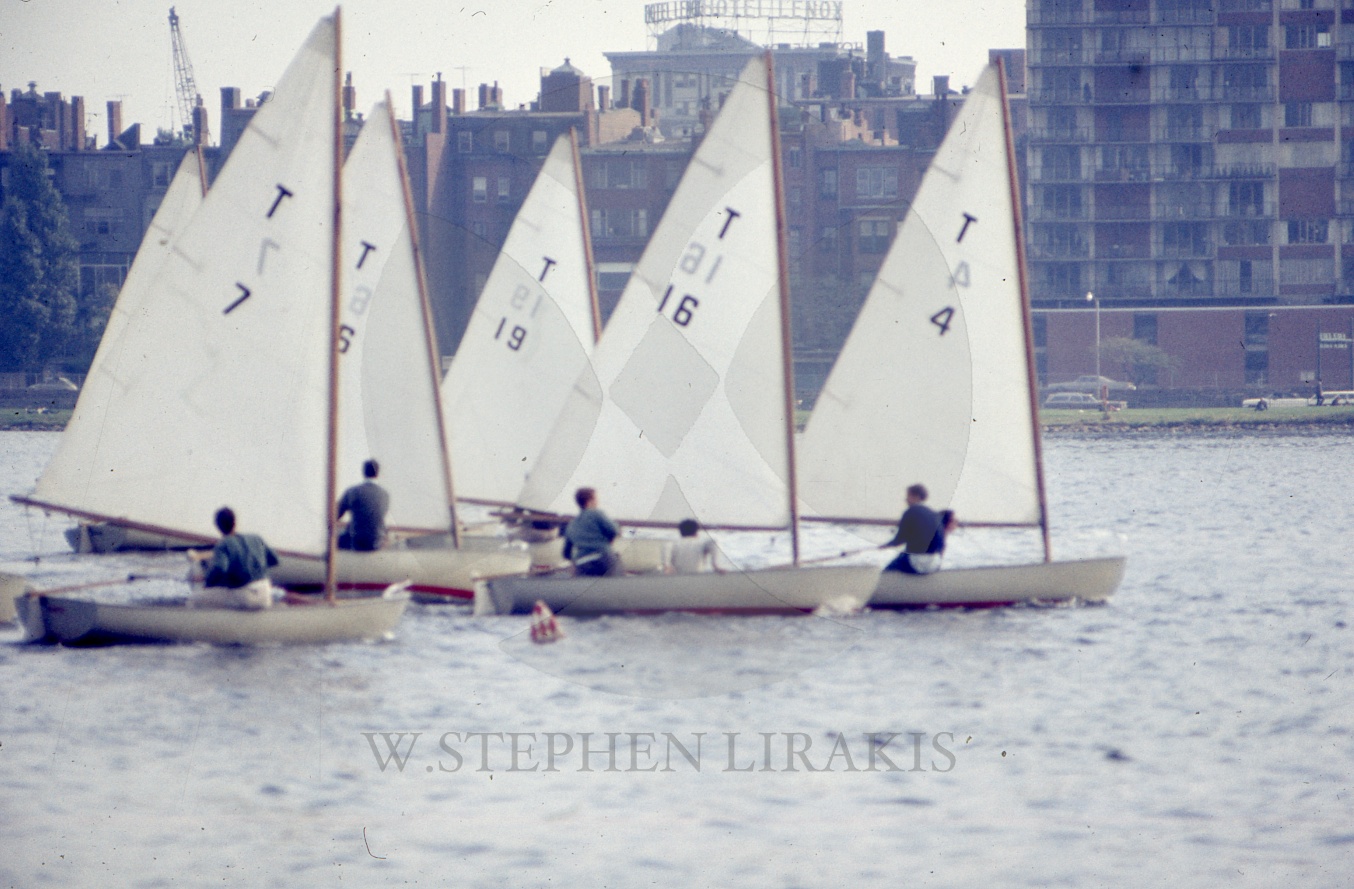
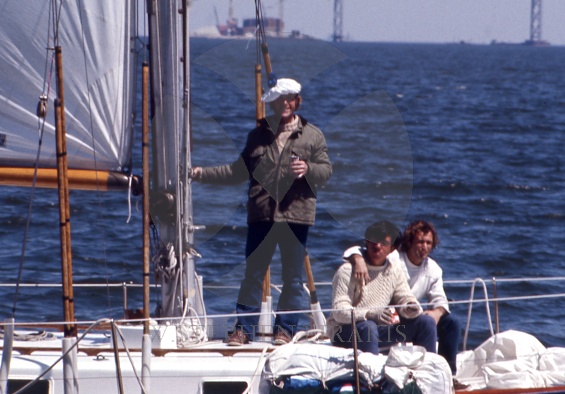


By Airwaves Writer Lydia Whiteford

Sail1Design welcomes your thoughts in our forum at the bottom of this article. Enjoy.
Earlier this winter, coaches from all over ICSA met in Utah to discuss the new year of college sailing. What resulted was a number of changes in the rules and regulations that apply to all the teams and events within ICSA, and it seems this year was the year of rather progressive and drastic changes. It is clear by the tenor of some of these changes that college sailing seems to be going the route of the NCAA, with stricter time restraints and even rules regarding sailor eligibility. This shift is admittedly extremely gradual, and will inevitably have its perks and downsides, but the most important thing for this season is adjusting to the rules that will apply right now. This article, therefore, is a response from me and others involved in college sailing to the most dramatic changes in the 2014 seasons.
The rule change that stood out to me the most at first is the new policy in which there will be a 10-race limit per day in college regattas. This means that after both divisions have sailed 10 races, no more races may be sailed on Saturday. By nature Sundays often have much fewer races because of the “no sail after” time, which is now 3 pm for most events. At first, this new rule seems like a bit of a hindrance. After all, the ultimate goal of any regatta is to get as many races as there are teams, because the more races there are the fairer the results become. But, upon further consideration, I think that this rule will provide a lot of benefits to sailors in certain venues. Everyone has sailed that regatta: 2 fleets of boats so breaks are minimized, or maybe even rotations on the water so you never get a break. When they do bring you in for “lunch”, you have just about enough time to viciously struggle out of your dry-suit and dash to the bathroom before they are calling for your division to get back on the water, where you will likely keep sailing until after sunset. These regattas, while noteworthy because they usually accomplish the desired number of races, often leave the sailors fatigued and dazed beyond recall. Your coach will ask you about an instance in the race and you find yourself drawing a blank because the entire day has blended into an endless loop of a W-4. With a 10- race limit, timing becomes more relaxed. If the sailors need a 30-minute break for lunch because the conditions are particularly brutal, they can take it because the race committee is only trying for 10 races, not 16. Also, this rule means that Saturdays will likely end earlier, giving college sailors (who are also college students) time to unwind and do work before they have to get up in the morning and sail all day again. This is particularly important for venues like Navy, which hold big inter-conference regattas that require most teams to travel far from home by van or even plane. These events absorb entire weekends, so having the spare time that the race limit can provide to do even a few regular student things will be of the upmost value.

The theme of some other proposed rules was increasing the safety precautions for the sailors. Concussions within college sailing have been increasing steadily over the years, and understandably so with a big pole made of metal hovering a couple of inches over your head whenever you are in a boat. One proposed solution was making helmets mandatory for all sailors; but this did not pass. The cost per school would be very high, and it did not seem like the most reasonable solution to the voters (and, more likely, all of the sailors who refused to wear helmets.) Some more experimental methods have been proposed, and have started to be tested. For example, Fran Charles (head coach at MIT) has proposed that all booms be made of carbon fiber, so as to reduce the weight of the boom and therefore the risk of serious head injury. All of the FJ’s at MIT already have carbon fiber booms, and they seem to sail as well as the normal collegiate FJ’s. The only difference is that they do not have a track to feed the foot of the sail through, and so a clew strap is necessary. These often break, and so present a sort of nuisance to the sailors right now, but if this flaw gets perfected I think that the carbon fiber booms are an excellent solution to the safety problem. Harvard has gone another route; two of the boats in their fleet of FJ’s have booms that are about 6 inches taller than normal. The masts are also longer, so there is no change in the sail area, but this is still the more controversial method because it may have a more influential change in the way the boats sail. 8 other schools are following suit with this, and have been approved for use for these new masts. Only testing of the two methods over the season will tell which is more effective.
Overall, it seems that the committee is trying to change the dynamics of college sailing to better fit the health of the athletes that compete in it. “At the NEISA annual meeting it was encouraging to see how healthy the conference is,” says Peter Bailey, Brown University Junior and Undergraduate Vice President of NEISA, “the leaders are taking steps to make college sailing more safe and competitive.” The more the rules change to be mindful of the sailors, the more that college sailing will start drifting towards the standards of the NCAA. I think I speak for all of us when I say it will be extremely interesting to see how the sport will develop in the near future.
Here’s a LINK to the official ICSA Procedural Rules
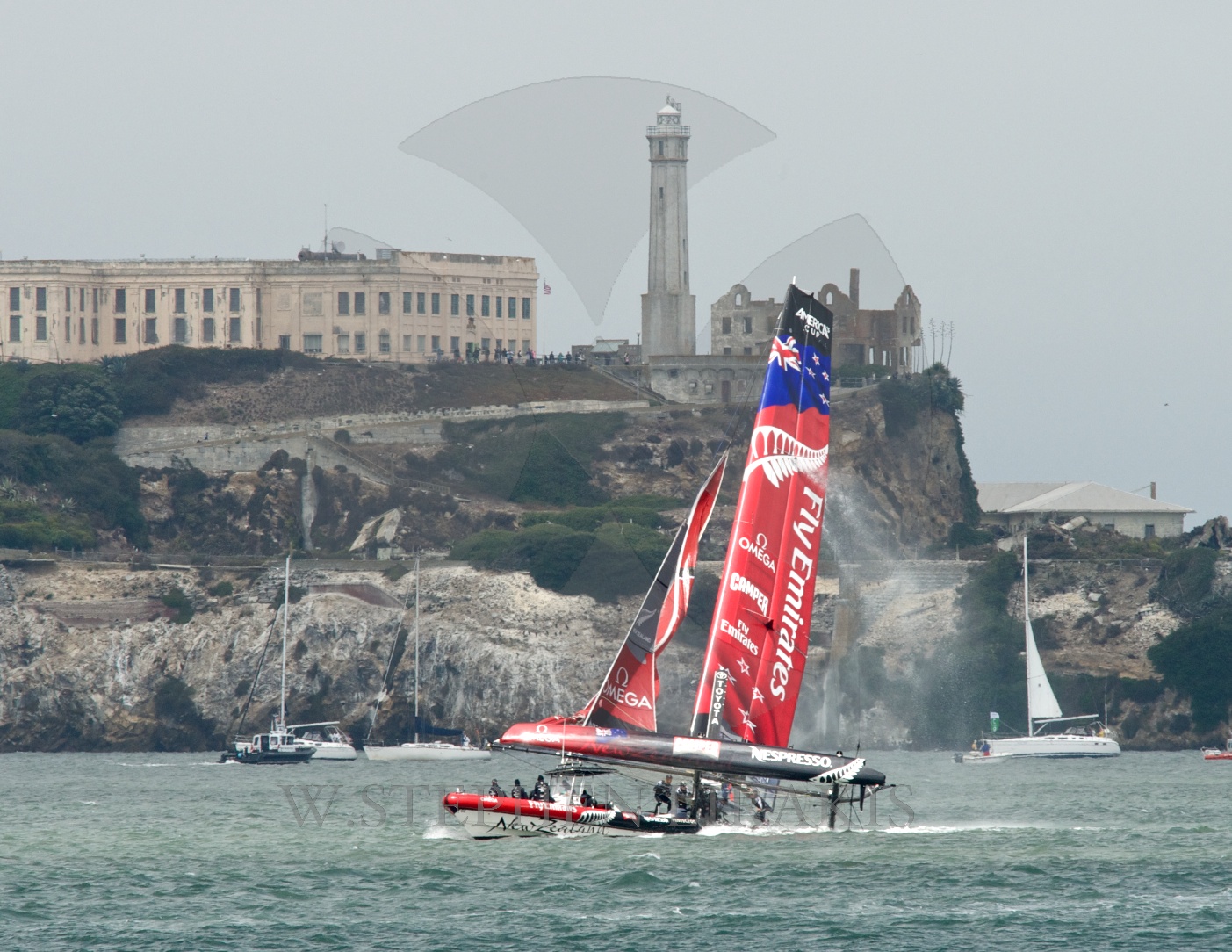
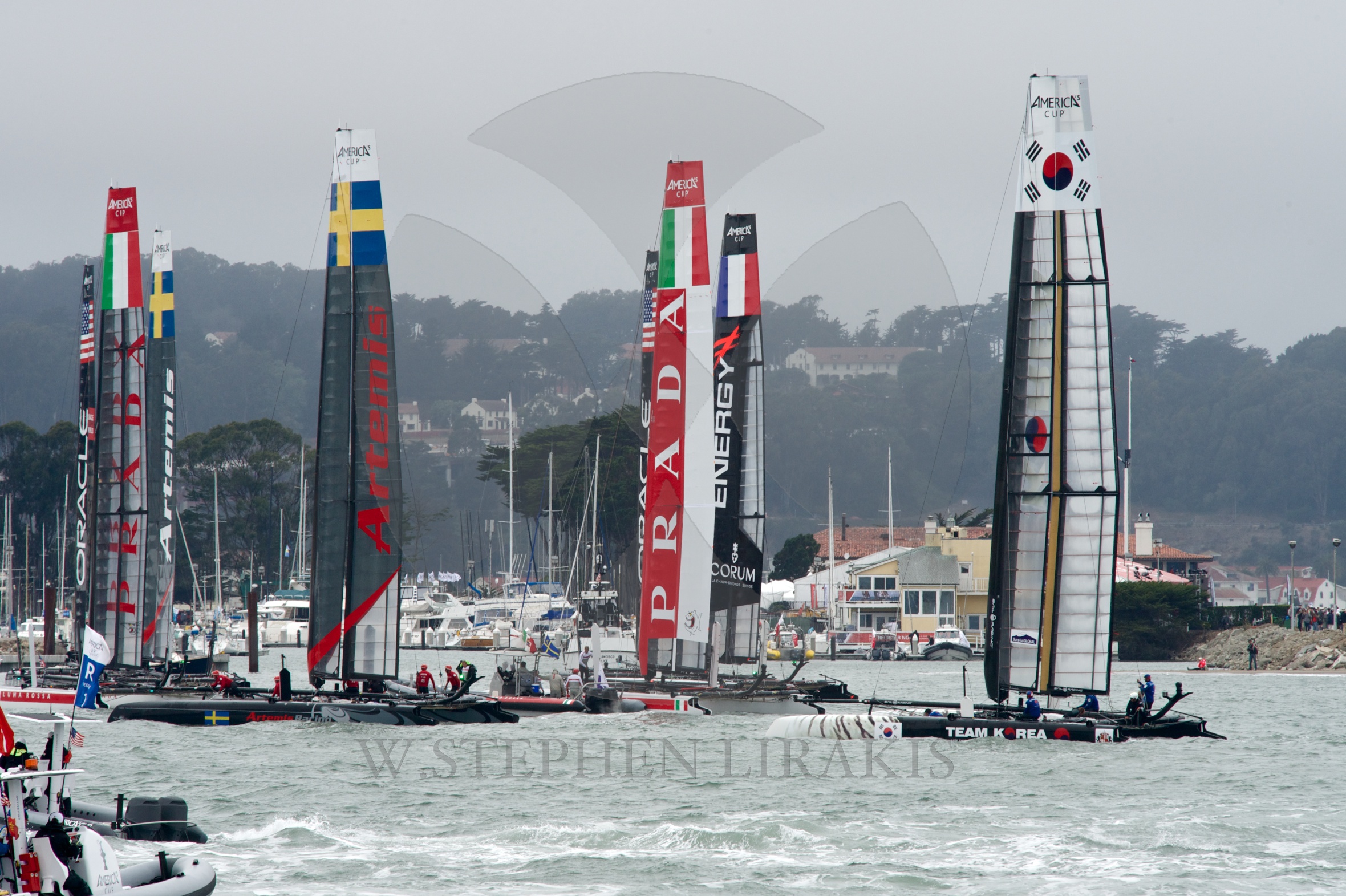
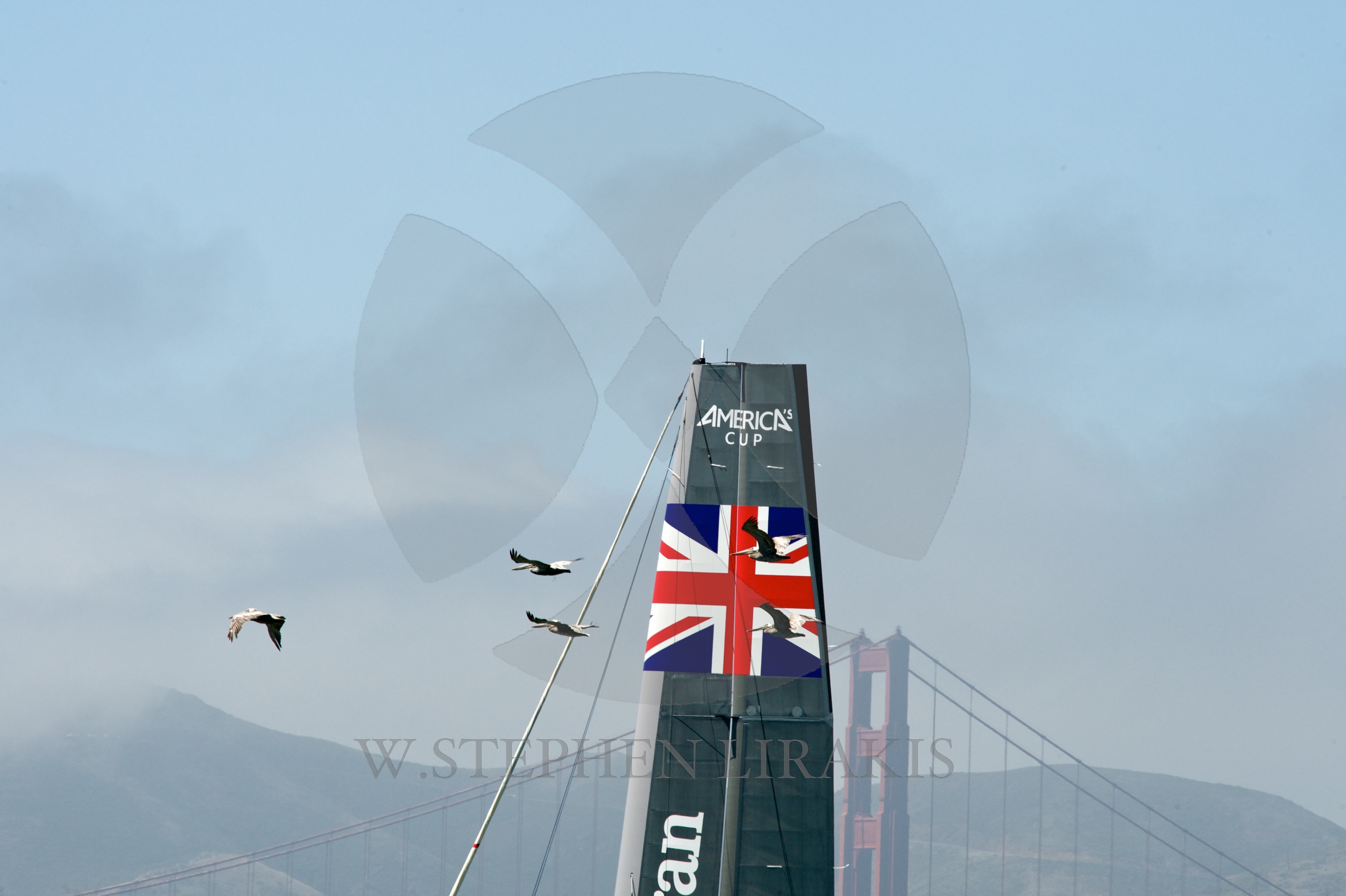
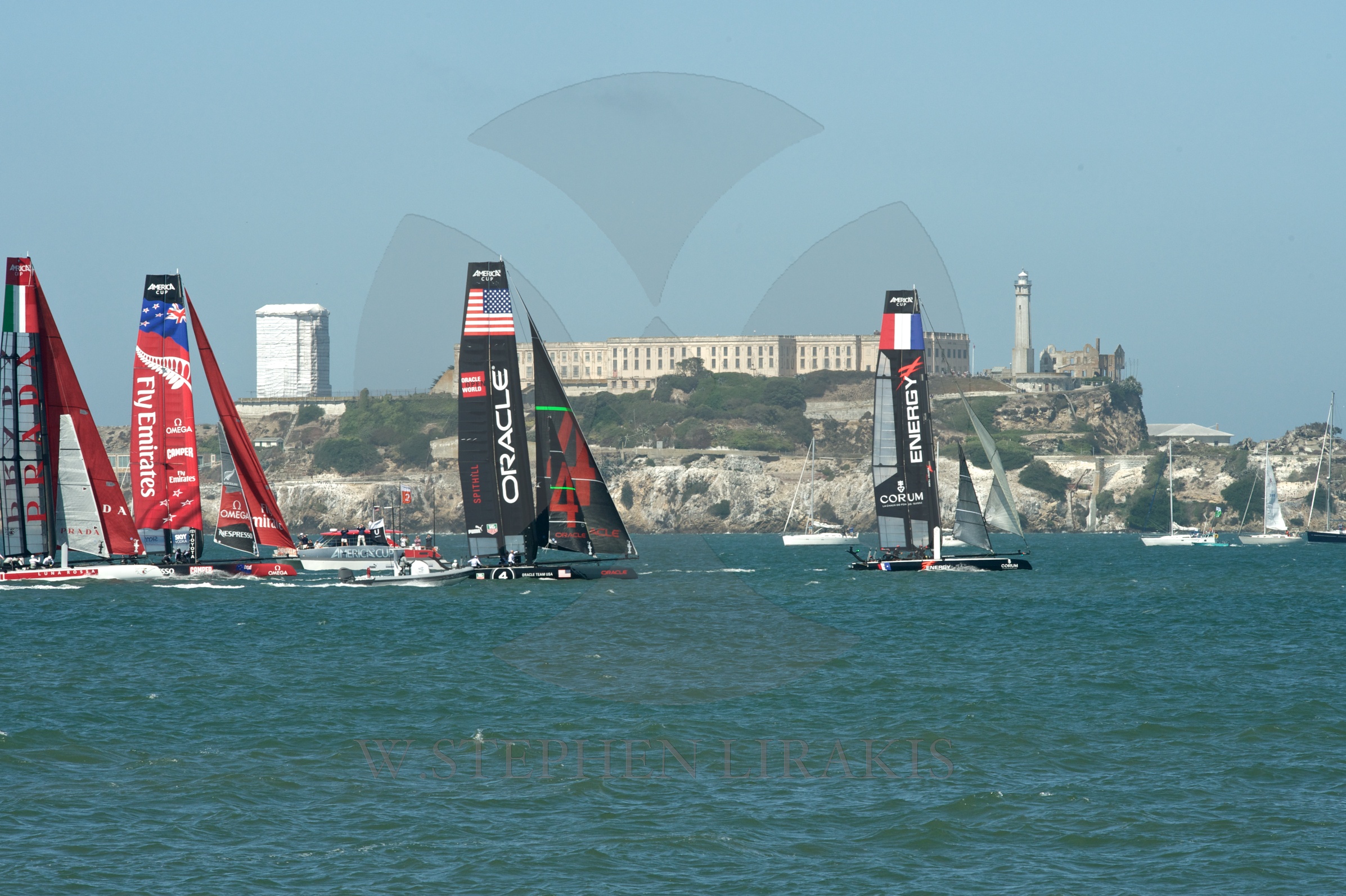
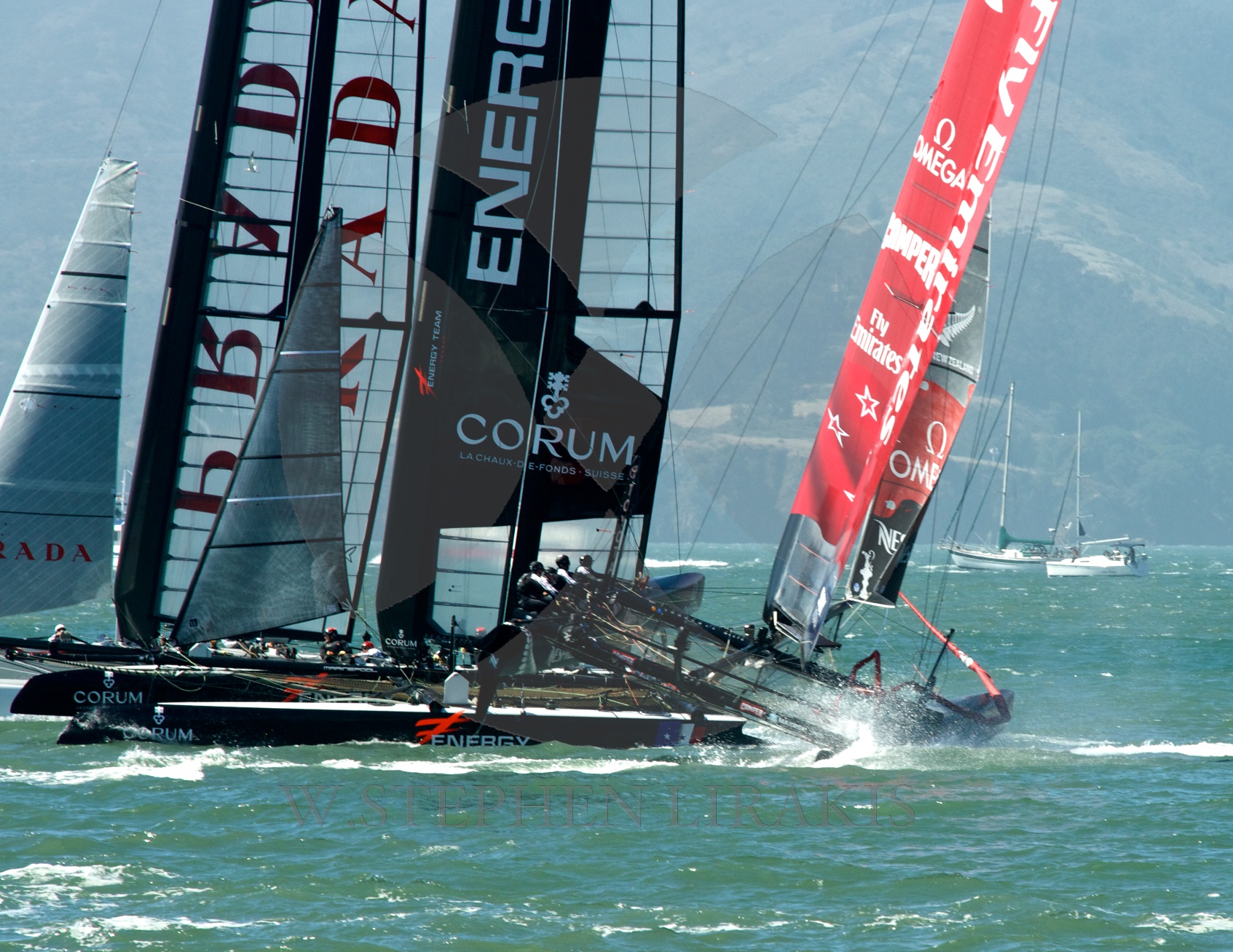
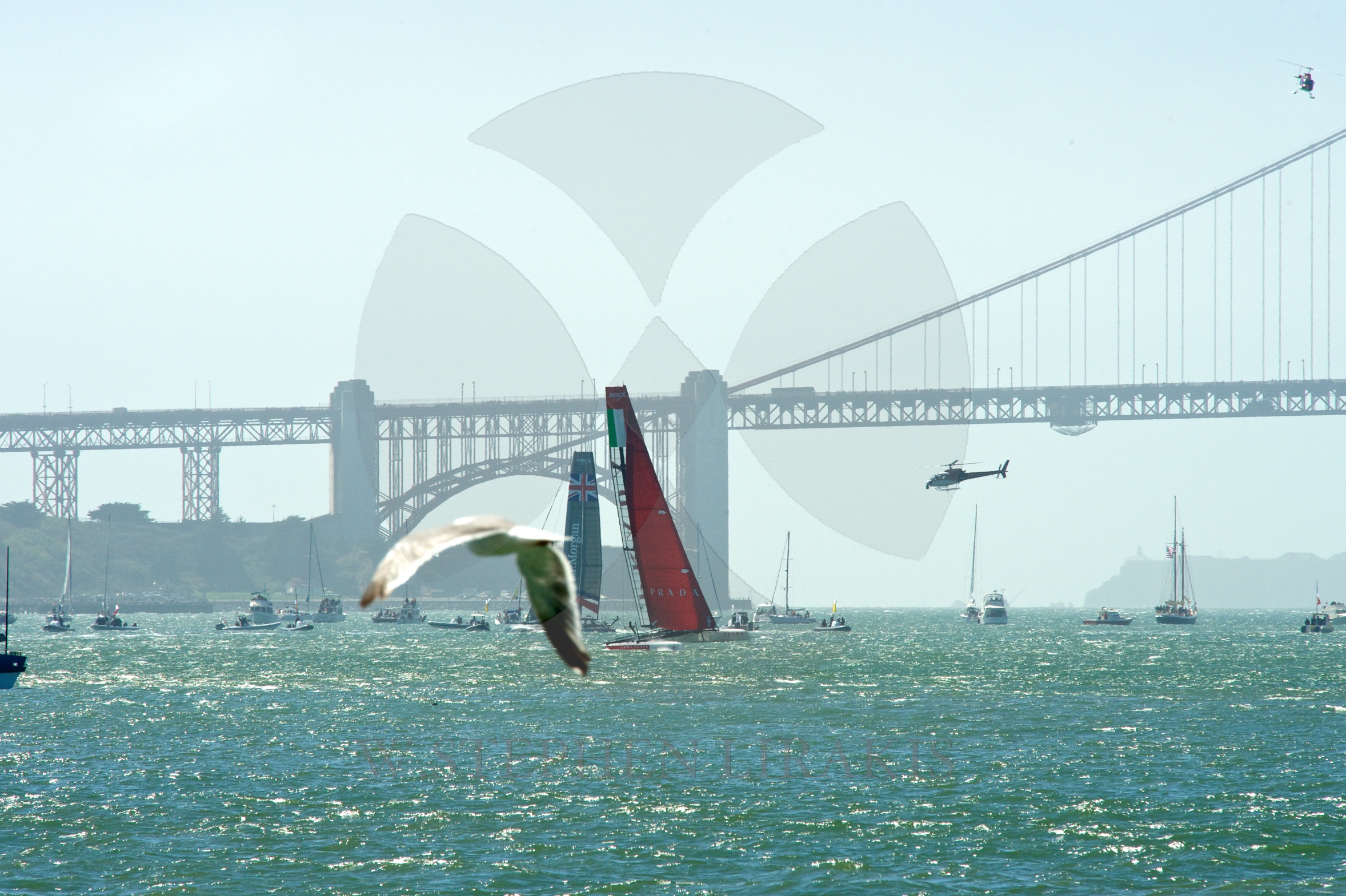
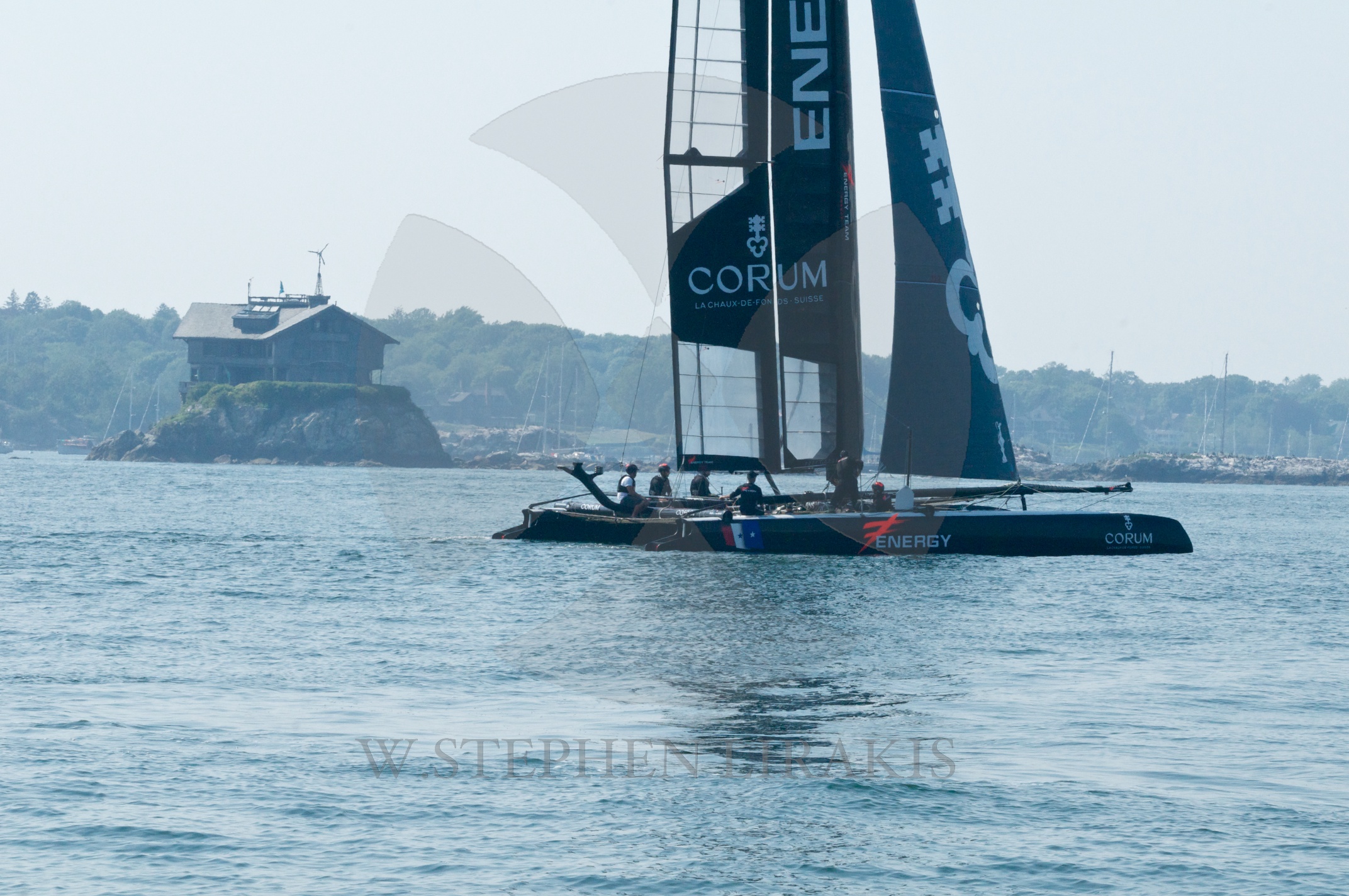
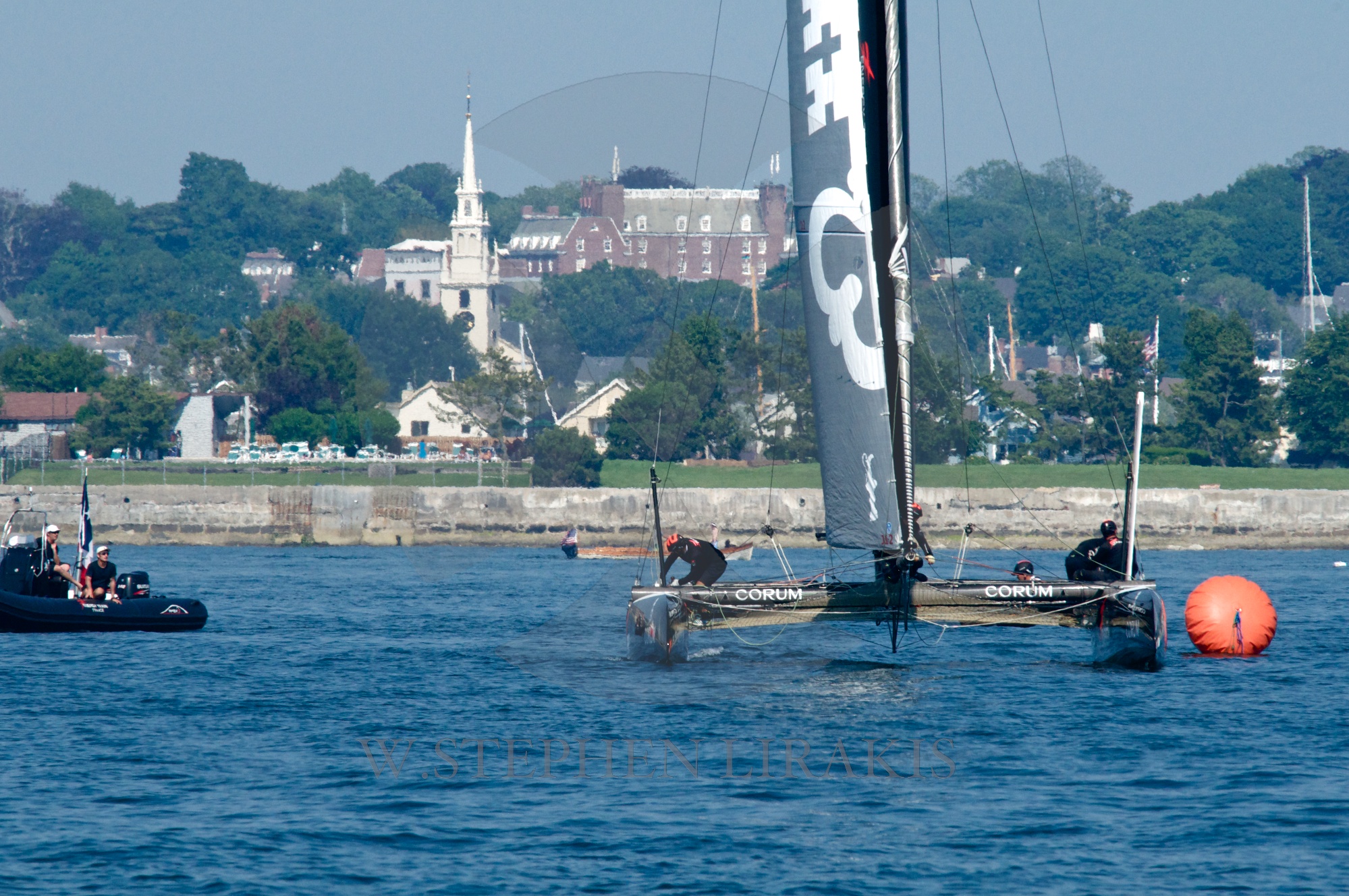
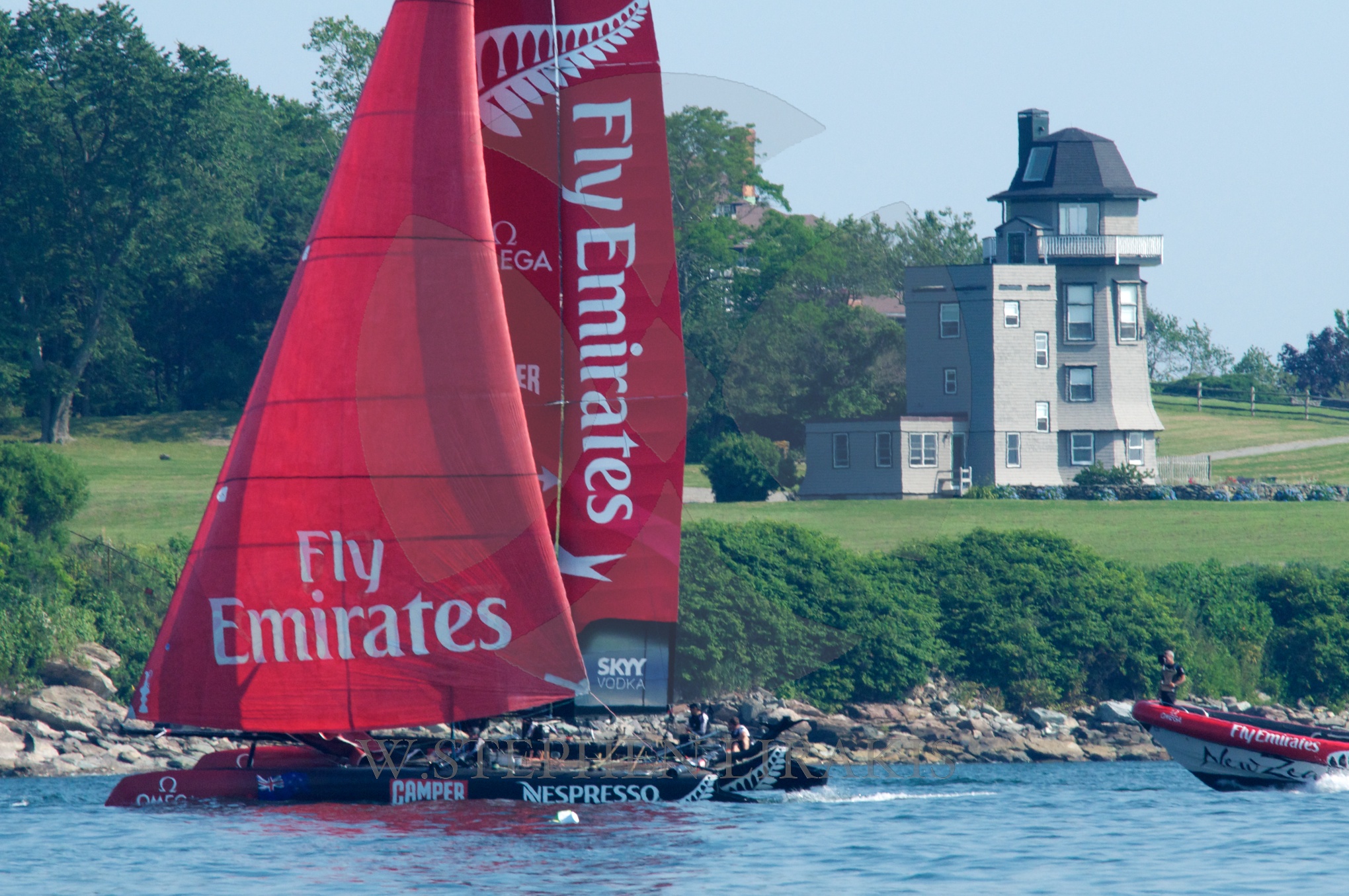
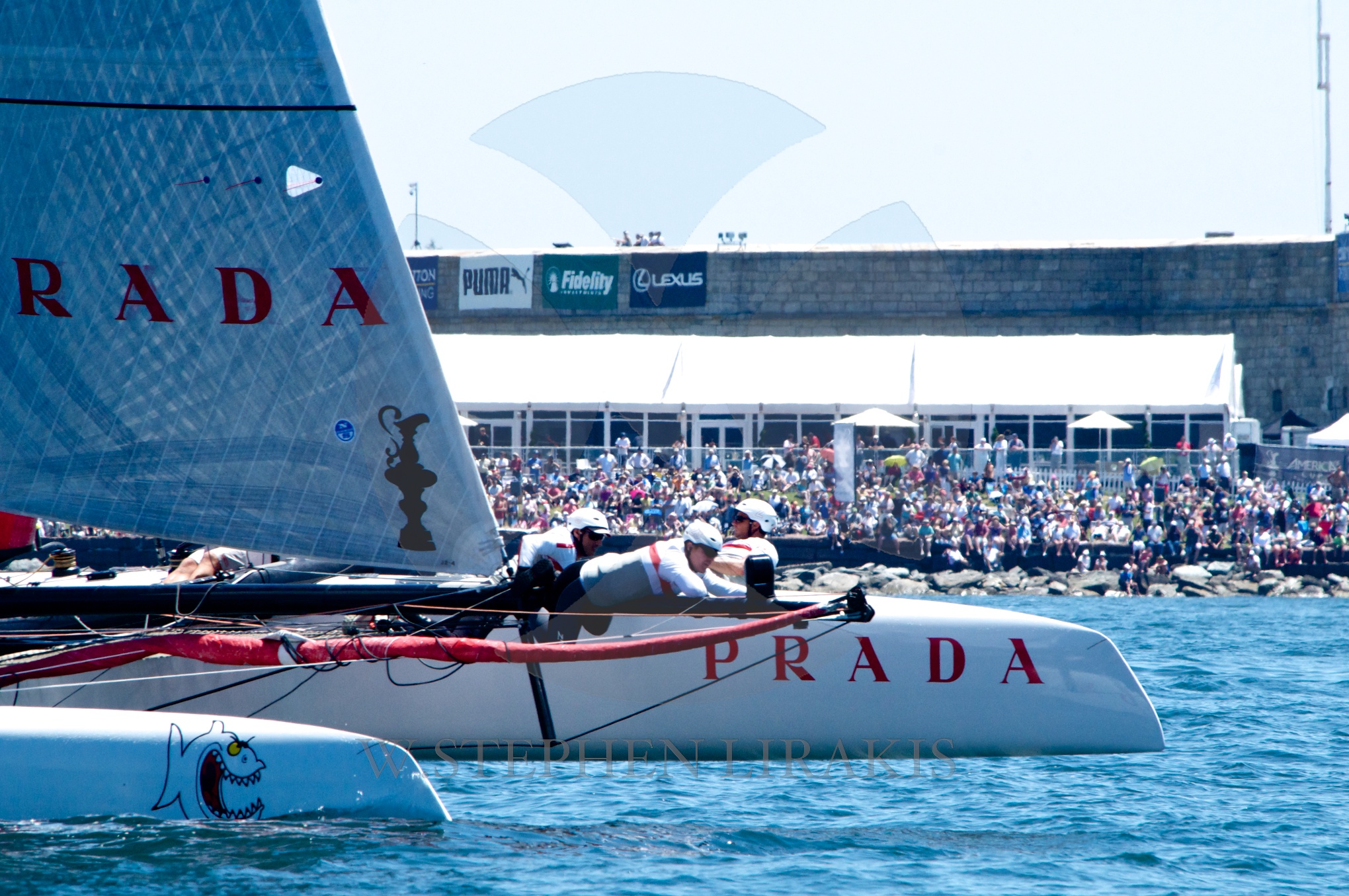
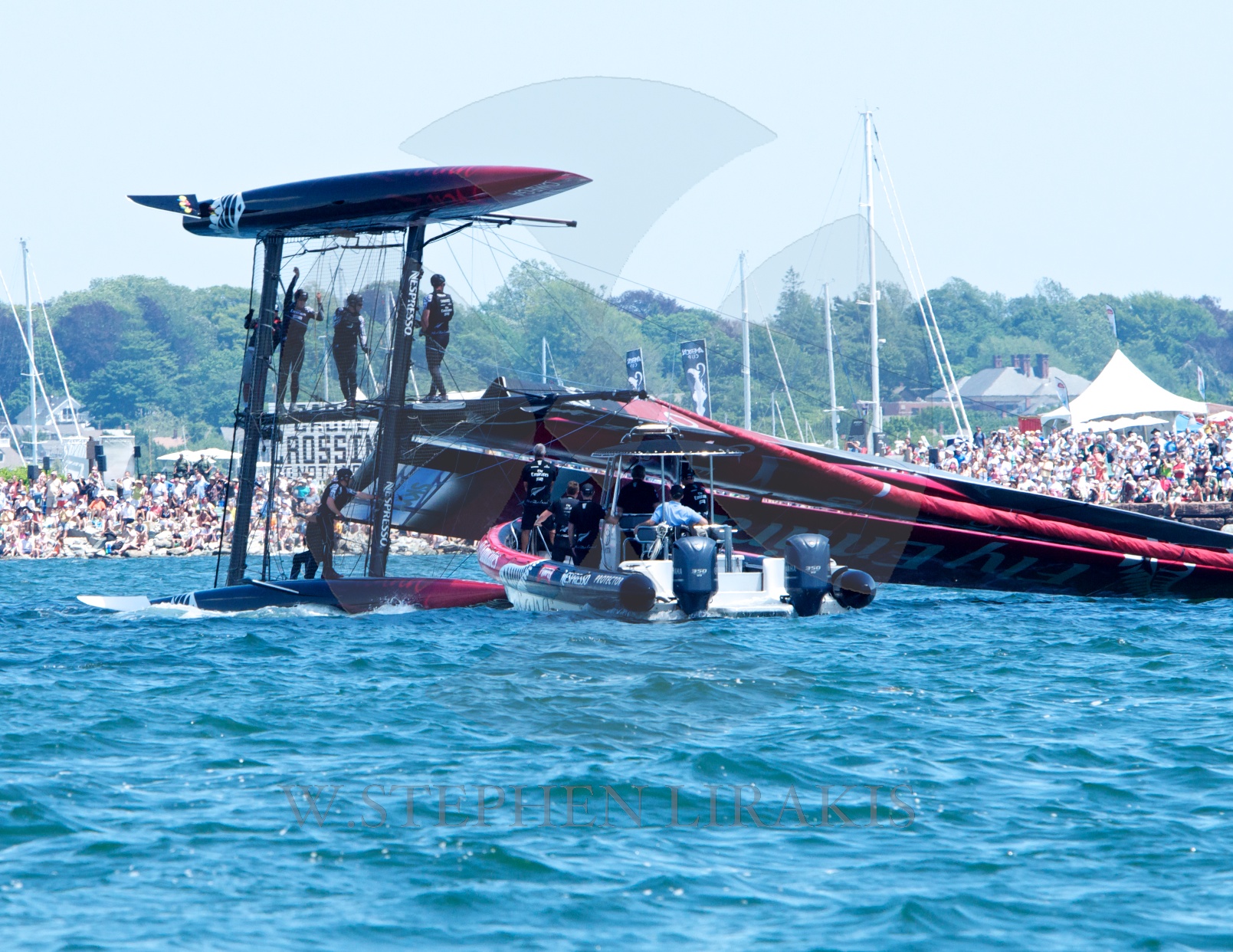
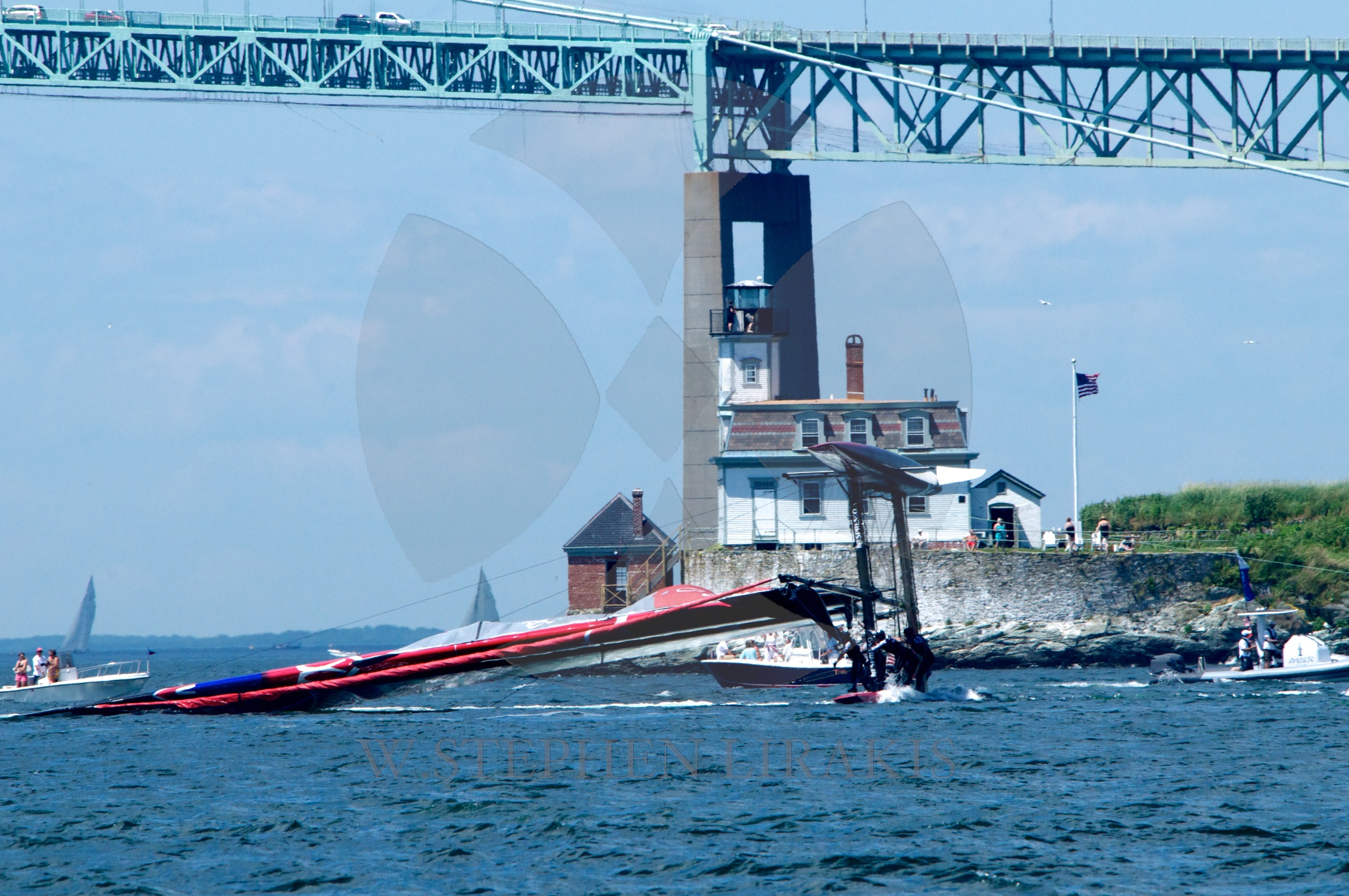
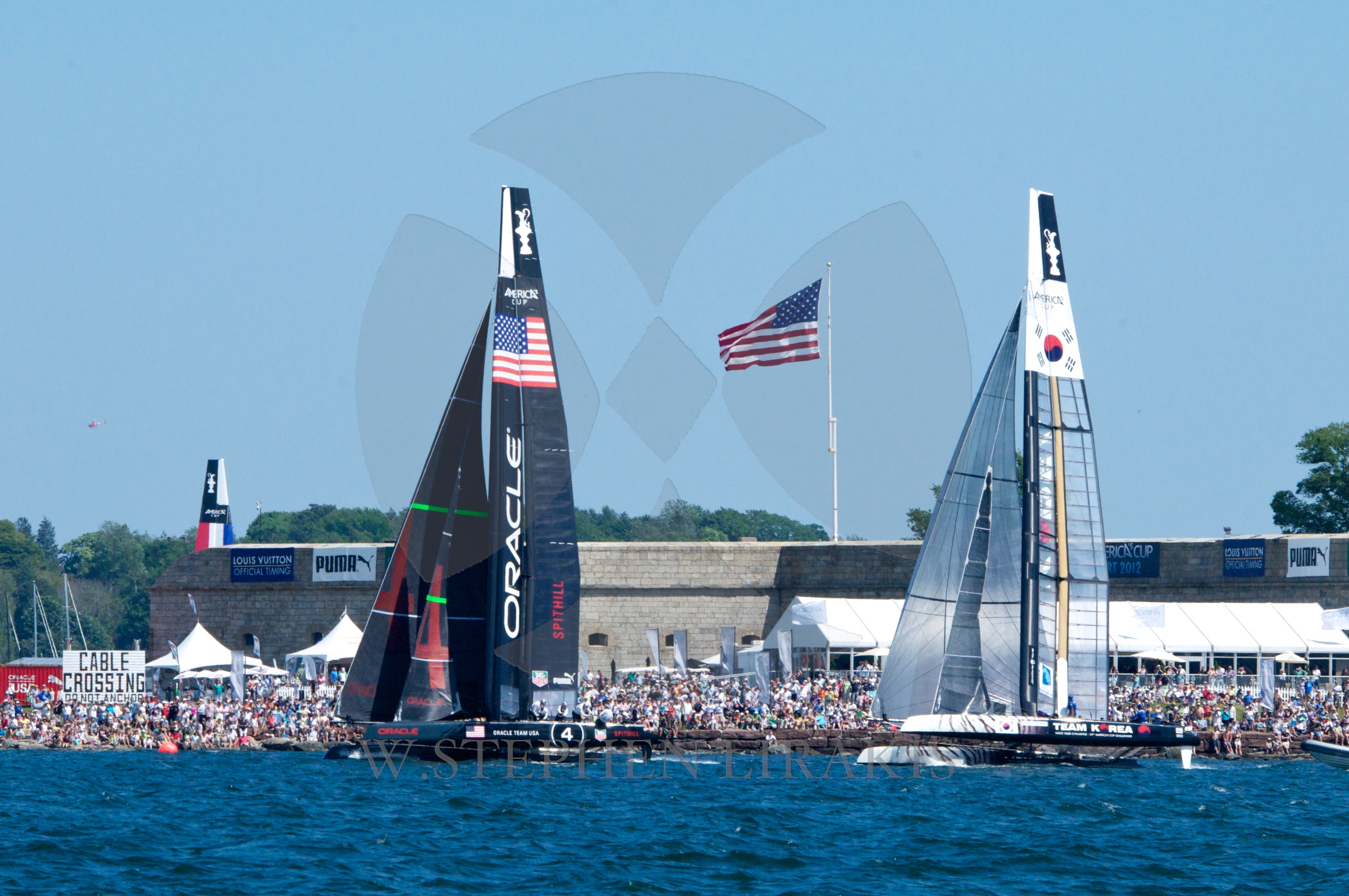
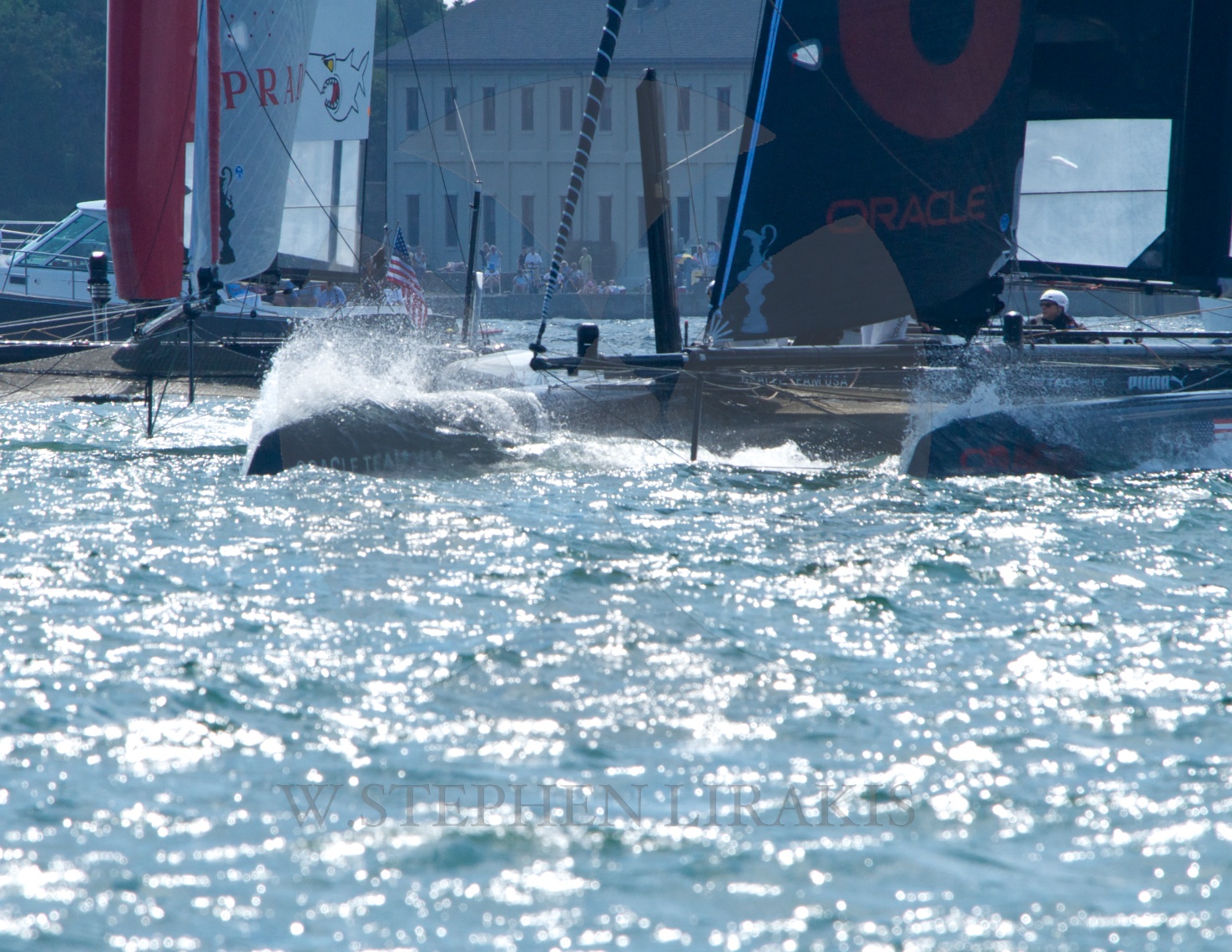
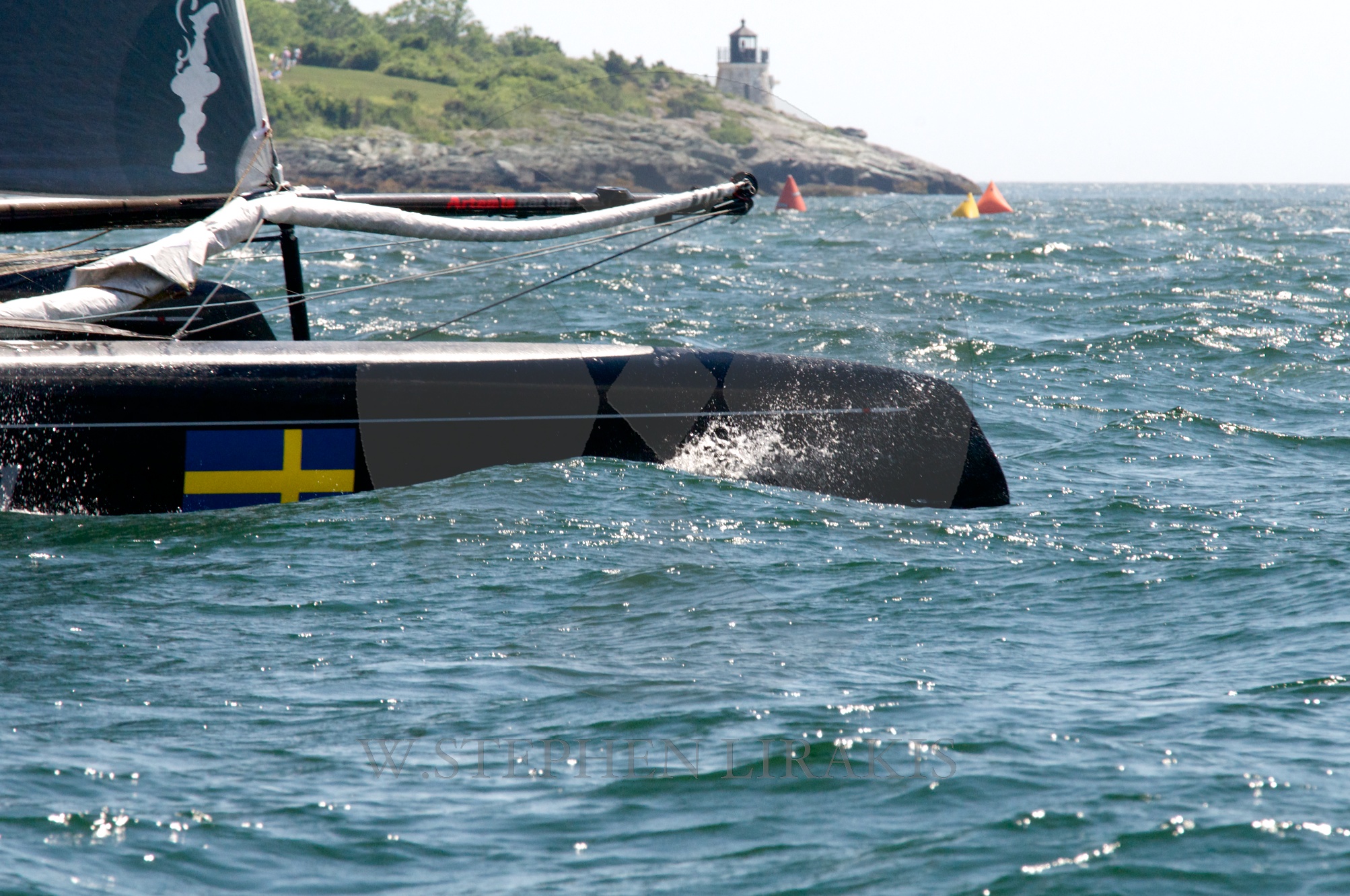
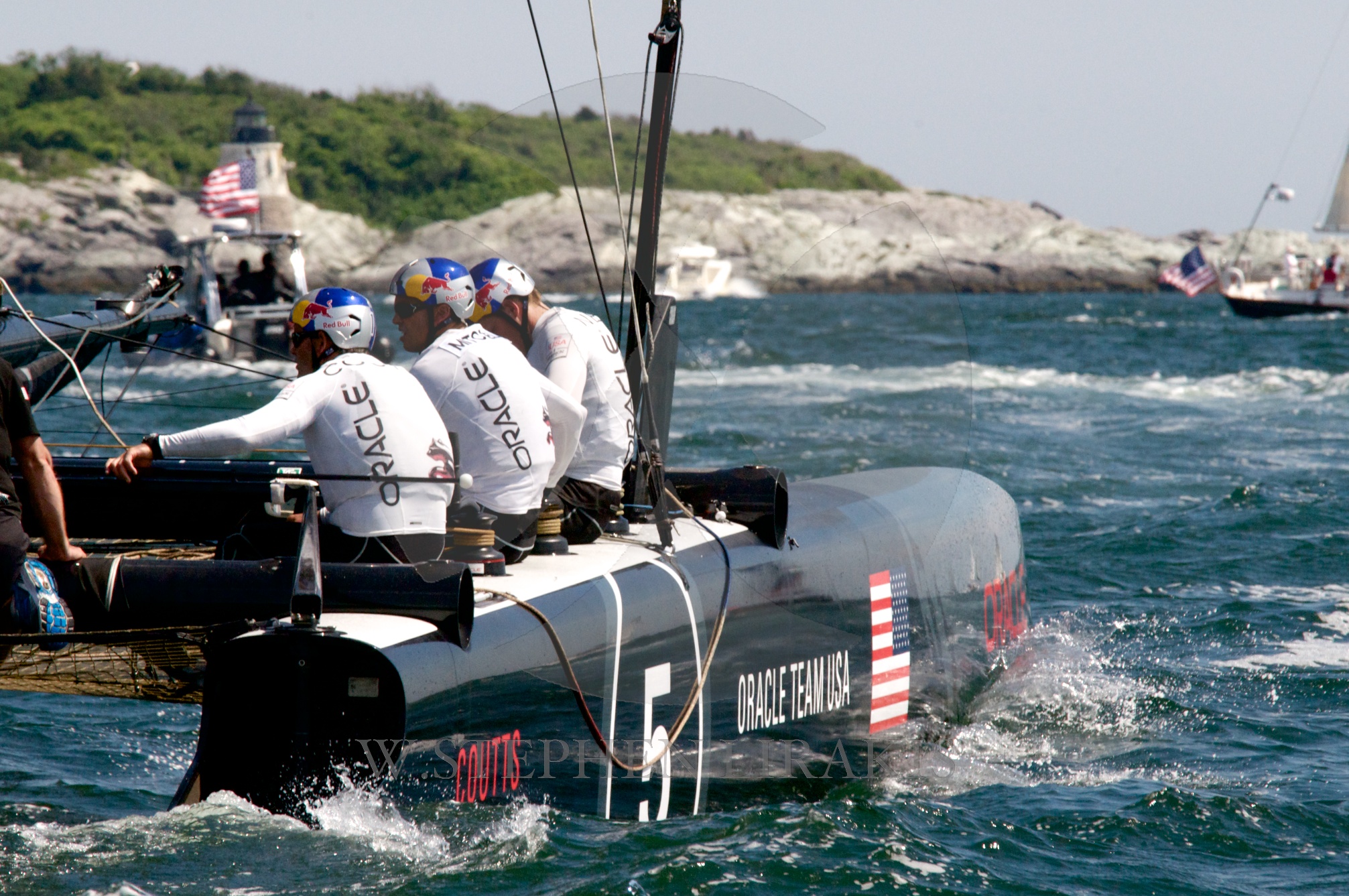
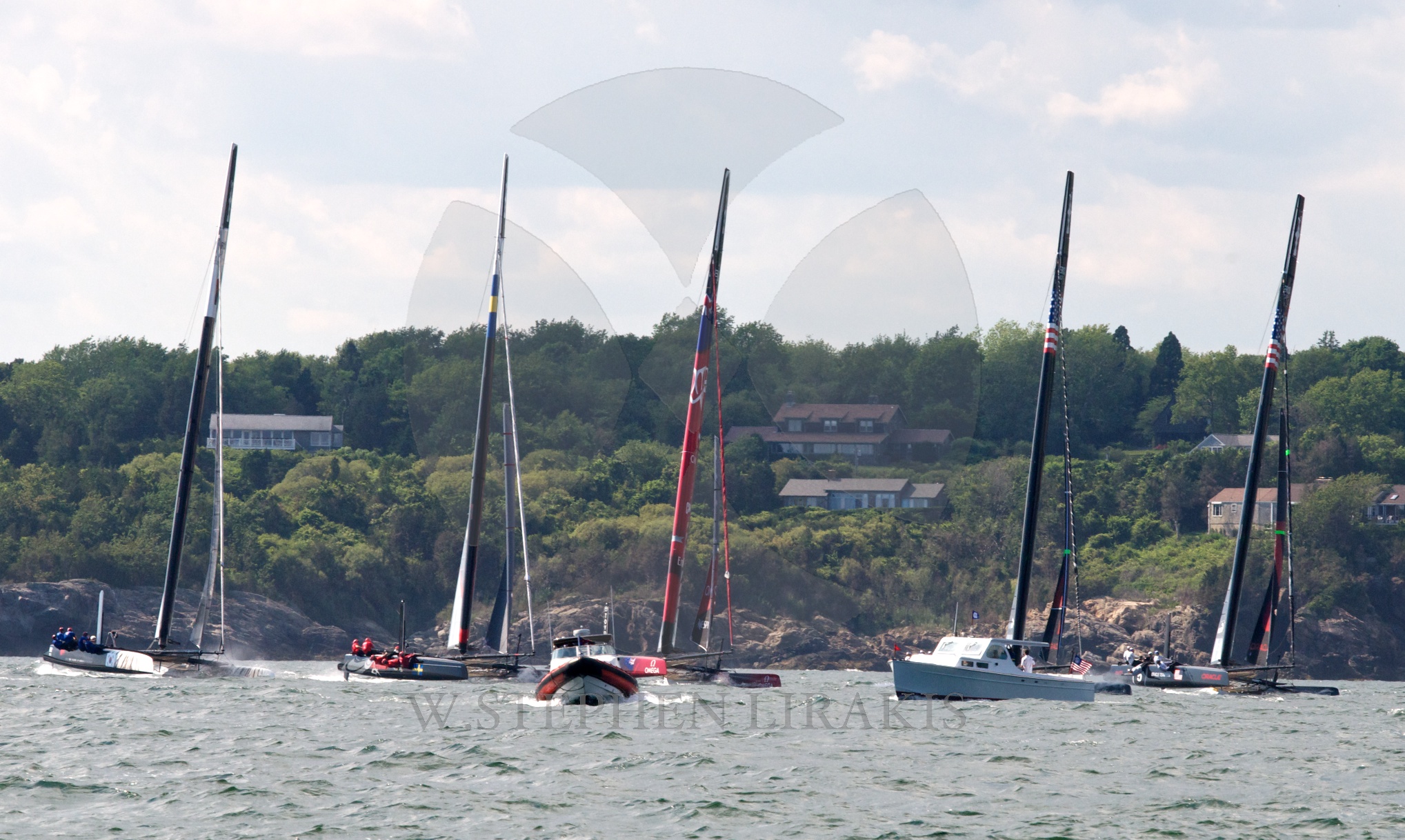
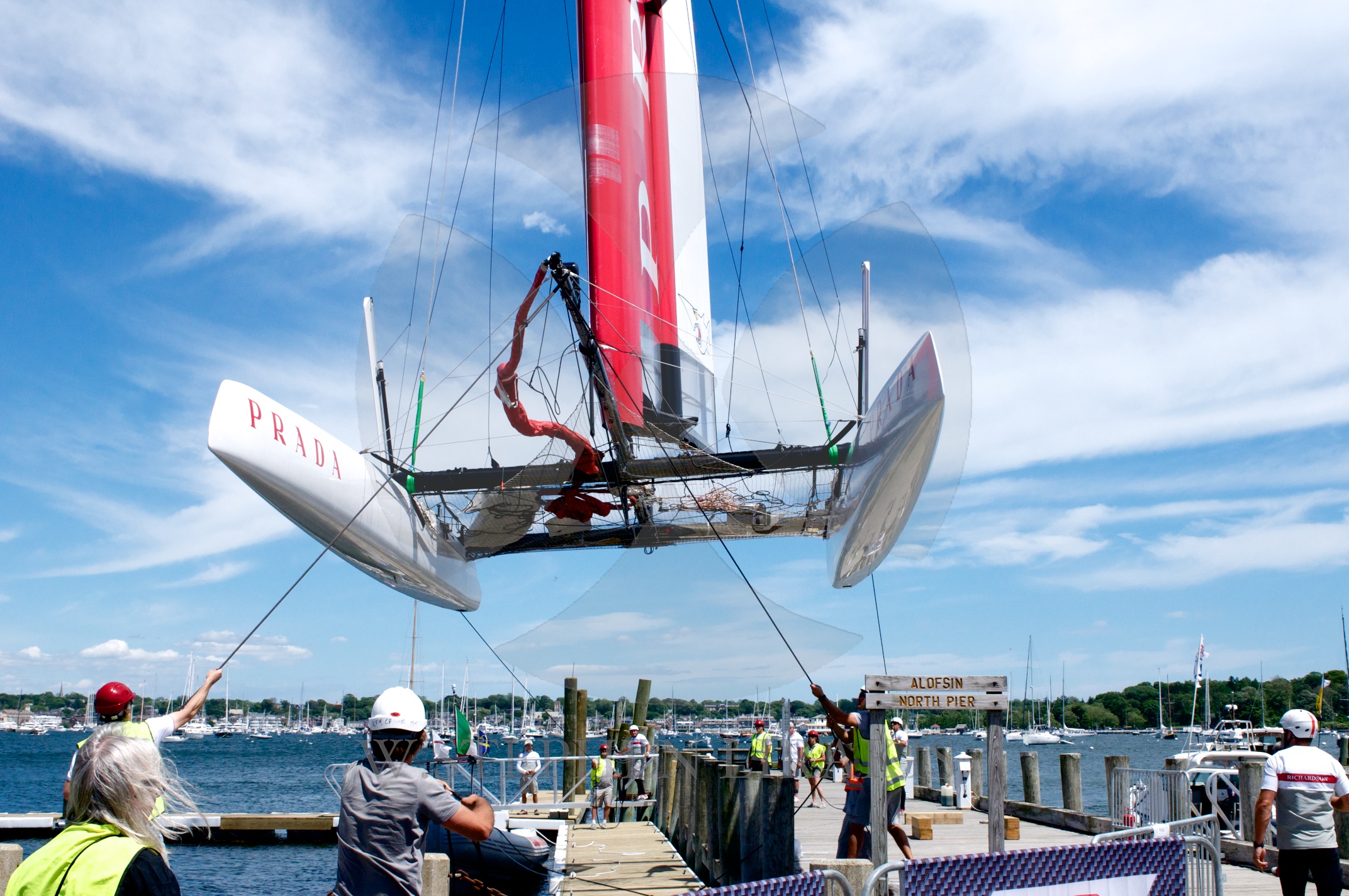
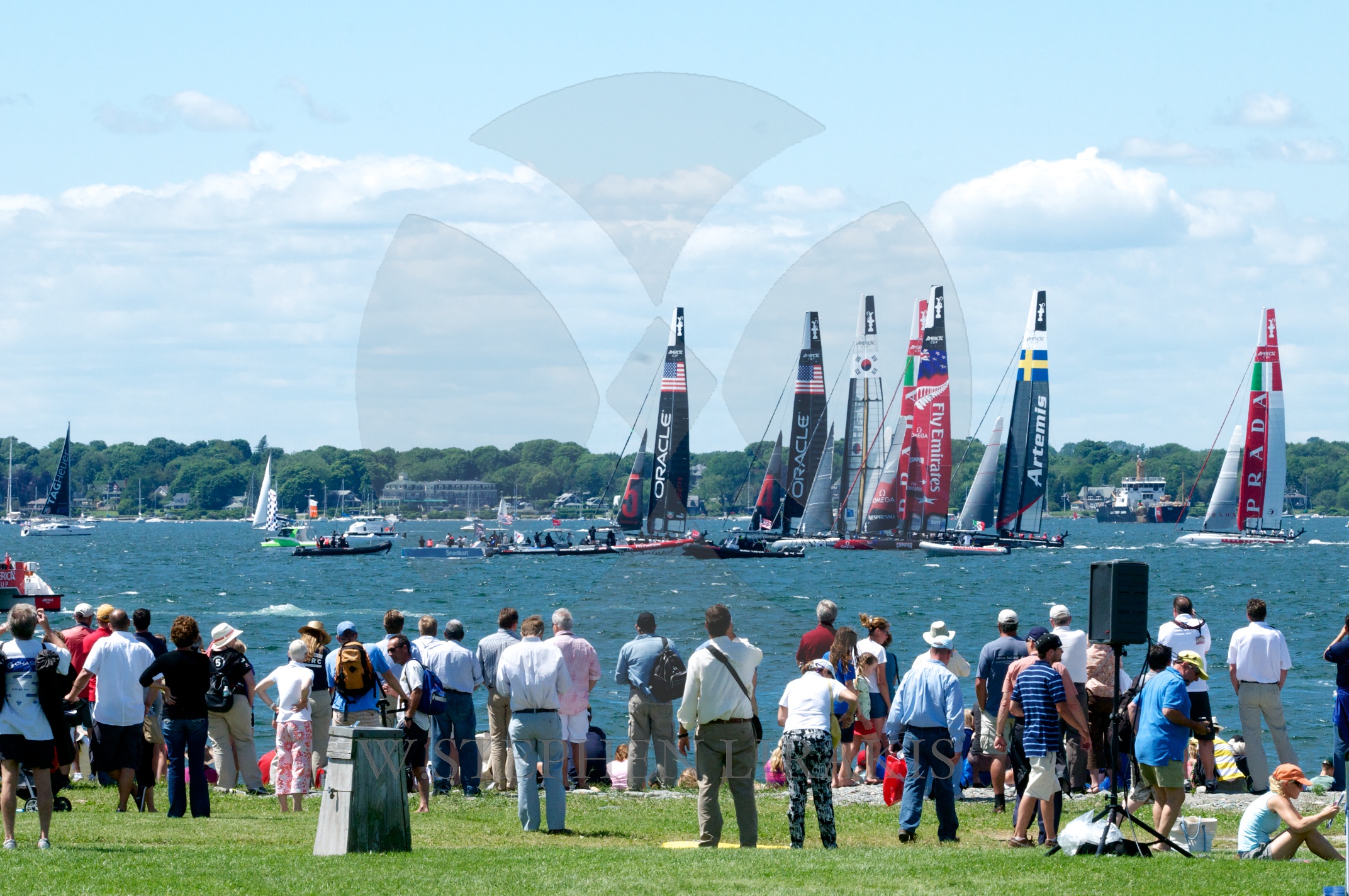
Russell Coutts promised us change and led us there by first introducing the 45 foot catamarans leading to the America’s Cup sailed in 72 foot foiling cats on San Francisco bay in a made for television series.
Tomorrow I will re visit the 72 foot boats.






2013 Penalty Box Productions Reel from Penalty Box Productions on Vimeo.
I continue to be impressed with the possibilities modern video cameras and computers have allowed people to do.
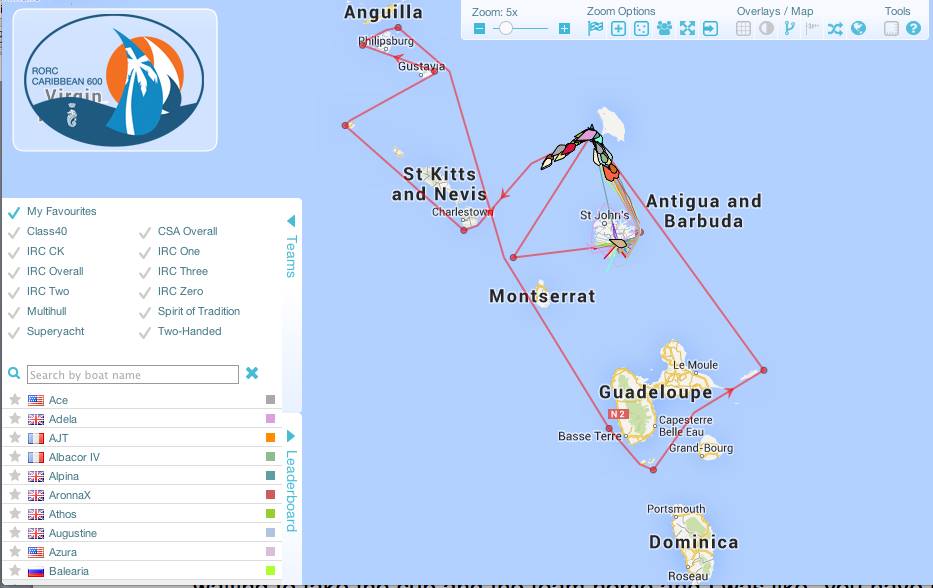
The caribbean 600 started today. track the boats: HERE
In typical RORC fashion it is an interesting race with lots of turns.

After 2 1/2 months of sub-zero weather, yesterday and today temperatures hovered near 50 degrees. You would have thought it was the first day of summer, it seemed as though there was a pent up energy, cabin fever we used to call it. Just look at the traffic going to Cape Cod.






In race five on the third day of the Extreme Sailing Series™ in Singapore, France’s Groupama sailing team (FRA) and Team Aberdeen Singapore (SIN) crashed just metres from the finish as a big gust hit the fleet on the final run to the line. In winds that were varying from 5 to 23 knots, Team Aberdeen Singapore caught the biggest gust of the day as they came into the finish line struggling to hold off the pace, ploughing into the back of the French team.
The Safety Team were immediately on site to provide assistance, and all the crews were quickly taken account of. Tanguy Cariou (FRA) onboard Groupama sailing team suffered minor facial injuries, and was taken ashore immediately for treatment. The rest of the crew onboard both Groupama and Team Aberdeen Singapore are uninjured, and the technical team are craning out the boats in Singapore’s F1 pitlane for full damage assessment. Due to the conditions, Race Director, Phil Lawrence had already called the whole day a no-Guest Sailor day, so there were no guests onboard at any time today. A full update will be available on atwww.extremesailingseries.com at 1930 SGT.
