
Stanley Paris built a 63 foot boat”Kiwi Spirit” with the purpose of bettering Dodge Morgan’s record around the world. Read his BLOG which shows the task is perhaps more daunting than he imagined.
Category: offshore sailing
SYDNEY-HOBART RACE IN REVIEW
2013 Rolex Sydney Hobart Race Final Wrap Video from On The Water Anarchy on Vimeo.
FROM SAILING ANARCHY
ON THE WAY TO HOBART
The great ocean races of the world are: the Sydney-Hobart, the Bermuda Race, the Fastnet Race and the Middle Sea Race.
The Sydney-Hobart is underway with a most interesting fleet of yachts. click to go to the race web site and see who is where on the race course.
EVER CHANGING SHAPE OF SPEED
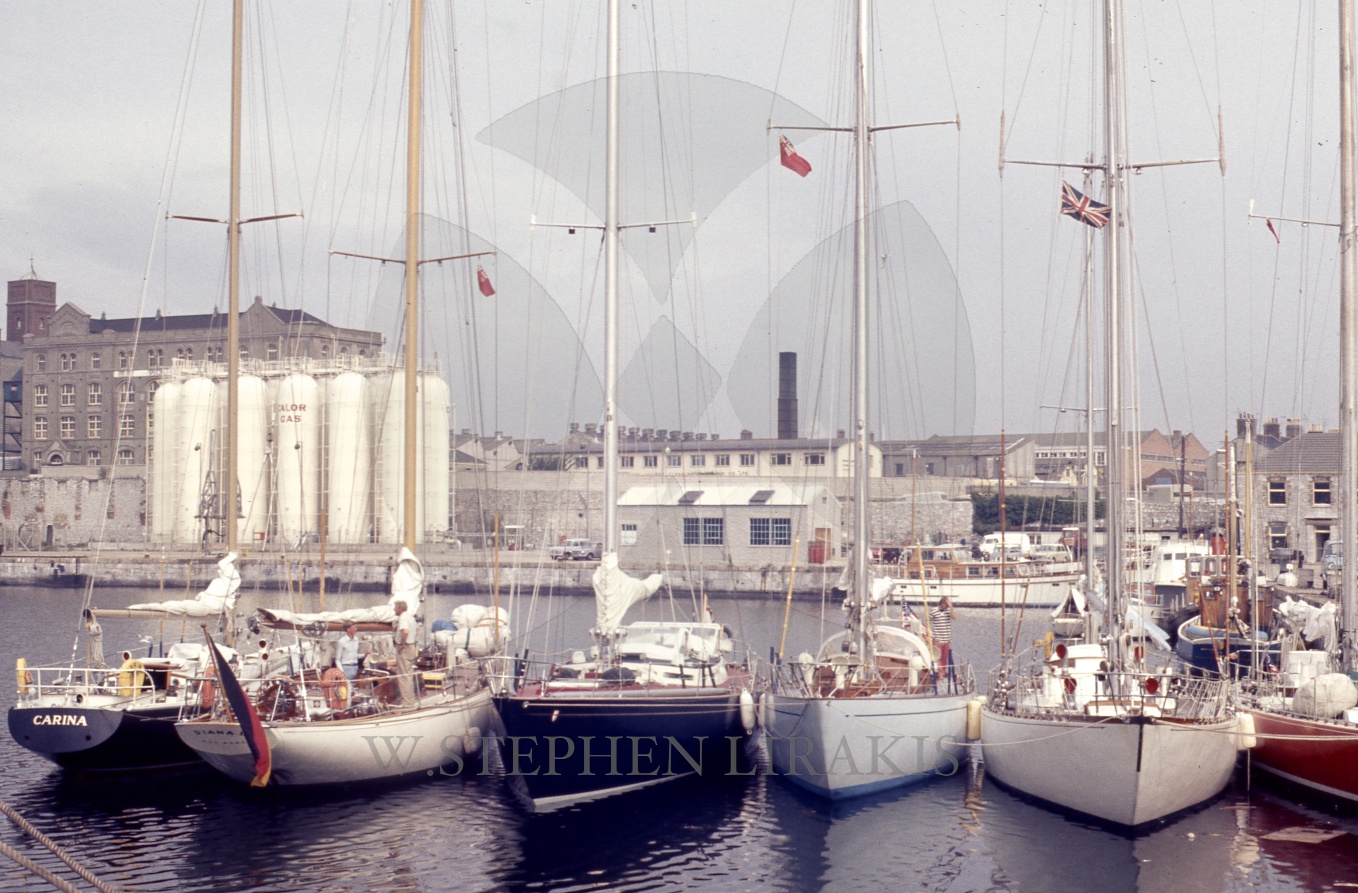

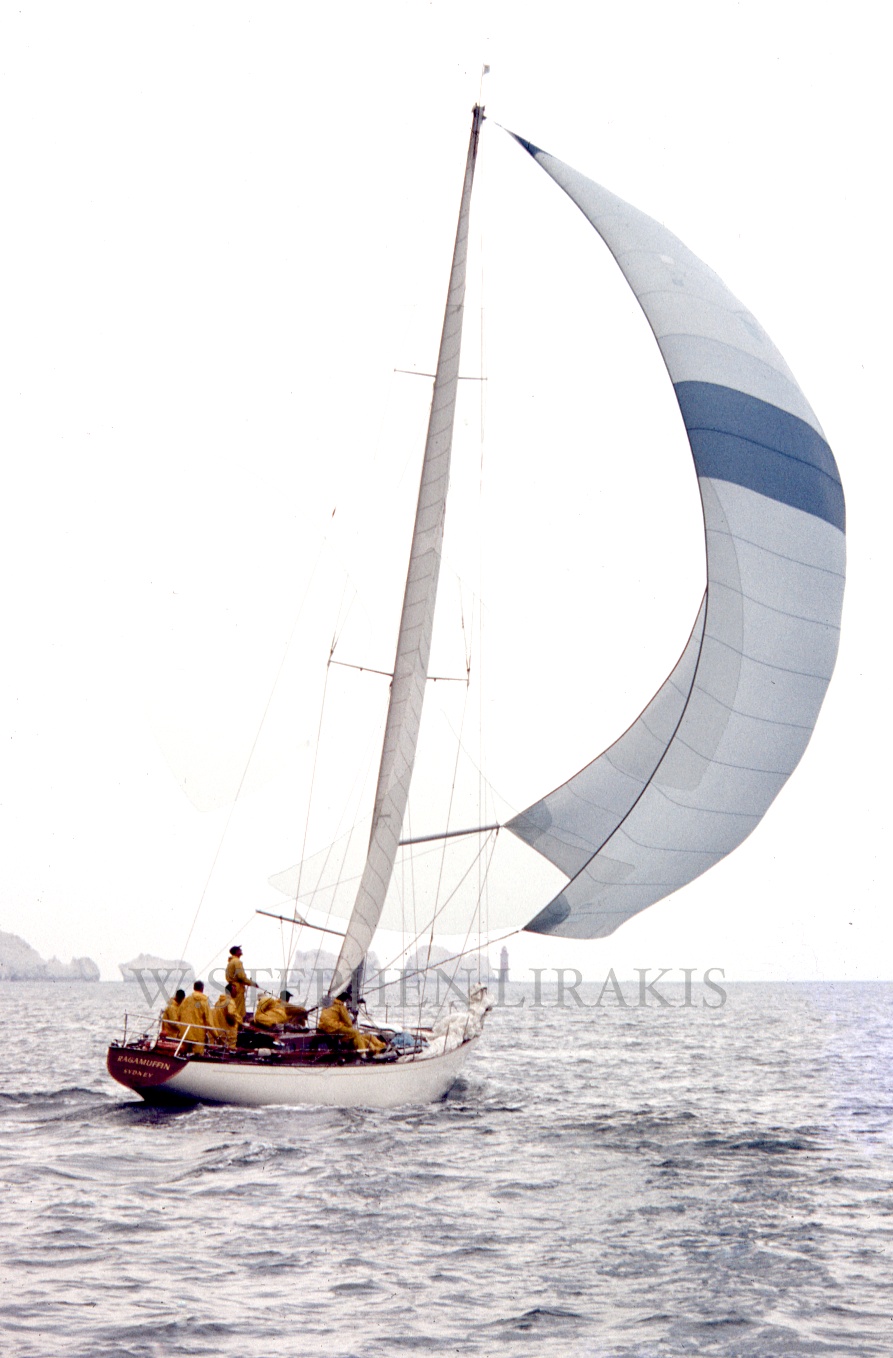

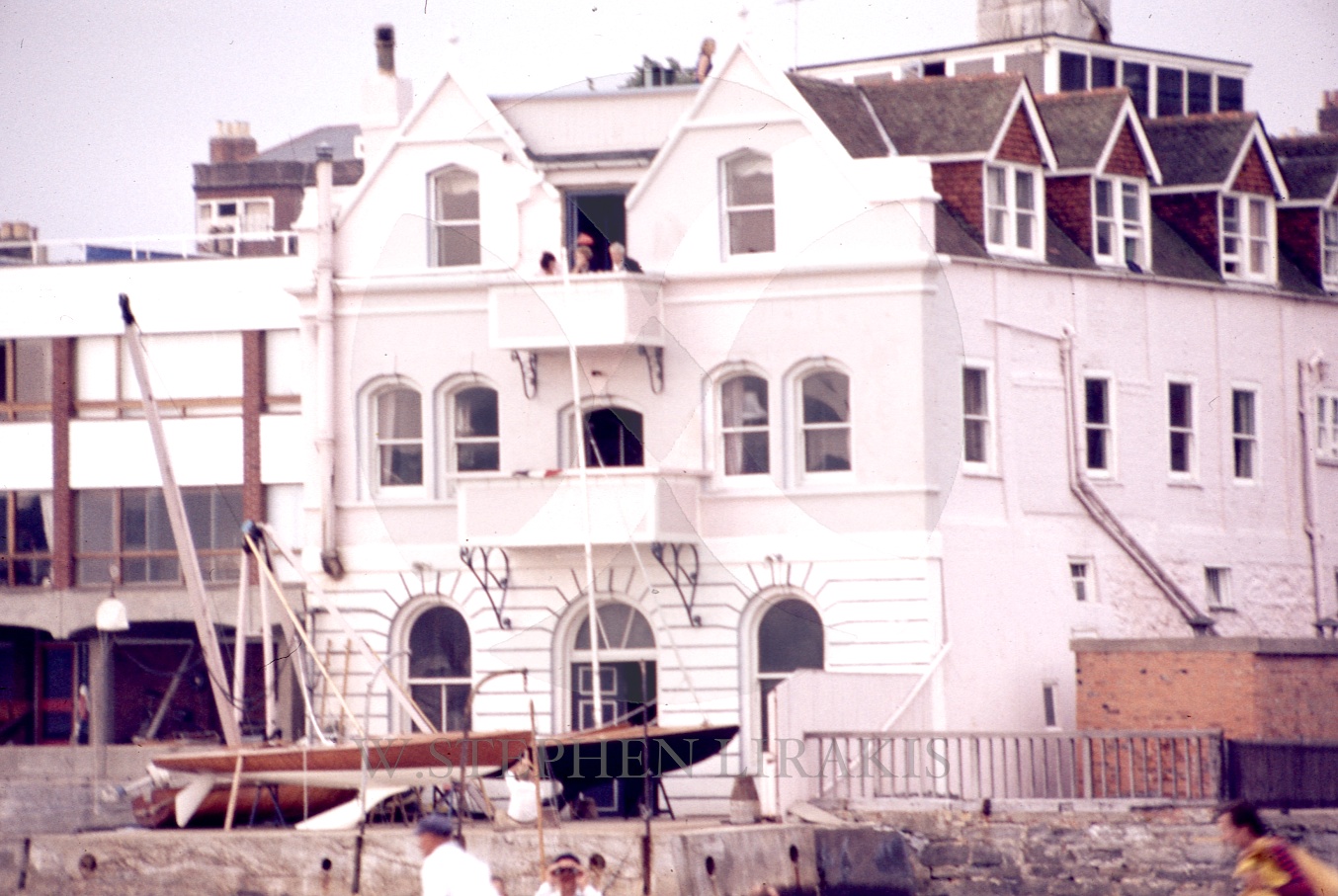
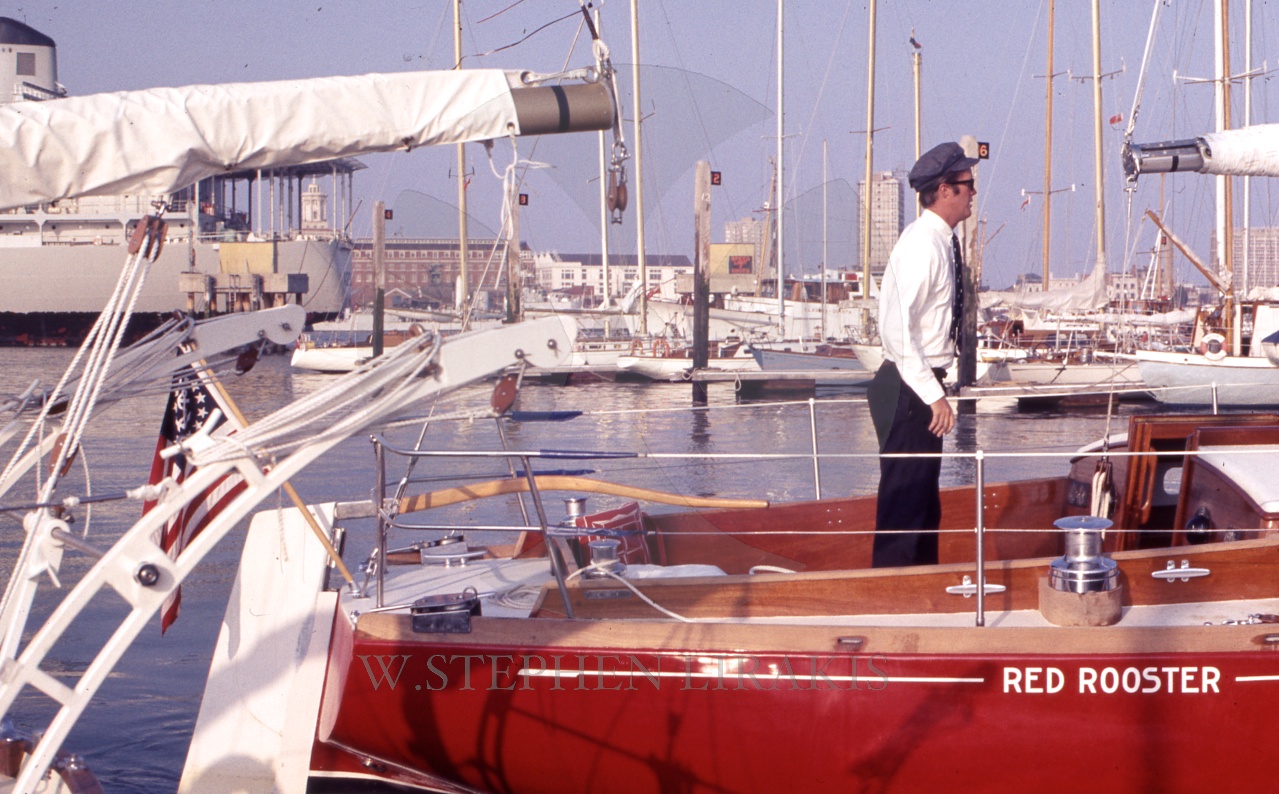

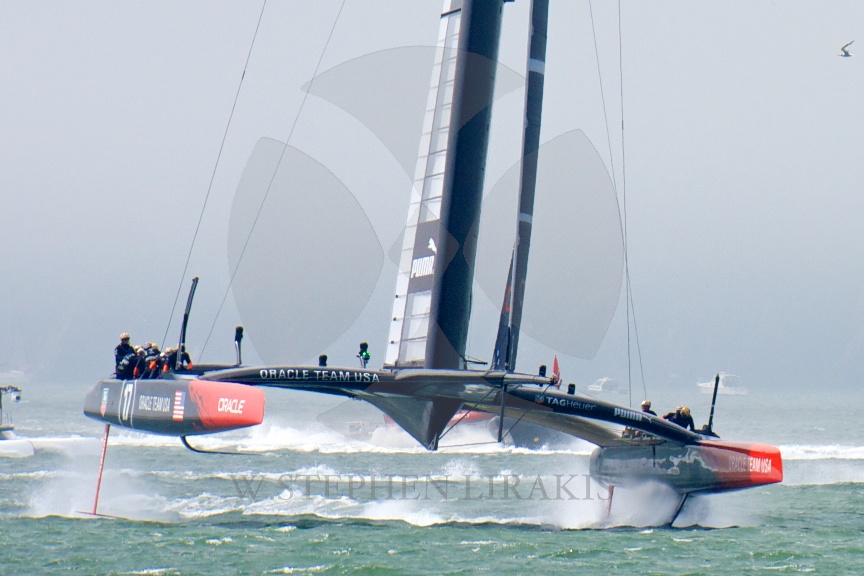

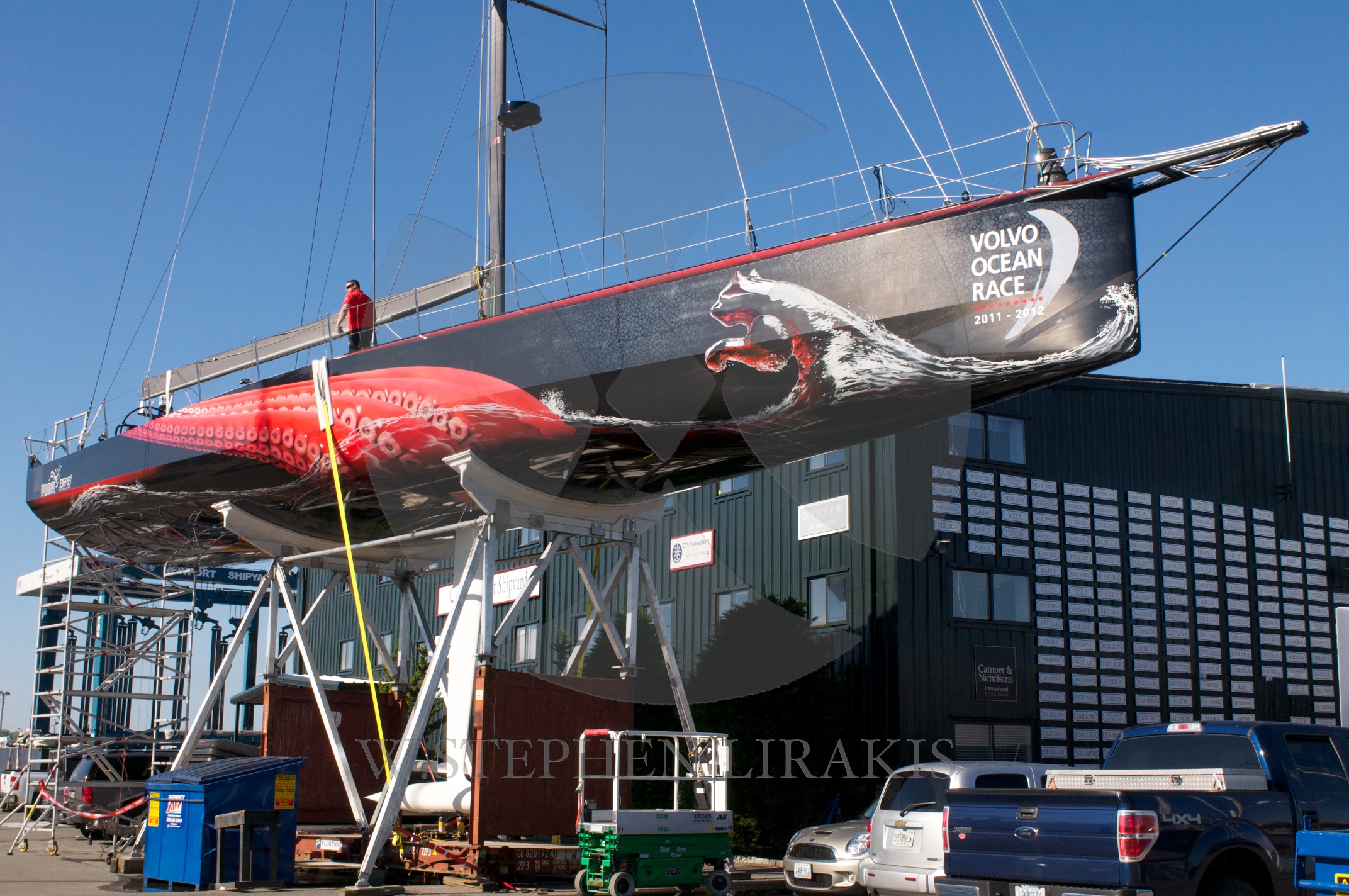
Every sailor wants a boat that is faster than his opponent. An edge that allows for errors in judgment. The achievement has been interrupted often because of rating rules; which attempt to make unequal boats equal. The disparity has now grown to a point where it is silly. Not that it was ever perfect.
Uffa Fox sitting on the upper balcony of his house in Cowes watching over the boats returning from a day’s racing, worked towards planing hulls, light and strong.
Dick Carter, so well known for fast boats that two of his designs were chosen for Admiral’s Cup teams before they were finished; i.e. untested.
Süd Fischer’s “Ragamuffin” , for me was not only the fastest of her time but the best sailed.
The just finished America’s Cup has changed the paradigm of the search for speed under sail.
LET ASHLEY TRY OUT
I was supposed to be part of this video supporting Ashley Perrin’s bid for a place on the all women’s team in the next Volvo race. The timing didn’t work out. Here is the finished product.
Ashley was on the crew of “Tempest” the 80 foot Sparkman & Stephens ketch in the 2005 Transatlantic race. We won our class; without Ashley this would likely not have happened.
A SENSE OF ADVENTURE

By Agathe Armand
He sailed the Whitbread four times and is regularly returning to the Southern Ocean in his sixties. Offshore legend Skip Novak tells us all about a race that changed his life and one that still lingers in his blood.


 Skip Novak/PPL
“With the one-design, the focus is back on the crew, back on the people, back on the personalities involved” – Skip Novak
Raised in the Midwest, USA, Novak sailed dinghies on the Chicago lake as a child. The American sailor heard about the Whitbread Round the World Race (later the Volvo Ocean Race) by chance, a couple of months before the start of the second edition in 1977-78.
Named navigator after a couple of beers with the King’s Legend skippers Nick Ratcliffe and Mike Clumsy, Novak ended up sailing four editions of the race.
Now 61, he has been sailing all his life and is still chartering expedition boats in high latitudes. We met him at Race HQ in Alicante, Spain.
After sailing the Whitbread from 1977-78 to 1989-90, what do you think makes this race such a special event?
“The strength of the Whitbread/Volvo Ocean Race is the people involved. We’ve discovered that over the years as media evolved. In the very early days, it was concentrating on the boat and the results and it has evolved into a people story. That’s where all the action is.
You don’t think it has lost its adventurous core in 40 years of history?
“The foundation of this race, as different from the America’s Cup or the Olympics, is really about adventure. If you don’t have a sense of adventure, don’t do the Volvo Ocean Race today. Despite the fact that the media is now a fly on the wall story while we were really on our own for 30 to 35 days in the old days, it is still an adventure sail. No doubt about it.
“It’s very hard to be romantic now and think wide with all the onboard footage, but it’s a natural evolution. We didn’t really care about media in the beginning, but we started promoting it when we realised this was a lifestyle. We wrote books and made films in view of doing it the next time. It’s only natural.
Speaking of evolution, what is your view on our new one-design Volvo Ocean 65?
“The one-design is a natural conclusion to various dilemmas over the years. I remember, in 1981-82, it was very apparent after we started sailing three or four says down the Atlantic with Alaska Eagle that we had a dog. We were faced with going around the world for nine months with a slow boat. It was quite difficult to take psychologically.
“Of course, as the race evolved, the boats changed but there were still differences in performance. The one-design solves that problem. The focus is back on the crew, back on the people, back on the personalities involved. I think we’ll see more of these great stories in the media.
On a more personal level, tell us about your sailing journey. Where does your high-latitude addiction come from?
“After sailing through the Southern Ocean on the Whitbread legs, looking at the Sub-Antarctica islands fly by, rounding Cape Horn and seeing the mountains of Tierra del Fuego, I vowed to myself then that one day, I’d go and see that. After 1985, I did. We built a boat and sailed there. 25 years later, I’m still down there. We were one of the pioneers of expedition sailing in high latitudes.
“I’m a mountaineer as well so I was living these two passions, sailing and climbing, in very remote areas. The only way to get to the Antarctic peninsula, South Georgia or Patagonia is to sail there. So I’m still feeding the rat, as they call it in mountaineering. I’m living high risks and making a business out of that. It’s incredibly satisfying and I love it.
No more Volvo Ocean Race then?
“I think I would struggle physically now, my knee couldn’t take the boat’s heeling angle. But it’s great to be out on the ocean pushing a boat, that’s for sure!”
Skip Novak’s participations to the Whitbread Round the World Race:
1977-78: King’s Legend (2nd overall)
1981-82: Alaska Eagle (9th overall)
1985-86: Drum (8th overall)
1989-90: Fazisi (11th overall)
ALL IS LOST
Isn’t this Steve Callahan’s story?
TSUNAMI TRASH
I am pleased to see that this story made the news. I have been wondering about the the debris from the tsunami floating in the Pacific.
DORADE TRANSPAC DAY 7
RECORD SPEEDS IN THE TRANSPAC
Phaedo dismasting from Richard Langdon on Vimeo.
Dismasting, Debris, and Dazzling Speed in Transpac
Published on July 15th, 2013 | by Editor
(July 15, 2013) – It was a glorious day for some teams, but not great for others today in the 2225-mile LA-Honolulu Race organized by the Transpacific YC, or the Transpac.
Earlier today the Transpacific YC received the following report: “At 1830 UTC (1130 PDT) Phaedo dismasted in location 28 58.247N 130 09.576W. Everyone onboard is fine, we have secured the boat, cutting away the mast and section of the boom, and are now heading towards the LA area under engine. At the time of the dismasting we were sailing under A4 at around 16 kts.”
A sat phone interview with the team indicated they thought the top of the mast failed first, and then the rest came down soon after. The true wind speed was about the same as boat speed: 16 knots. No indications yet of what exactly failed, but this will be examined once Lloyd Thornburg’s Gunboat 66 is safely back to shore.
Without enough spar left to set a jury rig, Phaedo is headed back towards LA under power, making about 6 knots. At this speed the team reckons they have about 250 miles range in fuel, which means they will require fuel assistance to complete the remainder of the trip to the coast.
Other teams have been facing other dangers, reporting floating debris that if hit could cause serious damage to any boat, but particularly carbon fiber race boats traveling at high speeds. For example, Chip Megeath’s R/P 45 Criminal Mischief in Division 4 sighted a 15-foot chunk of floating telephone pole at 28 31.25 N 129 21.66 W, and Ross Pearlman’s Jeanneau 52 Between the Sheets reported a 35-foot tree trunk floating 100 yards off her port bow at approximately 28-18N 134-59W.
Finally, Bob Hayward’s Seastream 650 Manatea still leads the fleet to Hawaii in Division 8, but said they struck a 10-foot section of what probably was a telephone pole at 28-35N 138-54W. Manatea and crew are OK and sailing, but also reported miscellaneous floating pieces of lumber, “like the structure of a house.”
No doubt these are all pieces of wreckage from the March 2011 Tsunami tragedy in Japan, making its way in the currents that circulate around the north Pacific. Transpacific YC has advised all mariners to maintain a sharp lookout.
But the other news is good: the fleet is still hurtling fast towards Hawaii at dazzling speeds, and course records are not out of the question. Giovanni Soldini’s canting-keeled Volvo 70 Maserati rolled off another 400+ mile day (423 to be exact) to average 17.6 knots, and thus also take the Division 1 lead in corrected time from David Askew’s R/P 74 Wizard.
At these speeds Maserati and Syd Fischer’s Elliott 100 Ragamuffin 100, who is only a few miles away, are both on record pace: Neville Crichton’s R/P 100 Alfa Romeo II in 2009 set the monohull course record of 5D 14H 36M 20S in 2009 for an average speed over course of about 16.5 knots. Whoever finishes first would win the Merlin Trophy for fastest monohull in the race, but if a record falls they would also win the Transpac Honolulu Race Elapsed Time Trophy, aka the Clock Trophy, donated by Roy Disney, which he himself won on Pyewacket in 1997 and again in 1999.
And the Barn Door Trophy for the fastest of the fixed-keel entries could not only go to Wizard if they maintain their lead, but they might even beat their own record time of 6D 19H 44M 28S set in 2011 when sailed as Belle Mente if her current pace of averaging 16.3 knots is able to hold.
But its still early days, and these teams still have many miles to cover before surfing into the finish line at Honolulu’s Diamond Head.
Nonetheless, the Division 1 speedsters have already overtaken some of the boats in Thursday’s Division 4, 5, and 6 starters. At midday today Division 6 was being led by Jeff Urbina’s Santa Cruz 52 Bodacious Dream, while Division 5 was still being led by Gordon Leon’s Farr 40 Foil, and Division 4 by Bob Pethick’s Rogers 46 Bretwalda 3.
And like yesterday, Isao Mita’s Judel/Vrolijk TP52 Beecom leads a Division 2 filled with similar designs, and Roy Pat Disney’s Andrews 70 Pyewacket leads the ULDB Sleds in Division 3.
The weather for the next 24 hours is expected to remain about the same for boats in the middle and front of the pack, with the trailing boats on the course possibly escaping a light air patch that has been forecasted to develop at about 130°W longitude.
Online spectators can follow the racer’s progress using the Yellowbrick tracking system which shows all the boat’s positions and information, like speed and course heading, and is updated every 6 hours. Click here to view.
– See more at: http://www.sailingscuttlebutt.com/2013/07/15/dismasting-debris-and-dazzling-speed-in-transpac/#more