BRUNO TROUBLE SPEAKS OUT

BRUNO TOUBLE IN 1978

Bruno Troublé: This is definitely NOT the America’s Cup

from scuttlebutt.

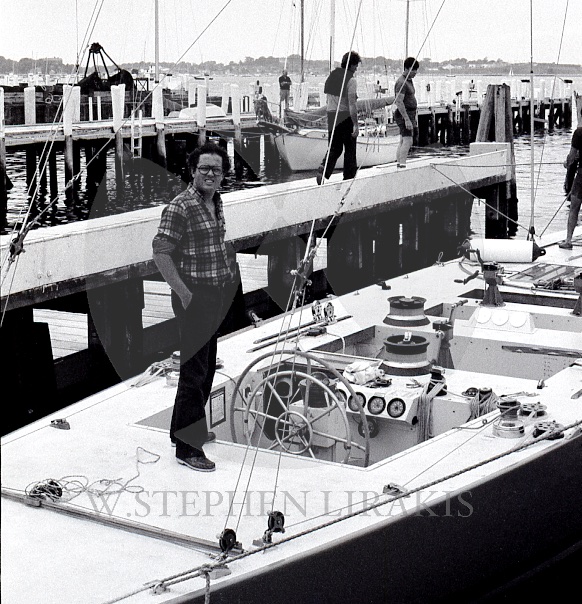
Bruno Troublé, a 2007 inductee to the America’s Cup Hall of Fame, has immense passion for the event.

After skippering two French challenges in 1977 and 1980, Bruno identified the opportunity to enhance the importance of the challenger selection series of the Cup. In 1983, he worked to create the Louis Vuitton Cup series, which continued until 2007, to select the Cup challenger.

But shifting sands has seen the Louis Vuitton brand lose interest, and while Bruno continued to work tirelessly to maintain the magic and tradition of the America’s Cup, he no longer recognizes what it has become. Here he comments…


I am away on my boat in Venice, enjoying spring in La Serenissima, far from the boiling controversy of the America’s Cup. All those witches and sorcerers trying to do good to the America’s Cup are instead slowly killing her. There have been so many mistakes over the last couple years!

Golden Gate Yacht Club, and their Oracle Team USA, are great sailors but hopeless guards of the Myth. They managed to kill the style and elegance which prevailed for decades, those unique aspects of the America’s Cup for which was our main aim at Louis Vuitton for 30 years.

They have discouraged the high level partners and put an end to the exclusive positioning of THE Cup. They have betrayed the long saga of incredible personalities who made the Cup so special. And they are now organizing a one design catamaran contest with no style and anonymous people beyond the sailing circles.

What we have now is a vulgar beach event smelling of sunscreen and french fries. This is definitely

LUNA ROSSA DROPS THE OTHER SHOE

Luna Rossa, THE CHALLENGER OF RECORD announces it’s withdrawal from the America’s Cup.10426134_562183907250351_8964944746336218143_n

Team Luna Rossa Challenge announces its withdrawal from the 35th America’s Cup

(April 2, 2015) – The result of the vote proposed by the America’s Cup Event Authority with the agreement of the Defender of the 35th America’s Cup has overturned, with a majority vote, the America’s Cup Class Rule for the boat with which this edition will be held; this happened notwithstanding the fact that such rule had been previously adopted unanimously by the teams and was in force since June 2014.

Following a careful evaluation of the serious implications of this unprecedented initiative, Team Luna Rossa confirms that it will withdraw from the 35th America’s Cup.

Team Luna Rossa indeed considers illegitimate the procedure adopted and founded on an evident abuse of process by surreptitious use of procedures to modify the Protocol in order to overturn the Class Rule, which instead requires the unanimity of the teams entered.

This is an attempt to introduce boats that are substantially monotypes and in total contrast with the ultra-centennial tradition of the America’s Cup, not to mention a two-month extension period to introduce further modifications to the rules, decided by the majority.

All of the above contributes to a lack of credibility and uncertain technical grounds for what should instead be the most sophisticated sailing competition in the world.

This radical change also implies a waste of important resources already invested based on the rules that were sanctioned in June last year. This means that the claim to reduce costs reveals itself as a pure pretext aimed to annihilate research and development achievements of some teams, and to favor instead preconceived technical and sporting positions by means of changing the most important element in the competition, the boat.

As a confirmation of this, it is important to underline the fact that Luna Rossa frequently advanced proposals aimed at containing costs that however would not have changed the nature of the boats, but these proposals have systematically been rejected by the Defender.

Team Luna Rossa has also taken into consideration the possibility to protest through the Arbitration Panel as foreseen by the Protocol; it has however noted that, ten months after signing the Protocol, the Defender is only now initiating the first formal procedures to compose this important body. This fact contributes to making the entire governance of the Event even less credible and reliable.

Team Luna Rossa regrets the repercussions that this difficult decision will have on the members of the Team – although it will honor all of its contractual obligations – and on the sailing event planned to take place in Cagliari next June and obviously understands the disappointment of the many fans who have supported Luna Rossa during the last four editions of the America’s Cup.

(Editor’s note: The AC World Series was to have four events in 2015, with the first event to be June 4-7 in Cagliari, Italy. That event is now cancelled.)

Patrizio Bertelli declared: “I want to thank the whole team for its hard work during this past year; regretfully this effort has been frustrated by this manoeuvre that is unprecedented in the history of the America’s Cup.

“However, in sports, as in life, one cannot always go for compromise, after compromise, after compromise; sometimes it is necessary to make decisions that are painful but must be clear cut, as only these can make everybody aware of the drifts of the system and therefore set the basis for the future: respect of legality and sportsmanship”.

AMERICA’S CUP: 48 FOOT CATS


PETEMELVIN

Pete Melvin: Writing the new America’s Cup Rule

Pete Melvin, a partner in Morrelli & Melvin Design and Engineering, was involved in writing the AC72 rule used in the 2013 America’s Cup, and in writing the AC62 rule that was released June 2014 for the 2017 America’s Cup.

But with the increasing concern about rising team budgets, Melvin was called up again to help downscale the boat further for. After a week of work, Melvin and his design committee members put forth a plan that was approved on March 31.

Melvin shares with Scuttlebutt the process for the change…


There was a desire to reduce costs of the boats, and after Oracle and Artemis sailed their AC45 Turbos test boats on San Francisco Bay in February, they found them to be good boats which would provide good racing. They came to realize that a boat of that size could reduce budgets, which would help those teams in need of funding, without reducing performance.

The new Class has a length of 48-feet, which we got to as a result of a couple factors. The Deed of Gift requires a load waterline of not less than 44-feet, and we wanted to stretch the boat somewhat to aid its performance in light air.

While I have not seen the performance numbers that were generated during their testing in San Francisco, my understanding is they were in the 45-knot range, and that the time to complete the race course used during the 2013 America’s Cup wouldn’t be much different than what was achieved with the AC72.

What we found in our work when developing the AC62 rule was that their projected performance of that boat was not much different than the AC72 either. With these foiling boats, speed is not derived through waterline length in the same manner as a boat that displaces water.

Additional advantages with the 48-foot size is in logistics. They require less manpower both on and off the water. For transport, all the parts, including the hull, will fit inside a 40-foot container. Like the AC45, this boat will have a removable section so that you can break it down to fit.

Performance wise, we are continuing to analyze what it is capable of this 48-foot Class. The task of getting to where we are now is just a week old, but based on the observations from Oracle and Artemis from their 45s, they seem confident that it will be a nice boat for the event.

This new Class rule is fairly similar to the A62 rule. There have been a few tweaks but essentially the concepts are unchanged.

The hull will be a new design specific for this boat, but the rule tolerances will be tightly constrained similar to a one design class. Each team will build their own hulls, with the hulls built in their country of origin, but the hulls each team builds must fit within tight margins. These tightly constrained tolerances will also be applied to the cross structures and the wing.

The area of open design options will be the foils, the rudders and daggerboards. There will be some rule limits, such as foil location and length of extension, but determining shapes and designs will be open. Also, the control systems for the rudders and daggerboards is open. Each team will determine how best to control their foils. There are some limits in how the system operates, such as manual or power, but the rest will be unique to each team.

There is still a lot of work to do. The shapes for the hull, cross-structure, and wing have yet to be finalized. We are now working with the teams as quickly as possible to define the geometry for those items of the boat. The final documentation for those items is due by the end of May.

KNOWING WHEN TO SLOW DOWN

11096580_936428403076382_4087247049456746374_o11080819_936428393076383_617314666279435791_o


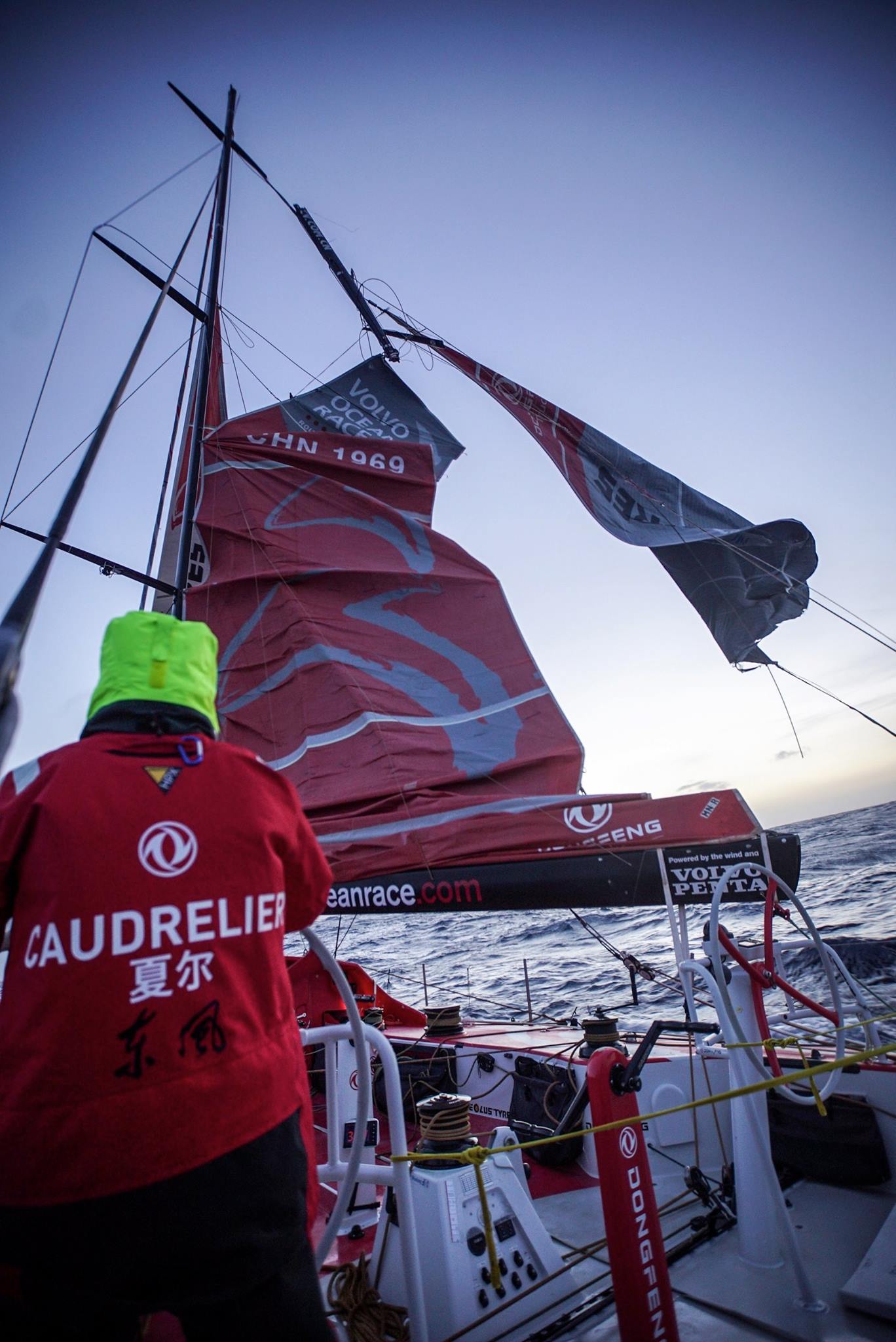
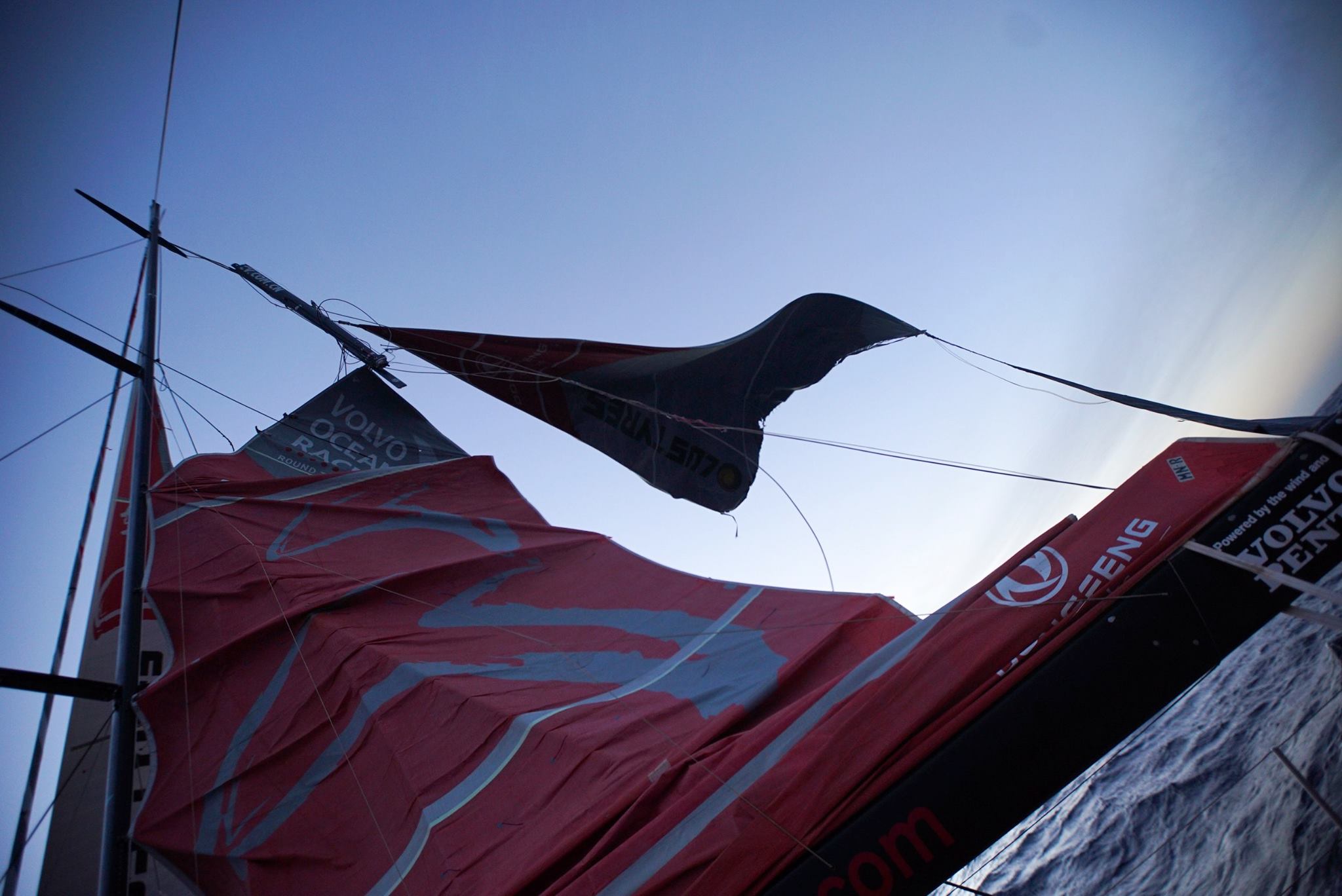
What a difference a day makes. The headlines yesterday were pedal to the metal. Today dismasting. Heavy weather sailing is about knowing when to ease off the pedal.

Volvo Ocean Race can confirm that Dongfeng Race Team broke its mast early on Monday (GMT, March 30) but fortunately nobody has been injured and there is no immediate danger to the crew.

The incident happened 240 nautical miles west of Cape Horn at 0315 UTC on Monday, in the final hours of the night onboard Dongfeng.

The crew reported that the mast broke above the third spreader, the top section of the mast. They are not planning to continue racing on this leg and are heading towards Ushuaia, Argentina, under their own sail.

Reached via Inmarsat, a disappointed skipper Charles Caudrelier said: “I’m gutted. As you’ve seen from the position reports we have been, on purpose, backing off a bit, not attacking in any way.

“The mast broke without warning, in about 30 knots of wind. We are unable to sail safely on starboard tack, but we are able to make reasonable speed on port tack. We will head towards Ushuaia and assess our options for getting to Itajaí.”

The Maritime Rescue Coordination Centre (MRCC) is aware of the situation and is on standby to help if necessary.

We are in constant contact with Caudrelier and are establishing the full extent of the damage to ensure we give him the support he needs to deal with the situation.

Ears pinned back and foot to the floor

(March 29, 2015; Day 13) – The Volvo Ocean Race may be a marathon, but at this stage of Leg 5 from Auckland to Itajaí, it’s pretty much a 350nm sprint east to Cape Horn.

With winds from the northwest, the boats have now gybed their last gybe and stacked their last stack. Their ears are pinned back and have their foot to the floor, as the 30 knot winds and 2.5 to 3-metre waves are allowing the teams to see what the VO65s can do.

“Now that we’ve all more or less settled in for a long port tack run to the east the big question on everyone’s mind is just how hard to push,” reports Amory Ross on Alvimedica. “If there’s anything we’ve learned so far this race it’s that the leaders aren’t afraid to redline the revs when challenged.”

Apart from SCA, the entire fleet – separated by 20 nm between Donfeng to the north and Abu Dhabi to the south – has covered more than 500 nautical miles in the last 24 hours, with the top five averaging over 20 knots as they fight for the lead. But Ross reminds that trophies aren’t determined at Cape Horn.

“We feel fast, as fast as anyone, and when you feel fast nobody wants to slow down because in the back of the mind we’re telling ourselves we can be first to the Cape,” observes Ross, with Alvimedica positioned to the north. “But this leg will be decided along the coast of Brazil, and if we push too hard now we may never give ourselves that chance.”

Pulling the throttle back may occur soon as the sea state is about to get rough. Waves are expected to build over the next 24 hours as the sailors get closer to the continental shelf – and Cape Horn.

As for SCA, with no fractional gennaker after damaging it earlier this week, they simply can’t match speed with the fleet. Forced to use the smaller J1 jib, they are suffering for speed and angle and, with reduced routing options, will continue to fall behind the pack now.

Leg 5 (6,776 nm) Position Report (21:40 UTC)
1. Team Alvimedica, Charlie Enright (USA), 2293.3 nm Distance to Finish
2. MAPFRE, Xabi Fernandez (ESP), 2.3 nm Distance to Lead
3. Abu Dhabi Ocean Racing, Ian Walker (GBR), 6.4 nm DTL
4. Team Brunel, Bouwe Bekking (NED), 7.0 nm DTL
5. Dongfeng Race Team, Charles Caudrelier (FRA), 11.2 DTL
6. Team SCA, Sam Davies (GBR), 401.4 nm DTL
7. Team Vestas Wind, Chris Nicholson (AUS), Did not start

LUNA ROSSA RESPONDS

America’s Cup: Luna Rossa threatens withdrawal over boat change
by Richard Gladwell, Sail-World.com NZL Mar 26, 2015, 15:58:00 (EDT)

Luna Rossa Swordfish and Luna Rossa Piranha both on the water. The future is foiling – AC45s to be modified; America’s Cup World Series to continue into 2018
Guilain Grenier

The Challenger of Record, long time America’s Cup competitor, Luna Rossa have threatened to withdraw from the America’s Cup if the mooted Protocol change to a smaller boat is implemented.

Emirates Team NZ, via social media, say they have supported the Italian stand against the boat change. ‘Emirates Team New Zealand agrees with Luna Rossa Challenge . It would be unfair to change the rules at this stage unless all America’s Cup teams agree to do so.’ says a statement on their Facebook page, today.

The previous day the Team wrote:’ the idea of boat size reduction is not new. Emirates Team New Zealand suggested this last year. Since then time has passed with teams well advanced in their design process now and any ideas around change will need the full consultation and support of all the teams.’

The latest Kiwi stance pits the two longest standing teams in the America’s Cup against two first time teams, plus Artemis Racing and the Defender.

Contrary to other media comment the Protocol Amendment is for a new class of boat – in the 47 to 54ft range, and not a foiling AC45 as has been suggested.

The initiative for the change is believed to have come from Larry Ellison as part of a move to make the America’s Cup more sustainable and for the class to be adopted by the teams for future America’s Cups and avoid the boat changing that has marked the more recent editions.

Initially both Oracle Team USA and Emirates Team New Zealand backed a move to a smaller boat (AC54) after the AC62 had been announced, and the discussion has been ongoing at the last two or three Competitor Meetings for the 35th America’s Cup.

The new AC5X rule is being drafted by the same group that produced the AC62 rule and is expected to be just a scaling of that rule.

At this stage there is no indication of how the Nationality rule will be applied, which requires two of the eight crew to be either Nationals of the country of the club of the team, or have passports for that country. The minimum number was initially set at 25% of the crew which neatly transposed to two crew members when the AC62 had eight crew. It is expected that the crew size will reduce to six, but that the Nationality requirement will remain at two nationals.

Earlier today Luna Rossa issued a media release stating:

Team Luna Rossa Challenge is distinctly opposed to the proposal – announced today on the official web site of the America’s Cup – to change the Class Rule for the 35th America’s Cup and therefore the boat that was previously accepted by all challengers on June 5th 2014.

Luna Rossa does not believe that a sporting event should be disputed in a courtroom and does not intend to initiate a lengthy litigation process that would only bring prejudice to the event.

If the principle of unanimity of all challengers required to change the Class Rule were not to be respected Luna Rossa will be obliged to withdraw from the 35th America’s Cup.

Team Luna Rossa trusts that the Defender will quickly announce a public clarification, also to avoid jeopardizing the organization of the America’s Cup World Series – Cagliari – Sardinia event planned to take place from June 4 to June 7, 2015.

Contrary to statements issued by one team, Changes to the Protocol only require the consent of the majority of the teams together with the Defender, Golden Gate Yacht Club or their commercial arm America’s Cup Events Committee.

After the withdrawal of the initial Challenger of Record, Hamilton Island Yacht Club, Luna Rossa stepped into the role as the next to challenge.

Patrizio Bertelli spells out his view of the 2013 America’s Cup in Auckland in October 2012

The Italians magnanimously waived their effective right of veto of change under the Protocol, instead ceding that right to the majority decision of the Challengers, of which there are currently five.

Given that three of the Challengers – two of which are first time Challengers – have indicated their support for the move, it could be a done deal, unless cooler heads prevail.

Had the Italians not given away their effective right of veto, they would have had the ability to stop this move dead in its tracks, now they are locked into the decision of the majority – two of which are first time challengers. Artemis Racing sailed just four races in the Challenger Rounds for the 34th America’s Cup.

The first of the America’s Cup World Series events scheduled for Cagliari, Italy for early June would probably not proceed without the support of Luna Rossa.

In a further legal complication the mooted change may also fail on other grounds in the Protocol, which required the Defender to publish the AC62 Class Rule prior to the opening of the Entry Period, and having published this Rule, and met this deadline, it would require regatta organisers to re-write history to give effect to the proposed change in boat.

A clarification of the matter is expected by the end of March, with a further Competitor Meeting being held on Tuesday.

The dispute cannot be resolved by the Arbitration Panel for the 35th America’s Cup, as none has been appointed. The issues between Cup organisers and the International Sailing Federation also appear to be unresolved.

The 35th America’s Cup is due to be sailed in just 27 months, with the first event in the America’s Cup World Series scheduled to take place in just three months. The date and venue pf the Qualifier series, which in turn triggers the launch date for the AC62’s has not been formally announced.

SMALLER IS CHEAPER

America’s Cup organizers want smaller, cheaper boats

AP Sports WriterMarch 25, 2015 Updated 14 hours ago

 — In another sign that billionaire Larry Ellison’s vision for the America’s Cup is too expensive, organizers say they want to reduce the size of the boats to be sailed in the 2017 regatta in Bermuda.

While intended to help some struggling syndicates, the unprecedented move would also reduce the status and prestige of sailing’s marquee regatta, not to mention the sizzle generated when the 2013 America’s Cup was sailed in cutting-edge, 72-foot catamarans.

And it could be troublesome. Not all teams are believed to be in favor of going from plans to sail the 2017 America’s Cup in 62-foot catamarans to apparently sailing it in 45-foot catamarans.

A news release issued late Wednesday said the changes are being drafted and teams will be asked to vote before the end of March. Normally, a decision like this must be approved unanimously. It’s believed Italy’s Luna Rossa is against the change.

Harvey Schiller, the America’s Cup commercial commissioner, said in the news release that reducing the size of the boat was discussed last year, but only Oracle and Emirates Team New Zealand were in favor.

Now that teams have seen the new souped-up 45s on the water, “there is a clear majority of competitors who support the idea,” Schiller said. “I’d like to be able to say we have unanimous support from all the teams but that is not the case.”

Schiller did not return a phone call and email seeking further comment.

At the time Bermuda won the right to host the 2017 America’s Cup by pledging up to $77 million in financial support, plans called for the regatta to be sailed in 62-foot cats. That would reduce costs in part since they require fewer sailors. Some teams have already started designing their 62-foot catamarans.

If teams switch to 45-footers, that’s the same size boats used in warmup regattas prior to the 2013 America’s Cup and in warmup regattas this year and next. It’s also a foot longer than the minimum size allowed by the 19th century Deed of Gift.

Two-time defending champion Oracle Team USA, which is owned by Ellison, has blurred the traditional lines between the defender and challengers, so it wasn’t clear who initiated the latest talk of reducing the size of the boats. Despite being one of the world’s richest men, it’s believed that Ellison has grown weary of pumping hundreds of millions of dollars into the America’s Cup and wants it to become more self-sustaining.

But teams and the event authority have struggled to raise money. There’s been speculation that two of the current five foreign challengers could drop out because of the staggering cost of competing, which would leave an embarrassingly small field of three challengers like in 2013. Team Australia dropped out last summer, citing the high costs.

Skippers from three foreign challengers — Ben Ainslie Racing of Britain, Team France and Artemis Racing of Sweden — were quoted in the news release as being in favor of the move to a smaller boat.

Team France skipper Franck Cammas called it “a game-changer. We will be able to have a very competitive team for about half the budget.”

Ainslie and Artemis’ Iain Percy alluded to the change helping the future of the America’s cup.

However, neither Emirates Team New Zealand, whose stunning collapse in 2013 allowed Oracle to keep the Auld Mug, nor Luna Rossa were mentioned in the release.

A Luna Rossa spokesman didn’t immediately return an email seeking comment.

Team New Zealand boss Grant Dalton referred to a statement on the team’s Facebook page. That statement said the Kiwis suggested a reduction in boat size last year. “Since then time has passed with teams well advanced in their design process now and any ideas around change will need the full consultation and support of all the teams,” the statement said.

A smaller boat could save Team New Zealand. Struggling to raise money, the Kiwis could be forced to drop out if they don’t land a qualifying regatta in Auckland. European teams are known to be unhappy about the cost of shipping 62-foot catamarans halfway around the world to New Zealand. The 45-foot cats are easier to ship because they can be disassembled and loaded into containers.

Read more here: http://www.fresnobee.com/2015/03/25/4446961_americas-cup-organizers-want-smaller.html?rh=1#storylink=cpy

SPEED OVER LAND

AL 010 (Large)

America’s Landsailing Cup: Speeds that pucker you up

by Eric Sorensen
As a wet boat racer for 40+ years I was intrigued by the simplicity of landsailing, and when the Landsailing World Championship came to Smith Creek Playa in Nevada for July of 2014, I went. One had to be a bit nuts to think going to a desert in Nevada in the middle of July would be fun. But that experience set the hook.

Duncan Harrison, editor of Dirt Boat Magazine, has now reeled me in to America’s premier landsailing event – America’s Landsailing Cup 2015 – this week on March 21-28. As one of the top Manta Twin class racers, he bought a used boat and loaned it to me for the week and gave me amazing coaching and tips to go fast.

There are five classes of dirt boats racing with speeds on the big boats already hitting 80 mph in 29 knot winds. The largest class is the Manta Twin with 36 boats registered. There is even an enterprise renting non-race boats if you just want to go out and sail fast on the playa.

The race course for the America’s Landsailing Cup is in California but just. It is held at Lake Ivanpah, which is contiguous to the border town of Primm, NV. This town is basically a casino and shopping mall construct with the only store in town at a camp ground for RVs. However, one can get a room and ignore the bells and clanging in the smoky casino.

My early first day impression had 25 knot puffs, dirt in the air, and speed that puckers you up. Thirty minutes was a good workout. Love the shower in my room at the end of the day! I was covered in grit and grinning from ear to ear.

It is likely I will be slow in the first race. My goal is to not crash into the desert or anyone else and finish the race. After that race we will see how competitive I can get. For starts, everyone lines up sitting still on the starting line which is a string on the dirt, pointing more or less 90 degrees to the wind. On ‘go’ we all sheet in and foot off for speed, hardening up as we accelerate.

We race toward a weather mark, and as tacks are slow, conventional wisdom is to overstand the mark. When you reach off a bit the speed just HONKS on in the heavy air!

When rounding the weather mark and heading ‘down’ in a broad reach the boats just take off! The back tires jump sideways with the push and steering with your feet gets second nature very quickly. Flying a weather wheel is very normal but a bit tough to get used to.

Right of way is easy. Boats on your right have the right of way. Forget port and starboard tacks. Mark rounding will get crowded in the large Manta Twin class. This is thinking in fast-think mode as the race lap only take 10-15 minutes. These races are tougher on the body than I had thought they would be. I was pretty tuckered out as were most of the racers.

I was advised to be careful of boats that don’t have sail numbers as they may just be out for some casual fun and not really know how to race. Good tip!

We had a race in conditions my mentor Duncan described as “somewhere between death and survivable.” He congratulated me on my finish … my baptism by fire. I was DFL except beating the dude who flipped over. Other boats had speeds over 55 mph downwind, and since no one moved away from me on the downwind leg, I am claiming to be in the 50 mph club. Cra cra!

I changed my starting technique, now stacking up behind some of the boats at the favored end of the line. It was helpful to see them in front of me so I could point parallel with them and keep the good speed. I was middle of the fleet at the first mark and then had a run in the mid to upper 30 mph range but lost the laminar flow at the bottom mark. Must remember to overstand the mark more. Once the flow is gone the advice is to go to weather to reacquire it and then bear off and go fast!


CARINA MODEL AND SAFETY AT SEA

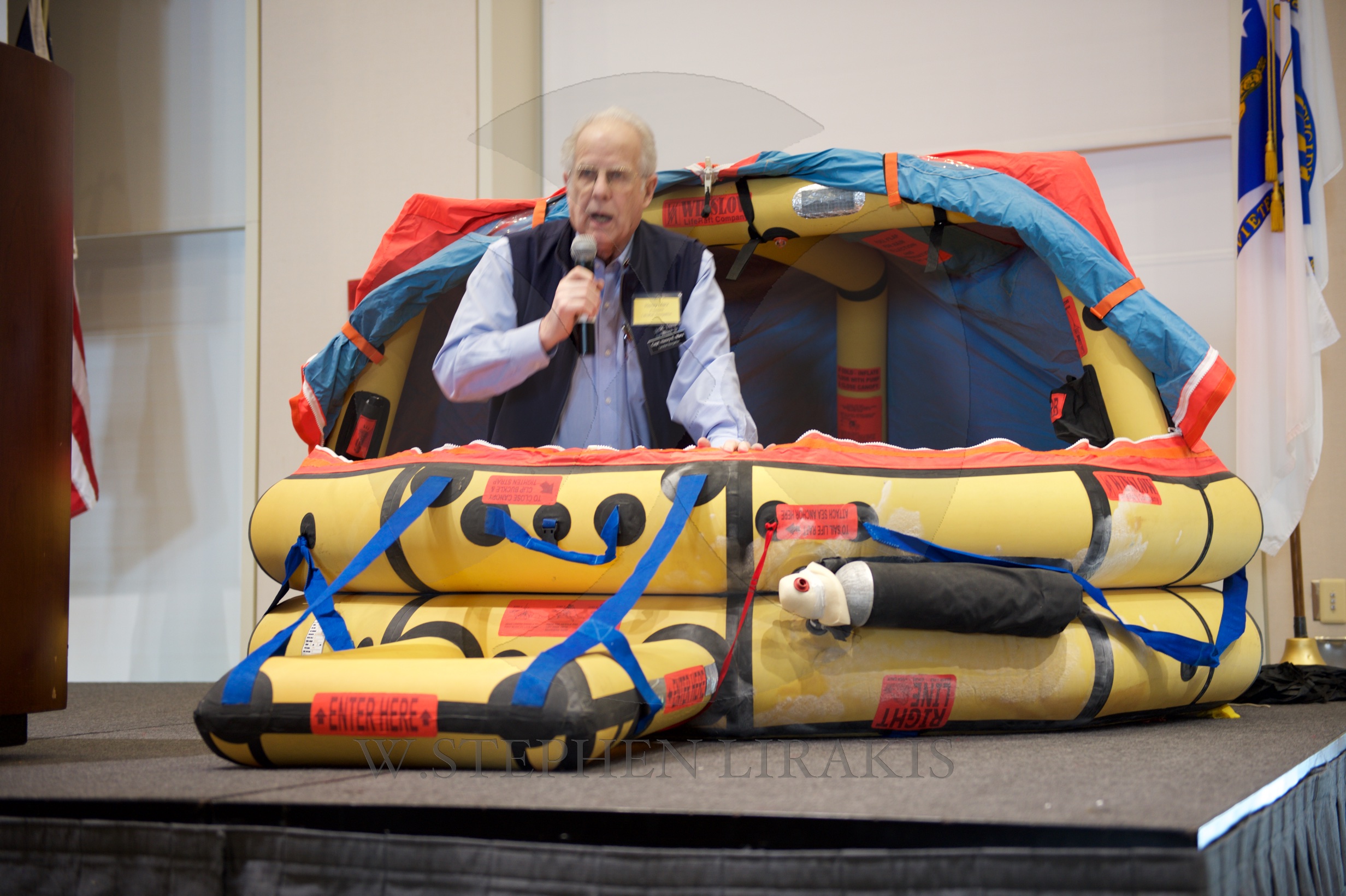
The safety at sea seminar, another step in preparation for the upcoming transatlantic race. one more thing checked off the list.

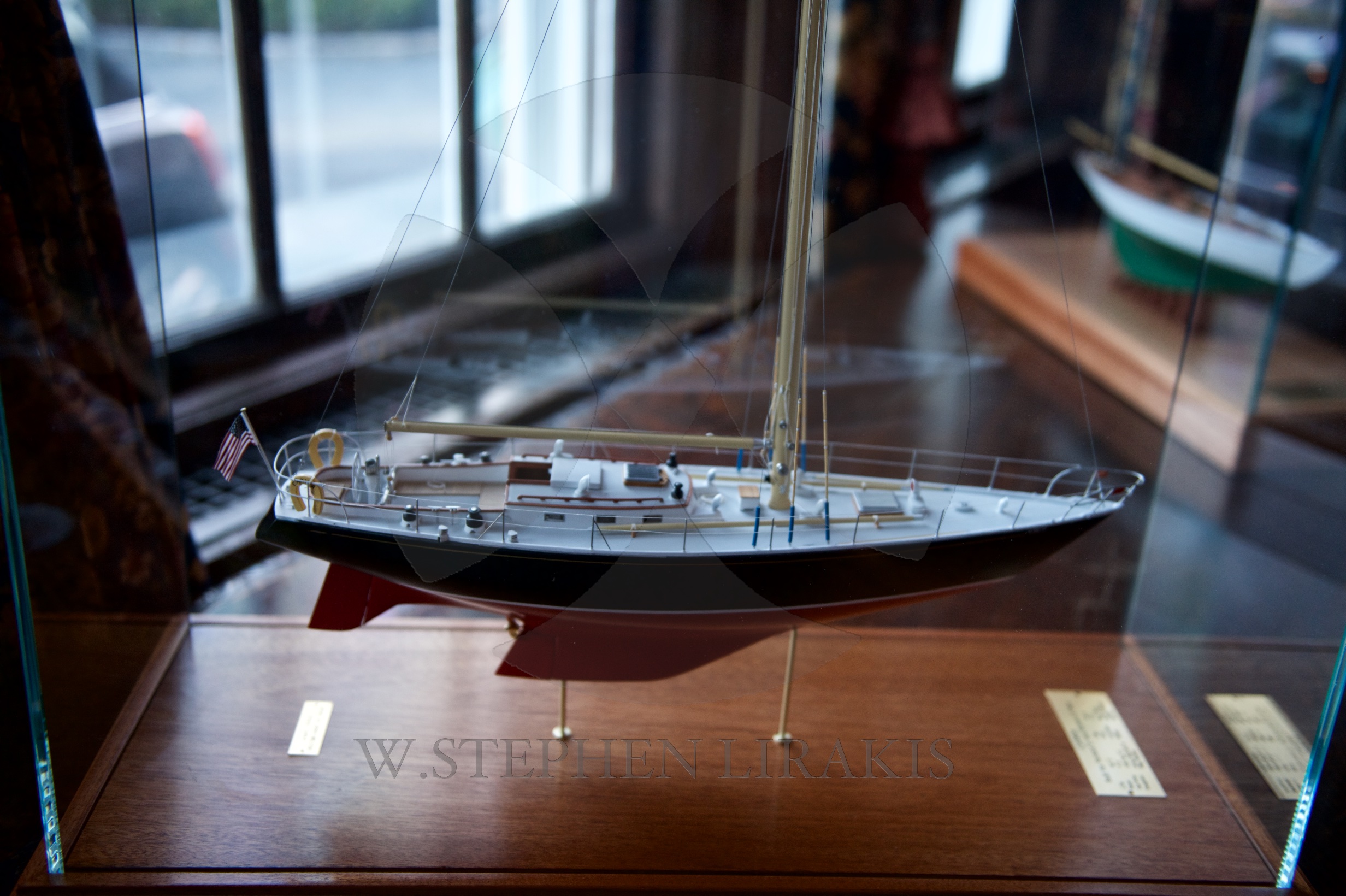
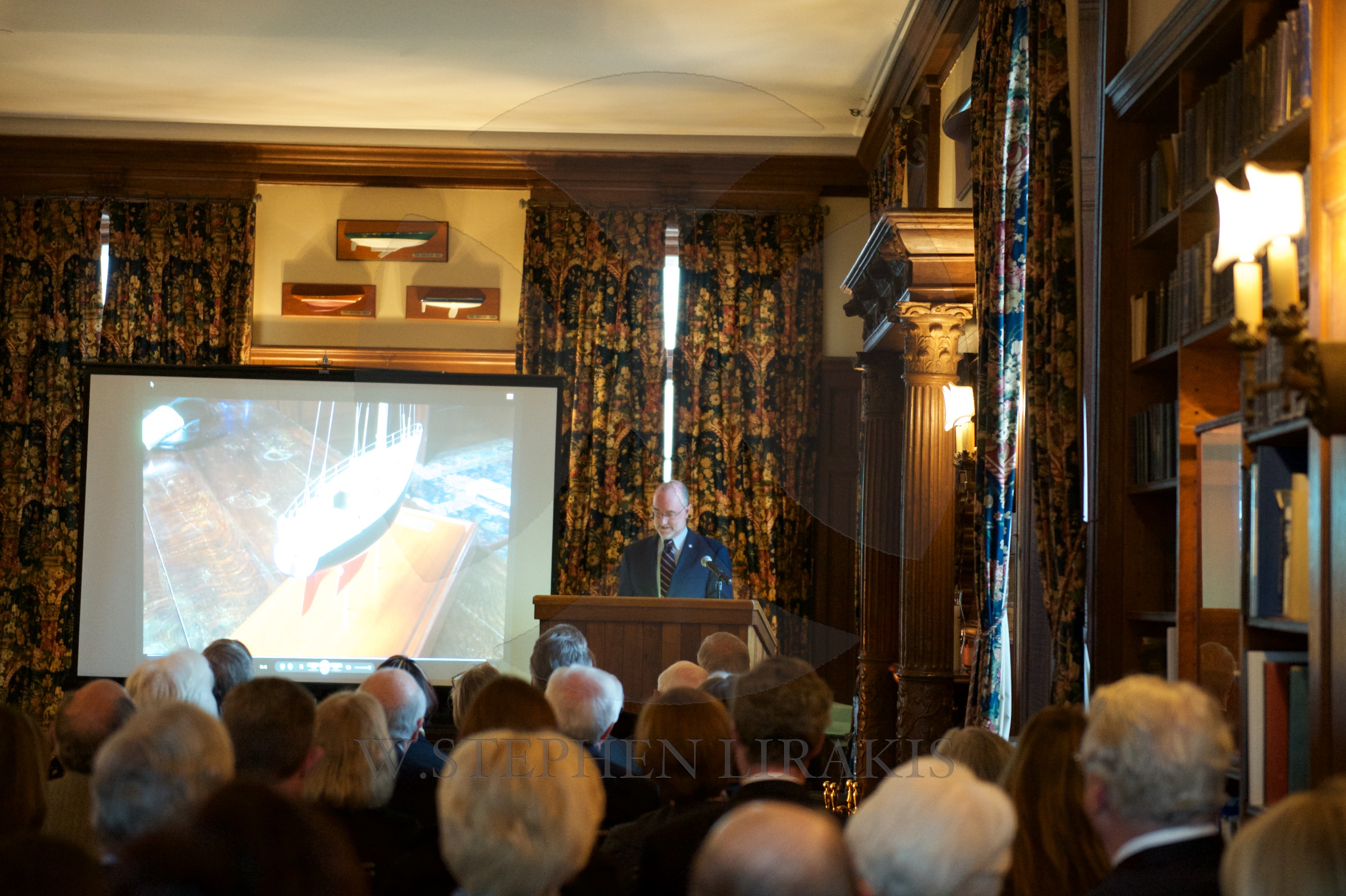
I managed to catch the presentation of the as built model of “Carina” by robert and Jonathan Nye to the New York Yacht Club. A memory of the legacy of “Carina” and the Nye family.

MARION-BERMUDA 2015
MARION-BERMUDA 2015
INFLATED RAFT
INFLATED RAFT
CARINA AS SHE WAS
CARINA AS SHE WAS
JONATHAN NYE AT HARBOR COURT