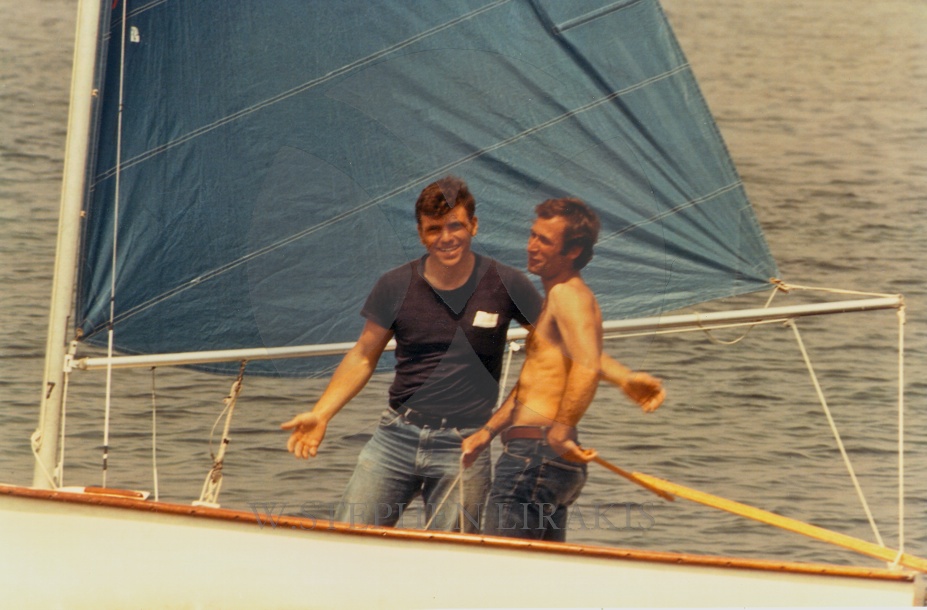
You would have to be my age to remember the Contender class It is almost nonexistent in the United States; the stronghold of the class is Europe. I regard the class as the first performance singlehanded boat, well before the 49er, the moth as we know it today.
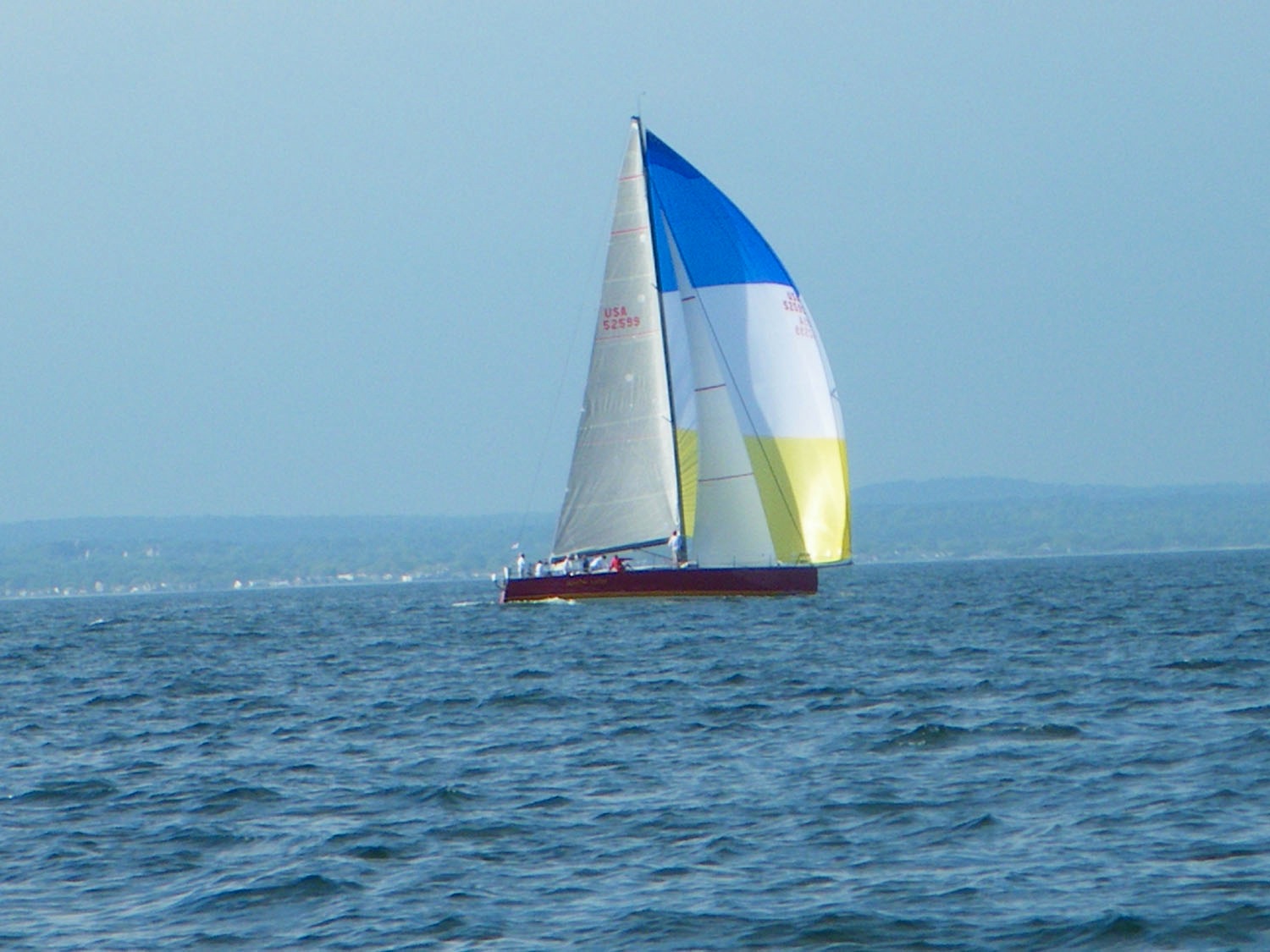
The other part of me is always amused by the possibilities offered by “modern” cameras. I am assuming this was shot with a go pro.
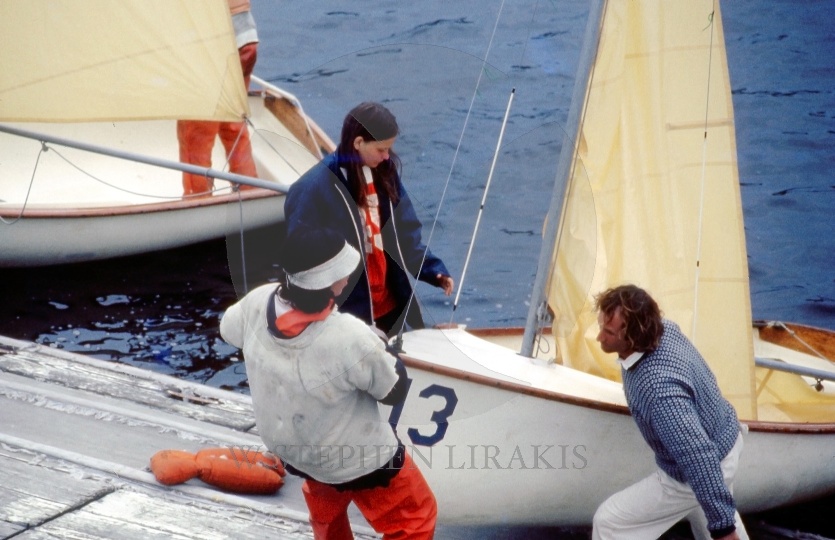
TOM DYKSTRA, STEPHEN LIRAKIS NEW ENGLAND CHAMPIONSHIPS
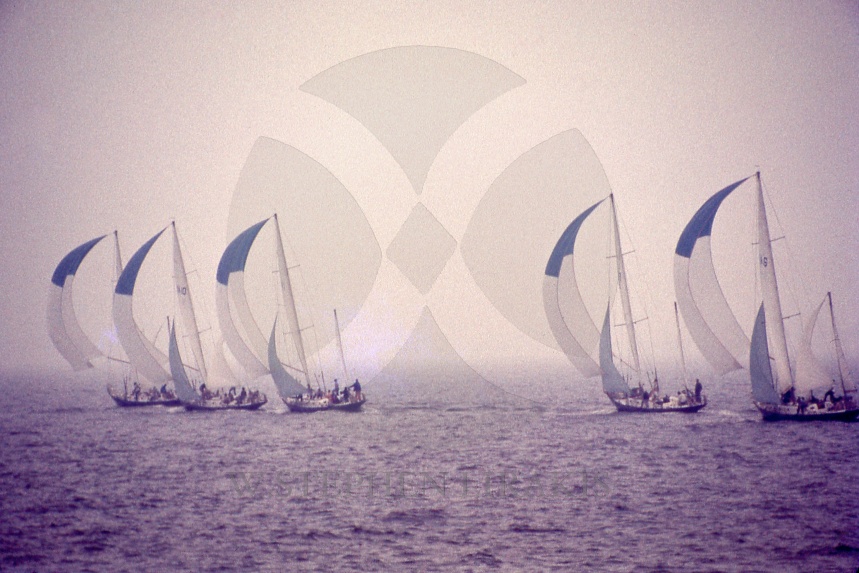
KENNEDY CUP NAVAL ACADEMY
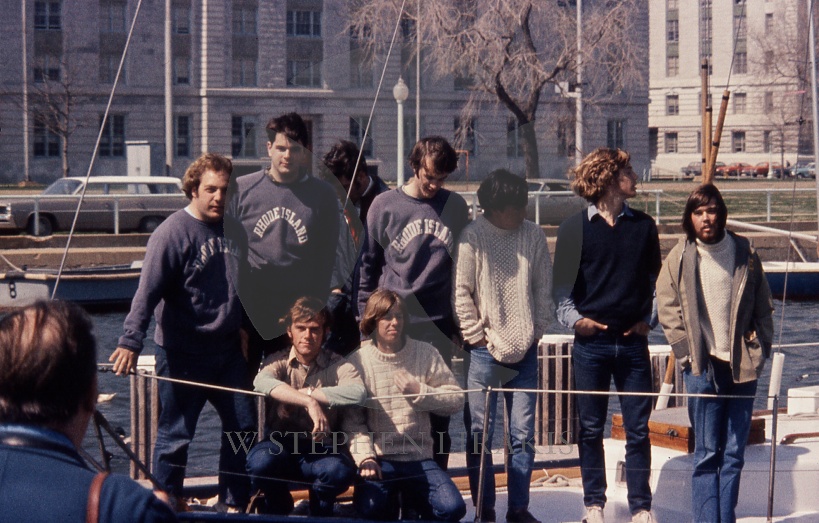
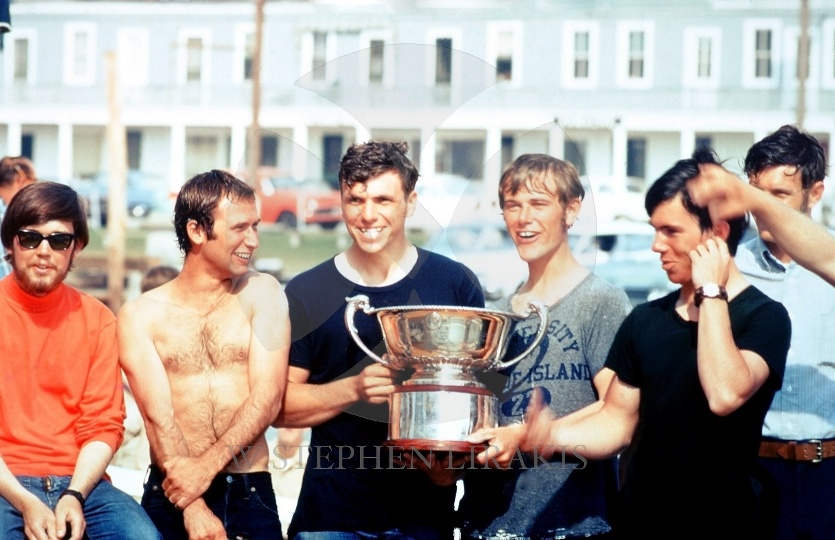
URI TEAM AT KENNEDY CUP
HENRY BOSSETT, STEPHEN LIRAKIS MAGGIE , HENRY’S FUTURE BRIDE
DANMARK TROPHY, URI TEAM AT THE COAST GUARD ACADEMY
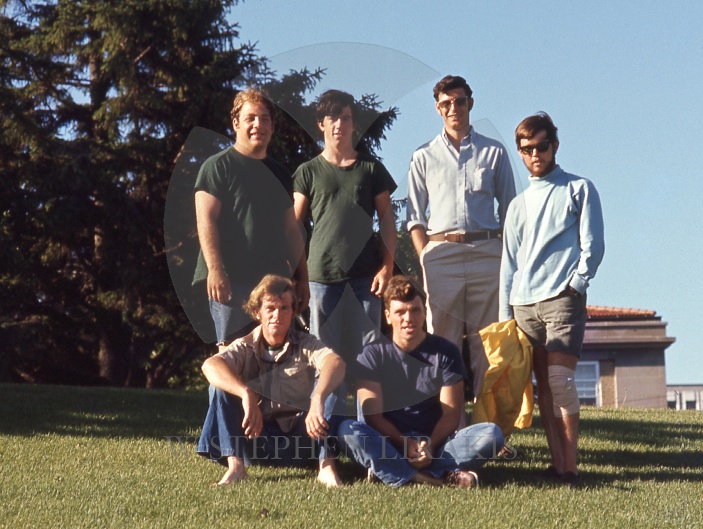
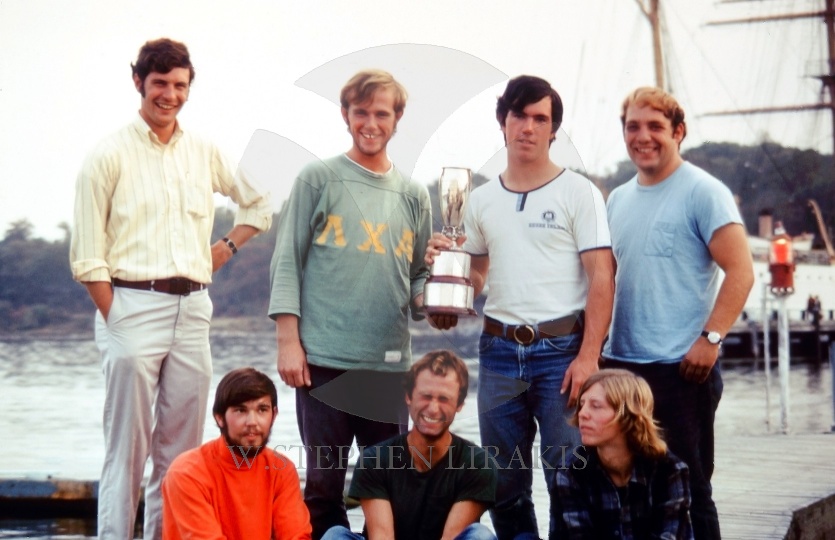
URI TEAM, NEW ENGLAND CHAMPIONS, MIKE FENTON, STEPHEN LIRAKIS, TOM DYKSTRA, SKIP WHYTE, HENRY BOSSETT, NED CASWELL
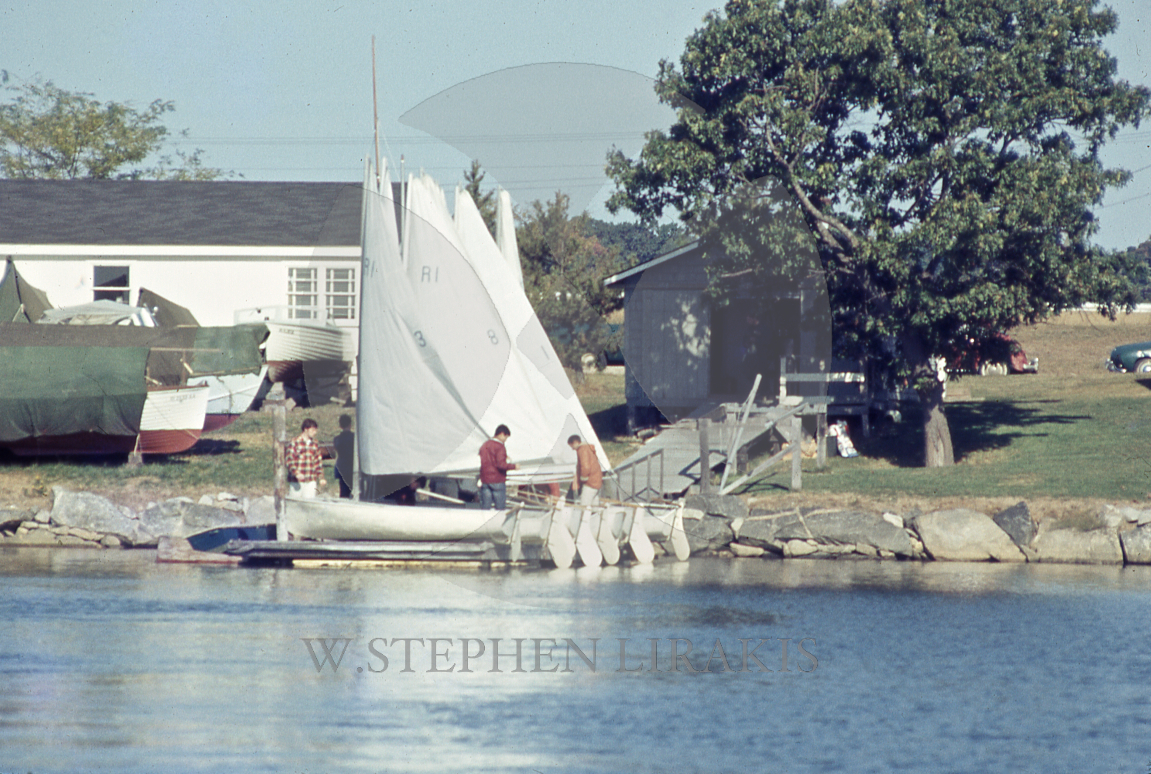
My post today is the result of some of these photos being sent to me by Henry Bossett. It is moments like this when one stops and counts the years. It is now a long time ago. 1970? We won almost everything. We had a good time doing it, or at least I did.
I had a conversation today with another college sailing mate, Bill Johnson, we were reminiscing about bygone days on Salt Pond. If you haven’t remarked yet; we look a little rag tag, certainly compared to today’s college sailing.
I love watching the Olympics. Ben Anslie is probably the best know name in sailing. He will be in San Francisco four days after he finishes in Weymouth; sailing for Oracle. So much for national pride.
For most of you the idea of sponsorship is an everyday thought. For me, the tiny reference about his coach sailing when there was no sponsorship and you had to make your way on your own resonates. I had qualified, but the idea of asking other people for help so I could go sailing was more than I dared to do. I could not afford to persue that path and had to move on. It is a different world. When I sailed in the America’s Cup it was amateur as well. As one friend said to me:” we were lucky to get a T shirt or a belt.”
Unless you live under a rock, you have already seen footage of this cruise ship disaster. It is surely with disbelief looking at these images and the unfolding story.
The scow is still my favorite boat. As far as I am concerned, many of the new designs are simply re-inventing the joy that already existed. In particular the “E” scow.
I am about to leave to sail the Block Island Race aboard “Snow Lion”. This will be our only “tune up” for the upcoming transatlantic race starting in june.
The University of Rhode Island women won the national championship on the final day of sailing. This is the first time the women have participated. Congratulations. I hope the rest of the team does not feel the pressure.
This post was triggered by a post on my wife’s facebook. One of her friends referenced the poem/film “this is the night mail” A captivating clip. Truly remarkable.
In college I spent the better part of three days with W.H. Auden. Listening to him recite his poems; drinking tea. talking quietly. I haven’t thought about this event in quite some time. Daily life has a way of interfering with things. It is a piece of my life. I could not say that it had a big impact; I did not become a poet or a writer. Yet I would not be who I am, had I not lived this moment; a piece of the puzzle.
This is a fascinating article that is really applicable to any dinghy. Most dingy sailors do things because they somehow know it’s right. Because it is faster than the boat next to them; avoiding anything that makes them slower. It is observed and learned. I don’t think anyone sailing asks themselves the technical questions while they are out on the water; many people never trouble their minds with these questions, especially if they are fast, it’s all that matters.
During my college years we would go out and sail against each other for hours at a time, refining each movement in the boat. In today’s world they are doing it better and much sooner. The young kids are so much more sophisticated than we were; in every sport.
On big keel boats one really does have to know that what you are doing is fast, because the results do not manifest themselves quickly. Particularly in a distance race where you might not see another boat. It is the learned behaviors we come to rely on.